Soil Taxonomy: Decoding Layers and Field Identification
Explore Soil Taxonomy and the art of field identification. Learn about pedons, diagnostic horizons, and how soil layers reveal stories of climate and chemistry.
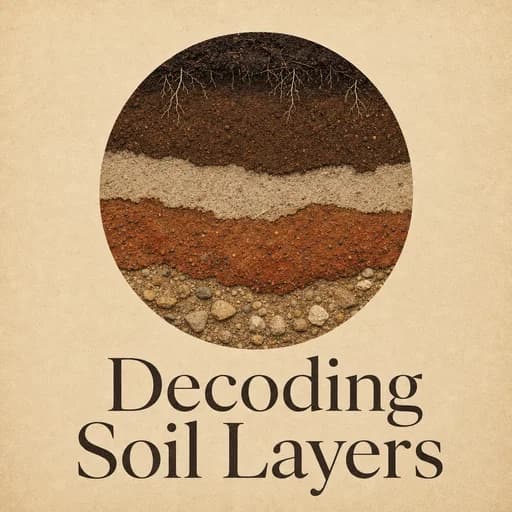
Best quote from Soil Taxonomy: Decoding Layers and Field Identification
Soil is actually a dynamic natural body; it breathes, it filters our water, it cycles our wastes, and it changes its chemistry and temperature with the seasons.
Generated by Miley
Field identification of soil orders, diagnostic horizons, and epipedons for soil taxonomy.



Frequently Asked Questions
Soil Taxonomy is the specialized language used to identify and classify the complex layers of the earth. By understanding this system, professionals can decode the history of a landscape's climate, biology, and chemistry. This identification is essential for practical applications such as farming, construction, and ecosystem protection, as it allows for a standardized way to describe the dynamic natural bodies found beneath the surface.
A pedon is defined as the smallest volume of the earth that can officially be called 'a soil.' It serves as the fundamental unit for study and classification within Soil Taxonomy. While soil is a dynamic body that breathes and cycles waste, the pedon provides a manageable scale for scientists to examine diagnostic horizons and chemical properties during a field identification or a formal soil survey.
In Soil Taxonomy, the lower boundary of soil is typically set at an arbitrary depth of 200 centimeters for the purpose of practical survey and field identification. Although biological activity and chemical changes can often occur much deeper than this limit, setting this 200-centimeter boundary allows for consistent data collection. This standard helps researchers focus on the most active layers that influence water filtration and seasonal temperature shifts.
Diagnostic horizons are specific layers within the soil profile that act as 'fingerprints' for identifying a particular soil order. These horizons are formed over thousands of years through various biological and chemical processes. By identifying these unique layers in a trench or road cut, experts can determine the soil's classification and better understand its role as a dynamic natural body that filters water and cycles nutrients.
From Columbia University alumni built in San Francisco
"Instead of endless scrolling, I just hit play on BeFreed. It saves me so much time."


"I never knew where to start with nonfiction—BeFreed’s book lists turned into podcasts gave me a clear path."


"Perfect balance between learning and entertainment. Finished ‘Thinking, Fast and Slow’ on my commute this week."
"Crazy how much I learned while walking the dog. BeFreed = small habits → big gains."
"Reading used to feel like a chore. Now it’s just part of my lifestyle."

"Feels effortless compared to reading. I’ve finished 6 books this month already."
"BeFreed turned my guilty doomscrolling into something that feels productive and inspiring."

"BeFreed turned my commute into learning time. 20-min podcasts are perfect for finishing books I never had time for."
"BeFreed replaced my podcast queue. Imagine Spotify for books — that’s it. 🙌"

"It is great for me to learn something from the book without reading it."
"The themed book list podcasts help me connect ideas across authors—like a guided audio journey."
"Makes me feel smarter every time before going to work"
From Columbia University alumni built in San Francisco
"Instead of endless scrolling, I just hit play on BeFreed. It saves me so much time."
"I never knew where to start with nonfiction—BeFreed’s book lists turned into podcasts gave me a clear path."
"Perfect balance between learning and entertainment. Finished ‘Thinking, Fast and Slow’ on my commute this week."
"Crazy how much I learned while walking the dog. BeFreed = small habits → big gains."
"Reading used to feel like a chore. Now it’s just part of my lifestyle."
"Feels effortless compared to reading. I’ve finished 6 books this month already."
"BeFreed turned my guilty doomscrolling into something that feels productive and inspiring."
"BeFreed turned my commute into learning time. 20-min podcasts are perfect for finishing books I never had time for."
"BeFreed replaced my podcast queue. Imagine Spotify for books — that’s it. 🙌"
"It is great for me to learn something from the book without reading it."
"The themed book list podcasts help me connect ideas across authors—like a guided audio journey."
"Makes me feel smarter every time before going to work"
"Instead of endless scrolling, I just hit play on BeFreed. It saves me so much time."
"I never knew where to start with nonfiction—BeFreed’s book lists turned into podcasts gave me a clear path."
"Perfect balance between learning and entertainment. Finished ‘Thinking, Fast and Slow’ on my commute this week."
"Crazy how much I learned while walking the dog. BeFreed = small habits → big gains."
"Reading used to feel like a chore. Now it’s just part of my lifestyle."
"Feels effortless compared to reading. I’ve finished 6 books this month already."
"BeFreed turned my guilty doomscrolling into something that feels productive and inspiring."
"BeFreed turned my commute into learning time. 20-min podcasts are perfect for finishing books I never had time for."
"BeFreed replaced my podcast queue. Imagine Spotify for books — that’s it. 🙌"
"It is great for me to learn something from the book without reading it."
"The themed book list podcasts help me connect ideas across authors—like a guided audio journey."
"Makes me feel smarter every time before going to work"
"Instead of endless scrolling, I just hit play on BeFreed. It saves me so much time."
"I never knew where to start with nonfiction—BeFreed’s book lists turned into podcasts gave me a clear path."
"Perfect balance between learning and entertainment. Finished ‘Thinking, Fast and Slow’ on my commute this week."
"Crazy how much I learned while walking the dog. BeFreed = small habits → big gains."
"Reading used to feel like a chore. Now it’s just part of my lifestyle."
"Feels effortless compared to reading. I’ve finished 6 books this month already."
"BeFreed turned my guilty doomscrolling into something that feels productive and inspiring."
"BeFreed turned my commute into learning time. 20-min podcasts are perfect for finishing books I never had time for."
"BeFreed replaced my podcast queue. Imagine Spotify for books — that’s it. 🙌"
"It is great for me to learn something from the book without reading it."
"The themed book list podcasts help me connect ideas across authors—like a guided audio journey."
"Makes me feel smarter every time before going to work"