Sarah’s Wager: The Rise of Agentic AI and Claude Opus 4.5
Explore the shift to agentic AI with Claude Opus 4.5. Learn how autonomous digital workers and the Singularity are transforming technology into a private workforce.

Best quote from Sarah’s Wager: The Rise of Agentic AI and Claude Opus 4.5
In a world where intelligence becomes a commodity, the value shifts from the process of building to the intent behind it; the winner is the one who can manage the people, the trust, and the vision of what needs to be built.
Generated by Aditya
Create a comprehensive audio lesson based ONLY on the attached article 'Sarah’s Wager: Sarah Guo and Conviction'. Follow the 'ELI10 GOD MODE' approach, explaining all concepts (Agentic AI, Singularity, Venture Capital, AI Stack, etc.) from first principles. Adhere strictly to Marc Andreessen's reasoning framework: lead with counterarguments, label confidence levels (High/Moderate/Low/Unknown), and separate facts from speculation. Use the specific 9-part structure provided, including themes on Agentic AI, VC changes, Sarah Guo's thesis, and the Talent War. Incorporate requested analogies (LEGO, electricity, etc.) and conclude with the 20 insights, 10 mental models, and the specific 'memory hook' provided. URL/Source: 'Sarah’s Wager: Sarah Guo and Conviction'.


Frequently Asked Questions
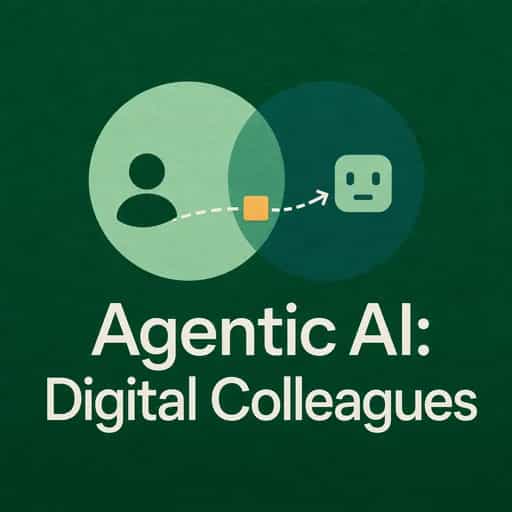
Agentic AI represents a significant step function change in technology where machines move beyond simple word prediction to understanding and executing finished goals. Unlike earlier tools that required constant hand-holding, agentic models like Claude Opus 4.5 can take the initiative to manage complex tasks and code programs from scratch. These autonomous agents act as a private workforce that can solve problems independently without being asked twice, marking a shift from reactive tools to proactive digital workers.
The release of Claude Opus 4.5 is cited as a pivotal moment where machines officially became agentic. This specific model release toward the end of 2025 triggered a massive leap in capability, comparable to an eight-year-old suddenly gaining the maturity and skill of a twenty-eight-year-old. It allows users to spin up multiple digital workers that operate continuously, completing sophisticated projects and managing workflows while the user is away, effectively automating high-level cognitive labor.
The Singularity, a concept predicted by I.J. Good in 1965, refers to the threshold where a machine becomes clever enough to design an even better version of itself. Current advancements in agentic AI suggest we are crossing this threshold, potentially making such technology the last invention humans ever need to make. As these agents become more autonomous and capable of self-improvement, they move us closer to this theoretical point of runaway technological growth and machine-led innovation.
Digital workers provide a private workforce that can execute complex tasks without the limitations of human workers. According to the discussion, these agents do not get hungry, do not get bored, and do not require delays like 'circling back on Monday.' They can be deployed quickly to solve problems over short periods, such as during a morning commute, ensuring that finished goals are met by the time a person reaches their desk, greatly increasing overall productivity.
From Columbia University alumni built in San Francisco
"Instead of endless scrolling, I just hit play on BeFreed. It saves me so much time."


"I never knew where to start with nonfiction—BeFreed’s book lists turned into podcasts gave me a clear path."


"Perfect balance between learning and entertainment. Finished ‘Thinking, Fast and Slow’ on my commute this week."
"Crazy how much I learned while walking the dog. BeFreed = small habits → big gains."
"Reading used to feel like a chore. Now it’s just part of my lifestyle."

"Feels effortless compared to reading. I’ve finished 6 books this month already."
"BeFreed turned my guilty doomscrolling into something that feels productive and inspiring."

"BeFreed turned my commute into learning time. 20-min podcasts are perfect for finishing books I never had time for."
"BeFreed replaced my podcast queue. Imagine Spotify for books — that’s it. 🙌"

"It is great for me to learn something from the book without reading it."
"The themed book list podcasts help me connect ideas across authors—like a guided audio journey."
"Makes me feel smarter every time before going to work"
From Columbia University alumni built in San Francisco
"Instead of endless scrolling, I just hit play on BeFreed. It saves me so much time."
"I never knew where to start with nonfiction—BeFreed’s book lists turned into podcasts gave me a clear path."
"Perfect balance between learning and entertainment. Finished ‘Thinking, Fast and Slow’ on my commute this week."
"Crazy how much I learned while walking the dog. BeFreed = small habits → big gains."
"Reading used to feel like a chore. Now it’s just part of my lifestyle."
"Feels effortless compared to reading. I’ve finished 6 books this month already."
"BeFreed turned my guilty doomscrolling into something that feels productive and inspiring."
"BeFreed turned my commute into learning time. 20-min podcasts are perfect for finishing books I never had time for."
"BeFreed replaced my podcast queue. Imagine Spotify for books — that’s it. 🙌"
"It is great for me to learn something from the book without reading it."
"The themed book list podcasts help me connect ideas across authors—like a guided audio journey."
"Makes me feel smarter every time before going to work"
"Instead of endless scrolling, I just hit play on BeFreed. It saves me so much time."
"I never knew where to start with nonfiction—BeFreed’s book lists turned into podcasts gave me a clear path."
"Perfect balance between learning and entertainment. Finished ‘Thinking, Fast and Slow’ on my commute this week."
"Crazy how much I learned while walking the dog. BeFreed = small habits → big gains."
"Reading used to feel like a chore. Now it’s just part of my lifestyle."
"Feels effortless compared to reading. I’ve finished 6 books this month already."
"BeFreed turned my guilty doomscrolling into something that feels productive and inspiring."
"BeFreed turned my commute into learning time. 20-min podcasts are perfect for finishing books I never had time for."
"BeFreed replaced my podcast queue. Imagine Spotify for books — that’s it. 🙌"
"It is great for me to learn something from the book without reading it."
"The themed book list podcasts help me connect ideas across authors—like a guided audio journey."
"Makes me feel smarter every time before going to work"
"Instead of endless scrolling, I just hit play on BeFreed. It saves me so much time."
"I never knew where to start with nonfiction—BeFreed’s book lists turned into podcasts gave me a clear path."
"Perfect balance between learning and entertainment. Finished ‘Thinking, Fast and Slow’ on my commute this week."
"Crazy how much I learned while walking the dog. BeFreed = small habits → big gains."
"Reading used to feel like a chore. Now it’s just part of my lifestyle."
"Feels effortless compared to reading. I’ve finished 6 books this month already."
"BeFreed turned my guilty doomscrolling into something that feels productive and inspiring."
"BeFreed turned my commute into learning time. 20-min podcasts are perfect for finishing books I never had time for."
"BeFreed replaced my podcast queue. Imagine Spotify for books — that’s it. 🙌"
"It is great for me to learn something from the book without reading it."
"The themed book list podcasts help me connect ideas across authors—like a guided audio journey."
"Makes me feel smarter every time before going to work"