The Rise and Fall of History's Great Empires: Why Systems Fail
Explore the life cycles of history's great empires. Learn how institutional overload and economic instability cause global superpowers to erode and transform.
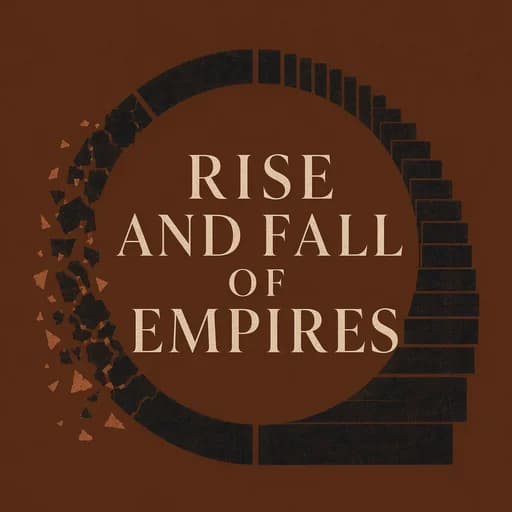
Best quote from The Rise and Fall of History's Great Empires: Why Systems Fail
History doesn't necessarily repeat itself in a perfect loop, but it does offer a series of warnings about how large-scale systems manage their strengths before they inevitably face institutional overload.
Generated by BeFreed
The rise and fall of history's great empires






Frequently Asked Questions
Empires function as complex, living organisms with distinct life cycles rather than permanent fixtures. They do not typically end in a single moment of destruction but instead undergo a process of erosion, fragmentation, and transformation. By studying the rise and fall of history's great empires, we can see how these massive systems manage their strengths before eventually facing the inevitable institutional overload that leads to their decline.
Economic instability is one of the primary cyclical phenomena that pulls at the seams of large-scale states, much like it did with the Persian or Mongol empires. When combined with internal friction and a struggle to maintain legitimacy, financial volatility acts as a trigger for decline. These historical forces are not merely relics of the past; they continue to shape whether modern political systems thrive or fail in the face of systemic pressure.
The Roman Forum represents the heart of what was perhaps the first true global superpower, a military and administrative machine that sustained political stability for centuries. Walking through such a site illustrates the weight of a power that once seemed built for eternity. Today, we live in a world still defined by the architectural, legal, and linguistic shadows of these fallen giants, making their history essential for understanding modern systems.
Institutional overload occurs when large-scale systems can no longer effectively manage their internal and external pressures, leading to a loss of stability. History offers a series of warnings about how empires handle their strengths before this invisible rot sets in. Understanding these specific triggers and the resulting institutional failure helps explain how modern political systems might navigate similar challenges to avoid fragmentation and total collapse.
From Columbia University alumni built in San Francisco
BeFreed Brings Together A Global Community Of Curious Minds


"Instead of endless scrolling, I just hit play on BeFreed. It saves me so much time."


"I never knew where to start with nonfiction—BeFreed’s book lists turned into podcasts gave me a clear path."


"Perfect balance between learning and entertainment. Finished ‘Thinking, Fast and Slow’ on my commute this week."
"Crazy how much I learned while walking the dog. BeFreed = small habits → big gains."
"Reading used to feel like a chore. Now it’s just part of my lifestyle."

"Feels effortless compared to reading. I’ve finished 6 books this month already."
"BeFreed turned my guilty doomscrolling into something that feels productive and inspiring."

"BeFreed turned my commute into learning time. 20-min podcasts are perfect for finishing books I never had time for."
"BeFreed replaced my podcast queue. Imagine Spotify for books — that’s it. 🙌"

"It is great for me to learn something from the book without reading it."
"The themed book list podcasts help me connect ideas across authors—like a guided audio journey."
"Makes me feel smarter every time before going to work"
From Columbia University alumni built in San Francisco
BeFreed Brings Together A Global Community Of Curious Minds
"Instead of endless scrolling, I just hit play on BeFreed. It saves me so much time."
"I never knew where to start with nonfiction—BeFreed’s book lists turned into podcasts gave me a clear path."
"Perfect balance between learning and entertainment. Finished ‘Thinking, Fast and Slow’ on my commute this week."
"Crazy how much I learned while walking the dog. BeFreed = small habits → big gains."
"Reading used to feel like a chore. Now it’s just part of my lifestyle."
"Feels effortless compared to reading. I’ve finished 6 books this month already."
"BeFreed turned my guilty doomscrolling into something that feels productive and inspiring."
"BeFreed turned my commute into learning time. 20-min podcasts are perfect for finishing books I never had time for."
"BeFreed replaced my podcast queue. Imagine Spotify for books — that’s it. 🙌"
"It is great for me to learn something from the book without reading it."
"The themed book list podcasts help me connect ideas across authors—like a guided audio journey."
"Makes me feel smarter every time before going to work"
"Instead of endless scrolling, I just hit play on BeFreed. It saves me so much time."
"I never knew where to start with nonfiction—BeFreed’s book lists turned into podcasts gave me a clear path."
"Perfect balance between learning and entertainment. Finished ‘Thinking, Fast and Slow’ on my commute this week."
"Crazy how much I learned while walking the dog. BeFreed = small habits → big gains."
"Reading used to feel like a chore. Now it’s just part of my lifestyle."
"Feels effortless compared to reading. I’ve finished 6 books this month already."
"BeFreed turned my guilty doomscrolling into something that feels productive and inspiring."
"BeFreed turned my commute into learning time. 20-min podcasts are perfect for finishing books I never had time for."
"BeFreed replaced my podcast queue. Imagine Spotify for books — that’s it. 🙌"
"It is great for me to learn something from the book without reading it."
"The themed book list podcasts help me connect ideas across authors—like a guided audio journey."
"Makes me feel smarter every time before going to work"
"Instead of endless scrolling, I just hit play on BeFreed. It saves me so much time."
"I never knew where to start with nonfiction—BeFreed’s book lists turned into podcasts gave me a clear path."
"Perfect balance between learning and entertainment. Finished ‘Thinking, Fast and Slow’ on my commute this week."
"Crazy how much I learned while walking the dog. BeFreed = small habits → big gains."
"Reading used to feel like a chore. Now it’s just part of my lifestyle."
"Feels effortless compared to reading. I’ve finished 6 books this month already."
"BeFreed turned my guilty doomscrolling into something that feels productive and inspiring."
"BeFreed turned my commute into learning time. 20-min podcasts are perfect for finishing books I never had time for."
"BeFreed replaced my podcast queue. Imagine Spotify for books — that’s it. 🙌"
"It is great for me to learn something from the book without reading it."
"The themed book list podcasts help me connect ideas across authors—like a guided audio journey."
"Makes me feel smarter every time before going to work"