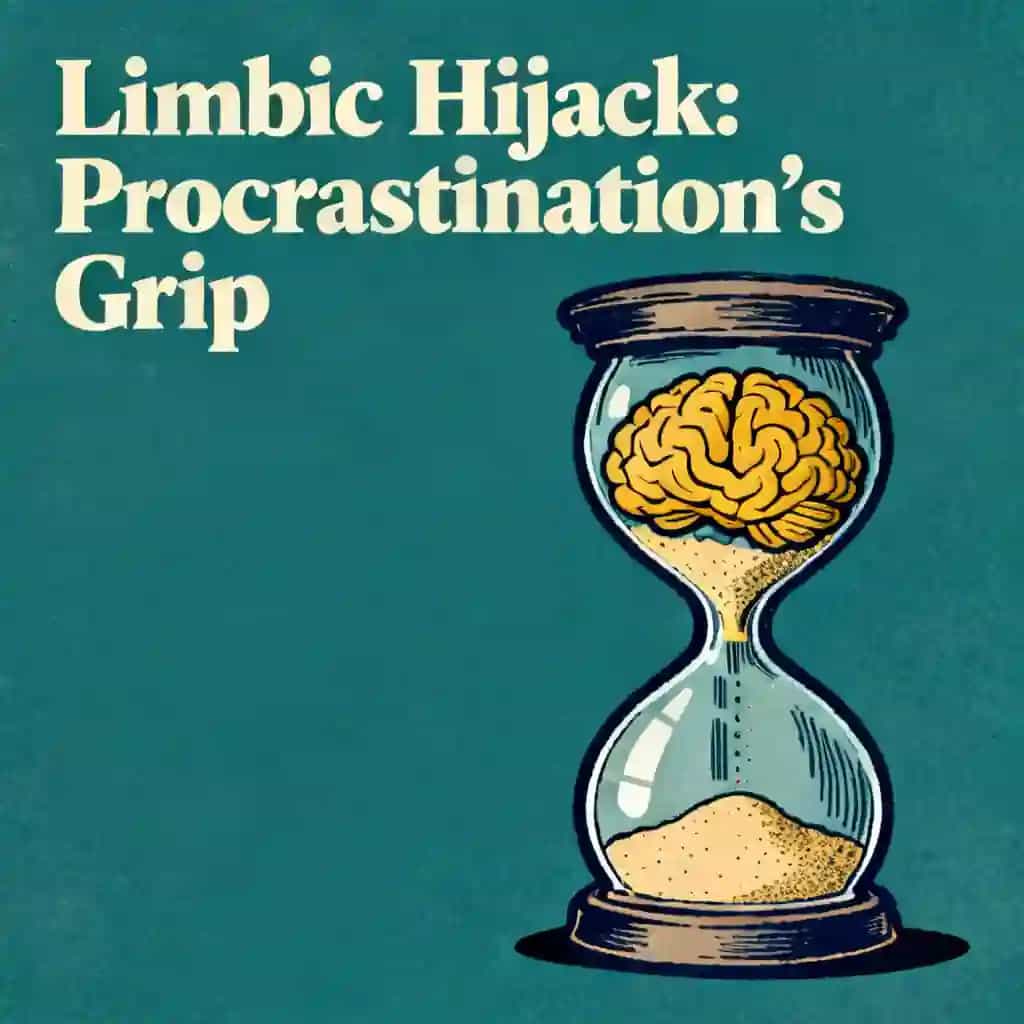
Procrastination: The Emotion Regulation Shift & Brain Science
Discover why procrastination is an emotion regulation problem, not a lack of willpower. Learn how the limbic system triggers avoidance and short-term mood repair.

Best quote from Procrastination: The Emotion Regulation Shift & Brain Science
Procrastination is not a character flaw—it is an emotion regulation problem. You aren't avoiding the work; you are avoiding the feelings the work stirs up inside you.
Generated by Mouad
Strategies for overcoming procrastination as a long-term habit, focusing on psychological shifts and sustainable behavior change for chronic procrastinators.






Frequently Asked Questions
Contrary to popular belief, procrastination is not a character flaw, a lack of willpower, or a failure of time management. While many people are told to buy better planners or set stricter alarms, these solutions often fail because they don't address the root cause. Procrastination is actually an emotion regulation problem where the mind seeks to avoid the immediate discomfort associated with a specific task.
The limbic system is the ancient part of the brain responsible for handling immediate rewards and perceived threats. When you face a difficult project, your limbic system may register feelings like boredom, anxiety, or fear of failure as a literal attack. To protect you, it triggers a visceral urge to turn away from the task, redirecting your focus toward activities that offer immediate relief.
Mood repair is a locally optimal response where the brain seeks out short-term hits of dopamine or comfort to escape negative emotions. When a looming deadline causes your heart to race or your stomach to knot, your brain prioritizes immediate relief over long-term goals. This explains why you might find yourself scrolling through social media or cleaning instead of completing a career-defining report.
Traditional solutions like 'grinding through it' or using better organizational tools often fail because they treat procrastination as a logical or mechanical issue. Because the behavior is driven by the psychology of avoidance and emotional distress, simply managing time does not stop the limbic system from viewing challenging work as a danger. True change requires shifting how you regulate the emotions triggered by difficult tasks.
From Columbia University alumni built in San Francisco
"Instead of endless scrolling, I just hit play on BeFreed. It saves me so much time."


"I never knew where to start with nonfiction—BeFreed’s book lists turned into podcasts gave me a clear path."


"Perfect balance between learning and entertainment. Finished ‘Thinking, Fast and Slow’ on my commute this week."
"Crazy how much I learned while walking the dog. BeFreed = small habits → big gains."
"Reading used to feel like a chore. Now it’s just part of my lifestyle."

"Feels effortless compared to reading. I’ve finished 6 books this month already."
"BeFreed turned my guilty doomscrolling into something that feels productive and inspiring."

"BeFreed turned my commute into learning time. 20-min podcasts are perfect for finishing books I never had time for."
"BeFreed replaced my podcast queue. Imagine Spotify for books — that’s it. 🙌"

"It is great for me to learn something from the book without reading it."
"The themed book list podcasts help me connect ideas across authors—like a guided audio journey."
"Makes me feel smarter every time before going to work"
From Columbia University alumni built in San Francisco
"Instead of endless scrolling, I just hit play on BeFreed. It saves me so much time."
"I never knew where to start with nonfiction—BeFreed’s book lists turned into podcasts gave me a clear path."
"Perfect balance between learning and entertainment. Finished ‘Thinking, Fast and Slow’ on my commute this week."
"Crazy how much I learned while walking the dog. BeFreed = small habits → big gains."
"Reading used to feel like a chore. Now it’s just part of my lifestyle."
"Feels effortless compared to reading. I’ve finished 6 books this month already."
"BeFreed turned my guilty doomscrolling into something that feels productive and inspiring."
"BeFreed turned my commute into learning time. 20-min podcasts are perfect for finishing books I never had time for."
"BeFreed replaced my podcast queue. Imagine Spotify for books — that’s it. 🙌"
"It is great for me to learn something from the book without reading it."
"The themed book list podcasts help me connect ideas across authors—like a guided audio journey."
"Makes me feel smarter every time before going to work"
"Instead of endless scrolling, I just hit play on BeFreed. It saves me so much time."
"I never knew where to start with nonfiction—BeFreed’s book lists turned into podcasts gave me a clear path."
"Perfect balance between learning and entertainment. Finished ‘Thinking, Fast and Slow’ on my commute this week."
"Crazy how much I learned while walking the dog. BeFreed = small habits → big gains."
"Reading used to feel like a chore. Now it’s just part of my lifestyle."
"Feels effortless compared to reading. I’ve finished 6 books this month already."
"BeFreed turned my guilty doomscrolling into something that feels productive and inspiring."
"BeFreed turned my commute into learning time. 20-min podcasts are perfect for finishing books I never had time for."
"BeFreed replaced my podcast queue. Imagine Spotify for books — that’s it. 🙌"
"It is great for me to learn something from the book without reading it."
"The themed book list podcasts help me connect ideas across authors—like a guided audio journey."
"Makes me feel smarter every time before going to work"
"Instead of endless scrolling, I just hit play on BeFreed. It saves me so much time."
"I never knew where to start with nonfiction—BeFreed’s book lists turned into podcasts gave me a clear path."
"Perfect balance between learning and entertainment. Finished ‘Thinking, Fast and Slow’ on my commute this week."
"Crazy how much I learned while walking the dog. BeFreed = small habits → big gains."
"Reading used to feel like a chore. Now it’s just part of my lifestyle."
"Feels effortless compared to reading. I’ve finished 6 books this month already."
"BeFreed turned my guilty doomscrolling into something that feels productive and inspiring."
"BeFreed turned my commute into learning time. 20-min podcasts are perfect for finishing books I never had time for."
"BeFreed replaced my podcast queue. Imagine Spotify for books — that’s it. 🙌"
"It is great for me to learn something from the book without reading it."
"The themed book list podcasts help me connect ideas across authors—like a guided audio journey."
"Makes me feel smarter every time before going to work"