The Physics Experiment That Failed and Won
When a search for 'invisible wind' turned up nothing, it broke 19th-century science. Discover how a basement failure paved the way for relativity.

Best quote from The Physics Experiment That Failed and Won
This single 'failed' moment is why you don't live in a world of clockwork certainty, but in a universe of relativity. It paved the way for Albert Einstein to suggest that the speed of light is the only true constant, while everything else—time, length, and mass—is up for grabs.
Generated with BeFreed
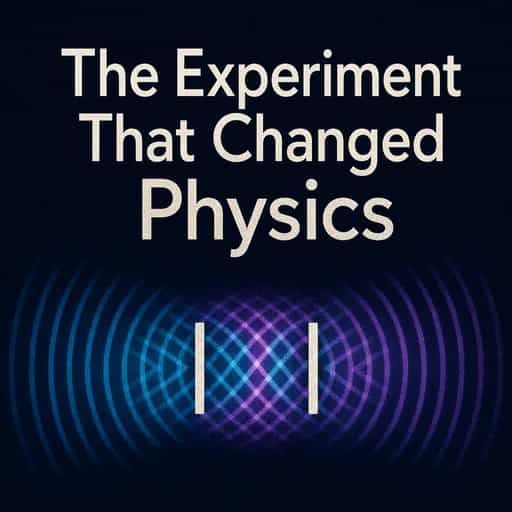
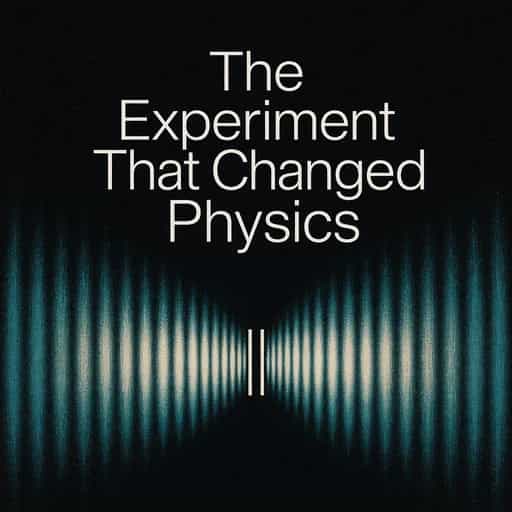
The Experiment That Changed Physics Forever






Frequently Asked Questions
In the 19th century, scientists believed that all waves required a medium to travel through, just as sound travels through air and ripples move through water. Since light was known to behave like a wave, they hypothesized that an invisible, rigid, yet ghostly substance called the "luminiferous aether" filled all of space to serve as light's medium. It was thought to be a stationary reference point for the entire universe.
The researchers built an incredibly sensitive device called an interferometer, which was mounted on a five-ton sandstone slab floating in a pool of mercury to eliminate vibrations. The machine split a beam of light into two paths at right angles to each other. They expected that as the Earth moved through the stationary aether at 30 kilometers per second, the "aether wind" would cause light traveling in one direction to move slower or faster than the light traveling at a right angle, resulting in a visible shift in the light's interference fringes.
Although the experiment failed to find any evidence of the aether wind—producing a "null result"—it is considered one of the most important experiments in history because it disproved the existing model of the universe. This "failure" provided the evidence needed to move away from classical Newtonian physics and paved the way for Albert Einstein’s Special Theory of Relativity, which established that the speed of light is constant for all observers.
To explain why the experiment showed no difference in the speed of light, some physicists like Hendrik Lorentz and George FitzGerald proposed that objects actually shrink in the direction of their motion through the aether. They suggested the physical arm of the interferometer was being compressed by the wind just enough to cancel out the expected delay. While they were trying to save the aether theory, their mathematical framework for length contraction and time dilation eventually became core components of Einstein’s relativity.
The experiment reveals that the universe often contradicts "common sense" and human assumptions. Just as Michelson and Morley found no aether, later experiments by scientists like Rutherford showed that atoms are mostly empty space rather than solid blobs. These discoveries demonstrate that the universe is governed by a dynamic, flexible fabric of space-time where the speed of light is the only true constant, rather than a rigid, clockwork system.
From Columbia University alumni built in San Francisco
"Instead of endless scrolling, I just hit play on BeFreed. It saves me so much time."


"I never knew where to start with nonfiction—BeFreed’s book lists turned into podcasts gave me a clear path."


"Perfect balance between learning and entertainment. Finished ‘Thinking, Fast and Slow’ on my commute this week."
"Crazy how much I learned while walking the dog. BeFreed = small habits → big gains."
"Reading used to feel like a chore. Now it’s just part of my lifestyle."

"Feels effortless compared to reading. I’ve finished 6 books this month already."
"BeFreed turned my guilty doomscrolling into something that feels productive and inspiring."

"BeFreed turned my commute into learning time. 20-min podcasts are perfect for finishing books I never had time for."
"BeFreed replaced my podcast queue. Imagine Spotify for books — that’s it. 🙌"

"It is great for me to learn something from the book without reading it."
"The themed book list podcasts help me connect ideas across authors—like a guided audio journey."
"Makes me feel smarter every time before going to work"
From Columbia University alumni built in San Francisco
"Instead of endless scrolling, I just hit play on BeFreed. It saves me so much time."
"I never knew where to start with nonfiction—BeFreed’s book lists turned into podcasts gave me a clear path."
"Perfect balance between learning and entertainment. Finished ‘Thinking, Fast and Slow’ on my commute this week."
"Crazy how much I learned while walking the dog. BeFreed = small habits → big gains."
"Reading used to feel like a chore. Now it’s just part of my lifestyle."
"Feels effortless compared to reading. I’ve finished 6 books this month already."
"BeFreed turned my guilty doomscrolling into something that feels productive and inspiring."
"BeFreed turned my commute into learning time. 20-min podcasts are perfect for finishing books I never had time for."
"BeFreed replaced my podcast queue. Imagine Spotify for books — that’s it. 🙌"
"It is great for me to learn something from the book without reading it."
"The themed book list podcasts help me connect ideas across authors—like a guided audio journey."
"Makes me feel smarter every time before going to work"
"Instead of endless scrolling, I just hit play on BeFreed. It saves me so much time."
"I never knew where to start with nonfiction—BeFreed’s book lists turned into podcasts gave me a clear path."
"Perfect balance between learning and entertainment. Finished ‘Thinking, Fast and Slow’ on my commute this week."
"Crazy how much I learned while walking the dog. BeFreed = small habits → big gains."
"Reading used to feel like a chore. Now it’s just part of my lifestyle."
"Feels effortless compared to reading. I’ve finished 6 books this month already."
"BeFreed turned my guilty doomscrolling into something that feels productive and inspiring."
"BeFreed turned my commute into learning time. 20-min podcasts are perfect for finishing books I never had time for."
"BeFreed replaced my podcast queue. Imagine Spotify for books — that’s it. 🙌"
"It is great for me to learn something from the book without reading it."
"The themed book list podcasts help me connect ideas across authors—like a guided audio journey."
"Makes me feel smarter every time before going to work"
"Instead of endless scrolling, I just hit play on BeFreed. It saves me so much time."
"I never knew where to start with nonfiction—BeFreed’s book lists turned into podcasts gave me a clear path."
"Perfect balance between learning and entertainment. Finished ‘Thinking, Fast and Slow’ on my commute this week."
"Crazy how much I learned while walking the dog. BeFreed = small habits → big gains."
"Reading used to feel like a chore. Now it’s just part of my lifestyle."
"Feels effortless compared to reading. I’ve finished 6 books this month already."
"BeFreed turned my guilty doomscrolling into something that feels productive and inspiring."
"BeFreed turned my commute into learning time. 20-min podcasts are perfect for finishing books I never had time for."
"BeFreed replaced my podcast queue. Imagine Spotify for books — that’s it. 🙌"
"It is great for me to learn something from the book without reading it."
"The themed book list podcasts help me connect ideas across authors—like a guided audio journey."
"Makes me feel smarter every time before going to work"