People or Patterns: Understanding the E-S Theory of Mind
Explore Simon Baron-Cohen’s E-S Theory. Learn how the cognitive dimensions of Empathizing and Systemizing shape how we navigate social worlds and mechanical patterns.
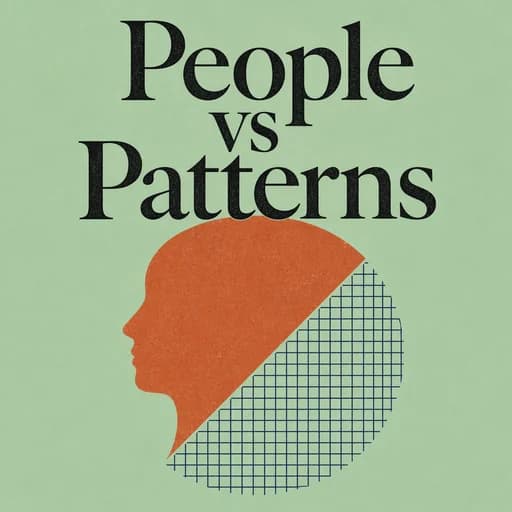
Best quote from People or Patterns: Understanding the E-S Theory of Mind
Knowing your 'brain type' is about the 'truth' your brain is hunting for: are you looking for the emotional truth of a shared moment, or the systematic truth of a lawful pattern?

This audio lesson was created by a BeFreed community member
The science and psychology behind different cognitive tunings—people and patterns vs. details and organization—specifically through the lens of Baron-Cohen's Empathizing–Systemizing (E-S) Theory.






Frequently Asked Questions
The Empathizing-Systemizing (E-S) Theory, developed by Simon Baron-Cohen, describes two fundamental cognitive dimensions used to navigate reality. Empathizing acts like a social radar, allowing individuals to tune into the unpredictable frequency of human mental states and emotions. Systemizing involves a shift toward pattern recognition, where the mind focuses on mechanical sequences, inputs, and the rules governing how things work, such as the precise mechanics of an espresso machine.
In the context of the E-S Theory, Empathizing functions as a high-frequency social radar that picks up on invisible waves of human emotion. It allows a person to notice subtle cues, such as a tightening around someone's eyes or a hesitation in their voice, to understand unspoken tensions. This cognitive lens focuses on the messy and beautiful world of people, prioritizing the interpretation of mental states over mechanical logic.
Having a high Systemizing dimension means your cognitive dial is turned toward identifying patterns and mechanical sequences. Instead of focusing on social moods, a systemizer tracks how things function, such as water pressure, temperature stability, or the ratio of grind size to extraction time in a machine. This lens allows an individual to move from the world of people to the world of patterns, seeking to understand the underlying rules of a system.
The Empathizing-Systemizing Theory is a manifestation of cognitive research led by Simon Baron-Cohen. His work suggests that these two dimensions—Empathizing and Systemizing—define how different individuals process their surroundings. By understanding these dimensions, we can better see why some people are naturally tuned into social frequencies while others are more adept at recognizing and analyzing the technical patterns found in the world around them.
From Columbia University alumni built in San Francisco
"Instead of endless scrolling, I just hit play on BeFreed. It saves me so much time."


"I never knew where to start with nonfiction—BeFreed’s book lists turned into podcasts gave me a clear path."


"Perfect balance between learning and entertainment. Finished ‘Thinking, Fast and Slow’ on my commute this week."
"Crazy how much I learned while walking the dog. BeFreed = small habits → big gains."
"Reading used to feel like a chore. Now it’s just part of my lifestyle."

"Feels effortless compared to reading. I’ve finished 6 books this month already."
"BeFreed turned my guilty doomscrolling into something that feels productive and inspiring."

"BeFreed turned my commute into learning time. 20-min podcasts are perfect for finishing books I never had time for."
"BeFreed replaced my podcast queue. Imagine Spotify for books — that’s it. 🙌"

"It is great for me to learn something from the book without reading it."
"The themed book list podcasts help me connect ideas across authors—like a guided audio journey."
"Makes me feel smarter every time before going to work"
From Columbia University alumni built in San Francisco
"Instead of endless scrolling, I just hit play on BeFreed. It saves me so much time."
"I never knew where to start with nonfiction—BeFreed’s book lists turned into podcasts gave me a clear path."
"Perfect balance between learning and entertainment. Finished ‘Thinking, Fast and Slow’ on my commute this week."
"Crazy how much I learned while walking the dog. BeFreed = small habits → big gains."
"Reading used to feel like a chore. Now it’s just part of my lifestyle."
"Feels effortless compared to reading. I’ve finished 6 books this month already."
"BeFreed turned my guilty doomscrolling into something that feels productive and inspiring."
"BeFreed turned my commute into learning time. 20-min podcasts are perfect for finishing books I never had time for."
"BeFreed replaced my podcast queue. Imagine Spotify for books — that’s it. 🙌"
"It is great for me to learn something from the book without reading it."
"The themed book list podcasts help me connect ideas across authors—like a guided audio journey."
"Makes me feel smarter every time before going to work"
"Instead of endless scrolling, I just hit play on BeFreed. It saves me so much time."
"I never knew where to start with nonfiction—BeFreed’s book lists turned into podcasts gave me a clear path."
"Perfect balance between learning and entertainment. Finished ‘Thinking, Fast and Slow’ on my commute this week."
"Crazy how much I learned while walking the dog. BeFreed = small habits → big gains."
"Reading used to feel like a chore. Now it’s just part of my lifestyle."
"Feels effortless compared to reading. I’ve finished 6 books this month already."
"BeFreed turned my guilty doomscrolling into something that feels productive and inspiring."
"BeFreed turned my commute into learning time. 20-min podcasts are perfect for finishing books I never had time for."
"BeFreed replaced my podcast queue. Imagine Spotify for books — that’s it. 🙌"
"It is great for me to learn something from the book without reading it."
"The themed book list podcasts help me connect ideas across authors—like a guided audio journey."
"Makes me feel smarter every time before going to work"
"Instead of endless scrolling, I just hit play on BeFreed. It saves me so much time."
"I never knew where to start with nonfiction—BeFreed’s book lists turned into podcasts gave me a clear path."
"Perfect balance between learning and entertainment. Finished ‘Thinking, Fast and Slow’ on my commute this week."
"Crazy how much I learned while walking the dog. BeFreed = small habits → big gains."
"Reading used to feel like a chore. Now it’s just part of my lifestyle."
"Feels effortless compared to reading. I’ve finished 6 books this month already."
"BeFreed turned my guilty doomscrolling into something that feels productive and inspiring."
"BeFreed turned my commute into learning time. 20-min podcasts are perfect for finishing books I never had time for."
"BeFreed replaced my podcast queue. Imagine Spotify for books — that’s it. 🙌"
"It is great for me to learn something from the book without reading it."
"The themed book list podcasts help me connect ideas across authors—like a guided audio journey."
"Makes me feel smarter every time before going to work"