Traditional portfolios are struggling as market correlations break down. Learn how top institutions adapt their analysis to find consistency in 2026.
Best quote from Modern investment strategies and why old playbooks fail
“
The only 'free lunch' in finance is diversification, which allows you to build an 'efficient frontier' that offers the highest possible return for a given level of risk by combining assets that aren't perfectly correlated.
”
J
Generated by Jeric3g
Input question
Finance and investment
Host voices
Jackson
Lena
Knowledge sources
Frequently Asked Questions
The efficient frontier is a mathematical concept from Modern Portfolio Theory that represents a set of optimal portfolios offering the highest expected return for a specific level of risk. In the context of the 2026 market, it serves as a roadmap to help investors stay rational by focusing on the "balanced whole" rather than chasing individual "hot tips." By plotting risk on one axis and return on the other, investors can identify if their current collection of assets is inefficient—meaning they are taking on too much "stomach churn" for too little potential gain.
Diversification relies on low correlation, where different assets do not move in lockstep. However, during extreme market stress, a phenomenon occurs where correlations spike as investors panic and sell off various asset classes simultaneously. For example, while U.S. and international stocks might normally have a moderate correlation, this can jump toward 1.0 during a crash, meaning the "diversification benefit" evaporates exactly when it is needed most. This is why some analysts suggest looking toward "macro-environmental diversification," holding assets like gold or commodities that respond differently to inflation and growth shocks.
The Optimization Enigma refers to the fact that mathematical models are highly sensitive to the data used as inputs, such as expected returns and volatility. If an investor overestimates a stock's return by even a small margin, the computer model may aggressively over-allocate funds to that single asset, essentially maximizing the human error. Because real-world data is often "dirty" or unpredictable, sophisticated optimized strategies sometimes underperform a simple "naive" portfolio where funds are split equally across all available assets.
To understand the true health of a business, an investor must look at the Income Statement, Balance Sheet, and Cash Flow Statement together. The Income Statement shows performance and margins, but because accounting can be subjective, it must be verified by the Cash Flow Statement, which reveals the actual cash moving in and out. Finally, the Balance Sheet acts as a "fortress" check, showing what the company owns versus what it owes. A key red flag in this analysis is when "Accounts Receivable" grows faster than revenue, which may indicate the company is inflating its sales numbers artificially.
The "four seasons" framework suggests that investors should prepare for four distinct economic environments: rising growth, falling growth, rising inflation, and falling inflation. Different assets perform better in different seasons; for instance, bonds typically protect a portfolio during growth shocks but can fail during inflation shocks, as seen in 2022. By holding a mix of "real assets" like commodities and property alongside traditional stocks and bonds, an investor can build a resilient portfolio designed to navigate shifting macro currents like "sticky" inflation or geopolitical fragmentation.
From Columbia University alumni | built in San Francisco
BeFreed Brings Together A Global Community Of Curious Minds
4.7
avg rating
7.84k+ App Rating
BeFreed Community
Seriously I haven’t even explored this app fully yet but from using it the last few days I am so impressed... BeFreed is on a different level from any other learning app I have used. This makes it ultra engaging and can actually improve your concentration which is great for all the doom scrollers!
@ladyInfinity
I bought BeFreed exactly 23 days ago, and I have used it every single day since. It has completely embedded itself into my daily workflow and learning habit.
@jayallen
The truth is, the app has exceeded all my expectations. I can ask it to generate audio on any topic, whatever it may be, and the result is impressive. My professional field is a specialization in psychotherapy and it is multidisciplinary; however, the answers are very accurate.
@Raguipa
What I appreciate most is how much it's reduced my scrolling – I'm spending less time searching and more time absorbing information. The combination of full audiobooks, podcasts, the learning plans are brilliant.
@colonyofcreatorsNGO
I have been a PhotoReading Accelerated Learning Instructor for the past 24 years... books and reading and learning are my thing, and BeFreed has done a great job in providing an innovative approach to disseminating and delivering information in an easy to consume way.
@BeFreed user
It is not just a book summary app, I have used the 'fun reading' option and it's a much better summary and way to grasp ideas the traditional way, that alone is worth this deal.
@austinakon
I love this app. Used it for several days and I cannot stop listening. Such a great way to start.
@jcrules328
I really like the program; I have already tested it for around one month, and I feel that it's an amazing gem. It works so well because I can use BeFreed to create my own topics, and the voice is so good with unlimited choice of narrations.
@DanielCZ
Seriously I haven’t even explored this app fully yet but from using it the last few days I am so impressed... BeFreed is on a different level from any other learning app I have used. This makes it ultra engaging and can actually improve your concentration which is great for all the doom scrollers!
@ladyInfinity
I bought BeFreed exactly 23 days ago, and I have used it every single day since. It has completely embedded itself into my daily workflow and learning habit.
@jayallen
The truth is, the app has exceeded all my expectations. I can ask it to generate audio on any topic, whatever it may be, and the result is impressive. My professional field is a specialization in psychotherapy and it is multidisciplinary; however, the answers are very accurate.
@Raguipa
What I appreciate most is how much it's reduced my scrolling – I'm spending less time searching and more time absorbing information. The combination of full audiobooks, podcasts, the learning plans are brilliant.
@colonyofcreatorsNGO
I have been a PhotoReading Accelerated Learning Instructor for the past 24 years... books and reading and learning are my thing, and BeFreed has done a great job in providing an innovative approach to disseminating and delivering information in an easy to consume way.
@BeFreed user
It is not just a book summary app, I have used the 'fun reading' option and it's a much better summary and way to grasp ideas the traditional way, that alone is worth this deal.
@austinakon
I love this app. Used it for several days and I cannot stop listening. Such a great way to start.
@jcrules328
I really like the program; I have already tested it for around one month, and I feel that it's an amazing gem. It works so well because I can use BeFreed to create my own topics, and the voice is so good with unlimited choice of narrations.
@DanielCZ
I love the fact that I can get useful, condensed, information and ideas in a 8 - 15 minute podcast style audio. I'm not a general fan of podcasts because of all the fluff, but this cuts through all that.
@BeFreed user
I am finishing up my doctorate, and have to read a lot of unfamiliar material... With BeFreed, you simply enter a prompt, and the app finds source material for you and generates an audio podcast. I find the process in BeFreed to be more streamlined than NotebookLM.
@Brad
I often search YouTube for something to listen to whilst making breakfast, when I'm out walking, commuting, etc, and BeFreed has provided an even more targeted approach, without the adverts and the fluff!
@BeFreed user
The absolute best part about this platform is its versatility. There is literally no subject that is off-topic. It handles whatever you throw at it... It is rare to find an learning tool with zero limitations that actually delivers on its promises.
@jayallen
BeFreed is fantastic. The user-friendly design means I spend less time navigating and more time learning. The mix of audiobooks, podcasts, and learning plans is a genius combo that has completely changed my daily routine.
@BeFreed user
At the start I needed a while to understand how to create podcasts in italian language and boom! It is so great! I can ask to explain every argument and it does so well and so smartly!
@matteo77
BeFreed has become my daily app for audio books tools... What I like the most is the way you put your text and come with an audio that you can listen on the go.
@kotanzu1
I love the fact that I can get useful, condensed, information and ideas in a 8 - 15 minute podcast style audio. I'm not a general fan of podcasts because of all the fluff, but this cuts through all that.
@BeFreed user
I am finishing up my doctorate, and have to read a lot of unfamiliar material... With BeFreed, you simply enter a prompt, and the app finds source material for you and generates an audio podcast. I find the process in BeFreed to be more streamlined than NotebookLM.
@Brad
I often search YouTube for something to listen to whilst making breakfast, when I'm out walking, commuting, etc, and BeFreed has provided an even more targeted approach, without the adverts and the fluff!
@BeFreed user
The absolute best part about this platform is its versatility. There is literally no subject that is off-topic. It handles whatever you throw at it... It is rare to find an learning tool with zero limitations that actually delivers on its promises.
@jayallen
BeFreed is fantastic. The user-friendly design means I spend less time navigating and more time learning. The mix of audiobooks, podcasts, and learning plans is a genius combo that has completely changed my daily routine.
@BeFreed user
At the start I needed a while to understand how to create podcasts in italian language and boom! It is so great! I can ask to explain every argument and it does so well and so smartly!
@matteo77
BeFreed has become my daily app for audio books tools... What I like the most is the way you put your text and come with an audio that you can listen on the go.
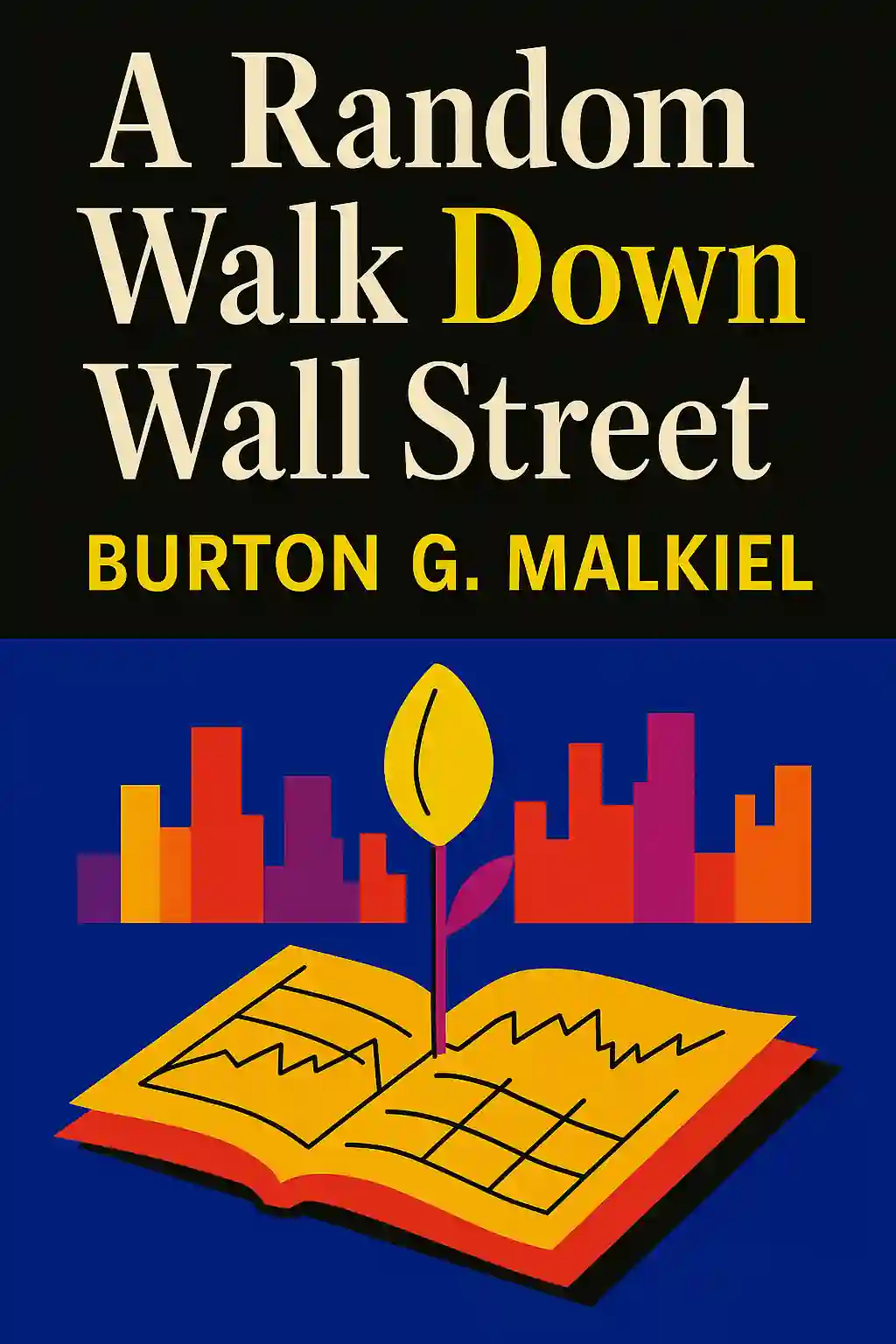
Discover why your neighbor with three index funds likely outperforms Wall Street pros with complex portfolios. Learn the counterintuitive truth about market efficiency and why the simplest investment strategies consistently beat sophisticated approaches.
Static models struggle when markets shift. Learn how to use LLM signals and dynamic controllers to build a resilient, regime-aware investment strategy.











![The value of probabilistic thinking [plus 3 examples for investors]](/_next/image?url=https%3A%2F%2Fd1y2du6z1jfm9e.cloudfront.net%2Fassets%2Fpodcast%2Fblue.png&w=1024&q=50)