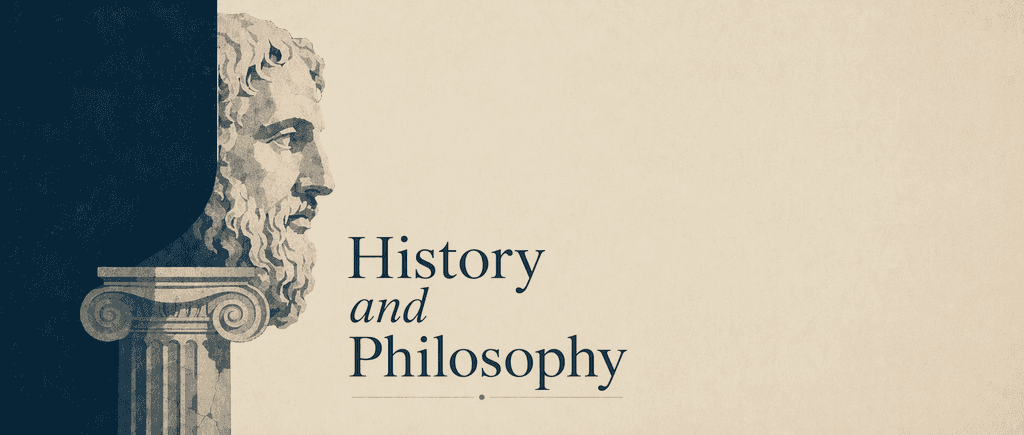
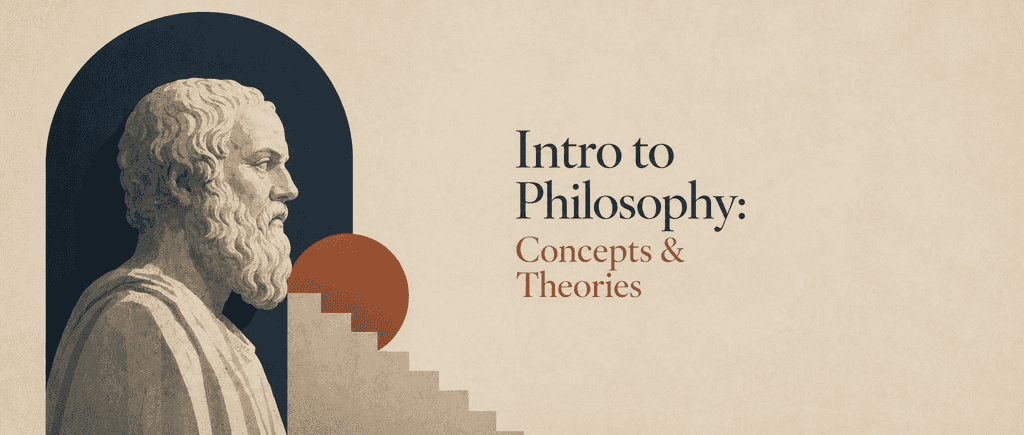
Love of Wisdom: From Ancient Myths to Modern Ethics
Discover how philosophy evolved from abstract myths into a practical toolkit for modern life. Explore the history of human reason and learn how to apply the 'love of wisdom' to today's toughest ethical dilemmas.

Best quote from Love of Wisdom: From Ancient Myths to Modern Ethics
Philosophy isn't a set of answers you memorize; it’s a toolkit you carry with you. It turns you from a passive observer of your life into an active inquirer.
Generated by Matthew
Philosophy

Frequently Asked Questions
The transition from myth to reason, spearheaded by thinkers like Thales of Miletus around 600 BCE, marked a pivot point where humans began explaining the world through observation rather than divine intervention. Instead of attributing natural events like storms or crop failures to the whims of gods like Poseidon or Demeter, these early philosophers sought an arche, or a first principle, to explain the material unity of the universe. This shift established the foundation for naturalism and the scientific method by treating the world as a puzzle that could be solved through rational inquiry.
Plato proposed a dualistic world where the physical reality we perceive is merely a shadowy reflection of a higher, perfect reality called the "Forms." For Plato, a concept like a circle exists as an eternal, perfect Form that physical objects can only mimic. In contrast, his student Aristotle "brought philosophy back down to earth" by arguing that the form of an object is not in a distant heaven but is inherent in the object itself. Aristotle focused on the structure, purpose, and material of things in the physical world, favoring an empirical approach over Plato’s abstract idealism.
The "Great Divide" of the 20th century split philosophy into two main camps: the Analytic tradition and the Continental tradition. The Analytic tradition, dominant in English-speaking countries, focuses on formal logic, linguistic analysis, and clarity, often attempting to solve philosophical problems by examining how language is used. The Continental tradition, rooted in mainland Europe, remains focused on "big picture" questions regarding human existence, power, and culture. It includes movements like Existentialism and Phenomenology, which prioritize the individual's lived experience and the structures of society.
Both Hellenistic schools offer practical "toolkits" for navigating life's challenges. Stoicism teaches individuals to distinguish between what they can control (their own thoughts and responses) and what they cannot (external events), aiming for a state of resolute indifference to outside circumstances. Epicureanism, often misunderstood as a pursuit of luxury, actually advocates for a moderate life focused on "natural and necessary" pleasures, such as friendship and the absence of bodily pain and mental anxiety. Both philosophies serve as "self-help" frameworks for maintaining tranquility in a chaotic world.
The "Veil of Ignorance" is a thought experiment developed by John Rawls to determine the most fair basis for a society. It asks individuals to design social and political rules without knowing what their own status in that society would be—whether they would be rich, poor, healthy, or sick. By stripping away personal bias, this exercise forces people to choose rules that protect the most vulnerable, serving as a logical tool for generating empathy and objective fairness in public policy.
From Columbia University alumni built in San Francisco
"Instead of endless scrolling, I just hit play on BeFreed. It saves me so much time."


"I never knew where to start with nonfiction—BeFreed’s book lists turned into podcasts gave me a clear path."


"Perfect balance between learning and entertainment. Finished ‘Thinking, Fast and Slow’ on my commute this week."
"Crazy how much I learned while walking the dog. BeFreed = small habits → big gains."
"Reading used to feel like a chore. Now it’s just part of my lifestyle."

"Feels effortless compared to reading. I’ve finished 6 books this month already."
"BeFreed turned my guilty doomscrolling into something that feels productive and inspiring."

"BeFreed turned my commute into learning time. 20-min podcasts are perfect for finishing books I never had time for."
"BeFreed replaced my podcast queue. Imagine Spotify for books — that’s it. 🙌"

"It is great for me to learn something from the book without reading it."
"The themed book list podcasts help me connect ideas across authors—like a guided audio journey."
"Makes me feel smarter every time before going to work"
From Columbia University alumni built in San Francisco
"Instead of endless scrolling, I just hit play on BeFreed. It saves me so much time."
"I never knew where to start with nonfiction—BeFreed’s book lists turned into podcasts gave me a clear path."
"Perfect balance between learning and entertainment. Finished ‘Thinking, Fast and Slow’ on my commute this week."
"Crazy how much I learned while walking the dog. BeFreed = small habits → big gains."
"Reading used to feel like a chore. Now it’s just part of my lifestyle."
"Feels effortless compared to reading. I’ve finished 6 books this month already."
"BeFreed turned my guilty doomscrolling into something that feels productive and inspiring."
"BeFreed turned my commute into learning time. 20-min podcasts are perfect for finishing books I never had time for."
"BeFreed replaced my podcast queue. Imagine Spotify for books — that’s it. 🙌"
"It is great for me to learn something from the book without reading it."
"The themed book list podcasts help me connect ideas across authors—like a guided audio journey."
"Makes me feel smarter every time before going to work"
"Instead of endless scrolling, I just hit play on BeFreed. It saves me so much time."
"I never knew where to start with nonfiction—BeFreed’s book lists turned into podcasts gave me a clear path."
"Perfect balance between learning and entertainment. Finished ‘Thinking, Fast and Slow’ on my commute this week."
"Crazy how much I learned while walking the dog. BeFreed = small habits → big gains."
"Reading used to feel like a chore. Now it’s just part of my lifestyle."
"Feels effortless compared to reading. I’ve finished 6 books this month already."
"BeFreed turned my guilty doomscrolling into something that feels productive and inspiring."
"BeFreed turned my commute into learning time. 20-min podcasts are perfect for finishing books I never had time for."
"BeFreed replaced my podcast queue. Imagine Spotify for books — that’s it. 🙌"
"It is great for me to learn something from the book without reading it."
"The themed book list podcasts help me connect ideas across authors—like a guided audio journey."
"Makes me feel smarter every time before going to work"
"Instead of endless scrolling, I just hit play on BeFreed. It saves me so much time."
"I never knew where to start with nonfiction—BeFreed’s book lists turned into podcasts gave me a clear path."
"Perfect balance between learning and entertainment. Finished ‘Thinking, Fast and Slow’ on my commute this week."
"Crazy how much I learned while walking the dog. BeFreed = small habits → big gains."
"Reading used to feel like a chore. Now it’s just part of my lifestyle."
"Feels effortless compared to reading. I’ve finished 6 books this month already."
"BeFreed turned my guilty doomscrolling into something that feels productive and inspiring."
"BeFreed turned my commute into learning time. 20-min podcasts are perfect for finishing books I never had time for."
"BeFreed replaced my podcast queue. Imagine Spotify for books — that’s it. 🙌"
"It is great for me to learn something from the book without reading it."
"The themed book list podcasts help me connect ideas across authors—like a guided audio journey."
"Makes me feel smarter every time before going to work"



![A Brief Outline of the World's Philosophies [33+ Schools of Thought] - Philosophy Buzz](/_next/image?url=https%3A%2F%2Fd1y2du6z1jfm9e.cloudfront.net%2Fassets%2Fpodcast%2Fpurple.png&w=1024&q=50)