Lost Connections: Depression as a Signal
When antidepressants fail to stop the pain, what if the problem isn't your brain? Explore why social disconnection, not just chemistry, drives anxiety.
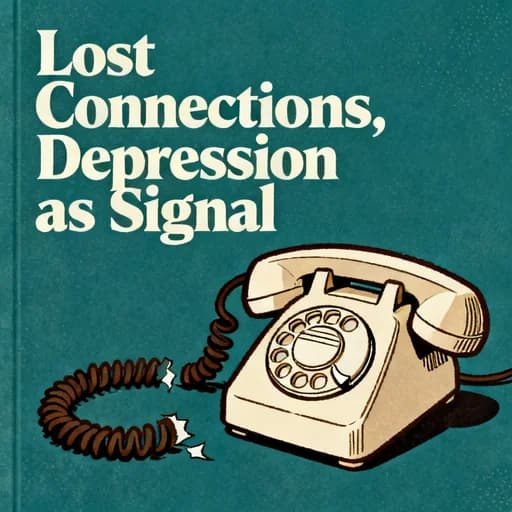
Best quote from Lost Connections: Depression as a Signal
If you're depressed because your life is falling apart, calling it a 'brain malfunction' is like blaming the fire alarm for the fire. Our psychological pain is a messenger telling us something is wrong with how we live.
Generated with BeFreed
An audio lesson about the book Lost Connections, covering its key ideas and takeaways.


Frequently Asked Questions
In the script, Hari uses the metaphor of food poisoning to explain that physical or psychological pain is often a signal rather than just a malfunction. He argues that depression and anxiety are "messengers" telling us that something is fundamentally wrong with how we are living or how our society is structured. Instead of viewing these feelings as a "broken alarm system" or a biological flaw, Hari suggests they are rational responses to unmet human needs and "disconnections" from things like meaningful work and community.
The script highlights a significant debate regarding the "serotonin myth." Hari points to research, including the Star-D trial and findings by Irving Kirsch, which suggests that the chemical imbalance narrative may be more of a marketing story than a scientific certainty. The discussion notes that a large portion of the relief provided by SSRIs—up to 75% in some studies—could be attributed to the placebo effect or natural recovery. While some experts like Peter Kramer argue that medication is still vital for severe cases, Hari emphasizes that the scientific community is increasingly finding that life context is a much larger predictor of depression than brain chemistry alone.
The script explores several of Hari’s "nine disconnections," including disconnection from meaningful work, other people, and the natural world. For example, the "Paint Mixer’s Despair" illustrates how a lack of control and monotony in the workplace can drive psychological strain. Additionally, the "Loneliness of the Hyper-Connected" describes how digital interactions often serve as "junk food" substitutes for deep, tribal bonds. Other factors mentioned include childhood trauma, the loss of status, and the pursuit of extrinsic goals like money and fame, which fail to provide lasting nourishment for the soul.
Social prescribing is a practical alternative or addition to traditional medical intervention. Instead of only prescribing a pill, a doctor might "prescribe" a patient to join a community project, such as a garden or a volunteer group. The goal is to treat the underlying cause of the depression—disconnection—by integrating the individual back into a supportive social environment. The script cites examples like the Kotti dwellers in Berlin who found relief from isolation by coming together for a common cause, suggesting that shifting from "me" to "us" can be a powerful antidepressant.
The script suggests that while neurobiology plays a role, our environment shapes that biology through neuroplasticity. By addressing systemic issues—such as through Universal Basic Income to provide a "secure foundation" or by reducing consumerist noise like public advertising—society can reduce the triggers for chronic stress and comparative anxiety. While the participants in the script debate whether social changes can fix a "mind that’s turned against itself," they agree that reconnecting with nature, community, and a meaningful future offers a more holistic path to healing than masking symptoms with chemicals alone.
From Columbia University alumni built in San Francisco
"Instead of endless scrolling, I just hit play on BeFreed. It saves me so much time."


"I never knew where to start with nonfiction—BeFreed’s book lists turned into podcasts gave me a clear path."


"Perfect balance between learning and entertainment. Finished ‘Thinking, Fast and Slow’ on my commute this week."
"Crazy how much I learned while walking the dog. BeFreed = small habits → big gains."
"Reading used to feel like a chore. Now it’s just part of my lifestyle."

"Feels effortless compared to reading. I’ve finished 6 books this month already."
"BeFreed turned my guilty doomscrolling into something that feels productive and inspiring."

"BeFreed turned my commute into learning time. 20-min podcasts are perfect for finishing books I never had time for."
"BeFreed replaced my podcast queue. Imagine Spotify for books — that’s it. 🙌"

"It is great for me to learn something from the book without reading it."
"The themed book list podcasts help me connect ideas across authors—like a guided audio journey."
"Makes me feel smarter every time before going to work"
From Columbia University alumni built in San Francisco
"Instead of endless scrolling, I just hit play on BeFreed. It saves me so much time."
"I never knew where to start with nonfiction—BeFreed’s book lists turned into podcasts gave me a clear path."
"Perfect balance between learning and entertainment. Finished ‘Thinking, Fast and Slow’ on my commute this week."
"Crazy how much I learned while walking the dog. BeFreed = small habits → big gains."
"Reading used to feel like a chore. Now it’s just part of my lifestyle."
"Feels effortless compared to reading. I’ve finished 6 books this month already."
"BeFreed turned my guilty doomscrolling into something that feels productive and inspiring."
"BeFreed turned my commute into learning time. 20-min podcasts are perfect for finishing books I never had time for."
"BeFreed replaced my podcast queue. Imagine Spotify for books — that’s it. 🙌"
"It is great for me to learn something from the book without reading it."
"The themed book list podcasts help me connect ideas across authors—like a guided audio journey."
"Makes me feel smarter every time before going to work"
"Instead of endless scrolling, I just hit play on BeFreed. It saves me so much time."
"I never knew where to start with nonfiction—BeFreed’s book lists turned into podcasts gave me a clear path."
"Perfect balance between learning and entertainment. Finished ‘Thinking, Fast and Slow’ on my commute this week."
"Crazy how much I learned while walking the dog. BeFreed = small habits → big gains."
"Reading used to feel like a chore. Now it’s just part of my lifestyle."
"Feels effortless compared to reading. I’ve finished 6 books this month already."
"BeFreed turned my guilty doomscrolling into something that feels productive and inspiring."
"BeFreed turned my commute into learning time. 20-min podcasts are perfect for finishing books I never had time for."
"BeFreed replaced my podcast queue. Imagine Spotify for books — that’s it. 🙌"
"It is great for me to learn something from the book without reading it."
"The themed book list podcasts help me connect ideas across authors—like a guided audio journey."
"Makes me feel smarter every time before going to work"
"Instead of endless scrolling, I just hit play on BeFreed. It saves me so much time."
"I never knew where to start with nonfiction—BeFreed’s book lists turned into podcasts gave me a clear path."
"Perfect balance between learning and entertainment. Finished ‘Thinking, Fast and Slow’ on my commute this week."
"Crazy how much I learned while walking the dog. BeFreed = small habits → big gains."
"Reading used to feel like a chore. Now it’s just part of my lifestyle."
"Feels effortless compared to reading. I’ve finished 6 books this month already."
"BeFreed turned my guilty doomscrolling into something that feels productive and inspiring."
"BeFreed turned my commute into learning time. 20-min podcasts are perfect for finishing books I never had time for."
"BeFreed replaced my podcast queue. Imagine Spotify for books — that’s it. 🙌"
"It is great for me to learn something from the book without reading it."
"The themed book list podcasts help me connect ideas across authors—like a guided audio journey."
"Makes me feel smarter every time before going to work"