Lisbon’s Baixa: Architecture of Power and Pombaline Urbanism
Explore how Lisbon’s Baixa was rebuilt after the 1755 earthquake using Pombaline style, Enlightenment philosophy, and the earthquake-resistant gaiola system.
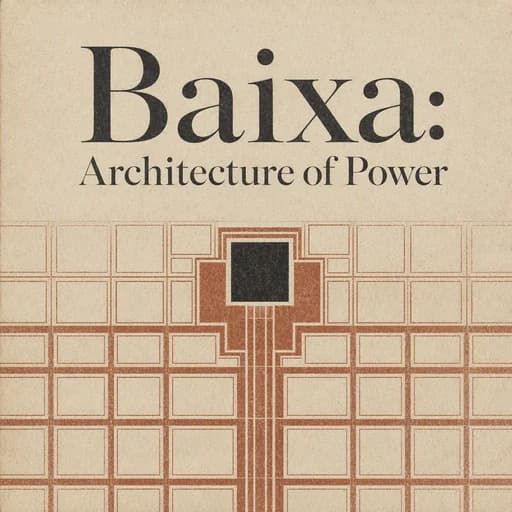
Best quote from Lisbon’s Baixa: Architecture of Power and Pombaline Urbanism
The Baixa is a reminder that urban planning is never just about buildings; it’s about who has the power to shape the way we live together.
Generated by Wendy
An in-depth look at Lisbon's Baixa district, focusing on its unique architecture and city planning, along with local stories and hidden details of the area. Skip the basic 1755 earthquake narrative and focus on the character of the neighborhood today and its architectural evolution.



![[PDF] The Rebuilding of Eighteenth Century Lisbon. Maria Helena Ribeiro dos ...](https://d1y2du6z1jfm9e.cloudfront.net/assets/podcast/yellow.png)


Frequently Asked Questions
The Pombaline style is a form of urban planning and architecture born from the reconstruction of Lisbon after the 1755 earthquake. Designed by military engineers, it replaced medieval chaos with a rigid, secularized grid focused on trade efficiency and centralized state control. This style is characterized by uniform facades where every window and door was calculated to reflect Enlightenment philosophy and the absolute power of the state.
Following the tragedy of the 1755 earthquake, Lisbon’s Baixa was transformed into a 'theatre of power.' Instead of rebuilding the organic streets of the past, the state implemented a technocratic, orderly grid system. This new urban layout prioritized reason and economic reshaped the city’s social fabric, using architecture as a tool for authoritarian control and modern trade rather than religious tradition.
The 'gaiola' is a hidden wooden cage system integrated into buildings within the Baixa district, making them the world's first large-scale earthquake-resistant structures. While the buildings appear as beautiful stone facades, this internal engineering was a triumph of Enlightenment-era logic. It represents a shift toward military-engineered safety and functional design, ensuring that the new city could withstand future seismic activity while maintaining its rigid aesthetic.
From Columbia University alumni built in San Francisco
"Instead of endless scrolling, I just hit play on BeFreed. It saves me so much time."


"I never knew where to start with nonfiction—BeFreed’s book lists turned into podcasts gave me a clear path."


"Perfect balance between learning and entertainment. Finished ‘Thinking, Fast and Slow’ on my commute this week."
"Crazy how much I learned while walking the dog. BeFreed = small habits → big gains."
"Reading used to feel like a chore. Now it’s just part of my lifestyle."

"Feels effortless compared to reading. I’ve finished 6 books this month already."
"BeFreed turned my guilty doomscrolling into something that feels productive and inspiring."

"BeFreed turned my commute into learning time. 20-min podcasts are perfect for finishing books I never had time for."
"BeFreed replaced my podcast queue. Imagine Spotify for books — that’s it. 🙌"

"It is great for me to learn something from the book without reading it."
"The themed book list podcasts help me connect ideas across authors—like a guided audio journey."
"Makes me feel smarter every time before going to work"
 Ask ChatGPT
 Ask Claude
From Columbia University alumni built in San Francisco
"Instead of endless scrolling, I just hit play on BeFreed. It saves me so much time."
"I never knew where to start with nonfiction—BeFreed’s book lists turned into podcasts gave me a clear path."
"Perfect balance between learning and entertainment. Finished ‘Thinking, Fast and Slow’ on my commute this week."
"Crazy how much I learned while walking the dog. BeFreed = small habits → big gains."
"Reading used to feel like a chore. Now it’s just part of my lifestyle."
"Feels effortless compared to reading. I’ve finished 6 books this month already."
"BeFreed turned my guilty doomscrolling into something that feels productive and inspiring."
"BeFreed turned my commute into learning time. 20-min podcasts are perfect for finishing books I never had time for."
"BeFreed replaced my podcast queue. Imagine Spotify for books — that’s it. 🙌"
"It is great for me to learn something from the book without reading it."
"The themed book list podcasts help me connect ideas across authors—like a guided audio journey."
"Makes me feel smarter every time before going to work"
"Instead of endless scrolling, I just hit play on BeFreed. It saves me so much time."
"I never knew where to start with nonfiction—BeFreed’s book lists turned into podcasts gave me a clear path."
"Perfect balance between learning and entertainment. Finished ‘Thinking, Fast and Slow’ on my commute this week."
"Crazy how much I learned while walking the dog. BeFreed = small habits → big gains."
"Reading used to feel like a chore. Now it’s just part of my lifestyle."
"Feels effortless compared to reading. I’ve finished 6 books this month already."
"BeFreed turned my guilty doomscrolling into something that feels productive and inspiring."
"BeFreed turned my commute into learning time. 20-min podcasts are perfect for finishing books I never had time for."
"BeFreed replaced my podcast queue. Imagine Spotify for books — that’s it. 🙌"
"It is great for me to learn something from the book without reading it."
"The themed book list podcasts help me connect ideas across authors—like a guided audio journey."
"Makes me feel smarter every time before going to work"
"Instead of endless scrolling, I just hit play on BeFreed. It saves me so much time."
"I never knew where to start with nonfiction—BeFreed’s book lists turned into podcasts gave me a clear path."
"Perfect balance between learning and entertainment. Finished ‘Thinking, Fast and Slow’ on my commute this week."
"Crazy how much I learned while walking the dog. BeFreed = small habits → big gains."
"Reading used to feel like a chore. Now it’s just part of my lifestyle."
"Feels effortless compared to reading. I’ve finished 6 books this month already."
"BeFreed turned my guilty doomscrolling into something that feels productive and inspiring."
"BeFreed turned my commute into learning time. 20-min podcasts are perfect for finishing books I never had time for."
"BeFreed replaced my podcast queue. Imagine Spotify for books — that’s it. 🙌"
"It is great for me to learn something from the book without reading it."
"The themed book list podcasts help me connect ideas across authors—like a guided audio journey."
"Makes me feel smarter every time before going to work"