Think you need to be an extrovert to lead? Learn how to use presence, power, and warmth to drive results and master the art of quiet leadership.
Best quote from Leading effectively without being the loudest person
“
Charisma is actually less about how people feel about you and more about how you make them feel about themselves.
”
B
Generated by Ben
Input question
To be extroverted and good leader
Host voices
Lena
Miles
Knowledge sources
Frequently Asked Questions
Charismatic leadership is built on a triad of learnable behaviors: Presence, Power, and Warmth. Presence is the foundation, defined as being fully engaged and giving 100% of your attention to the person in front of you. Power refers to projecting quiet confidence and competence rather than dominance, signaling that you are capable of leading. Warmth is the final piece, involving the projection of genuine care and empathy to create a sense of safety and connection with others.
Research indicates that in dynamic environments with proactive teams, introverted leaders can outperform extroverts by 14% in weekly profits. This is often because introverts are naturally suited for the deep, one-on-one focus required for presence. Furthermore, introverted leaders tend to be better at "socialized power," which focuses on the collective "we" rather than the individual ego, and they often excel at the preparation required to use charismatic verbal tactics like metaphors and structured stories.
The 2-48 Hour Rule addresses the different processing styles of team members, noting that introverts often develop their best ideas between two and forty-eight hours after a topic is introduced. To leverage this, leaders should send meeting agendas 48 hours in advance and allow for follow-up contributions after a meeting concludes. This practice prevents "out-loud thinkers" from dominating the conversation and ensures the leader captures the full brainpower of the team rather than just the loudest voices.
Yes, research suggests there is an "Inverted U-Curve" of charisma where moderate charisma is the sweet spot for effectiveness. Leaders who are "off the charts" in charisma may be perceived as all flash and no substance, leading to concerns about their operational discipline or arrogance. To avoid this trap, highly charismatic leaders must pair their inspiration with execution, using tools like spreadsheets and timelines to prove they are grounded in operational reality.
Effective leaders use specific rhetorical tools to frame reality and make their ideas "portable." These include using metaphors and analogies to simplify complex concepts, telling stories to activate the listener's emotional brain, and using "three-part lists" to create a sense of rhythm and pattern. Additionally, using collective pronouns like "we," "us," and "our" signals a shared identity, while "rhetorical questions" invite the audience into a shared reflection rather than just delivering a lecture.
From Columbia University alumni | built in San Francisco
BeFreed Brings Together A Global Community Of Curious Minds
4.7
avg rating
7.84k+ App Rating
BeFreed Community
Seriously I haven’t even explored this app fully yet but from using it the last few days I am so impressed... BeFreed is on a different level from any other learning app I have used. This makes it ultra engaging and can actually improve your concentration which is great for all the doom scrollers!
@ladyInfinity
I bought BeFreed exactly 23 days ago, and I have used it every single day since. It has completely embedded itself into my daily workflow and learning habit.
@jayallen
The truth is, the app has exceeded all my expectations. I can ask it to generate audio on any topic, whatever it may be, and the result is impressive. My professional field is a specialization in psychotherapy and it is multidisciplinary; however, the answers are very accurate.
@Raguipa
What I appreciate most is how much it's reduced my scrolling – I'm spending less time searching and more time absorbing information. The combination of full audiobooks, podcasts, the learning plans are brilliant.
@colonyofcreatorsNGO
I have been a PhotoReading Accelerated Learning Instructor for the past 24 years... books and reading and learning are my thing, and BeFreed has done a great job in providing an innovative approach to disseminating and delivering information in an easy to consume way.
@BeFreed user
It is not just a book summary app, I have used the 'fun reading' option and it's a much better summary and way to grasp ideas the traditional way, that alone is worth this deal.
@austinakon
I love this app. Used it for several days and I cannot stop listening. Such a great way to start.
@jcrules328
I really like the program; I have already tested it for around one month, and I feel that it's an amazing gem. It works so well because I can use BeFreed to create my own topics, and the voice is so good with unlimited choice of narrations.
@DanielCZ
Seriously I haven’t even explored this app fully yet but from using it the last few days I am so impressed... BeFreed is on a different level from any other learning app I have used. This makes it ultra engaging and can actually improve your concentration which is great for all the doom scrollers!
@ladyInfinity
I bought BeFreed exactly 23 days ago, and I have used it every single day since. It has completely embedded itself into my daily workflow and learning habit.
@jayallen
The truth is, the app has exceeded all my expectations. I can ask it to generate audio on any topic, whatever it may be, and the result is impressive. My professional field is a specialization in psychotherapy and it is multidisciplinary; however, the answers are very accurate.
@Raguipa
What I appreciate most is how much it's reduced my scrolling – I'm spending less time searching and more time absorbing information. The combination of full audiobooks, podcasts, the learning plans are brilliant.
@colonyofcreatorsNGO
I have been a PhotoReading Accelerated Learning Instructor for the past 24 years... books and reading and learning are my thing, and BeFreed has done a great job in providing an innovative approach to disseminating and delivering information in an easy to consume way.
@BeFreed user
It is not just a book summary app, I have used the 'fun reading' option and it's a much better summary and way to grasp ideas the traditional way, that alone is worth this deal.
@austinakon
I love this app. Used it for several days and I cannot stop listening. Such a great way to start.
@jcrules328
I really like the program; I have already tested it for around one month, and I feel that it's an amazing gem. It works so well because I can use BeFreed to create my own topics, and the voice is so good with unlimited choice of narrations.
@DanielCZ
I love the fact that I can get useful, condensed, information and ideas in a 8 - 15 minute podcast style audio. I'm not a general fan of podcasts because of all the fluff, but this cuts through all that.
@BeFreed user
I am finishing up my doctorate, and have to read a lot of unfamiliar material... With BeFreed, you simply enter a prompt, and the app finds source material for you and generates an audio podcast. I find the process in BeFreed to be more streamlined than NotebookLM.
@Brad
I often search YouTube for something to listen to whilst making breakfast, when I'm out walking, commuting, etc, and BeFreed has provided an even more targeted approach, without the adverts and the fluff!
@BeFreed user
The absolute best part about this platform is its versatility. There is literally no subject that is off-topic. It handles whatever you throw at it... It is rare to find an learning tool with zero limitations that actually delivers on its promises.
@jayallen
BeFreed is fantastic. The user-friendly design means I spend less time navigating and more time learning. The mix of audiobooks, podcasts, and learning plans is a genius combo that has completely changed my daily routine.
@BeFreed user
At the start I needed a while to understand how to create podcasts in italian language and boom! It is so great! I can ask to explain every argument and it does so well and so smartly!
@matteo77
BeFreed has become my daily app for audio books tools... What I like the most is the way you put your text and come with an audio that you can listen on the go.
@kotanzu1
I love the fact that I can get useful, condensed, information and ideas in a 8 - 15 minute podcast style audio. I'm not a general fan of podcasts because of all the fluff, but this cuts through all that.
@BeFreed user
I am finishing up my doctorate, and have to read a lot of unfamiliar material... With BeFreed, you simply enter a prompt, and the app finds source material for you and generates an audio podcast. I find the process in BeFreed to be more streamlined than NotebookLM.
@Brad
I often search YouTube for something to listen to whilst making breakfast, when I'm out walking, commuting, etc, and BeFreed has provided an even more targeted approach, without the adverts and the fluff!
@BeFreed user
The absolute best part about this platform is its versatility. There is literally no subject that is off-topic. It handles whatever you throw at it... It is rare to find an learning tool with zero limitations that actually delivers on its promises.
@jayallen
BeFreed is fantastic. The user-friendly design means I spend less time navigating and more time learning. The mix of audiobooks, podcasts, and learning plans is a genius combo that has completely changed my daily routine.
@BeFreed user
At the start I needed a while to understand how to create podcasts in italian language and boom! It is so great! I can ask to explain every argument and it does so well and so smartly!
@matteo77
BeFreed has become my daily app for audio books tools... What I like the most is the way you put your text and come with an audio that you can listen on the go.
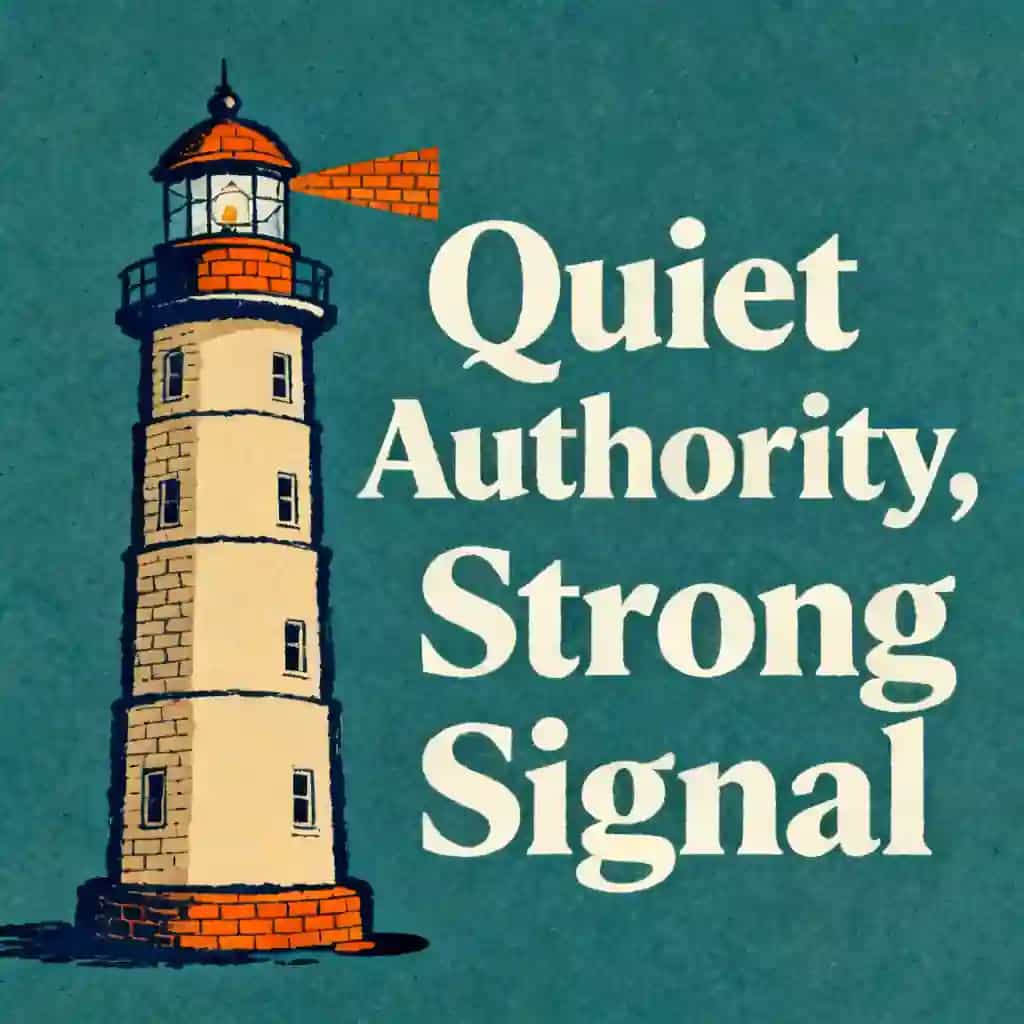
Discover why true confidence isn't about being the loudest in the room, but about cultivating authentic presence that naturally commands respect. Learn evidence-based strategies that work with your brain, not against it.
Struggling to command a room? Learn how subtle micro-signals like the strategic pause can build instant respect and genuine charisma in any interaction.