Imhotep’s Impact on Science, Mathematics, and Global Leadership
Explore Imhotep’s profound impact on science, mathematics, and leadership. Learn how his ancient Egyptian teachings influenced Western scholars and global history.
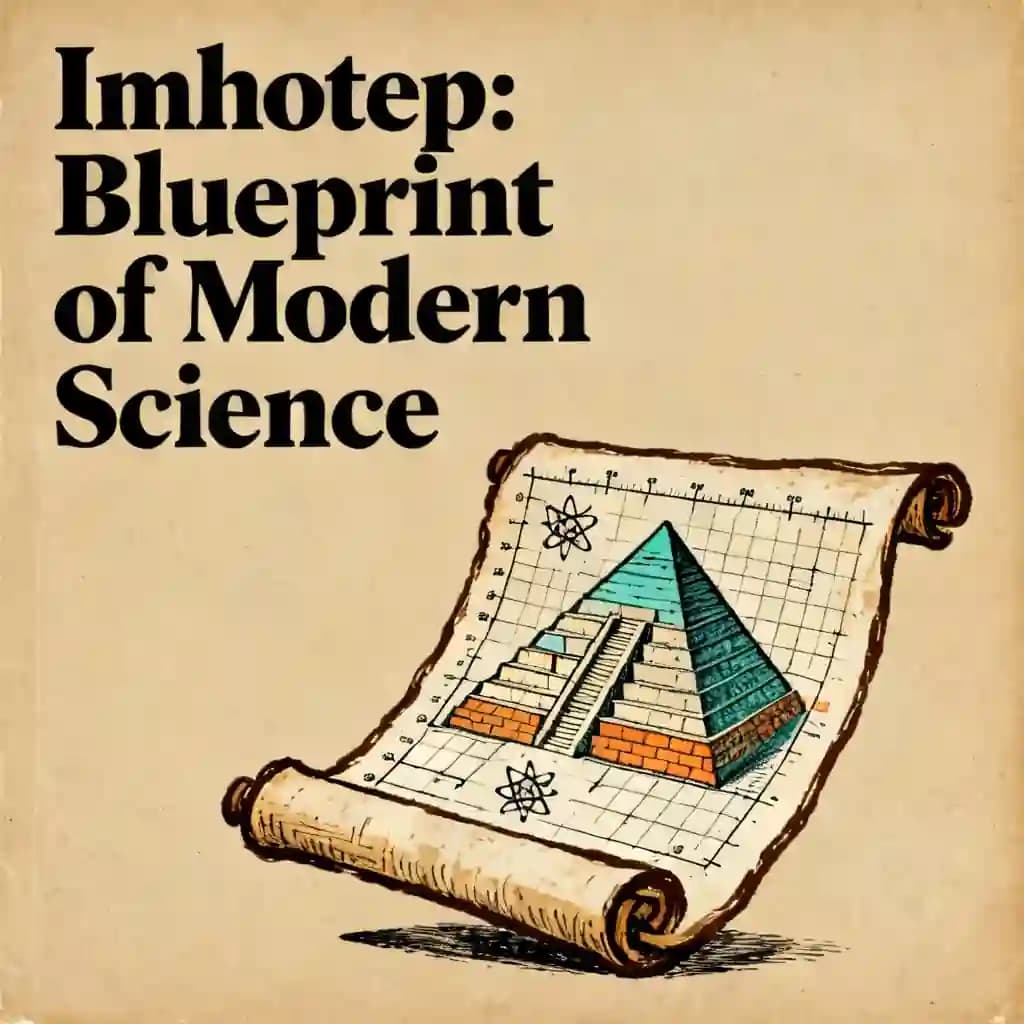
Best quote from Imhotep’s Impact on Science, Mathematics, and Global Leadership
Imhotep was practicing rational, scientific medicine over 2,200 years before Hippocrates was even born. He provided the templates that the rest of the world would use to build civilization, from the first stone column to the first systematic medical treatise.
Generated by Aaron Holiday
Create a study of Imhotep detailing his impact on science, mathematics, and leadership including who in the western world studied his teaching and replicated them around the world.






Frequently Asked Questions
Imhotep is often recognized as a pioneer in the history of medicine and ancient Egyptian science. He transitioned healing from a practice rooted in magic to one based on observation and clinical diagnosis. His early contributions to anatomy and surgical techniques laid a foundational framework that influenced medical practices for centuries, eventually reaching Western scholars who studied his systematic approach to treating injuries and diseases.
Imhotep’s mastery of mathematics was most visible in his revolutionary architectural achievements, such as the design of the Step Pyramid of Djoser. By applying complex geometric principles and structural engineering, he transformed architectural history from the use of mud bricks to permanent stone. His mathematical precision ensured the stability and symmetry of massive structures, establishing a standard for engineering that would be replicated by civilizations worldwide.
Imhotep exemplified Egyptian leadership principles through his multifaceted roles as a high priest, vizier, and architect. His leadership was defined by a commitment to innovation, administrative excellence, and the integration of spiritual and practical knowledge. By serving as a trusted advisor to the Pharaoh, he demonstrated how visionary thinking and disciplined management could lead to societal advancements that endure for millennia, inspiring modern leaders across various disciplines.
Western study of Imhotep began as ancient Greeks identified him with Asclepius, their god of healing. Throughout history, scholars have analyzed his architectural techniques and scientific observations to understand the roots of modern civilization. By replicating his emphasis on empirical evidence and structural integrity, Western institutions in medicine and engineering have integrated his ancient Egyptian teachings into the broader global curriculum of scientific and mathematical development.
From Columbia University alumni built in San Francisco
"Instead of endless scrolling, I just hit play on BeFreed. It saves me so much time."


"I never knew where to start with nonfiction—BeFreed’s book lists turned into podcasts gave me a clear path."


"Perfect balance between learning and entertainment. Finished ‘Thinking, Fast and Slow’ on my commute this week."
"Crazy how much I learned while walking the dog. BeFreed = small habits → big gains."
"Reading used to feel like a chore. Now it’s just part of my lifestyle."

"Feels effortless compared to reading. I’ve finished 6 books this month already."
"BeFreed turned my guilty doomscrolling into something that feels productive and inspiring."

"BeFreed turned my commute into learning time. 20-min podcasts are perfect for finishing books I never had time for."
"BeFreed replaced my podcast queue. Imagine Spotify for books — that’s it. 🙌"

"It is great for me to learn something from the book without reading it."
"The themed book list podcasts help me connect ideas across authors—like a guided audio journey."
"Makes me feel smarter every time before going to work"
 Ask ChatGPT
 Ask Claude
From Columbia University alumni built in San Francisco
"Instead of endless scrolling, I just hit play on BeFreed. It saves me so much time."
"I never knew where to start with nonfiction—BeFreed’s book lists turned into podcasts gave me a clear path."
"Perfect balance between learning and entertainment. Finished ‘Thinking, Fast and Slow’ on my commute this week."
"Crazy how much I learned while walking the dog. BeFreed = small habits → big gains."
"Reading used to feel like a chore. Now it’s just part of my lifestyle."
"Feels effortless compared to reading. I’ve finished 6 books this month already."
"BeFreed turned my guilty doomscrolling into something that feels productive and inspiring."
"BeFreed turned my commute into learning time. 20-min podcasts are perfect for finishing books I never had time for."
"BeFreed replaced my podcast queue. Imagine Spotify for books — that’s it. 🙌"
"It is great for me to learn something from the book without reading it."
"The themed book list podcasts help me connect ideas across authors—like a guided audio journey."
"Makes me feel smarter every time before going to work"
"Instead of endless scrolling, I just hit play on BeFreed. It saves me so much time."
"I never knew where to start with nonfiction—BeFreed’s book lists turned into podcasts gave me a clear path."
"Perfect balance between learning and entertainment. Finished ‘Thinking, Fast and Slow’ on my commute this week."
"Crazy how much I learned while walking the dog. BeFreed = small habits → big gains."
"Reading used to feel like a chore. Now it’s just part of my lifestyle."
"Feels effortless compared to reading. I’ve finished 6 books this month already."
"BeFreed turned my guilty doomscrolling into something that feels productive and inspiring."
"BeFreed turned my commute into learning time. 20-min podcasts are perfect for finishing books I never had time for."
"BeFreed replaced my podcast queue. Imagine Spotify for books — that’s it. 🙌"
"It is great for me to learn something from the book without reading it."
"The themed book list podcasts help me connect ideas across authors—like a guided audio journey."
"Makes me feel smarter every time before going to work"
"Instead of endless scrolling, I just hit play on BeFreed. It saves me so much time."
"I never knew where to start with nonfiction—BeFreed’s book lists turned into podcasts gave me a clear path."
"Perfect balance between learning and entertainment. Finished ‘Thinking, Fast and Slow’ on my commute this week."
"Crazy how much I learned while walking the dog. BeFreed = small habits → big gains."
"Reading used to feel like a chore. Now it’s just part of my lifestyle."
"Feels effortless compared to reading. I’ve finished 6 books this month already."
"BeFreed turned my guilty doomscrolling into something that feels productive and inspiring."
"BeFreed turned my commute into learning time. 20-min podcasts are perfect for finishing books I never had time for."
"BeFreed replaced my podcast queue. Imagine Spotify for books — that’s it. 🙌"
"It is great for me to learn something from the book without reading it."
"The themed book list podcasts help me connect ideas across authors—like a guided audio journey."
"Makes me feel smarter every time before going to work"