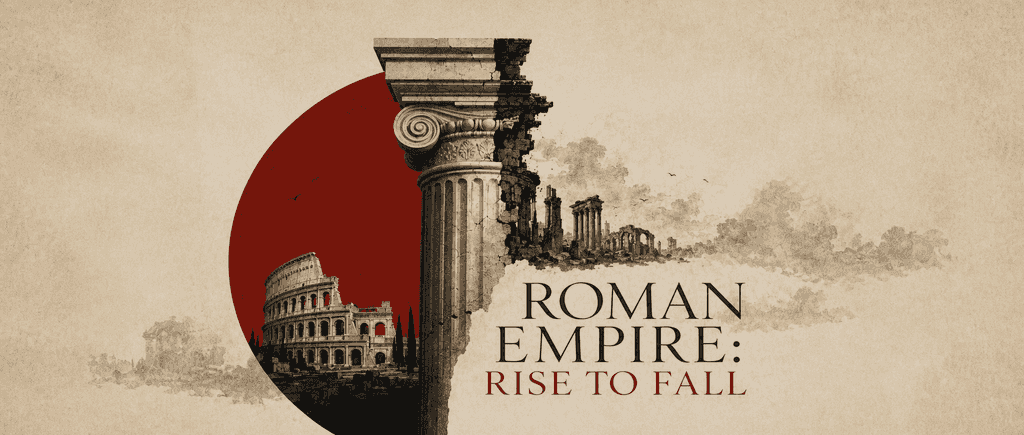
How the Roman Empire Fell and Reshaped Europe
The fall of Rome wasn't just a single event. Discover how internal instability and tribal migrations turned a massive superpower into the modern map.
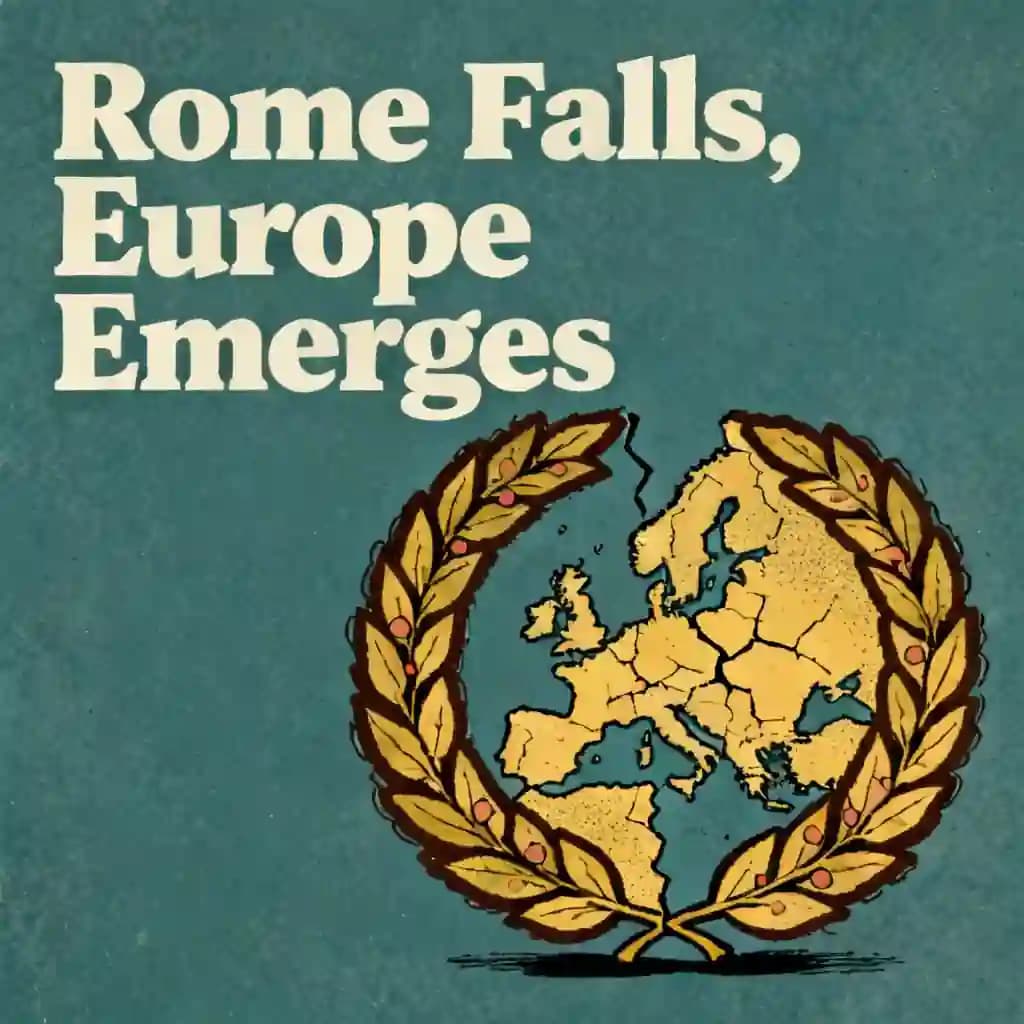
Best quote from How the Roman Empire Fell and Reshaped Europe
The Roman Empire didn't vanish overnight; it was a long transition where 'barbarian' groups weren't just invading, they were moving in and setting up the foundations for the countries we recognize today.
Generated by Freedee_83C4AC37
I want to learn about when the Roman Empire fell and the countries began to be separate countries in Europe

Frequently Asked Questions
The Crisis of the Third Century was a fifty-year period of near-total collapse between 235 and 284 CE, characterized by extreme political instability and civil war. During this time, more than 20 "barracks emperors" rose to power, often elevated and then assassinated by their own troops. The empire actually splintered into three separate political entities—the Gallic Empire in the west, the Palmyrene Empire in the east, and the remaining central Roman state—while the economy suffered from hyperinflation caused by the debasement of currency.
The split began with Emperor Diocletian, who realized the empire was too vast for one person to defend and manage effectively. He established the "Tetrarchy," or rule of four, to provide regional management. This division became permanent in 395 CE following the death of Emperor Theodosius I. While the Eastern Roman Empire (later known as the Byzantine Empire) remained wealthy and stable with its capital at Constantinople, the Western Roman Empire became increasingly vulnerable to economic decline and tribal migrations.
The groups labeled as "barbarians," such as the Visigoths, Franks, and Vandals, were often not outsiders trying to destroy civilization but tribes that had lived on the borders for centuries. Many served as Roman mercenaries or allies known as "foederati." Their large-scale movement into Roman territory was often triggered by a refugee crisis caused by the invading Huns. Rather than erasing Roman culture, these groups generally sought to inherit it, often adopting Roman laws, the Latin language, and Christianity to legitimate their new "successor kingdoms."
The year 476 CE is cited as the end of the Western Roman Empire because it was the moment the office of the Western Emperor was officially abolished. A Germanic chieftain named Odoacer deposed the teenage emperor Romulus Augustulus but chose not to appoint a puppet successor. Instead, he sent the imperial insignia to the Eastern Emperor in Constantinople and declared that the West no longer needed its own emperor, opting to rule Italy as a king.
As central Roman authority vanished, various Germanic tribes established kingdoms that became the foundations for modern countries. For example, the Franks in Gaul eventually transitioned into the French monarchy, especially after Charlemagne was crowned "Emperor of the Romans" in 800 CE. In Britain, the departure of Roman legions allowed Anglo-Saxon tribes to establish kingdoms that developed the English language, while in Spain, the Visigothic kingdom laid the groundwork for the later Christian realms of the Reconquista.
From Columbia University alumni built in San Francisco
"Instead of endless scrolling, I just hit play on BeFreed. It saves me so much time."


"I never knew where to start with nonfiction—BeFreed’s book lists turned into podcasts gave me a clear path."


"Perfect balance between learning and entertainment. Finished ‘Thinking, Fast and Slow’ on my commute this week."
"Crazy how much I learned while walking the dog. BeFreed = small habits → big gains."
"Reading used to feel like a chore. Now it’s just part of my lifestyle."

"Feels effortless compared to reading. I’ve finished 6 books this month already."
"BeFreed turned my guilty doomscrolling into something that feels productive and inspiring."

"BeFreed turned my commute into learning time. 20-min podcasts are perfect for finishing books I never had time for."
"BeFreed replaced my podcast queue. Imagine Spotify for books — that’s it. 🙌"

"It is great for me to learn something from the book without reading it."
"The themed book list podcasts help me connect ideas across authors—like a guided audio journey."
"Makes me feel smarter every time before going to work"
From Columbia University alumni built in San Francisco
"Instead of endless scrolling, I just hit play on BeFreed. It saves me so much time."
"I never knew where to start with nonfiction—BeFreed’s book lists turned into podcasts gave me a clear path."
"Perfect balance between learning and entertainment. Finished ‘Thinking, Fast and Slow’ on my commute this week."
"Crazy how much I learned while walking the dog. BeFreed = small habits → big gains."
"Reading used to feel like a chore. Now it’s just part of my lifestyle."
"Feels effortless compared to reading. I’ve finished 6 books this month already."
"BeFreed turned my guilty doomscrolling into something that feels productive and inspiring."
"BeFreed turned my commute into learning time. 20-min podcasts are perfect for finishing books I never had time for."
"BeFreed replaced my podcast queue. Imagine Spotify for books — that’s it. 🙌"
"It is great for me to learn something from the book without reading it."
"The themed book list podcasts help me connect ideas across authors—like a guided audio journey."
"Makes me feel smarter every time before going to work"
"Instead of endless scrolling, I just hit play on BeFreed. It saves me so much time."
"I never knew where to start with nonfiction—BeFreed’s book lists turned into podcasts gave me a clear path."
"Perfect balance between learning and entertainment. Finished ‘Thinking, Fast and Slow’ on my commute this week."
"Crazy how much I learned while walking the dog. BeFreed = small habits → big gains."
"Reading used to feel like a chore. Now it’s just part of my lifestyle."
"Feels effortless compared to reading. I’ve finished 6 books this month already."
"BeFreed turned my guilty doomscrolling into something that feels productive and inspiring."
"BeFreed turned my commute into learning time. 20-min podcasts are perfect for finishing books I never had time for."
"BeFreed replaced my podcast queue. Imagine Spotify for books — that’s it. 🙌"
"It is great for me to learn something from the book without reading it."
"The themed book list podcasts help me connect ideas across authors—like a guided audio journey."
"Makes me feel smarter every time before going to work"
"Instead of endless scrolling, I just hit play on BeFreed. It saves me so much time."
"I never knew where to start with nonfiction—BeFreed’s book lists turned into podcasts gave me a clear path."
"Perfect balance between learning and entertainment. Finished ‘Thinking, Fast and Slow’ on my commute this week."
"Crazy how much I learned while walking the dog. BeFreed = small habits → big gains."
"Reading used to feel like a chore. Now it’s just part of my lifestyle."
"Feels effortless compared to reading. I’ve finished 6 books this month already."
"BeFreed turned my guilty doomscrolling into something that feels productive and inspiring."
"BeFreed turned my commute into learning time. 20-min podcasts are perfect for finishing books I never had time for."
"BeFreed replaced my podcast queue. Imagine Spotify for books — that’s it. 🙌"
"It is great for me to learn something from the book without reading it."
"The themed book list podcasts help me connect ideas across authors—like a guided audio journey."
"Makes me feel smarter every time before going to work"