Before smartphones, digital mapping was just a desktop experiment. Discover how a scrappy startup evolved into a global lens using AI and 360-degree tech.
Best quote from Google Maps History and the Tech Behind Street View
“
It’s a classic engineering trade-off—perfection versus progress. Google operates on this principle of just getting started and iterating later rather than sitting in a boardroom debating the perfect way to do it for years.
”
J
Generated by Jacob
Input question
History of google maps and how street view works
Host voices
Eli
Nia
Knowledge sources
Frequently Asked Questions
The project began with a GIS expert building a prototype in just two weeks that featured 360-degree video captured from a camera hanging under a helicopter. Before it became a polished product, Google co-founder Larry Page personally drove around the San Francisco Bay Area with a camcorder to test if building facade footage would be useful. By 2007, the first official fleet consisted of SUVs outfitted with cameras, lasers, and GPS units, with trunks full of computers to prove that users wanted to see a street before arriving at their destination.
Google has adapted its technology to various environments using a diverse range of "vehicles." For snowy terrain like the 2010 Winter Olympics or ski resorts, they used modified snowmobiles. To navigate pedestrian zones and narrow urban areas like Stonehenge, they developed the "Trike," a three-wheeled bicycle. For hiking trails and desert dunes, they utilized the "Trekker" backpack and even strapped cameras to camels. Additionally, they used underwater apparatuses to map the Great Barrier Reef and a pushcart called the "Trolley" to capture the interiors of museums and the International Space Station.
Before any imagery is made public, it undergoes a compute-intensive processing step to detect and blur faces and license plates. This system has been in development since 2008 and currently uses a sophisticated combination of a "sliding-window" detector and a fast post-processor to ensure high accuracy. The automated system successfully blurs approximately 89% of faces and 94% of license plates. In cases where the technology misses a detail or over-blurs an object, users can flag the image for manual review by Google’s team.
Street View creates an immersive experience by building a low-resolution depth map for every panorama. Newer imagery uses laser scanners to measure the distance to surfaces like buildings and roads, creating a 3D mesh. For older imagery captured without lasers, Google uses a computer vision technique called "optical flow," which analyzes how objects move across the screen as the car drives by to calculate depth. When a user moves their cursor, the app stretches the 2D photos over this 3D model, making it feel like the user is walking through a physical space rather than just looking at a flat image.
Immersive View is a living 3D model of a city rather than a static photo. It uses AI and "neural radiance fields" to fuse billions of Street View and aerial images into a volumetric representation. This technology allows the map to simulate real-time conditions, such as changing the lighting based on the actual weather and time of day or showing the current "busyness" of a restaurant. It also enables "Immersive View for routes," which allows users to fly through their entire planned journey in a 3D environment before they start driving.
From Columbia University alumni | built in San Francisco
BeFreed Brings Together A Global Community Of Curious Minds
4.7
avg rating
7.84k+ App Rating
BeFreed Community
Seriously I haven’t even explored this app fully yet but from using it the last few days I am so impressed... BeFreed is on a different level from any other learning app I have used. This makes it ultra engaging and can actually improve your concentration which is great for all the doom scrollers!
@ladyInfinity
I bought BeFreed exactly 23 days ago, and I have used it every single day since. It has completely embedded itself into my daily workflow and learning habit.
@jayallen
The truth is, the app has exceeded all my expectations. I can ask it to generate audio on any topic, whatever it may be, and the result is impressive. My professional field is a specialization in psychotherapy and it is multidisciplinary; however, the answers are very accurate.
@Raguipa
What I appreciate most is how much it's reduced my scrolling – I'm spending less time searching and more time absorbing information. The combination of full audiobooks, podcasts, the learning plans are brilliant.
@colonyofcreatorsNGO
I have been a PhotoReading Accelerated Learning Instructor for the past 24 years... books and reading and learning are my thing, and BeFreed has done a great job in providing an innovative approach to disseminating and delivering information in an easy to consume way.
@BeFreed user
It is not just a book summary app, I have used the 'fun reading' option and it's a much better summary and way to grasp ideas the traditional way, that alone is worth this deal.
@austinakon
I love this app. Used it for several days and I cannot stop listening. Such a great way to start.
@jcrules328
I really like the program; I have already tested it for around one month, and I feel that it's an amazing gem. It works so well because I can use BeFreed to create my own topics, and the voice is so good with unlimited choice of narrations.
@DanielCZ
Seriously I haven’t even explored this app fully yet but from using it the last few days I am so impressed... BeFreed is on a different level from any other learning app I have used. This makes it ultra engaging and can actually improve your concentration which is great for all the doom scrollers!
@ladyInfinity
I bought BeFreed exactly 23 days ago, and I have used it every single day since. It has completely embedded itself into my daily workflow and learning habit.
@jayallen
The truth is, the app has exceeded all my expectations. I can ask it to generate audio on any topic, whatever it may be, and the result is impressive. My professional field is a specialization in psychotherapy and it is multidisciplinary; however, the answers are very accurate.
@Raguipa
What I appreciate most is how much it's reduced my scrolling – I'm spending less time searching and more time absorbing information. The combination of full audiobooks, podcasts, the learning plans are brilliant.
@colonyofcreatorsNGO
I have been a PhotoReading Accelerated Learning Instructor for the past 24 years... books and reading and learning are my thing, and BeFreed has done a great job in providing an innovative approach to disseminating and delivering information in an easy to consume way.
@BeFreed user
It is not just a book summary app, I have used the 'fun reading' option and it's a much better summary and way to grasp ideas the traditional way, that alone is worth this deal.
@austinakon
I love this app. Used it for several days and I cannot stop listening. Such a great way to start.
@jcrules328
I really like the program; I have already tested it for around one month, and I feel that it's an amazing gem. It works so well because I can use BeFreed to create my own topics, and the voice is so good with unlimited choice of narrations.
@DanielCZ
I love the fact that I can get useful, condensed, information and ideas in a 8 - 15 minute podcast style audio. I'm not a general fan of podcasts because of all the fluff, but this cuts through all that.
@BeFreed user
I am finishing up my doctorate, and have to read a lot of unfamiliar material... With BeFreed, you simply enter a prompt, and the app finds source material for you and generates an audio podcast. I find the process in BeFreed to be more streamlined than NotebookLM.
@Brad
I often search YouTube for something to listen to whilst making breakfast, when I'm out walking, commuting, etc, and BeFreed has provided an even more targeted approach, without the adverts and the fluff!
@BeFreed user
The absolute best part about this platform is its versatility. There is literally no subject that is off-topic. It handles whatever you throw at it... It is rare to find an learning tool with zero limitations that actually delivers on its promises.
@jayallen
BeFreed is fantastic. The user-friendly design means I spend less time navigating and more time learning. The mix of audiobooks, podcasts, and learning plans is a genius combo that has completely changed my daily routine.
@BeFreed user
At the start I needed a while to understand how to create podcasts in italian language and boom! It is so great! I can ask to explain every argument and it does so well and so smartly!
@matteo77
BeFreed has become my daily app for audio books tools... What I like the most is the way you put your text and come with an audio that you can listen on the go.
@kotanzu1
I love the fact that I can get useful, condensed, information and ideas in a 8 - 15 minute podcast style audio. I'm not a general fan of podcasts because of all the fluff, but this cuts through all that.
@BeFreed user
I am finishing up my doctorate, and have to read a lot of unfamiliar material... With BeFreed, you simply enter a prompt, and the app finds source material for you and generates an audio podcast. I find the process in BeFreed to be more streamlined than NotebookLM.
@Brad
I often search YouTube for something to listen to whilst making breakfast, when I'm out walking, commuting, etc, and BeFreed has provided an even more targeted approach, without the adverts and the fluff!
@BeFreed user
The absolute best part about this platform is its versatility. There is literally no subject that is off-topic. It handles whatever you throw at it... It is rare to find an learning tool with zero limitations that actually delivers on its promises.
@jayallen
BeFreed is fantastic. The user-friendly design means I spend less time navigating and more time learning. The mix of audiobooks, podcasts, and learning plans is a genius combo that has completely changed my daily routine.
@BeFreed user
At the start I needed a while to understand how to create podcasts in italian language and boom! It is so great! I can ask to explain every argument and it does so well and so smartly!
@matteo77
BeFreed has become my daily app for audio books tools... What I like the most is the way you put your text and come with an audio that you can listen on the go.
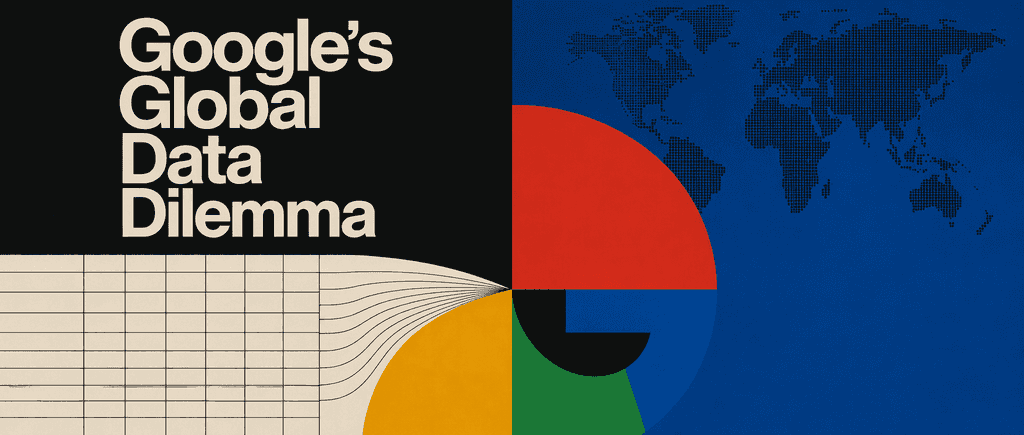
Discover how Google evolved from a Stanford PhD project called 'BackRub' to processing 8.5 billion daily searches and becoming a trillion-dollar company, transforming from garage startup to global tech giant.
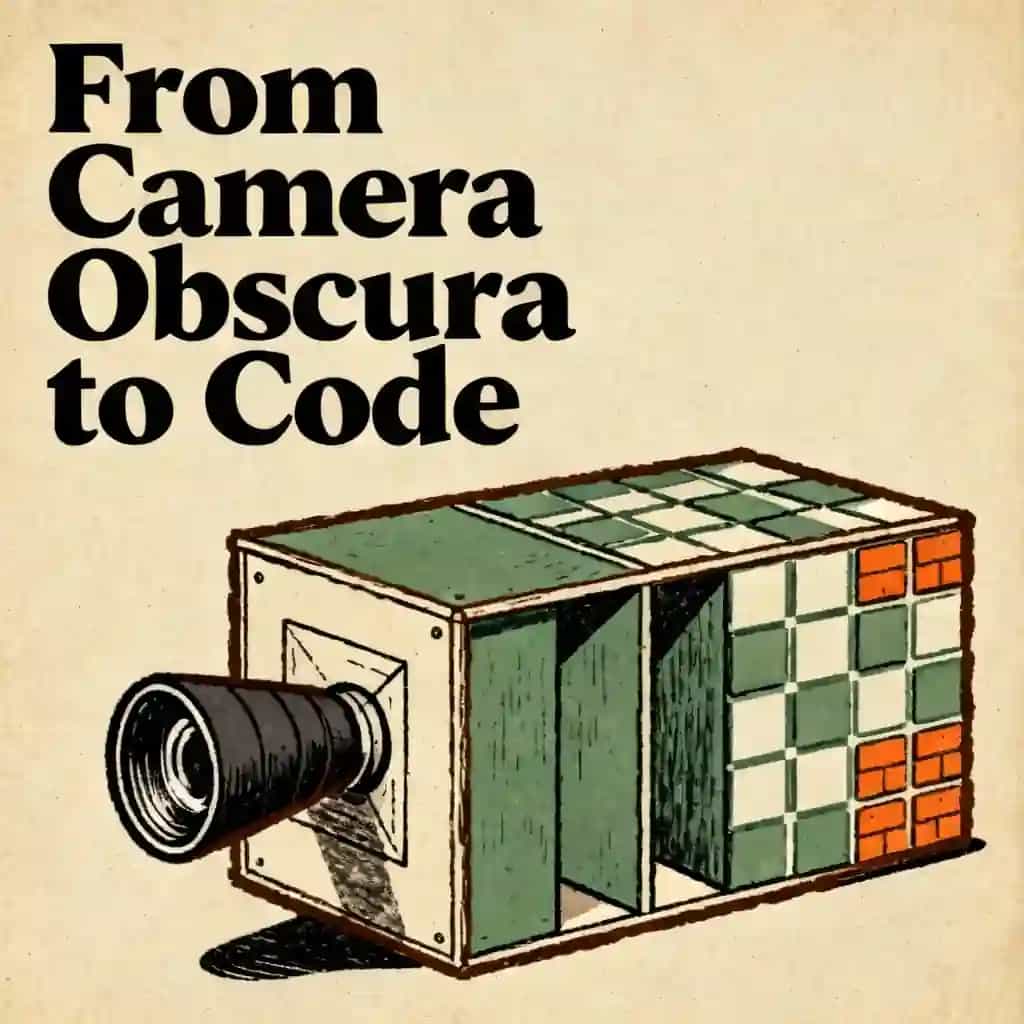
Journey through photography's incredible evolution from ancient light chambers to smartphone cameras, exploring key breakthroughs like daguerreotypes and digital sensors, while uncovering how this technology democratized image-making and fundamentally changed how humans capture and share reality.