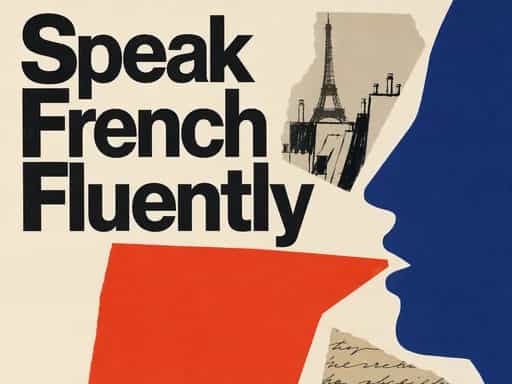
Master the Passé Composé and French storytelling. Learn auxiliary verbs, past participles, and travel vocabulary to narrate your adventures with confidence.

The Passé Composé is not just a grammatical hurdle—it is your ticket to storytelling. It is the difference between saying 'I eat' and 'I have eaten,' and today, we are going to turn that mechanical struggle into a fluid, natural skill.
🎧 Podcast-Skript: "Objectif: Voyage & Passé Composé"(Intro-Musik)"Salut! Willkommen zu deinem Lern-Podcast für die Schularbeit am 12. Mai. Wir gehen

The Passé Composé is a fundamental French past tense that allows you to anchor your experiences in the past. It is the essential tool for moving beyond simple present tense statements like 'I eat' to descriptive storytelling like 'I have eaten.' Mastering this tense is your ticket to narrating personal adventures, such as a journey through the Gare du Nord, and is a critical skill for any French learner preparing for exams.
In French storytelling, the Passé Composé uses a building-block approach consisting of auxiliary verbs and past participles. The auxiliary verbs serve as the foundation of the sentence, while the past participles provide the specific detail and color of the action. Understanding how these two components interact is key to building a toolkit for expression and avoiding common mechanical struggles during conversation or testing.
Many students encounter hurdles such as tiny spelling traps and the complex 'house of verbs' that governs movement. These pitfalls can be challenging when trying to use French travel vocabulary naturally. By focusing on the mechanics of the past tense and identifying these common traps, learners can transition from memorizing endings to developing a fluid, natural skill that provides total confidence in a classroom or real-world setting.
To describe a trip to Paris, such as visiting the Eiffel Tower or arriving at the Gare du Nord, you must combine specific travel vocabulary with the Passé Composé. This allows you to explain that you saw landmarks or ate specific foods in the past. By mastering the mechanics of auxiliary verbs and past participles, you can turn a list of memorized words into a fluid narrative about your incredible journey.
From Columbia University alumni built in San Francisco
"Instead of endless scrolling, I just hit play on BeFreed. It saves me so much time."
"I never knew where to start with nonfiction—BeFreed’s book lists turned into podcasts gave me a clear path."
"Perfect balance between learning and entertainment. Finished ‘Thinking, Fast and Slow’ on my commute this week."
"Crazy how much I learned while walking the dog. BeFreed = small habits → big gains."
"Reading used to feel like a chore. Now it’s just part of my lifestyle."
"Feels effortless compared to reading. I’ve finished 6 books this month already."
"BeFreed turned my guilty doomscrolling into something that feels productive and inspiring."
"BeFreed turned my commute into learning time. 20-min podcasts are perfect for finishing books I never had time for."
"BeFreed replaced my podcast queue. Imagine Spotify for books — that’s it. 🙌"
"It is great for me to learn something from the book without reading it."
"The themed book list podcasts help me connect ideas across authors—like a guided audio journey."
"Makes me feel smarter every time before going to work"
From Columbia University alumni built in San Francisco