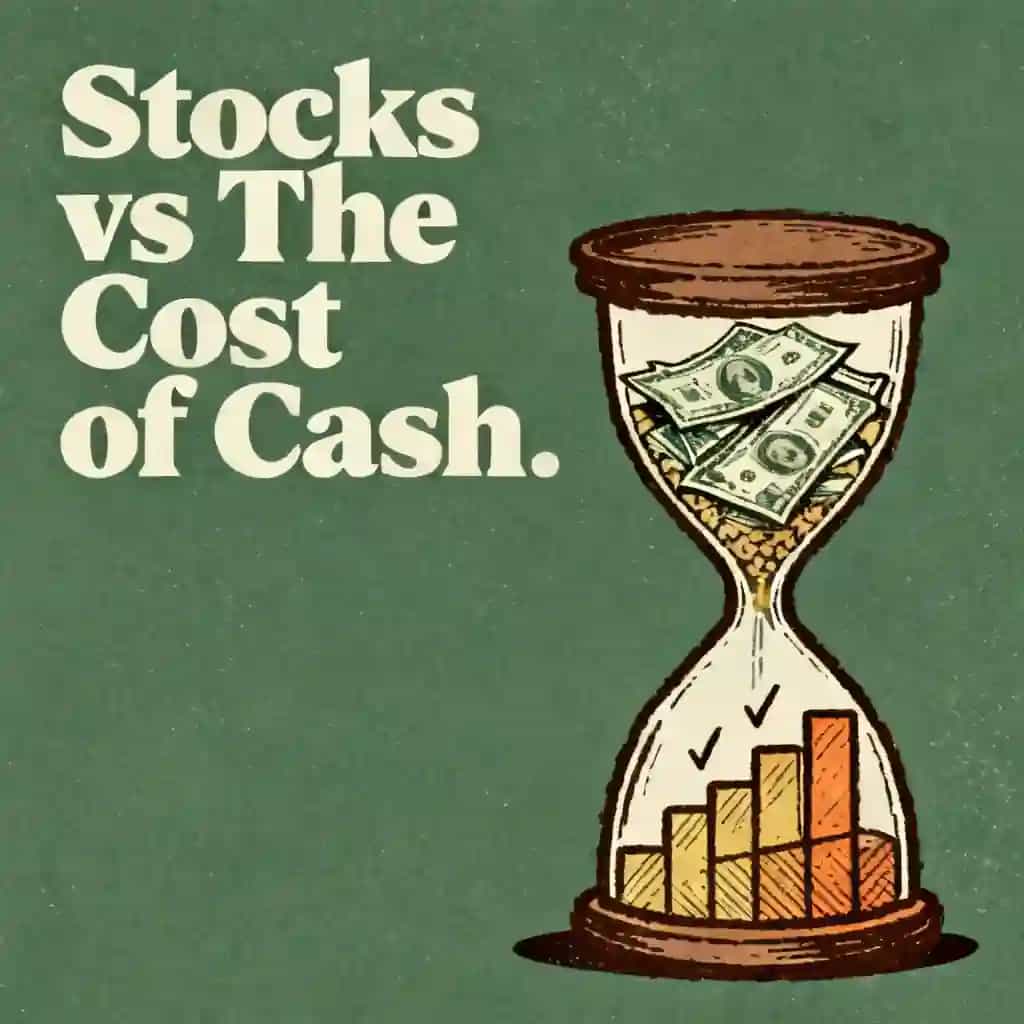
Profit is an opinion, but cash is a fact. You can argue about how to depreciate a truck, but you can’t argue about whether there’s money in the bank account.
Refresh Financial metrics, language of finance, bigger picture, story that numbers tell, Mastering balance sheets and financial statements, company valuation, investment due diligence with street smartness, things you do not learn in school easy to apply

From Columbia University alumni built in San Francisco
"Instead of endless scrolling, I just hit play on BeFreed. It saves me so much time."
"I never knew where to start with nonfiction—BeFreed’s book lists turned into podcasts gave me a clear path."
"Perfect balance between learning and entertainment. Finished ‘Thinking, Fast and Slow’ on my commute this week."
"Crazy how much I learned while walking the dog. BeFreed = small habits → big gains."
"Reading used to feel like a chore. Now it’s just part of my lifestyle."
"Feels effortless compared to reading. I’ve finished 6 books this month already."
"BeFreed turned my guilty doomscrolling into something that feels productive and inspiring."
"BeFreed turned my commute into learning time. 20-min podcasts are perfect for finishing books I never had time for."
"BeFreed replaced my podcast queue. Imagine Spotify for books — that’s it. 🙌"
"It is great for me to learn something from the book without reading it."
"The themed book list podcasts help me connect ideas across authors—like a guided audio journey."
"Makes me feel smarter every time before going to work"
From Columbia University alumni built in San Francisco

Nia: You know, Blythe, I used to think looking at a company’s profit was the ultimate "gotcha" moment for an investor. But I recently heard this phrase that totally flipped my perspective: "Revenue is vanity, profit is sanity, but cash is reality."
Blythe: That is spot on! It’s the ultimate street-smart rule. You’d be surprised how many people get blinded by a massive "Net Income" number on an income statement, while the company is actually bleeding out behind the scenes. In fact, a company can look wildly profitable on paper but still go bankrupt because it simply ran out of cash.
Nia: That’s terrifying! It’s like having a high salary but a maxed-out credit card and no gas in the tank.
Blythe: Exactly. We’re moving past the textbook definitions today to look under the hood and read a company’s "diary." We’re going to spot the red flags, like when accounts receivable are ballooning faster than sales—which basically means customers aren't paying their bills.
Nia: I love that. Let’s explore how to separate the vanity from the reality by starting with the foundation of it all: the balance sheet.
Nia: So, if the income statement is the movie, the balance sheet is the photograph, right? A snapshot of exactly where everything stands on a single day—like December 31st.
Blythe: Exactly! And the very first thing you have to wrap your head around is the golden equation: Assets equals Liabilities plus Equity. It sounds like accounting jargon—but "street smart" style—it just means everything the company owns was paid for by either borrowing money or using the owners’ own cash. If a company has a mountain of shiny equipment but it’s all financed by high-interest debt—that foundation is made of sand, Nia.
Nia: That makes so much sense. It’s like buying a luxury car but having a massive loan on it. You "own" the car—but do you really?
Blythe: You’ve hit the nail on the head. When I look at a balance sheet—the first thing I hunt for is liquidity. Can this company pay its bills tomorrow if things get rocky? Professionals use the Current Ratio—taking current assets and dividing them by current liabilities. If that number is below 1.0—it’s a huge red flag. It means they owe more in the next twelve months than they have in cash or things they can quickly turn into cash.
Nia: But what if they have a lot of inventory? Like a warehouse full of shoes? That counts as an asset—but you can’t exactly pay your electric bill with sneakers.
Blythe: That is such a sharp observation! That’s why we use the Quick Ratio—or the "acid-test." We subtract the inventory from the assets and then divide by the liabilities. It asks the brutal question: "Can you pay your bills without selling a single item of stock?" For a company like Ford—they carry massive inventory—so their current ratio might be 1.2—but their quick ratio is closer to 1.0. They need that buffer. But a tech giant like Apple—they move products so fast they can operate with a tighter ratio—sometimes even below 1.0—because their cash management is so elite.
Nia: So a "bad" number in one industry might be "standard" in another. It’s all about the context of the business model.
Blythe: Absolutely. You also have to look at the Debt-to-Equity ratio. If a company has more debt than equity—especially a ratio above 2.0—you need to start asking questions. Is that debt fueling growth—or is it just keeping the lights on? I saw a stat recently that S&P 500 companies with stable net margins above 10% over five years delivered 18% annualized returns—while those with volatile margins and high debt only saw about 8%. The balance sheet tells you if they have the "staying power" to survive a downturn.
Nia: It’s the difference between a company that’s "all hat and no cattle"—as they say—and one that actually has a fortress. What about the "Equity" part? I see "Retained Earnings" on there a lot.
Blythe: Retained earnings are essentially the company’s "savings account" from past profits. If you see that number growing consistently over three to five years—it shows disciplined management. They aren't just blowing every cent they make—they’re reinvesting in the future. But if you see debt growing faster than assets—that’s a flashing neon sign of financial stress.
Nia: So the balance sheet is where we check if the company is built to last. But even a sturdy building needs a functioning engine—which I guess brings us back to that "movie" of the income statement?
Blythe: Exactly. Now that we know the foundation is solid—we need to see if the engine is actually generating power—or if it’s just making a lot of noise.
Nia: I remember you saying revenue is "vanity." That feels so counterintuitive because everyone celebrates when a company announces "Record Sales!"
Blythe: Oh—it’s the classic trap! High revenue is great—but if it costs you $1.10 to make every $1.00 of sales—you’re just scaling a disaster. When you look at the income statement—you have to read it from top to bottom like a story. You start with Revenue—then subtract the Cost of Goods Sold—or COGS—to get your Gross Profit. This is the first "street smart" checkpoint.
Nia: This is where we see the "unit economics"—right? Like—how much does it actually cost to make one widget?
Blythe: Exactly. And the Gross Margin—which is Gross Profit divided by Revenue—tells you about the company’s "moat." If a software company has an 80% gross margin—it means it costs them almost nothing to serve one more customer. But a grocery store might have a 25% margin because they have to buy the milk and eggs first. If you see a company’s gross margin shrinking over three years—it usually means they’re losing pricing power or their costs are spiraling. That’s a major red flag.
Nia: Okay—so Gross Profit is step one. But then you have all the other stuff—the offices—the marketing—the fancy espresso machines in the breakroom.
Blythe: Right! Those are Operating Expenses—or OPEX. Subtract those from Gross Profit and you get Operating Income—often called EBIT—Earnings Before Interest and Taxes. This is my absolute favorite metric. It strips away the noise of how the company is financed or what their tax rate is—and just shows: "Does the core business actually work?"
Nia: I’ve noticed that sometimes a company’s revenue goes up—but their operating income goes down. What’s happening there?
Blythe: That’s usually a sign of "inefficient growth." They might be spending a fortune on marketing just to keep their sales flat—or their administrative costs are ballooning. Professionals look for "Operating Leverage"—where revenue grows faster than expenses. If revenue grows 10% and operating income grows 20%—that’s a beautiful thing. It means the company is getting more efficient as it gets bigger.
Nia: And then we finally get to the "Bottom Line"—the Net Income.
Blythe: The famous bottom line! But here’s the "dirty secret" Nia—net income is the easiest number to manipulate. Accounting rules allow for all sorts of non-cash adjustments—like depreciation or one-time gains from selling an old factory. I’ve seen companies report a "record profit" only to realize they sold off their best assets to make the numbers look good for one quarter.
Nia: That’s wild. So you could have a high net income—but if you strip away the "one-time" stuff—the actual business might be losing money?
Blythe: All the time! That’s why we always cross-check the income statement with the cash flow statement. If net income is high but operating cash flow is low—something is fishy. Maybe they’re booking sales before they’ve actually received the money—or they’re pushing expenses into the future. It’s like a chef who makes a beautiful plate but the kitchen is actually on fire. You have to look at the whole picture to see if the "profit" is actually real.
Nia: It sounds like we’re becoming financial detectives. We’ve checked the foundation—we’ve watched the movie of the operations—but now we need to "follow the money" to see where the actual cash is hiding.
Blythe: If there’s one thing I want every listener to take away—it’s that "Profit is an opinion—but Cash is a fact." You can argue about how to depreciate a truck—but you can’t argue about whether there’s money in the bank account.
Nia: I love that. "Profit is an opinion." It makes the cash flow statement sound like the only honest person in the room.
Blythe: It really is! The cash flow statement is broken into three sections—and each one tells a different part of the truth. First—you have Cash from Operating Activities. This is the lifeblood. It shows the actual cash generated from the day-to-day business. If this number isn't positive—you don’t have a business—you have a hobby that burns money.
Nia: I’ve heard you mention "Free Cash Flow" before. Is that the same thing?
Blythe: Great question! Free Cash Flow—or FCF—is the "North Star" for investors. You take that Operating Cash Flow and subtract Capital Expenditures—or CapEx. CapEx is the money spent on big things like new machinery or buildings. Whatever is left over is the "free" cash the company can use to pay dividends—buy back stock—or pay down debt. A company that grows its FCF year over year is a compounding machine.
Nia: What about the other two sections? Cash from Investing and Cash from Financing?
Blythe: This is where the story gets interesting. Cash from Investing shows where they’re putting their money for the long term. If it’s negative—that’s usually good! It means they’re buying equipment or acquiring other companies to grow. But if it’s consistently positive—be careful. It might mean they’re selling off their "furniture" just to pay the rent.
Nia: And Financing?
Blythe: That’s the "bank and shareholder" section. Are they borrowing more money—or paying it back? Are they issuing new shares—which dilutes existing owners—or are they buying them back? If a company is consistently borrowing cash just to fund its operations—that’s a massive red flag. It means their "engine" isn't powerful enough to keep them moving—so they’re constantly asking for a jump-start from the bank.
Nia: So—if I see a company with high Net Income—but negative Operating Cash Flow—what does that tell me in plain English?
Blythe: It tells you that customers aren't paying on time—or the company is sitting on a mountain of unsold inventory—or they’re using aggressive accounting to "book" revenue that hasn't actually arrived yet. It’s one of the biggest "red flags" in finance. In fact—there’s this thing called the "Cash Conversion Cycle"—which measures how many days it takes to turn a dollar of investment into a dollar of cash in the bank.
Nia: Oh—I’ve heard of that! Amazon and Walmart are famous for having a "negative" cycle—right?
Blythe: Exactly! They’re so efficient they actually collect money from customers before they even have to pay their suppliers. They’re essentially using their suppliers’ money to fund their own growth for free. That’s the ultimate "street smart" move. When you can master the cash flow statement—you stop being a spectator and start being an analyst. You see the gaps between what the company "says" it earned and what it actually "has."
Nia: It feels like the cash flow statement is the reality check that keeps the other two statements honest. But once we have all these numbers—how do we actually compare one company to another? I mean—how do I know if a 10% margin is "good" or just "okay"?
Blythe: That’s where the power of Ratios comes in. It’s how we turn those big—scary numbers into a standardized language that lets us compare a tiny startup to a massive conglomerate.
Nia: Ratios always sounded so "math-heavy" to me—but the way you describe them—it’s more like a "health checkup" for a company.
Blythe: That’s exactly what it is! Think of ratios as the "vital signs"—like blood pressure or heart rate. A single number doesn't tell you everything—but when you look at them together—you get a clear picture of the patient's health. We usually group them into four main buckets: Profitability—Liquidity—Efficiency—and Leverage.
Nia: We talked a bit about Profitability with margins—but I keep hearing about ROE and ROA. What are those actually telling us?
Blythe: ROE—or Return on Equity—is the "holy grail" for many investors. It’s Net Income divided by Shareholders’ Equity. It basically asks: "For every dollar the owners have put in—how much profit is the company spitting out?" A "good" ROE is usually 15% to 20%. But here’s the "street smart" warning: a company can fake a high ROE by taking on massive amounts of debt.
Nia: Wait—how does that work?
Blythe: Well—if you borrow a ton of money to buy assets—your "Equity" stays small. So even a modest profit looks huge compared to that tiny sliver of equity. That’s why you have to look at ROA—Return on Assets—as well. ROA doesn’t care where the money came from—it just measures how hard the company is "sweating" its assets to make a buck. If ROE is 40% but ROA is only 5%—the company is heavily "leveraged"—meaning they’re using a lot of borrowed money to juice their returns.
Nia: That sounds risky. It’s like using a huge loan to flip a house. If the house price goes up—you look like a genius. But if it goes down...
Blythe: Exactly! You’re wiped out. That’s why we look at Leverage Ratios—like the Debt-to-Equity ratio. It tells you exactly how much the company is leaning on the bank. And we use "Efficiency Ratios"—like Asset Turnover—to see how much revenue they generate for every dollar of assets. A high turnover means they’re "sweating" their assets—running them 24/7 to create value.
Nia: What about the "Efficiency" of things like inventory? I know we touched on that.
Blythe: Oh—Inventory Turnover is huge! If you’re a retailer—you want that number to be high. It means your products aren't just sitting on the shelf gathering dust. If a company’s inventory turnover is slowing down—it usually means their products are losing appeal—or they overproduced. It’s an early warning sign of a disaster. We also look at DSO—Days Sales Outstanding. That’s the average number of days it takes to collect cash from customers. If that number starts creeping up from 30 days to 45 days—it means your customers are struggling—or you’re being too "generous" with credit just to make a sale.
Nia: I’m starting to see how these connect. If DSO is going up—it’s going to hurt the Operating Cash Flow—which we just talked about!
Blythe: You’re a natural! Everything is connected. One ratio might show a "symptom"—but looking at three or four helps you find the "disease." Professionals use something called "Trend Analysis"—calculating these ratios for at least three to five years. A single year’s ratio is just a snapshot—but a five-year trend tells you the "story." Is the company getting more efficient—or are they just slowly fading away?
Nia: And then there’s the "DuPont Analysis"—I’ve seen that mentioned as the "master" framework.
Blythe: It’s the ultimate "street smart" breakdown! It takes ROE and splits it into three parts: Profit Margin—Asset Turnover—and Financial Leverage. It shows you exactly "how" the company is making its money. Are they making it through high margins—like a luxury brand? Through high volume—like a grocery store? Or through high debt—like a risky financial firm? When you can see that—you can see the true "identity" of the business.
Nia: This feels so much more practical than just looking at a stock price. But speaking of price—how do we know if the price we’re paying is actually "fair"? Because even a great company can be a bad investment if you overpay—right?
Blythe: Spot on. That brings us to the "art and science" of Valuation. It’s where we decide what the business is actually worth—regardless of what the market "thinks" today.
Nia: I’ve heard people say "valuation is an art"—which honestly sounds a bit like an excuse for just guessing!
Blythe: Ha! It’s a bit of both—honestly. It’s science because we use math—but it’s art because we have to make assumptions about the future. The most famous "scientific" method is the DCF—or Discounted Cash Flow analysis. It’s based on a simple idea: "A dollar today is worth more than a dollar tomorrow." We project the "Free Cash Flow" we talked about for the next 5 to 10 years—then "discount" it back to today’s value using a required rate of return.
Nia: So we’re basically saying—"If this company is going to hand me $100 five years from now—how much should I pay for that promise today?"
Blythe: Exactly! It’s the "intrinsic value." But the problem with DCF is that it’s incredibly sensitive. If you change your "growth rate" assumption from 5% to 6%—the entire valuation can jump by 20%. That’s why "street smart" investors always use a "Margin of Safety"—a concept Benjamin Graham made famous. If your math says a stock is worth $100—you don’t buy it at $100. You wait until it’s trading at $70 or $80.
Nia: So the Margin of Safety is your "insurance" for when your assumptions are wrong?
Blythe: Precisely! It protects you from your own mistakes and from "bad luck." Another popular method is "Comparable Company Analysis"—or "Comps." This is the "Market Approach." You look at similar companies and see what multiples the market is paying for them—like the P/E ratio—Price-to-Earnings.
Nia: I see P/E ratios everywhere. But is it really that simple?
Blythe: It’s a good "shorthand"—but it can be a trap. A high P/E usually means the market expects high growth. But if that growth doesn’t happen—the stock price crashes. I like the PEG ratio—P/E divided by the growth rate. It "normalizes" the price for the growth you’re getting. A company with a 30 P/E might look expensive—but if they’re growing at 30%—their PEG is 1.0—which is actually quite reasonable.
Nia: What about "Enterprise Value"? I hear that’s better than "Market Cap."
Blythe: Oh—Market Cap is just the price of the "Equity." But Enterprise Value—or EV—is the price of the "whole house." It’s Market Cap plus Debt minus Cash. It’s what an acquirer would actually have to pay to own the whole business and clear the debts. We often use EV/EBITDA because it lets us compare companies with different levels of debt—apples to apples.
Nia: This is making so much more sense. So we have "Intrinsic Value" from the DCF—and "Relative Value" from the Comps.
Blythe: Right. And "Precedent Transactions"—which is looking at what actual buyers paid for similar companies in the past. Professionals "triangulate"—they look at all three and see where they overlap. If a DCF says $45—and Comps say $42 to $48—you can have a lot of conviction in that range. But if the DCF says $100 and the market is paying $30—something is very wrong. Either the market is crazy—or your assumptions are wild.
Nia: This is where the "due diligence" part comes in—right? You have to be your own toughest critic.
Blythe: Absolutely. You have to look for "red flags" that these valuation models might miss. Like—is the revenue growth "organic"—or are they just buying other companies to make their numbers look bigger? Or—is their "Net Income" actually just one-time gains? We call it "Quality of Earnings" analysis. If the "profits" aren't coming from the core business—they aren't sustainable.
Nia: It feels like we’re building a "mental model" of the business. It’s not just a ticker symbol anymore—it’s a living—breathing organization.
Blythe: That’s the goal! When you can connect the "narrative"—the story of the business—to the "numbers"—the financial reality—that’s when you become a master investor. But before we get to the "how-to" part for our listeners—we have to talk about those "red flags" in more detail. The things they *don't* teach you in school.
Nia: I love the idea of "street smart" due diligence. It sounds like we’re looking for the things companies try to hide in the fine print.
Blythe: Oh—they definitely do! You’d be amazed what you can find if you just know where to look. One of the biggest red flags is "Revenue Recognition" issues. I once read about a company that was booking revenue the moment they "shipped" a product to their own warehouse—not even to a customer!
Nia: Wait—is that even legal?
Blythe: It’s often in a "gray area" of accounting. That’s why you always check the relationship between Revenue and Accounts Receivable. If Sales grow 10%—but Accounts Receivable grows 40%—it means the company is "stuffing the channel." They’re pushing products onto distributors who don’t want them—just to make the quarterly numbers. Eventually—those products get returned—and the stock price craters.
Nia: That sounds like a "future problem" being hidden in the present.
Blythe: Exactly! Another one is "Capitalizing Expenses." Normally—if you buy a box of pens—that’s an "expense" that hits your profit immediately. but if you "capitalize" it—you treat it like an "asset" and spread the cost over 5 years. It makes your current profit look much higher. Companies have done this with everything from marketing costs to R&D. If you see "Intangible Assets" or "Other Assets" ballooning on the balance sheet—dig deeper. They might be hiding costs there.
Nia: What about management? I mean—how do you "audit" the people running the show?
Blythe: You look at their "Capital Allocation" track record. Do they buy back shares when the price is at an all-time high? That’s a terrible use of cash. Do they overpay for flashy acquisitions that never actually make money? Check the "Goodwill" on the balance sheet. If a company has a lot of Goodwill and then suddenly has a "Goodwill Impairment"—it’s an admission that they wasted shareholder money on a bad deal.
Nia: I’ve also heard you mention "off-balance-sheet" stuff. That sounds like something out of a spy movie!
Blythe: It’s not quite that exciting—but it’s just as dangerous! It used to be very common with things like "Operating Leases"—where a company would lease a whole fleet of planes but not put the debt on their balance sheet. The rules have tightened up recently—but you still have to look at the "Footnotes" for things like pension obligations or lawsuits. The footnotes are where the "bodies are buried"—Nia. If the notes are incredibly complex and hard to understand—that in itself is a red flag. As Warren Buffett says—"If you can’t understand it—it’s probably because they don’t want you to."
Nia: So—complexity is a warning sign. "Simplicity is the ultimate sophistication"—right?
Blythe: Absolutely. A great business is usually easy to explain. "We buy this for $1—we sell it for $2—and it costs us $0.50 to run the shop." If you need a PhD in advanced mathematics to figure out how they make money—walk away. And watch for "Accounting Changes." If a company suddenly changes how they calculate "Depreciation" or "Revenue"—it’s often because their old method was going to show a loss.
Nia: It feels like the "dirty secret" of finance is that the numbers are only as good as the people reporting them.
Blythe: Exactly. That’s why we always cross-check. Income statement vs. Cash Flow. Revenue vs. Receivables. Debt vs. Interest Coverage. If the "story" the numbers are telling isn't consistent—believe the cash flow. Cash doesn’t lie.
Nia: This is so empowering. It’s like having a superpower—being able to see through the "spin." But for someone listening who wants to start applying this *today*—where do they actually begin? What’s the "Practical Playbook"?
Blythe: I love that! Let’s break it down into a simple—step-by-step process that anyone can use to analyze their first company.
Nia: Okay—Blythe. I’m ready. I have a company in mind. What is the very first thing I do?
Blythe: Step One: The "Five-Year Quick Look." Go to a site like Yahoo Finance or Koyfin—and pull up the last five years of the Income Statement. Don’t look at the numbers yet—look at the *trends*. Is Revenue growing? Is Gross Margin stable or expanding? Is Operating Income growing faster than Revenue? If the answer is "no" to these—you might not need to go any further.
Nia: Okay—growth and margins. Check. What’s Step Two?
Blythe: Step Two: The "Cash Reality Check." Compare "Net Income" to "Cash from Operations" for those same five years. You want to see that Cash from Operations is consistently higher than Net Income. If it’s significantly lower—or if it’s volatile while Net Income is "smooth"—that’s your first big red flag. It means the "profits" might be artificial.
Nia: Step Three?
Blythe: Step Three: The "Fortress Test." Look at the Balance Sheet. Calculate the Current Ratio—Current Assets divided by Current Liabilities. Is it above 1.0? Then look at the Total Debt. Compare that Debt to the "Free Cash Flow" the company generates. If the company could pay off all its debt with just two or three years of FCF—they have a fortress. if it would take ten years—they’re on thin ice.
Nia: This is surprisingly simple when you break it down like this.
Blythe: It’s all about filtering! Step Four: The "Efficiency Drill." Check the "Days Sales Outstanding"—DSO. Is it stable? If it’s rising—it means they’re struggling to collect cash. Check the "Inventory Turnover." If you’re looking at a retailer or manufacturer—is that number staying high? This tells you if the products are actually selling in the real world.
Nia: And then—the "Valuation Sanity Check"?
Blythe: Exactly—Step Five! Look at the P/E ratio and the PEG ratio. Compare them to the company’s own history. Is the stock trading at a "premium" or a "discount" to its five-year average? Then—do a simple "Back-of-the-Envelope" DCF. If the company grows at 5% forever—what is it worth? If that number is way below the current price—you’re paying a massive "growth premium."
Nia: I like that. It’s about asking—"How much perfection am I paying for?"
Blythe: Precisely! And Step Six: Read the "Risk Factors" in the 10-K—the annual report. Skip the boring stuff and look for the specific risks they mention. Are they worried about a single customer? A new regulation? A specific competitor? This is where you get the "qualitative" story to match your "quantitative" numbers.
Nia: I love this. It’s like a "Pre-Flight Checklist" for an investor.
Blythe: It really is. And my "Street Smart" tip: Look for "Skin in the Game." Check how much of the company the CEO and the board actually own. If they’re selling their shares while telling you how great things are—that’s the ultimate red flag. You want to be on the same side of the table as the people running the show.
Nia: This has been such a masterclass—Blythe. I feel like I can actually open an annual report now without getting a headache.
Blythe: That makes me so happy! It’s not about being a math genius—it’s about being a curious detective. The numbers are just clues—and your job is to piece together the truth.
Nia: So—to everyone listening—take one company you’re interested in—maybe a brand you use every day—and run this six-step drill this weekend. You’ll be amazed at what you discover when you start looking past the headlines.
Blythe: Absolutely. And remember—the goal isn't to be "right" about every stock. The goal is to avoid the "blowups"—the companies with sand foundations and smoke-and-mirror profits. If you can do that—the winners will take care of themselves.
Nia: As we wrap things up today—Blythe—I’m struck by how much "personality" there is in these financial statements. It’s not just a grid of data—it’s a reflection of human decisions—ambition—discipline—and sometimes—even a bit of desperation.
Blythe: You’ve hit the nail on the head. Every number on that page is the result of a choice made by a manager—a salesperson—or an engineer. When you learn to read these statements—you’re not just looking at "accounting"—you’re looking at the "soul" of the business.
Nia: It’s about building that bridge between the "narrative" and the "numbers." One without the other is dangerous. A great story without the numbers is just a fantasy—and numbers without a story are just noise.
Blythe: Exactly. I think the biggest takeaway for our listeners should be that financial literacy is a superpower. It gives you the confidence to make your own decisions—to ignore the "talking heads" on TV—and to see the world as it actually is—not just how it’s marketed to you.
Nia: I love that. "Seeing the world as it actually is." That’s a pretty good goal for life—not just for investing.
Blythe: It really is. We’ve covered a lot today—from the "fortress" of the balance sheet to the "reality check" of the cash flow statement—and the "due diligence" moves that keep you safe. I hope everyone feels a little more "street smart" now.
Nia: I know I do! Thank you all so much for joining us on this deep dive into the language of finance. It’s been such a fascinating journey.
Blythe: It really has. And to everyone listening—don’t feel like you have to master this all at once. Just start with one statement—one ratio—one company. The skill compounds over time—just like a great investment.
Nia: Before you go—take a moment to reflect: What’s one "red flag" we discussed today that you’ve seen in the real world? Or—which part of the "Practical Playbook" are you going to try first?
Blythe: That’s a great way to start. Trust your gut—but verify it with the numbers.
Nia: Thank you again for spending this time with us. Happy hunting out there!
Blythe: Stay curious—and stay smart. Thanks for listening!