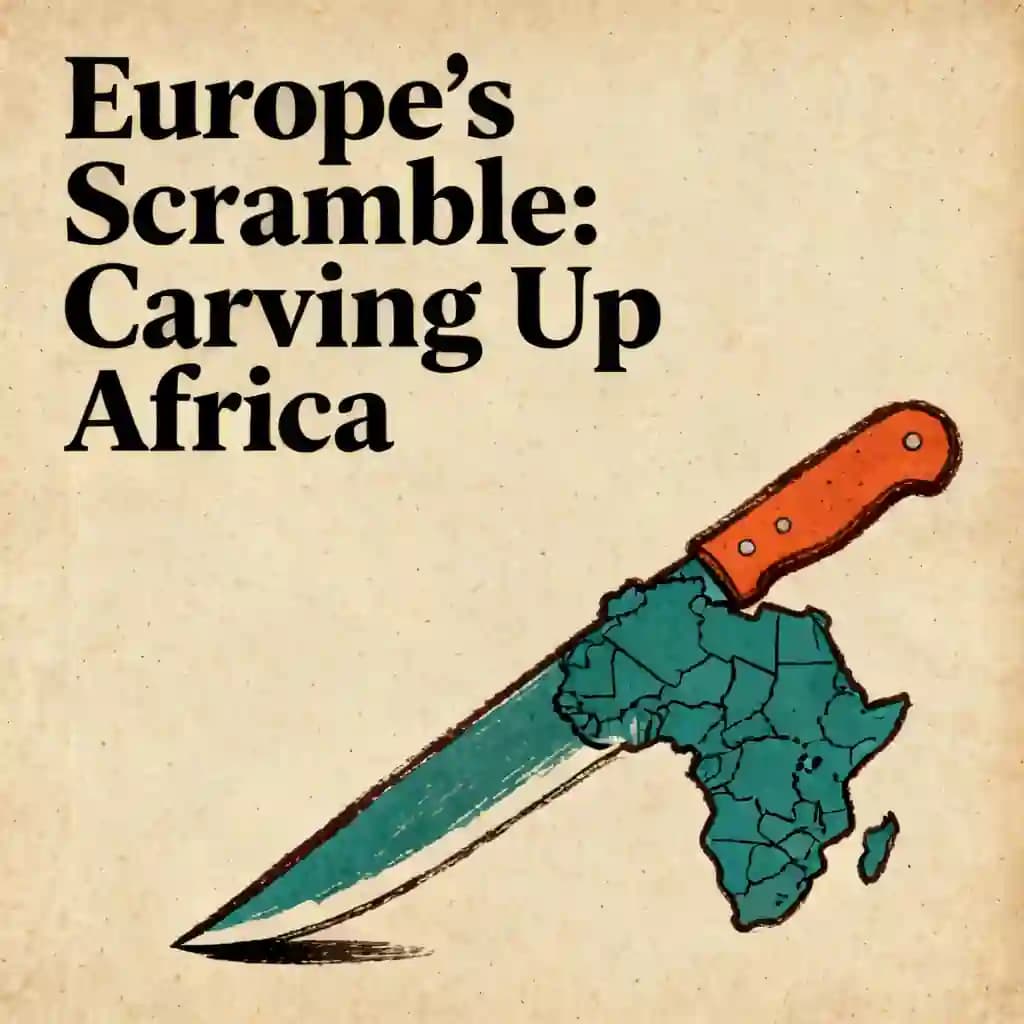
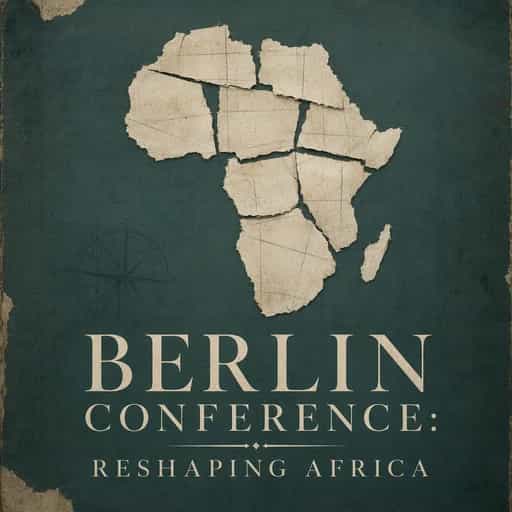
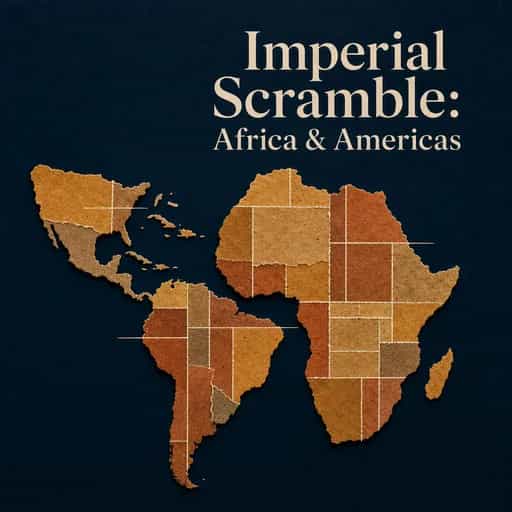
Industrial greed led Europe to redraw global maps in 1884. Explore how these artificial borders and the quest for resources reshaped world history.
Best quote from European Imperialism and the Race to Carve Up Africa
“
The lines drawn during this conference were breathtaking in their arrogance. Diplomats used rulers and pencils to draw straight lines across maps of regions they had never seen, completely ignoring the 'human landscape' of the continent.
”
J
Generated by Josh
Input question
La Expansión Imperialista Europea
Imperialismo europeo en los siglos XIX y XX
La riqueza generó un exaltado nacionalismo, basado en la ciudad de su p
Host voices
Lena
Knowledge sources
Frequently Asked Questions
The principle of effective occupation was a legal requirement introduced during the 1884 Berlin Conference to manage European competition. It dictated that a colonial power could not simply claim territory on a map; instead, they had to demonstrate a physical administrative presence, such as a military post, a signed treaty, or a government office. Rather than preventing conflict, this rule acted as an accelerant, triggering a frantic "scramble" as European nations rushed to plant flags and establish outposts in the African interior to beat their rivals.
By the late 19th century, the Industrial Revolution had entered a high-tech phase that required specific raw materials not found in Europe. Factories had an insatiable thirst for rubber for tires, palm oil for machinery lubrication, and copper for electrical wiring. Additionally, European markets had become saturated, leading to a "Long Depression." This forced financiers and factory owners to view Africa as a "field of abstinence"—a massive warehouse of cheap raw materials and a captive market where they could dump surplus capital and manufactured goods for higher returns.
These were two primary methods used by European powers to govern their colonies with limited personnel. The British model of "Indirect Rule" was a cost-effective system that co-opted existing local hierarchies, turning traditional leaders into "Native Authorities" who collected taxes and maintained order under British "advice." In contrast, the French model of "Assimilation" sought to replace African culture and language with French values, theoretically allowing subjects to become "Black Frenchmen." While the British model tended to freeze societies into rigid tribal identities, the French model was highly centralized and culturally destructive.
Resistance was widespread and took many forms, ranging from military confrontation to diplomatic maneuvering. Some leaders, like Samori Touré, built modern empires with professional armies and firearm manufacturing to fight the French for over a decade. Others, like Emperor Menelik II of Ethiopia, successfully used modern artillery and tactical alliances to decisively defeat Italian forces at the Battle of Adwa. Resistance also occurred through social and spiritual means, such as the Maji Maji Rebellion’s use of spiritual unity or the Aba Women’s War in Nigeria, where women used traditional public shaming methods to protest British taxation.
From Columbia University alumni | built in San Francisco
BeFreed Brings Together A Global Community Of Curious Minds
4.7
avg rating
7.84k+ App Rating
BeFreed Community
Seriously I haven’t even explored this app fully yet but from using it the last few days I am so impressed... BeFreed is on a different level from any other learning app I have used. This makes it ultra engaging and can actually improve your concentration which is great for all the doom scrollers!
@ladyInfinity
I bought BeFreed exactly 23 days ago, and I have used it every single day since. It has completely embedded itself into my daily workflow and learning habit.
@jayallen
The truth is, the app has exceeded all my expectations. I can ask it to generate audio on any topic, whatever it may be, and the result is impressive. My professional field is a specialization in psychotherapy and it is multidisciplinary; however, the answers are very accurate.
@Raguipa
What I appreciate most is how much it's reduced my scrolling – I'm spending less time searching and more time absorbing information. The combination of full audiobooks, podcasts, the learning plans are brilliant.
@colonyofcreatorsNGO
I have been a PhotoReading Accelerated Learning Instructor for the past 24 years... books and reading and learning are my thing, and BeFreed has done a great job in providing an innovative approach to disseminating and delivering information in an easy to consume way.
@BeFreed user
It is not just a book summary app, I have used the 'fun reading' option and it's a much better summary and way to grasp ideas the traditional way, that alone is worth this deal.
@austinakon
I love this app. Used it for several days and I cannot stop listening. Such a great way to start.
@jcrules328
I really like the program; I have already tested it for around one month, and I feel that it's an amazing gem. It works so well because I can use BeFreed to create my own topics, and the voice is so good with unlimited choice of narrations.
@DanielCZ
Seriously I haven’t even explored this app fully yet but from using it the last few days I am so impressed... BeFreed is on a different level from any other learning app I have used. This makes it ultra engaging and can actually improve your concentration which is great for all the doom scrollers!
@ladyInfinity
I bought BeFreed exactly 23 days ago, and I have used it every single day since. It has completely embedded itself into my daily workflow and learning habit.
@jayallen
The truth is, the app has exceeded all my expectations. I can ask it to generate audio on any topic, whatever it may be, and the result is impressive. My professional field is a specialization in psychotherapy and it is multidisciplinary; however, the answers are very accurate.
@Raguipa
What I appreciate most is how much it's reduced my scrolling – I'm spending less time searching and more time absorbing information. The combination of full audiobooks, podcasts, the learning plans are brilliant.
@colonyofcreatorsNGO
I have been a PhotoReading Accelerated Learning Instructor for the past 24 years... books and reading and learning are my thing, and BeFreed has done a great job in providing an innovative approach to disseminating and delivering information in an easy to consume way.
@BeFreed user
It is not just a book summary app, I have used the 'fun reading' option and it's a much better summary and way to grasp ideas the traditional way, that alone is worth this deal.
@austinakon
I love this app. Used it for several days and I cannot stop listening. Such a great way to start.
@jcrules328
I really like the program; I have already tested it for around one month, and I feel that it's an amazing gem. It works so well because I can use BeFreed to create my own topics, and the voice is so good with unlimited choice of narrations.
@DanielCZ
I love the fact that I can get useful, condensed, information and ideas in a 8 - 15 minute podcast style audio. I'm not a general fan of podcasts because of all the fluff, but this cuts through all that.
@BeFreed user
I am finishing up my doctorate, and have to read a lot of unfamiliar material... With BeFreed, you simply enter a prompt, and the app finds source material for you and generates an audio podcast. I find the process in BeFreed to be more streamlined than NotebookLM.
@Brad
I often search YouTube for something to listen to whilst making breakfast, when I'm out walking, commuting, etc, and BeFreed has provided an even more targeted approach, without the adverts and the fluff!
@BeFreed user
The absolute best part about this platform is its versatility. There is literally no subject that is off-topic. It handles whatever you throw at it... It is rare to find an learning tool with zero limitations that actually delivers on its promises.
@jayallen
BeFreed is fantastic. The user-friendly design means I spend less time navigating and more time learning. The mix of audiobooks, podcasts, and learning plans is a genius combo that has completely changed my daily routine.
@BeFreed user
At the start I needed a while to understand how to create podcasts in italian language and boom! It is so great! I can ask to explain every argument and it does so well and so smartly!
@matteo77
BeFreed has become my daily app for audio books tools... What I like the most is the way you put your text and come with an audio that you can listen on the go.
@kotanzu1
I love the fact that I can get useful, condensed, information and ideas in a 8 - 15 minute podcast style audio. I'm not a general fan of podcasts because of all the fluff, but this cuts through all that.
@BeFreed user
I am finishing up my doctorate, and have to read a lot of unfamiliar material... With BeFreed, you simply enter a prompt, and the app finds source material for you and generates an audio podcast. I find the process in BeFreed to be more streamlined than NotebookLM.
@Brad
I often search YouTube for something to listen to whilst making breakfast, when I'm out walking, commuting, etc, and BeFreed has provided an even more targeted approach, without the adverts and the fluff!
@BeFreed user
The absolute best part about this platform is its versatility. There is literally no subject that is off-topic. It handles whatever you throw at it... It is rare to find an learning tool with zero limitations that actually delivers on its promises.
@jayallen
BeFreed is fantastic. The user-friendly design means I spend less time navigating and more time learning. The mix of audiobooks, podcasts, and learning plans is a genius combo that has completely changed my daily routine.
@BeFreed user
At the start I needed a while to understand how to create podcasts in italian language and boom! It is so great! I can ask to explain every argument and it does so well and so smartly!
@matteo77
BeFreed has become my daily app for audio books tools... What I like the most is the way you put your text and come with an audio that you can listen on the go.
Explore how Europe expanded from 35% to 84% global control through industrial revolution, nationalism, and imperialism. Perfect for Swedish gymnasium history exam prep covering key actors, structures, and transformations.
Deep dive into how Britain transformed from trading power to governing a quarter of the world's population. Explore administrative innovations, the post-1857 restructuring, and governance challenges across India, Africa, and Egypt during the height of imperial control.
Explore how history's greatest conquerors seized power, what made them unstoppable in their time, and the fatal flaws that ultimately led to their downfall—from Alexander to Napoleon.