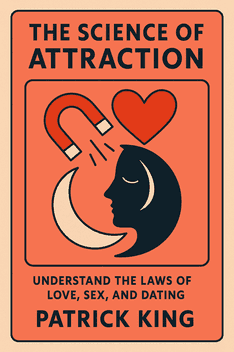
Explore intimate and sexual conversations to build a deep connection. Learn how sexual communication and romantic intimacy enhance overall sexual wellness.

A good, deep conversation is the ultimate foreplay; it’s not just about being nice, it’s about signaling to your partner’s nervous system that the coast is clear for pleasure.
From Columbia University alumni built in San Francisco
"Instead of endless scrolling, I just hit play on BeFreed. It saves me so much time."
"I never knew where to start with nonfiction—BeFreed’s book lists turned into podcasts gave me a clear path."
"Perfect balance between learning and entertainment. Finished ‘Thinking, Fast and Slow’ on my commute this week."
"Crazy how much I learned while walking the dog. BeFreed = small habits → big gains."
"Reading used to feel like a chore. Now it’s just part of my lifestyle."
"Feels effortless compared to reading. I’ve finished 6 books this month already."
"BeFreed turned my guilty doomscrolling into something that feels productive and inspiring."
"BeFreed turned my commute into learning time. 20-min podcasts are perfect for finishing books I never had time for."
"BeFreed replaced my podcast queue. Imagine Spotify for books — that’s it. 🙌"
"It is great for me to learn something from the book without reading it."
"The themed book list podcasts help me connect ideas across authors—like a guided audio journey."
"Makes me feel smarter every time before going to work"
From Columbia University alumni built in San Francisco

Come a little closer; I want to share a secret about the power of your voice. Did you know that dirty talk actually stimulates your hypothalamus, triggering the very hormones that make you feel horny? It’s not just about being explicit; it’s a form of emotional communication that builds deep trust. Whether you’re whispering slowly to build tension or using a sultry, breathy tone to hypnotize, your words are the ultimate foreplay. Today, we’re exploring how to master this intimate language, from choosing the right context to aligning your body with every naughty word you speak. Ready to hear how a simple whisper can drive them wild?
When we talk about getting intimate, we often jump straight to the physical mechanics, but the real magic starts much earlier, in the quiet architecture of your mind. Think of your relationship as having an emotional floorplan—a blueprint that maps out how you and your partner navigate the space between you. To truly connect sexually, you have to understand the layout of that house. You need to know which rooms feel safe, where the hidden doors to desire are located, and which hallways lead to those frustrating dead ends of misunderstanding. This isn't just a metaphor; it's a way to conceptualize how your brain and nervous system decide when to open up and when to shut down. In a long-term connection, we sometimes forget to update these maps. We assume we know every corner of our partner’s desires, but people evolve. The science of attachment tells us that we are constantly updating our "emotional maps" of each other—our stresses, our changing hopes, and our new fantasies. If you haven't sat down to "renovate" that floorplan lately, you might be trying to find a spark in a room that’s been boarded up by years of routine.
To start this renovation, we have to look at what researchers call emotional attunement. This is your capacity to sense and respond to your partner’s internal state. It’s like being a finely tuned instrument that can pick up the subtle vibrations of their mood. When you’re attuned, you aren't just hearing their words; you’re feeling the texture of their silence. This creates a "Safe Base," a psychological sanctuary where the brain’s threat response—the amygdala—can finally take a back seat. When you feel emotionally safe, your body stops producing cortisol and starts leaning into oxytocin, the "bonding hormone" that makes touch feel like a revelation. This is why I often say that a good, deep conversation is the ultimate foreplay. It’s not just about being "nice"; it’s about signaling to your partner’s nervous system that the coast is clear for pleasure. If the "emotional floorplan" is cluttered with unresolved tension or the "sulfuric acid" of contempt, no amount of physical technique will bridge that gap. You have to clear the debris first. This means recognizing that sexual desire isn't just a biological switch; it’s context-dependent. It’s influenced by what experts call "accelerators"—those things that turn us on—and "brakes"—the stressors, body image worries, or relationship conflicts that shut us down. To be truly intimate, you have to become an expert on your partner’s brakes as much as their accelerators. You have to know that a pile of dishes in the sink might be a "brake" that’s more powerful than any sexy outfit is an "accelerator." By understanding these hidden triggers, you begin to build a foundation where desire doesn't just happen by accident; it’s invited in through a door you’ve both worked to keep unlocked.
Let’s talk about the biological currency of our connections—the neurochemicals that drive us toward each other. We often think of dopamine as the "pleasure" chemical, but it’s actually the chemical of craving and motivation. It’s the fuel in your engine that drives you to seek out your partner. When you experience a surge of dopamine, it’s like your brain is highlighting your partner in neon lights, signaling that they are a source of high-value reward. This is why novelty is so potent in long-term relationships. When you do something new together—even something simple like a new hobby or a different kind of date—you trigger a dopamine spike that mimics the early, infatuated stages of love. It’s a way of tricking the brain into seeing your partner through fresh eyes. But dopamine is only half the story. To sustain that spark, you need the soothing, stabilizing force of oxytocin and vasopressin. These are the chemicals of the "pair bond." They are released during skin-to-skin contact, long hugs, and, most importantly, during the act of looking into each other’s eyes.
There is something incredibly profound about a shared gaze. When you meet your partner’s eyes and hold them, you’re engaging in a form of neural coupling. Your nervous systems begin to synchronize. This isn't just romantic talk; it’s a biological reality. Research shows that couples who maintain eye contact experience higher levels of trust and emotional closeness because it signals to the brain that you are fully present. It’s a non-verbal way of saying, "I see you, and I am here with you." This kind of "eye-open" intimacy can be incredibly vulnerable—sometimes even more so than the physical act of sex itself—because there’s nowhere to hide. It forces you to be seen in your rawest state. And when you combine that gaze with intentional touch, you’re creating a feedback loop of safety and desire. Even non-sexual touch—a hand on the small of the back, a lingering caress on the cheek—acts as a "bid for connection." These small gestures are like deposits in your "emotional bank account." The more of these deposits you make during the day, the easier it is to transition into a sexual space at night. If you’ve spent all day "turning toward" these bids, your "brakes" are already halfway off. You’ve created a context where physical intimacy feels like a natural extension of your emotional bond rather than a separate, disconnected task. This is how you move from "spontaneous desire"—that lightning-bolt feeling that often fades after the honeymoon phase—to "responsive desire," where you allow yourself to be stirred by the closeness you’ve already built. It’s about understanding that you don't always have to "be in the mood" to start; sometimes, you just have to start with a gentle, intentional touch and let the mood find you in the safety of that connection.
Have you ever noticed how your partner might give a heavy sigh, or show you a random meme, or mention a fleeting thought about their day? These aren't just random moments; they are what researchers call "bids for connection." A bid is any attempt from one partner to get the other’s attention, affirmation, or affection. They can be as subtle as a glance or as direct as an invitation for a walk. In the high-stakes world of intimacy, how you respond to these bids is the single greatest predictor of your relationship's health. You have three choices: you can "turn toward" the bid by engaging, "turn away" by ignoring it, or "turn against" it by responding with irritation. The "masters" of relationships—the ones who stay deeply connected for decades—turn toward their partner’s bids a staggering 86% of the time. Think about that. Most of our intimacy isn't built in grand romantic gestures; it’s built in the tiny, everyday moments where we choose to notice each other.
When you turn toward a bid, you are telling your partner’s nervous system, "You matter to me. I see you." This builds a reservoir of goodwill that carries you through the inevitable times when things get rocky. But when bids are consistently ignored or met with hostility, the "emotional bank account" goes into the red. This is where the "Four Horsemen" of relationship failure start to creep in: criticism, defensiveness, stonewalling, and especially contempt. Contempt is the "sulfuric acid" of love because it attacks the very foundation of respect. It’s the eye-roll, the sarcastic "whatever," the sense that you are superior to your partner. From a neurological perspective, contempt completely shuts down the empathy circuits in the brain. You literally cannot feel connected to someone you are looking down upon. To counter this, we have to practice the "Softened Startup." This means that when we have a need or a frustration, we lead with a neutral observation and our own feelings rather than an attack on the other person’s character. Instead of saying, "You never pay attention to me," which triggers an immediate defensive "brake" in the other person, you might say, "I’m feeling a little lonely tonight, and I’d love to just sit with you for a bit." See the difference? One is a wall; the other is a bridge. By mastering the art of the bid and the softened startup, you’re practicing a form of "mental foreplay" that keeps the pathways to desire open. You’re ensuring that when you do want to get physical, you aren't starting from a place of resentment or distance. You’re starting from a place where you’ve both been "seen" and "held" all day long, making the transition to the bedroom feel like coming home to a fire that’s already been stoking for hours.
One of the most liberating things you can learn about your sexuality is that desire isn't a single "on" switch. It’s actually a "Dual Control Model," consisting of an accelerator and a brake. Every single one of us has a different sensitivity for each. Some people have a very sensitive accelerator—the slightest hint of a sexy scent or a playful look sends them into high gear. Others have very sensitive brakes—stress at work, a messy house, or a minor disagreement can completely shut down their system. Most of the "not-very-good advice" we get about sex ignores this reality. We’re told that if we aren't feeling "spontaneous desire"—that sudden, unprompted urge for sex—then something must be wrong with us or our relationship. But the truth is that for many people, especially in long-term relationships, "responsive desire" is the norm. This is desire that emerges in response to the right context, the right touch, and the right emotional connection. It’s not about how much you want sex; it’s about whether you like the sex you’re having once you get started.
Understanding your "emotional floorplan" means knowing what your specific brakes and accelerators are. If your partner is feeling distant, it might not be because they don't find you attractive; it might be because their "brakes" are being slammed by external stressors. This is where the "Stress-Reducing Conversation" comes in. This is a specific exercise where one partner vents about their day while the other offers pure empathy—no solutions, no "fixing," just saying, "That sounds really hard." By helping your partner process their external stress, you are effectively helping them lift their foot off the sexual brake. You are creating the emotional space for desire to breathe. We also have to challenge the "gendered beliefs" that tell us how sex "should" be. We’re often fed a narrative that men are the pursuers and women are the gatekeepers, or that sex always has to follow a specific script. But real intimacy is about "playful exploration." It’s about moving away from "performance-based" measures like frequency or orgasm and moving toward "pleasure and attunement." When you shift the goal from "doing it right" to "feeling it together," the pressure evaporates. You can use tools like sex toys or new positions not as a replacement for connection, but as a bridge to novelty and shared joy. This is where "Positive Delusion" plays a role too—the healthy bias where you believe your partner is uniquely capable of making you feel this way. By nurturing this bias and focusing on mutual pleasure, you create a sexual connection that is resilient, adaptable, and deeply attuned to the ebb and flow of your actual lives, rather than some impossible cultural ideal.
Even the most attuned couples will experience a "rupture"—a moment where communication breaks down, feelings are hurt, and distance grows. In the science of relationships, the rupture isn't the problem; the failure to repair is. A "Repair Conversation" is a structured way to come back together after a conflict. It involves taking responsibility for your part in the breakdown, acknowledging the underlying intention, and offering a way to prevent it from happening again. It’s about saying, "I got defensive earlier and I stopped listening. I’m sorry. I really want to hear what you were trying to tell me." This kind of vulnerability is incredibly powerful. It signals that the relationship is more important than being right. It’s the ultimate act of emotional safety, proving that your bond is sturdy enough to hold hard feelings. When you can repair quickly, you prevent resentment from accumulating like silt at the bottom of a river, eventually choking off the flow of intimacy.
One of the simplest yet most effective tools for preventing these ruptures in the first place is the "Power of the Pause." In the heat of a discussion, our brains often go into fight-or-flight mode. We stop listening and start formulating our rebuttal while the other person is still talking. The pause technique trains you to wait five to ten seconds after your partner finishes speaking before you respond. This gives your nervous system a moment to settle and allows your "prefrontal cortex"—the rational, empathetic part of your brain—to stay in the driver's seat. During this pause, you can practice "Reflective Listening," where you paraphrase what you heard your partner say to ensure you actually understood it. "So, what I hear you saying is that you felt invisible at dinner tonight. Did I get that right?" This simple act of validation is like magic. It lowers your partner’s heart rate and relaxes their defensive posture. It proves that you are a "Safe Base" for their emotions. And here’s the secret: this level of emotional safety is the most potent aphrodisiac there is. When a person feels truly heard and understood, their body relaxes in a way that makes physical intimacy feel safe and inviting. You’re not just solving a conflict; you’re clearing the path for passion. By incorporating these "Micro-Rituals" of connection—the daily check-ins, the 20-second hugs, the intentional pauses—you are building a relationship that doesn't just survive stress, but uses it as an opportunity to grow even closer. You are learning that intimacy is a skill, a daily practice of choosing each other, one breath and one word at a time.
Now, I want to give you some concrete, actionable steps you can take starting today to deepen both your emotional and physical connection. Think of this as your personal playbook for building a more vibrant, intimate world together. First, let’s start with the "Softened Startup." Tomorrow, when you need to bring up something that’s bothering you, try the formula: Observation + Feeling + Need. Instead of "You’re always on your phone," try "I noticed we haven't talked much tonight, and I’m feeling a bit disconnected. I’d love to have just fifteen minutes of phone-free time together." It’s an invitation, not an accusation. Next, practice the "Daily Emotional Check-In." Set a timer for ten minutes—five minutes for each of you. One person speaks about their day, their highs, their lows, and what’s weighing on them, while the other person listens without giving advice. Your only job is to provide empathy. This simple habit prevents emotional distance from creeping in during the busy-ness of life.
On the physical side, prioritize "Non-Sexual Touch." This is crucial. If the only time you touch each other is when you want sex, touch starts to feel like a demand or a transaction. A morning hug that lasts twenty seconds, holding hands while you walk, or a gentle hand on the shoulder while they’re cooking—these are "bids" that build safety. They tell the nervous system that touch is a safe, loving constant, not just a precursor to a "performance." When you do decide to move toward sexual intimacy, try the "Speaker-Listener Technique" for your desires. Use "I-statements" to share a fantasy or a need. "I’ve been curious about trying this," or "I really love it when you do that." This removes the "mind-reading" pressure and builds a shared language of pleasure. And don't forget the "Power of the Gaze." Tonight, before you go to sleep, just spend one minute looking into each other’s eyes in silence. It might feel awkward at first, but let that vulnerability be there. It’s one of the fastest ways to sync your nervous systems and remind yourselves of the soul behind the person you share a bed with. Finally, implement a "Reset Signal." If a conversation starts to escalate, agree on a word—like "reset" or "timeout"—that either of you can use to stop the spiral. Take twenty minutes apart to calm your nervous systems, then come back and try again with a softened startup. These aren't just "exercises"; they are the building blocks of a "Secure Attachment." They are the daily "compound interest" that builds a wealth of intimacy over time. By choosing to be intentional, curious, and kind, you are creating a relationship that is not only sexually fulfilling but emotionally alive—a true partnership where you are both seen, known, and deeply desired.
As we wrap up our time together today, I want you to take a moment to just breathe and reflect on the beauty of what you’re building. Intimacy isn't a destination you reach; it’s a living, breathing process that you nurture every single day. It’s found in the courage to be vulnerable, the patience to listen, and the willingness to see your partner as a complex, evolving human being who is also trying their best to find their way. We’ve explored the science—the dopamine of novelty, the oxytocin of touch, the "brakes" of stress, and the "accelerators" of safety. But beyond the biology, there is the simple, profound human truth that we all just want to be known and accepted for who we truly are. When you practice these exercises—the softened startups, the bids for connection, the repair conversations—you aren't just "fixing" a relationship. You are crafting a sanctuary. You are telling your partner, "Your inner world is a place I want to visit. Your pleasure is a journey I want to share. Your heart is safe with me."
Think about one small thing you can do tonight to signal that safety. Maybe it’s a lingering look, a sincere thank-you for something small, or a question about a dream they haven't mentioned in a while. Each of these is a thread in the tapestry of your connection. And remember, it’s not about perfection. You will trip up, you will miss bids, and you will forget to pause. That’s okay. The beauty is in the "turning back toward" each other after the stumble. It’s in the "reset." As you move forward, hold onto the idea that your relationship is a "Safe Base" from which you both can go out into the world and feel a little more resilient, a little more loved, and a lot more alive. The pleasure of being understood is one of the greatest gifts we can give one another. It’s the ultimate foreplay, the deepest connection, and the most enduring form of love. So, take these "shared secrets" we’ve discussed and weave them into the fabric of your daily life. Let your words be a caress, your silence be a sanctuary, and your touch be a reminder that in this big, chaotic world, you have found a place where you truly belong. Thank you for opening your heart and your mind to this journey with me today. There is so much joy waiting to be discovered in the space between you, and I am so excited for you to find it, one intentional moment at a time. Reflect on what resonated with you most, and perhaps share that one thing with your partner tonight. The simple act of saying "I learned this about us" might just be the most intimate thing you do all day.