Decoding Revelation: From Roman Resistance to Modern Myth
Explore the Book of Revelation not as a divine crystal ball, but as a complex literary puzzle. This episode breaks down how ancient symbols of political resistance are often misinterpreted as modern military forecasts.

Best quote from Decoding Revelation: From Roman Resistance to Modern Myth
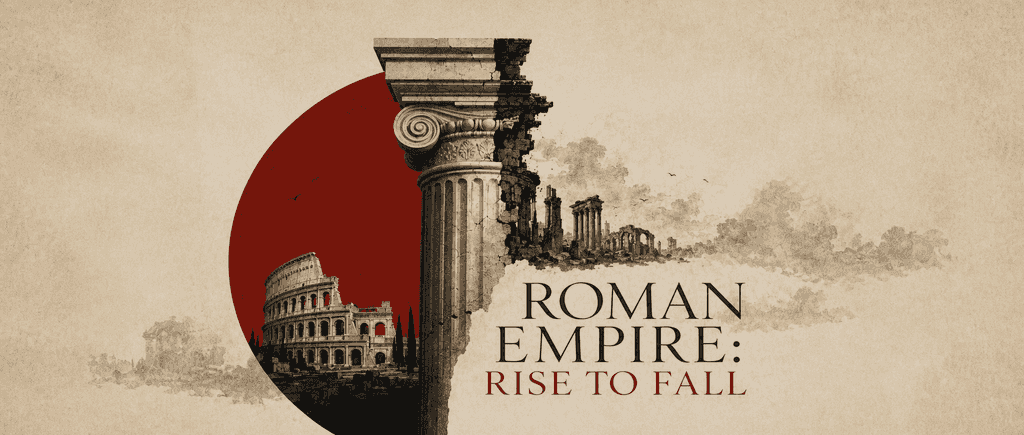
Revelation is less like a crystal ball and more like a complex literary puzzle; it’s not necessarily about 'the end,' but about pulling back the curtain on the recurring patterns of how empires rise and fall.
Generated by Laura
Explain to an atheist the Book of Revelations and what modern events is supposedly foretold.

Frequently Asked Questions
In the original Greek, the word apocalypsis literally means an "unveiling" or a pulling back of the curtain to reveal what is happening behind the scenes of history. Rather than being a literal Hollywood-style disaster movie or a crystal ball for the future, the genre was intended to help ancient audiences understand the true nature of the political and spiritual forces at work in their own time, specifically under the Roman Empire.
The futurist view, popularized in the 19th century by John Nelson Darby, treats the Book of Revelation as a literal blueprint or timeline for events that have not yet happened. In contrast, the historicist view, often found in Eastern Orthodox tradition, sees the book as a symbolic portrayal of the entire course of human history. Instead of looking for a single future battle, historicists look for recurring patterns of how empires rise and fall, viewing "Armageddon" as a "mountain of slaughter" that describes the ongoing age of global conflict.
In the symbolic language of prophecy, an earthquake represents a total convulsion or collapse of the political and social order, such as the fall of major empires or radical shifts in church-state relations. Mountains typically symbolize kingdoms, centers of authority, or great empires. Therefore, when the text describes mountains disappearing or islands fleeing away, it is poetically describing the literal vanishing of imperial powers and the process of decolonization.
While ancient readers saw the "plague of hail" as a cosmic disaster, some modern historicist interpreters point to the specific weight of the hailstones—one "talent," or roughly 75 to 125 pounds—as a parallel to modern warfare. For instance, the uranium payload of the atomic bomb dropped on Hiroshima weighed approximately 141 pounds, which is remarkably close to a biblical talent. This interpretation suggests the symbols capture the "unimaginable" reality of modern aerial bombardment and devastation from above.
Thinkers like Augustine sought to "domesticate" the book once Christianity became the official religion of the Roman Empire. It became politically awkward to label Rome as "the Beast" or "the Harlot" once the church was in power. By turning the book into an allegory about the internal spiritual struggle of the soul against sin, they pulled the "political teeth" out of the text, moving it away from a manual of resistance to a call for personal piety.
From Columbia University alumni built in San Francisco
"Instead of endless scrolling, I just hit play on BeFreed. It saves me so much time."


"I never knew where to start with nonfiction—BeFreed’s book lists turned into podcasts gave me a clear path."


"Perfect balance between learning and entertainment. Finished ‘Thinking, Fast and Slow’ on my commute this week."
"Crazy how much I learned while walking the dog. BeFreed = small habits → big gains."
"Reading used to feel like a chore. Now it’s just part of my lifestyle."

"Feels effortless compared to reading. I’ve finished 6 books this month already."
"BeFreed turned my guilty doomscrolling into something that feels productive and inspiring."

"BeFreed turned my commute into learning time. 20-min podcasts are perfect for finishing books I never had time for."
"BeFreed replaced my podcast queue. Imagine Spotify for books — that’s it. 🙌"

"It is great for me to learn something from the book without reading it."
"The themed book list podcasts help me connect ideas across authors—like a guided audio journey."
"Makes me feel smarter every time before going to work"
From Columbia University alumni built in San Francisco
"Instead of endless scrolling, I just hit play on BeFreed. It saves me so much time."
"I never knew where to start with nonfiction—BeFreed’s book lists turned into podcasts gave me a clear path."
"Perfect balance between learning and entertainment. Finished ‘Thinking, Fast and Slow’ on my commute this week."
"Crazy how much I learned while walking the dog. BeFreed = small habits → big gains."
"Reading used to feel like a chore. Now it’s just part of my lifestyle."
"Feels effortless compared to reading. I’ve finished 6 books this month already."
"BeFreed turned my guilty doomscrolling into something that feels productive and inspiring."
"BeFreed turned my commute into learning time. 20-min podcasts are perfect for finishing books I never had time for."
"BeFreed replaced my podcast queue. Imagine Spotify for books — that’s it. 🙌"
"It is great for me to learn something from the book without reading it."
"The themed book list podcasts help me connect ideas across authors—like a guided audio journey."
"Makes me feel smarter every time before going to work"
"Instead of endless scrolling, I just hit play on BeFreed. It saves me so much time."
"I never knew where to start with nonfiction—BeFreed’s book lists turned into podcasts gave me a clear path."
"Perfect balance between learning and entertainment. Finished ‘Thinking, Fast and Slow’ on my commute this week."
"Crazy how much I learned while walking the dog. BeFreed = small habits → big gains."
"Reading used to feel like a chore. Now it’s just part of my lifestyle."
"Feels effortless compared to reading. I’ve finished 6 books this month already."
"BeFreed turned my guilty doomscrolling into something that feels productive and inspiring."
"BeFreed turned my commute into learning time. 20-min podcasts are perfect for finishing books I never had time for."
"BeFreed replaced my podcast queue. Imagine Spotify for books — that’s it. 🙌"
"It is great for me to learn something from the book without reading it."
"The themed book list podcasts help me connect ideas across authors—like a guided audio journey."
"Makes me feel smarter every time before going to work"
"Instead of endless scrolling, I just hit play on BeFreed. It saves me so much time."
"I never knew where to start with nonfiction—BeFreed’s book lists turned into podcasts gave me a clear path."
"Perfect balance between learning and entertainment. Finished ‘Thinking, Fast and Slow’ on my commute this week."
"Crazy how much I learned while walking the dog. BeFreed = small habits → big gains."
"Reading used to feel like a chore. Now it’s just part of my lifestyle."
"Feels effortless compared to reading. I’ve finished 6 books this month already."
"BeFreed turned my guilty doomscrolling into something that feels productive and inspiring."
"BeFreed turned my commute into learning time. 20-min podcasts are perfect for finishing books I never had time for."
"BeFreed replaced my podcast queue. Imagine Spotify for books — that’s it. 🙌"
"It is great for me to learn something from the book without reading it."
"The themed book list podcasts help me connect ideas across authors—like a guided audio journey."
"Makes me feel smarter every time before going to work"