De-escalation: The Art of the Off-Ramp in High-Stakes Negotiations
Learn the art of the off-ramp in high-stakes negotiations. Discover how de-escalation and face-negotiation theory help resolve intense professional conflicts.
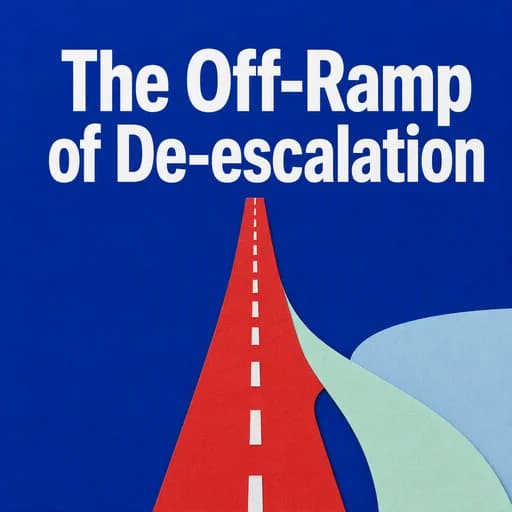
Best quote from De-escalation: The Art of the Off-Ramp in High-Stakes Negotiations
When people feel cornered, they stop trying to solve the problem and start trying to protect their pride. The fastest way to lose control is to trap someone in a corner—and the fastest way to regain it is to give them space to breathe.
Generated by Julian
Teach me a conflict de-escalation framework for high-stakes talks. Use Iran’s demand for U.S. concessions before reopening the Strait of Hormuz as a case study, and give me 3 signals, 3 repair moves, and 3 red lines for my own hard conversations.






Frequently Asked Questions
The art of the off-ramp is a de-escalation strategy focused on creating a deliberate way for a counterpart to back down without feeling crushed or humiliated. In high-stakes negotiations, providing this path is essential because it prevents the primal defensive reflex that occurs when someone feels cornered. By allowing the other party to maintain their dignity, you move the focus away from protecting pride and back toward solving the actual problem.
Face-negotiation theory suggests that when a person's dignity or 'face' is stripped away, they enter a defensive state that makes reaching an agreement nearly impossible. Research indicates that protecting a counterpart's pride is a critical component of professional communication and crisis management. When dignity is preserved, parties are less likely to view exchanges as tactical strikes and are more likely to engage in productive problem-solving rather than just trying to survive the interaction.
Many high-stakes negotiations collapse not because of rigid terms or high prices, but because one party feels humiliated or cornered. When resentment builds, every word can be interpreted as a tactical strike, leading to a breakdown in communication where the goal shifts from hitting deadlines to protecting one's ego. Understanding the psychology of negotiation helps managers recognize that maintaining the other party's dignity is just as important as the technical details of the deal.
From Columbia University alumni built in San Francisco
BeFreed Brings Together A Global Community Of Curious Minds


"Instead of endless scrolling, I just hit play on BeFreed. It saves me so much time."


"I never knew where to start with nonfiction—BeFreed’s book lists turned into podcasts gave me a clear path."


"Perfect balance between learning and entertainment. Finished ‘Thinking, Fast and Slow’ on my commute this week."
"Crazy how much I learned while walking the dog. BeFreed = small habits → big gains."
"Reading used to feel like a chore. Now it’s just part of my lifestyle."

"Feels effortless compared to reading. I’ve finished 6 books this month already."
"BeFreed turned my guilty doomscrolling into something that feels productive and inspiring."

"BeFreed turned my commute into learning time. 20-min podcasts are perfect for finishing books I never had time for."
"BeFreed replaced my podcast queue. Imagine Spotify for books — that’s it. 🙌"

"It is great for me to learn something from the book without reading it."
"The themed book list podcasts help me connect ideas across authors—like a guided audio journey."
"Makes me feel smarter every time before going to work"
From Columbia University alumni built in San Francisco
BeFreed Brings Together A Global Community Of Curious Minds
"Instead of endless scrolling, I just hit play on BeFreed. It saves me so much time."
"I never knew where to start with nonfiction—BeFreed’s book lists turned into podcasts gave me a clear path."
"Perfect balance between learning and entertainment. Finished ‘Thinking, Fast and Slow’ on my commute this week."
"Crazy how much I learned while walking the dog. BeFreed = small habits → big gains."
"Reading used to feel like a chore. Now it’s just part of my lifestyle."
"Feels effortless compared to reading. I’ve finished 6 books this month already."
"BeFreed turned my guilty doomscrolling into something that feels productive and inspiring."
"BeFreed turned my commute into learning time. 20-min podcasts are perfect for finishing books I never had time for."
"BeFreed replaced my podcast queue. Imagine Spotify for books — that’s it. 🙌"
"It is great for me to learn something from the book without reading it."
"The themed book list podcasts help me connect ideas across authors—like a guided audio journey."
"Makes me feel smarter every time before going to work"
"Instead of endless scrolling, I just hit play on BeFreed. It saves me so much time."
"I never knew where to start with nonfiction—BeFreed’s book lists turned into podcasts gave me a clear path."
"Perfect balance between learning and entertainment. Finished ‘Thinking, Fast and Slow’ on my commute this week."
"Crazy how much I learned while walking the dog. BeFreed = small habits → big gains."
"Reading used to feel like a chore. Now it’s just part of my lifestyle."
"Feels effortless compared to reading. I’ve finished 6 books this month already."
"BeFreed turned my guilty doomscrolling into something that feels productive and inspiring."
"BeFreed turned my commute into learning time. 20-min podcasts are perfect for finishing books I never had time for."
"BeFreed replaced my podcast queue. Imagine Spotify for books — that’s it. 🙌"
"It is great for me to learn something from the book without reading it."
"The themed book list podcasts help me connect ideas across authors—like a guided audio journey."
"Makes me feel smarter every time before going to work"
"Instead of endless scrolling, I just hit play on BeFreed. It saves me so much time."
"I never knew where to start with nonfiction—BeFreed’s book lists turned into podcasts gave me a clear path."
"Perfect balance between learning and entertainment. Finished ‘Thinking, Fast and Slow’ on my commute this week."
"Crazy how much I learned while walking the dog. BeFreed = small habits → big gains."
"Reading used to feel like a chore. Now it’s just part of my lifestyle."
"Feels effortless compared to reading. I’ve finished 6 books this month already."
"BeFreed turned my guilty doomscrolling into something that feels productive and inspiring."
"BeFreed turned my commute into learning time. 20-min podcasts are perfect for finishing books I never had time for."
"BeFreed replaced my podcast queue. Imagine Spotify for books — that’s it. 🙌"
"It is great for me to learn something from the book without reading it."
"The themed book list podcasts help me connect ideas across authors—like a guided audio journey."
"Makes me feel smarter every time before going to work"