The Beauty of Traces: China’s Ruin Aesthetics and Ancient Sites
Explore China’s Ruin Aesthetics through the beauty of traces. Learn how Dunhuang murals and Suzhou gardens reveal a dialogue between time, nature, and spirit.
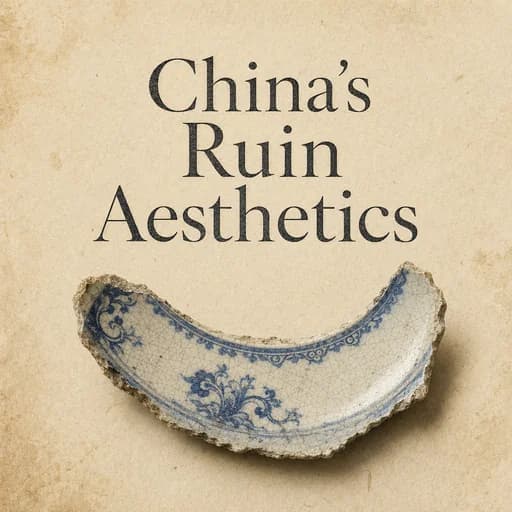
Best quote from The Beauty of Traces: China’s Ruin Aesthetics and Ancient Sites
A ruin is not just a pile of debris; it is a 'processive co-creativity' between man the artist and nature the transformer, where the very things that seem to be falling apart are actually holding the most valuable stories of our civilization together.
Generated by Mary Chen
深度探讨“沟沟壑壑斑斑驳驳”所描述的历史岁月痕迹,包括古旧建筑、文物、文化遗址中的沧桑美感及其背后的历史故事。






Frequently Asked Questions
China’s Ruin Aesthetics is a profound tradition that finds beauty in the mottled and variegated traces of history rather than the polished or new. This concept, often referred to as the beauty of traces, focuses on the cracks and crevices of ancient sites. It suggests that the most honest dialogue between the human spirit and time is found in crumbling stones and fading ink, where decay acts as a magnetic pull toward historical truth.
Processive co-creativity describes the relationship between man the artist and nature the transformer. In this view, a ruin is not merely a pile of debris but a collaborative work that continues long after construction ends. As nature interacts with ancient Chinese architecture, such as the peeling Dunhuang murals, it creates a unique aesthetic that values the ongoing transformation of the site over its original, static form.
The Dunhuang murals and Suzhou gardens serve as primary examples of how imperfections define cultural value. In Dunhuang, peeling paint creates a specific beauty of traces that highlights the passage of time. Similarly, the scars of the Republican era on Suzhou gardens helped preserve their cultural legitimacy. These sites demonstrate that heritage preservation is not just about maintenance, but about recognizing the historical significance of a site's weathered state.
Qu Yuan was a poet who, more than two thousand years ago, stood overlooking the ruins of an ancient capital. Instead of seeing grand architecture, he observed earthen hillocks known in the Chinese language as qiu. His perspective marks an early recognition of ruin aesthetics, where the memory of magnificent halls is replaced by the reality of rubble. This historical viewpoint underscores the long-standing Chinese tradition of finding meaning in the remnants of the past.
From Columbia University alumni built in San Francisco
"Instead of endless scrolling, I just hit play on BeFreed. It saves me so much time."


"I never knew where to start with nonfiction—BeFreed’s book lists turned into podcasts gave me a clear path."


"Perfect balance between learning and entertainment. Finished ‘Thinking, Fast and Slow’ on my commute this week."
"Crazy how much I learned while walking the dog. BeFreed = small habits → big gains."
"Reading used to feel like a chore. Now it’s just part of my lifestyle."

"Feels effortless compared to reading. I’ve finished 6 books this month already."
"BeFreed turned my guilty doomscrolling into something that feels productive and inspiring."

"BeFreed turned my commute into learning time. 20-min podcasts are perfect for finishing books I never had time for."
"BeFreed replaced my podcast queue. Imagine Spotify for books — that’s it. 🙌"

"It is great for me to learn something from the book without reading it."
"The themed book list podcasts help me connect ideas across authors—like a guided audio journey."
"Makes me feel smarter every time before going to work"
From Columbia University alumni built in San Francisco
"Instead of endless scrolling, I just hit play on BeFreed. It saves me so much time."
"I never knew where to start with nonfiction—BeFreed’s book lists turned into podcasts gave me a clear path."
"Perfect balance between learning and entertainment. Finished ‘Thinking, Fast and Slow’ on my commute this week."
"Crazy how much I learned while walking the dog. BeFreed = small habits → big gains."
"Reading used to feel like a chore. Now it’s just part of my lifestyle."
"Feels effortless compared to reading. I’ve finished 6 books this month already."
"BeFreed turned my guilty doomscrolling into something that feels productive and inspiring."
"BeFreed turned my commute into learning time. 20-min podcasts are perfect for finishing books I never had time for."
"BeFreed replaced my podcast queue. Imagine Spotify for books — that’s it. 🙌"
"It is great for me to learn something from the book without reading it."
"The themed book list podcasts help me connect ideas across authors—like a guided audio journey."
"Makes me feel smarter every time before going to work"
"Instead of endless scrolling, I just hit play on BeFreed. It saves me so much time."
"I never knew where to start with nonfiction—BeFreed’s book lists turned into podcasts gave me a clear path."
"Perfect balance between learning and entertainment. Finished ‘Thinking, Fast and Slow’ on my commute this week."
"Crazy how much I learned while walking the dog. BeFreed = small habits → big gains."
"Reading used to feel like a chore. Now it’s just part of my lifestyle."
"Feels effortless compared to reading. I’ve finished 6 books this month already."
"BeFreed turned my guilty doomscrolling into something that feels productive and inspiring."
"BeFreed turned my commute into learning time. 20-min podcasts are perfect for finishing books I never had time for."
"BeFreed replaced my podcast queue. Imagine Spotify for books — that’s it. 🙌"
"It is great for me to learn something from the book without reading it."
"The themed book list podcasts help me connect ideas across authors—like a guided audio journey."
"Makes me feel smarter every time before going to work"
"Instead of endless scrolling, I just hit play on BeFreed. It saves me so much time."
"I never knew where to start with nonfiction—BeFreed’s book lists turned into podcasts gave me a clear path."
"Perfect balance between learning and entertainment. Finished ‘Thinking, Fast and Slow’ on my commute this week."
"Crazy how much I learned while walking the dog. BeFreed = small habits → big gains."
"Reading used to feel like a chore. Now it’s just part of my lifestyle."
"Feels effortless compared to reading. I’ve finished 6 books this month already."
"BeFreed turned my guilty doomscrolling into something that feels productive and inspiring."
"BeFreed turned my commute into learning time. 20-min podcasts are perfect for finishing books I never had time for."
"BeFreed replaced my podcast queue. Imagine Spotify for books — that’s it. 🙌"
"It is great for me to learn something from the book without reading it."
"The themed book list podcasts help me connect ideas across authors—like a guided audio journey."
"Makes me feel smarter every time before going to work"