British Monarchs Since Queen Victoria: Success and Legacy
Explore the history of British monarchs from Queen Victoria to King Charles III. Analyze their legacies and success in promoting the modern Royal Family.

Best quote from British Monarchs Since Queen Victoria: Success and Legacy
The 'perfect' King, Edward VIII, almost destroyed the monarchy by putting himself first. The 'reluctant' King, George VI, saved it by putting the people first, proving that the monarchy wasn't about being a celebrity; it was about being a 'silent guardian' of the nation’s soul.

This audio lesson was created by a BeFreed community member
Tell the story of all the British monarchs since Victoria and comment on how successful they were in promoting the British monarchy.

Frequently Asked Questions
Following the long reign of Queen Victoria, the British monarchy saw a succession of influential leaders including King Edward VII, King George V, King Edward VIII, and King George VI. The era continued with the record-breaking reign of Queen Elizabeth II and the recent accession of King Charles III. Each monarch has played a unique role in shaping the history of the British Monarchy and adapting the institution to the social and political changes of the 20th and 21st centuries.
Royal Family success is often measured by a monarch's ability to maintain public support, provide national stability during crises, and adapt to modern democratic values. For instance, King George V was successful in branding the family as the House of Windsor during WWI, while Queen Elizabeth II is credited with globalizing the monarchy's reach. Evaluating these figures involves looking at how they balanced tradition with the evolving expectations of the British public and the Commonwealth.
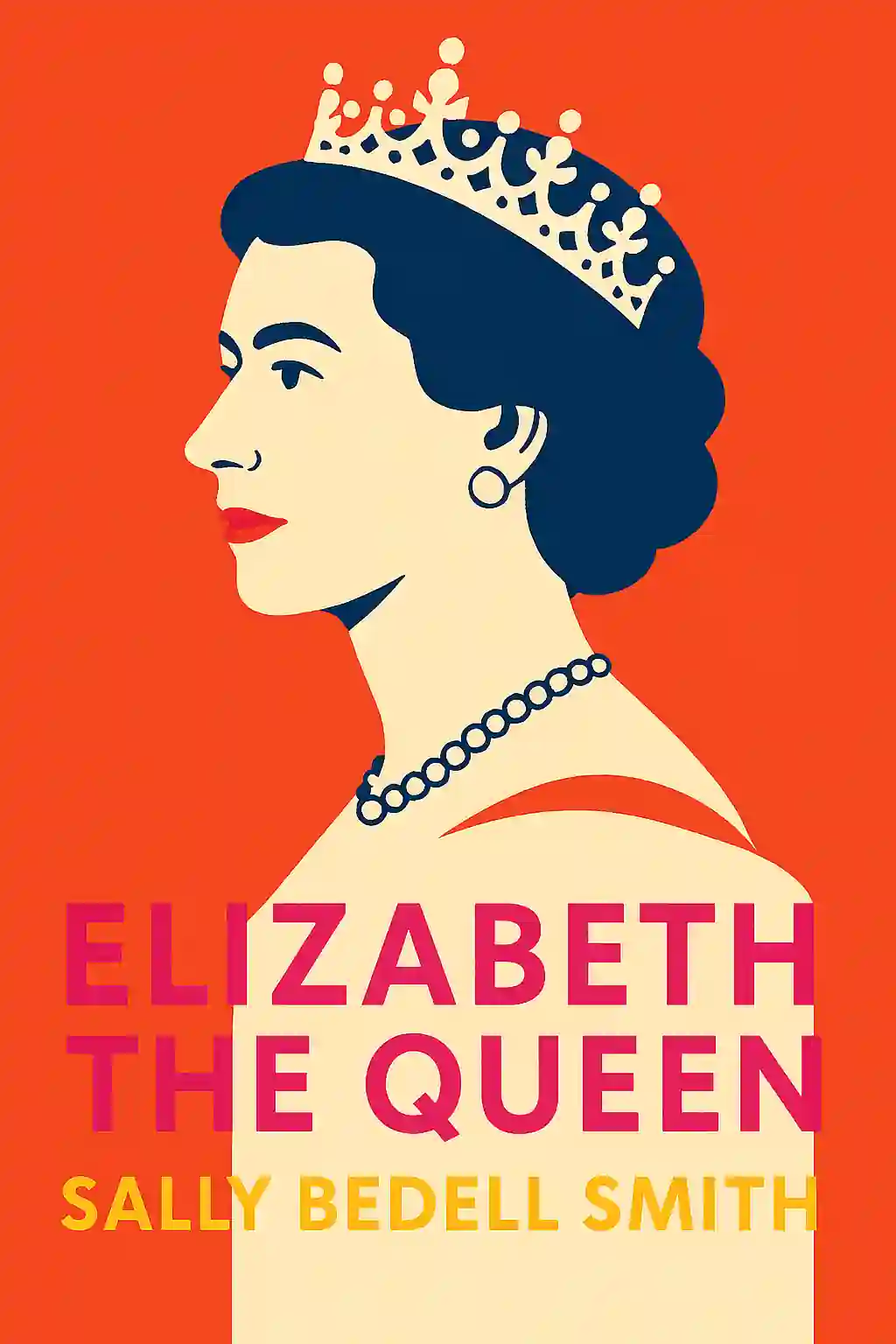
Queen Elizabeth II significantly redefined the legacy of British monarchs by serving as a constant symbol of stability for over 70 years. Her success in promoting the monarchy stemmed from her dedication to public service and her ability to modernize the institution's image without losing its historical significance. By navigating the transition from Empire to Commonwealth, she ensured the Royal Family remained relevant in a rapidly changing world, setting a high standard for her successors.
As the current head of the British monarchs, King Charles III faces the challenge of maintaining the institution's popularity in a more secular and skeptical age. His success depends on his ability to champion contemporary issues, such as environmental sustainability, while upholding the ceremonial duties inherited from Queen Victoria and Queen Elizabeth II. His reign marks a new chapter in the history of the British Monarchy, focused on streamlining the royal household and connecting with a diverse modern audience.
Discover more

The history of the British Monarchy
The British monarchy represents one of history's longest continuous political institutions, profoundly influencing global governance, culture, and society. This learning plan benefits history enthusiasts, political science students, and anyone interested in understanding how this ancient institution evolved and continues to shape modern Britain and the Commonwealth.

The Kennedy Dynasty: Power, Scandal, and Survival
This plan offers a deep dive into the tension between political mythology and the reality of power. It is ideal for history buffs and political science students seeking to understand how one family shaped American leadership through triumph and turmoil.
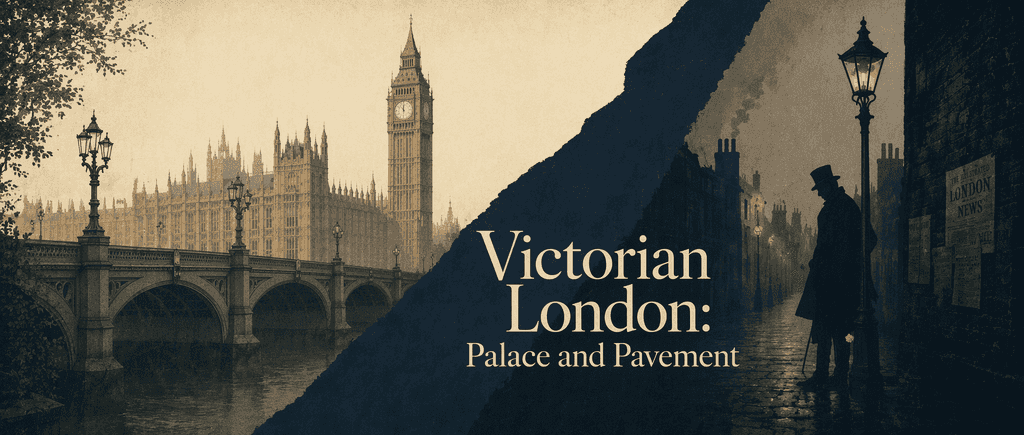
Victorian London: Palace and Pavement
This learning plan provides a comprehensive look at the contradictions of 19th-century London, bridging the gap between high society and the desperate underworld. It is essential for history enthusiasts, writers, and students seeking to understand the foundations of modern urban life and social reform.

The King’s Great Matter
This plan is essential for history enthusiasts and students seeking to understand the radical transformation of the English state and church. It provides a deep dive into the political maneuvers and religious tensions that defined the Tudor era and reshaped Western Christianity.

Thatcher and the British Disease
This plan provides a deep dive into the pivotal shift from post-war consensus to neoliberalism in the United Kingdom. It is ideal for students of political history, economics, and sociology seeking to understand how radical reform reshapes a nation's identity.

Oxford Greats: The 19th-Century Novel
This learning plan offers a deep dive into the socio-political forces that shaped the Victorian era's most enduring literary works. It is ideal for literature students, history buffs, and readers looking to understand the intersection of industrial trauma and identity politics.

The English musical renaissance
This plan offers a deep dive into the pivotal era that defined England's musical identity. It is ideal for history enthusiasts and musicians seeking to understand how Tudor politics and Elizabethan culture shaped Western classical music.

Empires, Revolutions, and Ordinary Survival
This plan is essential for history enthusiasts and political science students who want to understand the mechanics of social change from the ground up. It offers a unique look at how ordinary lives intersect with the fall of empires and the birth of revolutions.
From Columbia University alumni built in San Francisco
"Instead of endless scrolling, I just hit play on BeFreed. It saves me so much time."


"I never knew where to start with nonfiction—BeFreed’s book lists turned into podcasts gave me a clear path."


"Perfect balance between learning and entertainment. Finished ‘Thinking, Fast and Slow’ on my commute this week."
"Crazy how much I learned while walking the dog. BeFreed = small habits → big gains."
"Reading used to feel like a chore. Now it’s just part of my lifestyle."

"Feels effortless compared to reading. I’ve finished 6 books this month already."
"BeFreed turned my guilty doomscrolling into something that feels productive and inspiring."

"BeFreed turned my commute into learning time. 20-min podcasts are perfect for finishing books I never had time for."
"BeFreed replaced my podcast queue. Imagine Spotify for books — that’s it. 🙌"

"It is great for me to learn something from the book without reading it."
"The themed book list podcasts help me connect ideas across authors—like a guided audio journey."
"Makes me feel smarter every time before going to work"
From Columbia University alumni built in San Francisco
"Instead of endless scrolling, I just hit play on BeFreed. It saves me so much time."
"I never knew where to start with nonfiction—BeFreed’s book lists turned into podcasts gave me a clear path."
"Perfect balance between learning and entertainment. Finished ‘Thinking, Fast and Slow’ on my commute this week."
"Crazy how much I learned while walking the dog. BeFreed = small habits → big gains."
"Reading used to feel like a chore. Now it’s just part of my lifestyle."
"Feels effortless compared to reading. I’ve finished 6 books this month already."
"BeFreed turned my guilty doomscrolling into something that feels productive and inspiring."
"BeFreed turned my commute into learning time. 20-min podcasts are perfect for finishing books I never had time for."
"BeFreed replaced my podcast queue. Imagine Spotify for books — that’s it. 🙌"
"It is great for me to learn something from the book without reading it."
"The themed book list podcasts help me connect ideas across authors—like a guided audio journey."
"Makes me feel smarter every time before going to work"
"Instead of endless scrolling, I just hit play on BeFreed. It saves me so much time."
"I never knew where to start with nonfiction—BeFreed’s book lists turned into podcasts gave me a clear path."
"Perfect balance between learning and entertainment. Finished ‘Thinking, Fast and Slow’ on my commute this week."
"Crazy how much I learned while walking the dog. BeFreed = small habits → big gains."
"Reading used to feel like a chore. Now it’s just part of my lifestyle."
"Feels effortless compared to reading. I’ve finished 6 books this month already."
"BeFreed turned my guilty doomscrolling into something that feels productive and inspiring."
"BeFreed turned my commute into learning time. 20-min podcasts are perfect for finishing books I never had time for."
"BeFreed replaced my podcast queue. Imagine Spotify for books — that’s it. 🙌"
"It is great for me to learn something from the book without reading it."
"The themed book list podcasts help me connect ideas across authors—like a guided audio journey."
"Makes me feel smarter every time before going to work"
"Instead of endless scrolling, I just hit play on BeFreed. It saves me so much time."
"I never knew where to start with nonfiction—BeFreed’s book lists turned into podcasts gave me a clear path."
"Perfect balance between learning and entertainment. Finished ‘Thinking, Fast and Slow’ on my commute this week."
"Crazy how much I learned while walking the dog. BeFreed = small habits → big gains."
"Reading used to feel like a chore. Now it’s just part of my lifestyle."
"Feels effortless compared to reading. I’ve finished 6 books this month already."
"BeFreed turned my guilty doomscrolling into something that feels productive and inspiring."
"BeFreed turned my commute into learning time. 20-min podcasts are perfect for finishing books I never had time for."
"BeFreed replaced my podcast queue. Imagine Spotify for books — that’s it. 🙌"
"It is great for me to learn something from the book without reading it."
"The themed book list podcasts help me connect ideas across authors—like a guided audio journey."
"Makes me feel smarter every time before going to work"