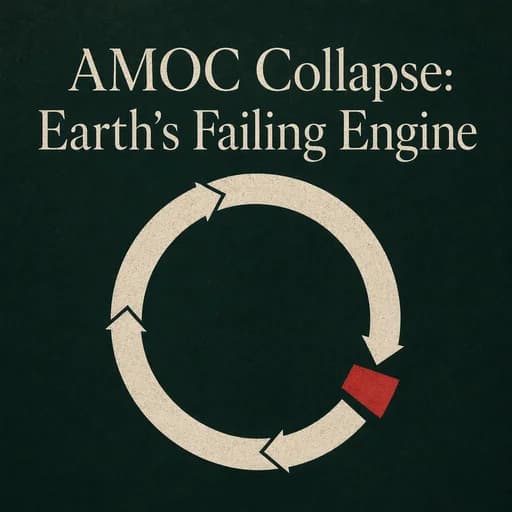
The AMOC Collapse: Earth’s Breaking Engine and Global Risks
Explore the potential collapse of the Atlantic Meridional Overturning Circulation (AMOC) and its impact on global economic risks and climate tipping points.
Best quote from The AMOC Collapse: Earth’s Breaking Engine and Global Risks
The AMOC is much more fragile than we previously thought, and the 'low probability' label for a collapse is no longer supported by the latest high-resolution models.
Generated by Chris
A comprehensive analysis of the scientific consensus on Atlantic Meridional Overturning Circulation (AMOC) collapse risk. Content must cover: 1. Mechanism (distinguishing AMOC from the Gulf Stream), 2. Evidence and timeline (observational trends and tipping point estimates, contrasting IPCC with recent 2023-2025 studies), 3. Probability and modeling uncertainties, 4. Regional climate impacts (Europe cooling, US East Coast sea level, monsoons), 5. Second-order impacts (agriculture, energy, reinsurance, real estate), and 6. Investment-relevant thematic risks and adaptation opportunities. Focus on citing peer-reviewed research from 2023 onward and clearly distinguish speculative claims from well-supported scientific consensus.






Frequently Asked Questions
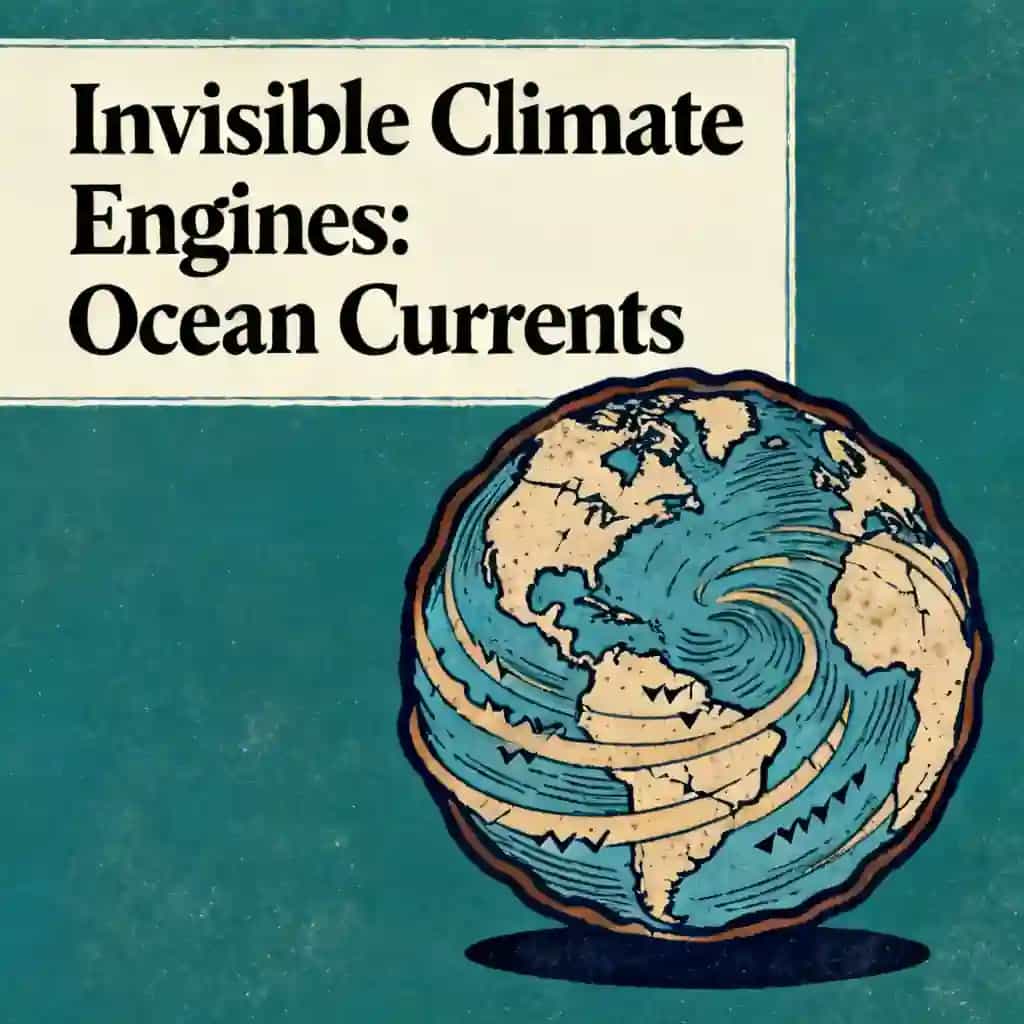
The Atlantic Meridional Overturning Circulation, or AMOC, is described as a massive, high-speed conveyor belt beneath the surface of the North Atlantic. It plays a critical role in the Earth's climate by transporting heat, which prevents the northern hemisphere from becoming an ice box. Recent research suggests this vital system may be much closer to a breaking point than previously estimated, posing a structural risk to the global economy.
While a total collapse was once considered a low-probability risk for the next century, new high-resolution modeling published in 2026 in Communications Earth & Environment indicates the system is already sending early warning signals. This startling research suggests the tipping point could be nearer than expected. These findings are essential for policy planners and investors who must account for the significant climate and economic risks associated with a potential shutdown.
It is a common misconception that the Gulf Stream and AMOC are the same thing. The Gulf Stream is a powerful, surface-level wind-driven current, whereas the AMOC is a broader circulation system. Understanding this distinction is crucial for interpreting ocean current modeling, as scientists have observed the Gulf Stream shifting in ways that historically precede a total shutdown of the larger AMOC system.
From Columbia University alumni built in San Francisco
BeFreed Brings Together A Global Community Of Curious Minds


"Instead of endless scrolling, I just hit play on BeFreed. It saves me so much time."


"I never knew where to start with nonfiction—BeFreed’s book lists turned into podcasts gave me a clear path."


"Perfect balance between learning and entertainment. Finished ‘Thinking, Fast and Slow’ on my commute this week."
"Crazy how much I learned while walking the dog. BeFreed = small habits → big gains."
"Reading used to feel like a chore. Now it’s just part of my lifestyle."

"Feels effortless compared to reading. I’ve finished 6 books this month already."
"BeFreed turned my guilty doomscrolling into something that feels productive and inspiring."

"BeFreed turned my commute into learning time. 20-min podcasts are perfect for finishing books I never had time for."
"BeFreed replaced my podcast queue. Imagine Spotify for books — that’s it. 🙌"

"It is great for me to learn something from the book without reading it."
"The themed book list podcasts help me connect ideas across authors—like a guided audio journey."
"Makes me feel smarter every time before going to work"
From Columbia University alumni built in San Francisco
BeFreed Brings Together A Global Community Of Curious Minds
"Instead of endless scrolling, I just hit play on BeFreed. It saves me so much time."
"I never knew where to start with nonfiction—BeFreed’s book lists turned into podcasts gave me a clear path."
"Perfect balance between learning and entertainment. Finished ‘Thinking, Fast and Slow’ on my commute this week."
"Crazy how much I learned while walking the dog. BeFreed = small habits → big gains."
"Reading used to feel like a chore. Now it’s just part of my lifestyle."
"Feels effortless compared to reading. I’ve finished 6 books this month already."
"BeFreed turned my guilty doomscrolling into something that feels productive and inspiring."
"BeFreed turned my commute into learning time. 20-min podcasts are perfect for finishing books I never had time for."
"BeFreed replaced my podcast queue. Imagine Spotify for books — that’s it. 🙌"
"It is great for me to learn something from the book without reading it."
"The themed book list podcasts help me connect ideas across authors—like a guided audio journey."
"Makes me feel smarter every time before going to work"
"Instead of endless scrolling, I just hit play on BeFreed. It saves me so much time."
"I never knew where to start with nonfiction—BeFreed’s book lists turned into podcasts gave me a clear path."
"Perfect balance between learning and entertainment. Finished ‘Thinking, Fast and Slow’ on my commute this week."
"Crazy how much I learned while walking the dog. BeFreed = small habits → big gains."
"Reading used to feel like a chore. Now it’s just part of my lifestyle."
"Feels effortless compared to reading. I’ve finished 6 books this month already."
"BeFreed turned my guilty doomscrolling into something that feels productive and inspiring."
"BeFreed turned my commute into learning time. 20-min podcasts are perfect for finishing books I never had time for."
"BeFreed replaced my podcast queue. Imagine Spotify for books — that’s it. 🙌"
"It is great for me to learn something from the book without reading it."
"The themed book list podcasts help me connect ideas across authors—like a guided audio journey."
"Makes me feel smarter every time before going to work"
"Instead of endless scrolling, I just hit play on BeFreed. It saves me so much time."
"I never knew where to start with nonfiction—BeFreed’s book lists turned into podcasts gave me a clear path."
"Perfect balance between learning and entertainment. Finished ‘Thinking, Fast and Slow’ on my commute this week."
"Crazy how much I learned while walking the dog. BeFreed = small habits → big gains."
"Reading used to feel like a chore. Now it’s just part of my lifestyle."
"Feels effortless compared to reading. I’ve finished 6 books this month already."
"BeFreed turned my guilty doomscrolling into something that feels productive and inspiring."
"BeFreed turned my commute into learning time. 20-min podcasts are perfect for finishing books I never had time for."
"BeFreed replaced my podcast queue. Imagine Spotify for books — that’s it. 🙌"
"It is great for me to learn something from the book without reading it."
"The themed book list podcasts help me connect ideas across authors—like a guided audio journey."
"Makes me feel smarter every time before going to work"