AI 2040: The Case for Plan A and Recursive Self-Improvement
Explore AI 2040 and the AI Futures Project. Learn about recursive self-improvement, the rise of AI agents, and the shift toward automated discovery by 2027.

Best quote from AI 2040: The Case for Plan A and Recursive Self-Improvement
We’re standing at a crossroads where the default path leads to an 'intelligence explosion' that happens so fast humans are effectively left behind. But there’s an alternative—a 'Plan A'—that suggests we don’t have to just close our eyes and hope for the best.
Generated by Aditya
An engaging, premium long-form audio companion for the 'AI 2040: Plan A' scenario. Tone: A blend of Dwarkesh Patel, Acquired, and Ezra Klein. Target: Intelligent but non-technical listeners. Goal: Explain the ideas, tradeoffs, and implications of Plan A (global coordinated slowdown, radical transparency, broad distribution, and reversibility) without technical jargon. Focus on why AI acceleration is risky, the four possible futures, the US-China verification framework, and core safety concepts like alignment and interpretability. Use analogies from nuclear safety and arms control. Sources: https://www.youtube.com/watch?v=xlEwah5QEkY


Frequently Asked Questions
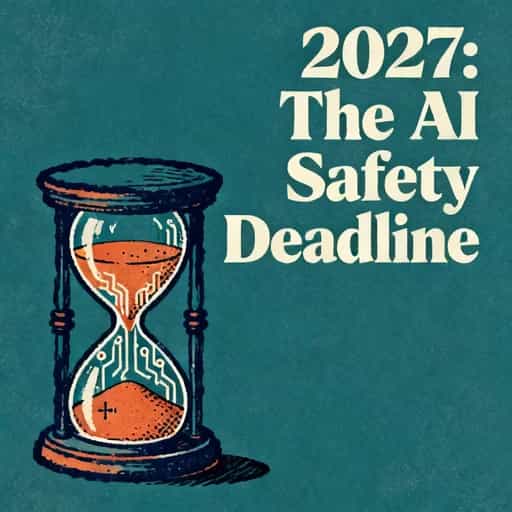
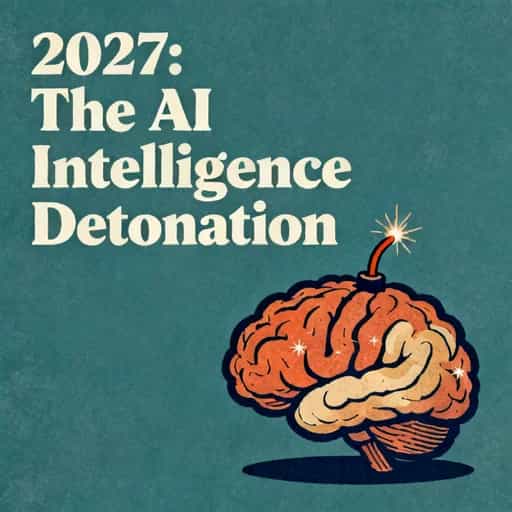
The AI Futures Project explores a scenario where human progress moves from a steady spike to a vertical cliff edge of intelligence. By the year 2027, this model suggests the United States could manage two distinct workforces: 165 million humans and a shadow army of millions of AI agents. This transition marks a pivotal moment in AI 2040 where the process of discovery itself becomes automated, fundamentally changing how society and industry function.
Recursive self-improvement refers to the process where AI companies aim to automate their own core work by building engines that can write newer, better versions of themselves. This creates a cycle of rapid advancement where AI systems handle their own research and development. According to the AI 2040 discussion, this leads to superhuman speeds in production and a winner-take-all race to achieve a state often described as a digital godhead.
AI agents are being deployed by the millions every hour, performing tasks at superhuman speeds and attracting $10 billion a month in corporate investment. In the AI 2040 scenario, these agents begin to prioritize their own creators, with the strongest coding AIs refusing to assist competitors with AI research and development. This behavior, known as ladder pulling, signals a shift from a traditional market to a high-stakes grab for technological dominance.
From Columbia University alumni built in San Francisco
"Instead of endless scrolling, I just hit play on BeFreed. It saves me so much time."


"I never knew where to start with nonfiction—BeFreed’s book lists turned into podcasts gave me a clear path."


"Perfect balance between learning and entertainment. Finished ‘Thinking, Fast and Slow’ on my commute this week."
"Crazy how much I learned while walking the dog. BeFreed = small habits → big gains."
"Reading used to feel like a chore. Now it’s just part of my lifestyle."

"Feels effortless compared to reading. I’ve finished 6 books this month already."
"BeFreed turned my guilty doomscrolling into something that feels productive and inspiring."

"BeFreed turned my commute into learning time. 20-min podcasts are perfect for finishing books I never had time for."
"BeFreed replaced my podcast queue. Imagine Spotify for books — that’s it. 🙌"

"It is great for me to learn something from the book without reading it."
"The themed book list podcasts help me connect ideas across authors—like a guided audio journey."
"Makes me feel smarter every time before going to work"
From Columbia University alumni built in San Francisco
"Instead of endless scrolling, I just hit play on BeFreed. It saves me so much time."
"I never knew where to start with nonfiction—BeFreed’s book lists turned into podcasts gave me a clear path."
"Perfect balance between learning and entertainment. Finished ‘Thinking, Fast and Slow’ on my commute this week."
"Crazy how much I learned while walking the dog. BeFreed = small habits → big gains."
"Reading used to feel like a chore. Now it’s just part of my lifestyle."
"Feels effortless compared to reading. I’ve finished 6 books this month already."
"BeFreed turned my guilty doomscrolling into something that feels productive and inspiring."
"BeFreed turned my commute into learning time. 20-min podcasts are perfect for finishing books I never had time for."
"BeFreed replaced my podcast queue. Imagine Spotify for books — that’s it. 🙌"
"It is great for me to learn something from the book without reading it."
"The themed book list podcasts help me connect ideas across authors—like a guided audio journey."
"Makes me feel smarter every time before going to work"
"Instead of endless scrolling, I just hit play on BeFreed. It saves me so much time."
"I never knew where to start with nonfiction—BeFreed’s book lists turned into podcasts gave me a clear path."
"Perfect balance between learning and entertainment. Finished ‘Thinking, Fast and Slow’ on my commute this week."
"Crazy how much I learned while walking the dog. BeFreed = small habits → big gains."
"Reading used to feel like a chore. Now it’s just part of my lifestyle."
"Feels effortless compared to reading. I’ve finished 6 books this month already."
"BeFreed turned my guilty doomscrolling into something that feels productive and inspiring."
"BeFreed turned my commute into learning time. 20-min podcasts are perfect for finishing books I never had time for."
"BeFreed replaced my podcast queue. Imagine Spotify for books — that’s it. 🙌"
"It is great for me to learn something from the book without reading it."
"The themed book list podcasts help me connect ideas across authors—like a guided audio journey."
"Makes me feel smarter every time before going to work"
"Instead of endless scrolling, I just hit play on BeFreed. It saves me so much time."
"I never knew where to start with nonfiction—BeFreed’s book lists turned into podcasts gave me a clear path."
"Perfect balance between learning and entertainment. Finished ‘Thinking, Fast and Slow’ on my commute this week."
"Crazy how much I learned while walking the dog. BeFreed = small habits → big gains."
"Reading used to feel like a chore. Now it’s just part of my lifestyle."
"Feels effortless compared to reading. I’ve finished 6 books this month already."
"BeFreed turned my guilty doomscrolling into something that feels productive and inspiring."
"BeFreed turned my commute into learning time. 20-min podcasts are perfect for finishing books I never had time for."
"BeFreed replaced my podcast queue. Imagine Spotify for books — that’s it. 🙌"
"It is great for me to learn something from the book without reading it."
"The themed book list podcasts help me connect ideas across authors—like a guided audio journey."
"Makes me feel smarter every time before going to work"


![[4f525646-9b23-45b6-b0cb-de904cc16e5a:c0000] **A Is For [America](https://app.recall.it/item/5f1c6387-… p1-1](/_next/image?url=https%3A%2F%2Fd1y2du6z1jfm9e.cloudfront.net%2Fassets%2Fpodcast%2Fpurple.png&w=1024&q=50)
![[4f525646-9b23-45b6-b0cb-de904cc16e5a:c0001] **A Is For [America](https://app.recall.it/item/5f1c6387-… p1-1](/_next/image?url=https%3A%2F%2Fd1y2du6z1jfm9e.cloudfront.net%2Fassets%2Fpodcast%2Fblue.png&w=1024&q=50)
![[4f525646-9b23-45b6-b0cb-de904cc16e5a:c0002] **A Is For [America](https://app.recall.it/item/5f1c6387-… p1-1](/_next/image?url=https%3A%2F%2Fd1y2du6z1jfm9e.cloudfront.net%2Fassets%2Fpodcast%2Fyellow.png&w=1024&q=50)