BeFreed
    Categories>Philosophy & Spirituality>Life after death and the holographic universe

    Life after death and the holographic universe

    33분
    |
    |
    2026년 4월 4일
    • Philosophy & Spirituality
    • Technology

    If the brain stops, how does consciousness continue? Explore how near-death experiences and quantum physics suggest our reality is a dimensional shift.

    Life after death and the holographic universe
    0:00 / 0:00
    전달 방식을 선택하세요

    하나의 에피소드, 다양한 청취 방식.

    Life after death and the holographic universe의 같은 아이디어를 나에게 맞는 목소리, 깊이, 속도로 만나보세요. 언제든 바꿀 수 있습니다.

    전체 대본 및 챕터

    챕터 1

    Beyond the Brain’s Off Switch

    Jackson: You know, I was thinking about how we usually view death as this big, final "off" switch. But what if we’ve been looking at the wrong map entirely? What if consciousness isn't something the brain produces, but more like a signal it’s just tuning into?

    Lena: That’s a huge question, Jackson. And it’s exactly what researchers like Pim van Lommel are suggesting. They’ve found that during cardiac arrest, when the brain has absolutely no measurable electrical activity, people are still reporting these incredibly lucid, structured experiences.

    Jackson: Right, like the "veridical" cases where patients accurately describe things happening in the room while they’re clinically dead. It makes you wonder—if the physical body is "off," how is the information still being recorded?

    Lena: Exactly. Some theorists, like Michael Talbot, argue the universe is actually a giant hologram, a sort of "holographic video game" where space and time are just symbolic constructs.

    Jackson: That is wild. So let’s dive into how this dimensional model reframes our entire existence.

    챕터 2

    The Dimensional Shift and the Geometry of Awareness

    Jackson: You know, that holographic video game metaphor really sticks with me. If we’re in a simulation or a holographic projection, then death isn’t the end of the player—it’s just the end of the character’s specific quest. But how does that actually work in terms of the evidence we see in Near-Death Experiences?

    Lena: It’s all about the geometry of awareness. Think about how we usually perceive ourselves. We feel like a single point of consciousness—a "zero-dimensional" point—trapped inside a three-dimensional body, right? We’re looking out through these two little windows we call eyes.

    Jackson: Right, the "me" is just this dot behind my forehead.

    Lena: Exactly. But in an Out-of-Body Experience, or an OBE, that geometry shifts. People report their consciousness exiting the body and expanding into the 3D space around them. They aren't a point anymore; they become the space. They can see their own body from the ceiling, or notice a shoe on a hospital ledge that’s completely invisible from the bed.

    Jackson: That reminds me of the "Maria’s Shoe" case you mentioned earlier. If she was just a "point" in her body, she couldn’t see that ledge. But if her consciousness expanded to "become" the room, the information was just... there.

    Lena: Precisely. And the theory suggests that death is simply the next step in that expansion—a transition from 3D space into 4D space-time. In this model, 4D isn't just "time" as a line, but time as a single, simultaneous continuum. It’s why so many people in NDEs describe a "life review" where their entire history unfolds at once, not one second at a time.

    Jackson: That is a massive shift in perspective. So, instead of being a passenger in a car driving down a road, death is like stepping out of the car and seeing the entire map of the journey from start to finish?

    Lena: That’s a perfect way to put it. You’re no longer limited by the "now." You become part of the "always." This aligns with the "Afterlife Theory" which treats consciousness as an information geometry that doesn't disappear—it just transforms. If the brain is a filter, like we talked about, then death is the ultimate removal of that filter. The brain was actually narrowing our focus so we could function in this 3D world. When it shuts down, the focus widens back to the totality of the information system.

    Jackson: It’s almost like the brain is a pair of VR goggles. While you have them on, you’re convinced you’re in this specific room, doing this specific task. When you take them off, you realize you’re actually in a much larger house.

    Lena: Right! And the "holographic" part comes in because every piece of the hologram contains the information of the whole. So, your "individual" consciousness isn't just a fragment; it’s a specific focal point of the entire universal field. When the physical resonator—your body—breaks down, the information doesn't vanish. Information, according to the law of conservation, can’t be destroyed. It just returns to the non-local field.

    Jackson: So the "evidence" we’re looking at—the NDEs, the OBEs—they aren't just weird glitches. They’re data points showing the system’s transition. But what about the people who say this is just the brain "misfiring" as it dies? How do we distinguish a "holographic transition" from just a very vivid hallucination?

    Lena: That’s where the "veridical" evidence is so crucial. Hallucinations are subjective and often chaotic. But if a patient can tell a doctor the serial number on the top of a surgical tool that they couldn't possibly see from the table—and their brain is showing a flat-line EEG—that’s not a hallucination. That’s a transfer of information that shouldn't be happening if the brain is the only thing doing the recording. It suggests the "observer" is still active even when the "hardware" is failing.

    Jackson: It’s like the player is still recording the game even after the monitor has been unplugged.

    Lena: Exactly. We’re seeing a shift from a "production" model of consciousness—where the brain makes the mind—to a "transmission" model, where the brain is just the interface. And if it’s an interface, then the "source" of the signal must be somewhere else.

    이 에피소드로 더 깊이 배우기

    이 에피소드의 아이디어를 BeFreed의 가이드 학습 경험으로 더 깊이 탐구해 보세요.

    챕터 3

    The Mystery of Terminal Lucidity and the Persistent Self

    Jackson: Okay, so if consciousness is a signal and the brain is the receiver, that might explain NDEs. But there’s another phenomenon that really challenges the "brain-produces-mind" idea even more directly, isn't there? I’m talking about terminal lucidity.

    Lena: Oh, terminal lucidity is absolutely fascinating and, honestly, quite moving. It’s when patients with severe, irreversible brain damage—we’re talking advanced Alzheimer’s or massive tumors—suddenly become completely coherent and "themselves" again right before they die.

    Jackson: This is the part that really messes with the standard medical model. If your brain is physically degraded—if the "hardware" is literally falling apart—how can the "software" suddenly run perfectly for ten minutes?

    Lena: Right. There’s a case of an eighty-one-year-old woman in Iceland who hadn’t recognized her family or spoken a word in a year due to advanced dementia. Her son was sitting by her bed, and she suddenly sat up, looked him in the eye, and recited a beautiful, coherent poem about light and God. Then she lay back down and passed away shortly after.

    Jackson: That’s incredible. And a post-mortem would show her brain was still riddled with the damage from Alzheimer’s, right? It didn't "heal" for those ten minutes.

    Lena: Exactly. The damage is still there. In any other physical system, if the engine is melted, the car doesn't suddenly win a race. But in these cases, the "person" returns. This suggests that the "Self" was always there, fully intact, but the damaged brain was simply preventing it from expressing itself. It’s like a radio with a broken speaker. The music is still playing at the station, but you only hear static until, for some reason, the connection clears up one last time as the physical system completely lets go.

    Jackson: It’s almost as if the struggle to stay alive is what creates the "static." As the body prepares to die, it stops trying to "filter" the consciousness through the broken hardware, and for a brief moment, the signal comes through pure.

    Lena: That’s a very common interpretation among researchers like Bruce Greyson at the University of Virginia. They call it "paradoxical lucidity." It points to a "non-material" side of the mind. If the mind were strictly a product of the brain, terminal lucidity would be physically impossible. You can't get a high-definition image out of a shattered screen.

    Jackson: Unless the image isn't "in" the screen.

    Lena: Right! It’s being projected onto the screen. And this fits perfectly with the holographic hypothesis we were talking about. In a hologram, the whole is in every part. So even if the "part"—the brain—is damaged, the "whole" of the consciousness is still accessible in the field.

    Jackson: It really changes how we look at aging and dementia, doesn't it? It means the person we love isn't "gone"—they’re just "muted" by the biology.

    Lena: It’s a much more hopeful perspective, but it’s also backed by this weird, reproducible data. The National Institute on Aging even held a workshop in 2018 to study this, because it’s so well-documented in medical literature spanning over 250 years. They found 83 cases specifically in the literature where patients with brain abscesses, strokes, and tumors regained clarity.

    Jackson: And it’s not just "random talking." It’s "terminal" lucidity—it specifically happens at the threshold of death. Why then? Why not three weeks before?

    Lena: Some theorists suggest that death is a process of "decoherence." During life, the brain is a "resonator" that holds the consciousness in a very tight, localized loop. As we die, that resonator starts to break down. Usually, that just means more "noise." But at the very end, as the "Day Agent"—the local ego—completely gives up its grip, the "Night Agent"—the non-local observer—can briefly use whatever’s left of the hardware to say goodbye.

    Jackson: The "Day Agent" and the "Night Agent." I like that distinction. It’s like the "Day Agent" is the one worried about the crossword puzzle and the hospital food, and the "Night Agent" is the one connected to the infinite.

    Lena: Exactly. And the "Night Agent" doesn't need a perfect brain to exist; it only needs a brain to speak to us here. Terminal lucidity is like a final transmission from the non-local field before the local station goes off the air forever.

    Jackson: It’s such a powerful reminder that we might be much more than the sum of our neurons. But if this "Self" is so persistent, where does it go? And does it ever come back? That leads us into some even more controversial territory, doesn't it?

    Lena: It does. If consciousness is information, and information is conserved, then we have to ask: what happens to that "information matrix" after the resonator is gone? And that’s where the research into children’s memories of previous lives comes in.

    챕터 4

    Impossible Memories and the Conservation of Information

    Jackson: Okay, so we’ve talked about consciousness leaving the body and consciousness appearing in broken brains. But what about consciousness... returning? I know the University of Virginia has done some massive studies on kids who remember things they shouldn't know.

    Lena: This is probably some of the most rigorous evidence we have, even if it feels the most "out there." Dr. Ian Stevenson and later Dr. Jim Tucker have documented over 2,500 cases of young children—usually between ages two and six—who have detailed, verifiable memories of a "previous life."

    Jackson: And when we say "verifiable," we aren't talking about "I was a prince in a castle," right?

    Lena: No, not at all. We’re talking about "I was a mechanic named James Huston who died on a ship called the Natoma." Take the case of James Leininger. As a toddler, he started having these horrific nightmares about a plane crash. He told his parents he was a pilot, he described the specific type of plane—a Corsair—and he even named the aircraft carrier he flew off of: the USS Natoma Bay.

    Jackson: Now, a three-year-old isn't exactly a World War II buff. How did his parents react?

    Lena: They were skeptics! They thought he was picking it up from TV. But he knew things that weren't in any common documentaries. He named a fellow pilot, Jack Larsen. He described exactly how his plane was hit in the engine and crashed into the water near Iwo Jima. His father eventually went to a veterans' reunion and confirmed everything. James Huston was a real person, he died exactly as the boy described, and Jack Larsen was indeed his wingman.

    Jackson: That is wild. And the key is that the kid had no connection to this guy, right? No family ties, no books in the house?

    Lena: Zero. And Tucker’s team is very careful about "information leakage." They document what the child says before they find the deceased person. In many cases, the child provides names of small villages or obscure family members that the researchers have to spend years tracking down in remote parts of the world.

    Jackson: So, if we look at this through our "holographic" lens... it’s like the information matrix of "James Huston" didn't just dissolve into the field. It stayed coherent and somehow "re-nested" into a new resonator—the child, James Leininger.

    Lena: Exactly. If the universe is a "self-contained memory system," as some of these papers suggest, then "you" are a specific pattern of symbolic information. When the first "form" died, that information pattern returned to the field. But if that pattern has a strong "gravitational pull"—maybe due to an unfinished narrative or a traumatic ending—it might seek out a new, compatible resonator.

    Jackson: Like a piece of software that was force-closed before it could save, so it tries to reboot on the next available device.

    Lena: That’s a great analogy. And it’s interesting that these memories usually fade by age seven, right around the time the child’s "Day Agent"—their new ego and personality—really solidifies. It’s like the new software finally overwrites the old cached data.

    Jackson: So, if this is true, it suggests that the "Afterlife" isn't just a place we go to sit on a cloud. It’s a dynamic part of a larger information cycle. It’s "post-symbolic" existence.

    Lena: Right. The theory of "Symbolic Information in a Self-Contained Memory System" argues that our whole reality is built out of these symbolic codes. We think we’re made of atoms, but we’re actually made of bits. And those bits don't stop existing just because the 3D projection ends. They just move to a different part of the system.

    Jackson: It makes me think about the "Holographic Universe" book the listener mentioned. Michael Talbot talked about how the brain is a hologram perceiving a holographic universe. If everything is a hologram, then "here" and "there" are just labels. Everything is interconnected.

    Lena: Absolutely. And if everything is interconnected, then "evidence of life after death" isn't about proving a supernatural realm. It’s about recognizing the true nature of this realm. If this reality is an informational construct, then death is just a change in the data’s location.

    Jackson: It really reframes the whole "powers unknown" idea the listener asked about. Maybe those "powers" aren't mysterious deities, but just the underlying laws of the holographic field itself. The "Cosmic Compiler," as one of the sources calls it.

    Lena: I love that term—the "Cosmic Compiler." It implies there’s a logic to it all. A set of rules that governs how consciousness attaches to form and how it detaches. And the research we’re seeing—the NDEs, the terminal lucidity, the childhood memories—these are the "system logs" that let us peek at how the code actually works.

    Jackson: So we’ve looked at the evidence from the medical side and the "re-entry" side. Let’s go deeper into the "physics" of this. How does a holographic universe actually store "us"? And what does it mean to be a "resonator" for this field?

    이 에피소드로 더 깊이 배우기

    이 에피소드의 아이디어를 BeFreed의 가이드 학습 경험으로 더 깊이 탐구해 보세요.

    챕터 5

    The Brain as a Quantum Resonator

    Jackson: You know, Lena, we keep using these tech metaphors—software, signals, compilers. But let’s get into the "hardware" for a second. If the brain isn't producing consciousness, what is it actually doing? I saw one paper calling the brain a "quantum tangle."

    Lena: That is such a cool image, isn't it? The idea is that the brain’s physical structure—all those folds and loops in the neocortex—isn't just for packing in more neurons. It’s actually designed to "resonate" with the fundamental structure of space-time.

    Jackson: Like an antenna specifically tuned to a certain frequency.

    Lena: Exactly. Think about "Loop Quantum Gravity." It suggests that space-time itself isn't smooth; it’s made of these tiny, discrete "loops" of information at the Planck scale. Now, look at a map of the brain’s neural networks. It looks incredibly similar, right? All these interconnected loops and nodes.

    Jackson: So you’re saying the brain is a "fractal antenna" that mirrors the universe’s own architecture?

    Lena: Precisely. This is what some call the "Filter" or "Receiver" model. The universe is a "unified quantum field" filled with infinite information. The brain acts as a resonator that "attracts" a specific, coherent "bundle" of that field and holds it in place. That "bundle" is what we experience as our individual consciousness.

    Jackson: So "I" am basically just a localized whirlpool in a much larger ocean. The whirlpool looks like an object, but it’s actually just the water moving in a specific way because of the shape of the seabed.

    Lena: That’s a perfect analogy! The "seabed" is your brain’s unique topology—your genetics, your experiences, your physical structure. It shapes the "whirlpool" of your consciousness. When you die, the "seabed" is leveled. The whirlpool disappears as a distinct form, but the water—the consciousness—doesn't go anywhere. It’s still part of the ocean.

    Jackson: And because the ocean is "holographic," the information of that specific whirlpool—how it spun, what it "felt" like—is still encoded in the water itself. It doesn't just vanish.

    Lena: Right. And this explains why, in NDEs, people feel like their consciousness is "expanding." If you’re a whirlpool and you suddenly stop being a whirlpool, you don't "die"—you just remember that you’re the ocean. You go from a "0D" point of view to a "3D" or "4D" point of view. You’re no longer limited by the "folds" of the brain that were narrowing your signal.

    Jackson: This also helps explain the "Hard Problem" that philosophers always talk about—why does a bunch of physical matter feel like something? If consciousness is already a fundamental property of the field, then the brain doesn't have to "create" feeling. It just has to "focus" it.

    Lena: Exactly! It’s what Arman Kamran calls the "Consciousness Horizon." We’ve been trying to build a soul out of bricks, when we should have been looking at the space between the bricks. The "feeling" is already there in the field. The brain just provides the "resonator" that lets that feeling have a specific narrative, a name, and a history.

    Jackson: It’s like a musical instrument. The violin doesn't "create" music; it just provides the physical structure for the air to vibrate in a way that sounds like a melody. If the violin breaks, the melody stops, but the laws of acoustics—the "potential" for music—are still there.

    Lena: And if we’re talking about "quantum consciousness," some researchers, like Penrose and Hameroff, think this resonance is happening at an even smaller level—inside the "microtubules" of our neurons. They suggest these tiny structures are shielded enough to allow for quantum coherence. Basically, our brains are mini quantum computers that "orchestrate" the collapse of the universal wave function into our specific "conscious moments."

    Jackson: So every second, we’re literally "collapsing" the infinite potential of the universe into a single "now." That’s a lot of responsibility!

    Lena: It really is! And it fits with the "holographic video game" idea. The "game engine" (the quantum field) has all these possibilities. Your "avatar" (the brain) renders only the specific part of the map you’re currently standing on. Death is just the moment you stop rendering the map from that specific avatar’s perspective.

    Jackson: So the "evidence" of life after death isn't just about "ghosts." It’s about the fact that the "engine" keeps running even when your character is gone. The information system is self-contained and eternal.

    Lena: It’s a complete shift from "materialism" to "informationalism." And if we accept that, then the "unknown powers" the listener mentioned become much more understandable. They’re the "source code" of our reality.

    챕터 6

    The Life Review and the Witness Consciousness

    Jackson: You know, Lena, one of the most consistent things people talk about in NDEs is the "life review." And it’s not just like watching a movie of your life; they say they feel everything they ever did—and everything they made others feel. How does that fit into this holographic model?

    Lena: It fits perfectly if you think about the "Dual Genome Self" or the "Witness Consciousness." The idea is that there are actually two "agents" within us. There’s the "Day Agent"—the ego, the one that’s busy making lunch and worrying about bills—and then there’s the "Night Agent," the non-local witness that’s connected to the field.

    Jackson: So the "Day Agent" is the player in the game, and the "Night Agent" is the one recording the entire stream?

    Lena: Exactly. And during life, the "Day Agent" is so loud that we barely hear the "Night Agent." But at death, when the brain’s filters collapse, the "Night Agent" takes over. The life review is the moment when you step out of the "local" perspective and into the "non-local" one. You’re no longer just "Me"; you’re the part of the holographic field that recorded that entire life.

    Jackson: That sounds incredibly intense. If the field is interconnected, then "feeling what you made others feel" makes total sense. In a hologram, you aren't separate from the other people in your life. You’re all parts of the same image.

    Lena: Right! It’s like the "Witness" is seeing the "Self" from all angles at once. Some describe it as a "panoramic" awareness. It’s not sequential—it’s simultaneous. You’re seeing the "map" of your life instead of just the "road" you were on. And this "Witness" isn't judging you in the traditional sense; it’s more like an "informational reset." You’re integrating all the data you collected during that "run" of the simulation.

    Jackson: It reminds me of the "receiver" hypothesis. If the brain is a filter, it’s filtering out everyone else’s experiences so we can focus on our own. When the filter’s gone, the "non-local" reality of our connection to everyone else just rushes back in.

    Lena: Exactly. And this isn't just "spiritual talk." It connects to the "Quantum Ontology" we were discussing. If the field is a single continuum, then "separation" is the illusion. "Connection" is the fundamental reality. The life review is just the moment the illusion of separation dissolves.

    Jackson: It’s interesting how many people come back from NDEs and their whole lives change because of this. They become more altruistic, they lose their fear of death, they feel this "oneness." It’s like they’ve had a "preview" of the non-local state and they can’t go back to being just a "Day Agent."

    Lena: Right. They’ve seen the "source code." They’ve realized that the "holographic video game" has a deeper purpose—it’s about the quality of the information we generate. Our emotions, our connections, our choices—these are the "bits" that get stored in the universal memory system.

    Jackson: So, in a way, we are "writing" the universe as we live. We aren't just characters; we’re co-authors.

    Lena: That’s a beautiful way to look at it. And it explains why "veridical" NDEs are so detailed. The "Witness" isn't just seeing a hallucination; it’s accessing the actual "data logs" of the environment. If your consciousness has expanded into the 3D space, you’re literally "reading" the information of the room directly from the field, bypassing the eyes and ears entirely.

    Jackson: It really makes you wonder about the "blind" NDE cases you mentioned. People who have been blind from birth, who have no visual "software" in their brains, but they come back from an NDE and can accurately describe the color of the doctor’s tie or the shape of the equipment.

    Lena: Those cases are some of the most challenging for standard neuroscience. If you don't have a visual cortex that "works," you shouldn't be able to "hallucinate" sight. But if sight isn't "in" the brain, but "in" the field... and if your consciousness can "interface" with the field directly during an NDE... then the "Mindsight," as Kenneth Ring calls it, makes sense.

    Jackson: It’s like the data for "red" or "round" is a universal property. You don't need eyes to "see" it if you can "feel" the data directly.

    Lena: Exactly. We’re moving from a "sensory" model of reality to an "informational" one. And in an informational universe, death isn't a loss of information—it’s a liberation from the sensors that were limiting our access to it.

    Jackson: So we’ve covered the "why" and the "how." Now, let’s talk about what this actually means for how we live our lives. If we’re in a holographic memory system, how does that change our "gameplay"?

    이 에피소드로 더 깊이 배우기

    이 에피소드의 아이디어를 BeFreed의 가이드 학습 경험으로 더 깊이 탐구해 보세요.

    챕터 7

    The Practical Playbook: Living in the Hologram

    Jackson: So, Lena, if we really are "form-resonators" in a holographic field, and death is just a dimensional transition... how does that change things for us now? I mean, besides being a great topic for a late-night chat, does it have a "playbook" for the listener?

    Lena: It absolutely does. The biggest takeaway from all this research—the "holographic hypothesis," the NDEs, the "transmission" model—is that our "internal" state matters way more than we think. If the universe is a "self-contained memory system," then we are literally "coding" our own persistent information matrix every day.

    Jackson: So, "you are what you think" isn't just a motivational poster—it’s actually an algorithmic reality?

    Lena: Precisely. If our consciousness is a "bundle" of the field, then the "frequency" we resonate at determines what we attract. Many NDE survivors talk about "increased altruism" and "spiritual transformation" because they’ve realized that "sin" or "negativity" is basically just "narrative entropy." It’s "noise" that disrupts the coherence of the system.

    Jackson: So, "virtue" is just "alignment" with the system’s source code. It’s like keeping your code clean so the "Cosmic Compiler" can run it smoothly.

    Lena: Exactly! One of the papers we looked at, "The Cosmic Compiler and the Architecture of the Dream," suggests that things like "covenants" or moral frameworks are actually "stabilizing algorithms." They keep the "simulation" from falling into chaos. So, the first practical step is to recognize that your actions aren't just "lost" in time. They’re "recorded" in the 4D space-time continuum—which is basically the universe’s memory.

    Jackson: That’s a bit intimidating, but also empowering. It means our "gameplay" has permanent value. What about the "fear of death"? That’s the big one for most people.

    Lena: The data shows that the best cure for the fear of death is... understanding the evidence. NDE survivors almost universally lose that fear. Why? Because they realize death isn't "annihilation"—it’s "expansion." The playbook here is to start identifying less with the "avatar"—the body and the ego—and more with the "Observer."

    Jackson: Right, the "Night Agent." How do we do that while we’re still stuck in the "Day Agent" mode?

    Lena: Meditation, contemplation, "definitional fasting"—as Mulat Tazebew calls it. It’s about "loosening the conceptual constraints" that keep us locked in the 3D point of view. When you meditate, you’re basically "tuning" your resonator to a more non-local frequency. You’re practicing "stepping out of the car" and looking at the "map."

    Jackson: I love that idea of "definitional fasting." Stop defining yourself as "Jackson the guy with the bill to pay" and start just being the "Witness."

    Lena: Exactly. And another takeaway is "play—engagement without attachment." If this is a "holographic video game," we should take the "quests" seriously—be compassionate, learn, create—but don't get so attached that you forget it’s a game. The goal isn't to "escape" the hologram; it’s to "awaken" within it.

    Jackson: So, "winning" the game isn't about collecting the most coins; it’s about having the most "coherent" experience.

    Lena: Right! It’s about the "quality of the qualia." And recognizing that "Separation" is a glitch. When you help someone else, you’re literally helping another part of your own holographic field. It’s "non-local self-interest."

    Jackson: It really changes the "powers unknown" thing too. If we’re part of the field, then we have access to those "powers." Intuition, synchronicity—these are just "meta-data" alerts from the field telling us we’re on the right track.

    Lena: Absolutely. The "unknown powers" are just the laws of the "Compiler" that we haven't fully mapped yet. But the more we align with the "Informational Ontology"—the idea that we are part of a unified, purposeful field—the more those "powers" start working with us instead of against us.

    Jackson: It’s like finding the "cheat codes" for a meaningful life.

    Lena: Exactly. And the "final boss" is just the realization that there was never a "boss" at all—only the "Dreamer" dreaming the dream. And you are both the Dreamer and the Dream.

    챕터 8

    The Convergence of Science and Spirit

    Jackson: It’s incredible how all these different lines of evidence—the physics of holograms, the medical data on NDEs, the philosophy of "symbolic information"—they’re all pointing to the same door, aren't they?

    Lena: They really are. We’re living in a unique moment in history where the "scientific" and the "spiritual" are finally starting to speak the same language. We call it "Quantum Biology" or "Holographic Theory" today, but it’s the same "perennial philosophy" that mystics have been talking about for thousands of years.

    Jackson: It’s like science is finally building the telescope that can see what the meditators were seeing just by closing their eyes.

    Lena: That’s a perfect way to put it. We’re moving from a universe of "dead matter" to a universe of "living information." And in that universe, death isn't a wall—it’s a horizon. And as we know, when you reach the horizon, you realize there’s just more world on the other side.

    Jackson: It reminds me of that "receiver" hypothesis again. If our brains are just the "tuner," then the "music" of our consciousness was playing before we were born and it’ll keep playing after we’re gone. We just happened to catch a few decades of the broadcast on this specific "device."

    Lena: And what a broadcast it is! The fact that the "hologram" is so detailed, so beautiful, and so consistent suggests that it’s not a random accident. It’s a "self-contained memory system" designed for growth, for experience, and ultimately, for self-recognition.

    Jackson: So to the listener who asked about the "true evidence" and the "unknown powers"... maybe the most compelling evidence is the fact that we’re even here to ask the question. That a "holographic video game" can become aware of itself.

    Lena: Exactly. The "power" is the consciousness itself. It’s the "Observer" at the center of the bubble. And as we’ve seen, that Observer is surprisingly robust. It survives the "off" switch of the brain, it records data from outside the body, and it carries memories across lifetimes.

    Jackson: It really takes the "sting" out of the "off" switch. It’s more like a "transition" button.

    Lena: Right. It’s a "New Game Plus" mode.

    Jackson: I love that. So, as we wrap up this deep dive, I’m left with this one thought: If we are all "points of view" for the same "One Consciousness," then every time we learn something, or love something, or even just wonder about the universe... we’re contributing to that "Cosmic Memory."

    Lena: We are. We’re enriching the field. And that’s a legacy that no "biological death" can ever take away.

    Jackson: That’s a powerful place to leave it. Lena, this has been an absolute journey.

    Lena: It really has, Jackson. It’s a lot to process, but it’s also incredibly liberating.

    Jackson: For everyone listening, I hope this reframes some of those big questions for you. Maybe the "unknown" isn't as scary as we thought—it’s just the part of the map we haven't unfolded yet.

    이 에피소드로 더 깊이 배우기

    이 에피소드의 아이디어를 BeFreed의 가이드 학습 경험으로 더 깊이 탐구해 보세요.

    챕터 9

    Closing Reflections on the Eternal Narrative

    Jackson: You know, thinking back on everything we’ve covered today—from the "veridical" accounts of surgeons’ tools seen from the ceiling to the "impossible" memories of three-year-old World War II pilots—it’s hard to look at the world the same way. It feels like we’re standing on the edge of a brand new map of reality.

    Lena: It really does. And the "Holographic Universe" theory provides such a solid framework for it all. It’s not just "woo-woo" speculation anymore; it’s being debated in the halls of major universities and published in peer-reviewed medical journals like The Lancet and Resuscitation. We’re seeing a real shift in how we define "life," "death," and "information."

    Jackson: Right. If the brain is a "resonator" and the universe is a "memory system," then our lives aren't just "flickers" in the dark. They’re "entries" in a permanent ledger. That "Day Agent" and "Night Agent" distinction really sticks with me. It reminds me that even when things feel chaotic or "terminal" on the surface, there’s a deeper "Witness" that remains completely coherent.

    Lena: Exactly. And that "Witness" is what the evidence is pointing to. Whether it’s "terminal lucidity" in a damaged brain or "mindsight" in a blind NDE patient, the "Observer" seems to have access to a level of reality that doesn't need physical sensors. It’s like we’ve been trying to explain the movie by only looking at the projector, without realizing there’s a "source" for the film itself.

    Jackson: It makes me think about the "holographic video game" metaphor one last time. If we’re the "player," and the body is the "avatar," then death is just the moment the "quest" ends and we return to the "main menu." But the "player"—the consciousness—has grown, has learned, and carries that "data" forward.

    Lena: That’s the beauty of the "informational ontology." Nothing is wasted. Every "qualia," every feeling, every "redness of red" is a contribution to the field’s self-experience. As the sources said, "the dream is dreaming itself," and we are the "focal points" where that dream becomes "real."

    Jackson: So, as we bring this conversation to a close, I want to leave everyone with a question to sit with. If you were truly a "non-local observer" just visiting this "3D projection" for a little while, how would that change the way you treat the people around you today? How would it change the way you look at your own "quest"?

    Lena: That’s the ultimate "playbook" move, isn't it? To live as if the connection is real, because, according to the evidence, it is.

    Jackson: Thank you all so much for joining us on this exploration. It’s been a deep dive into some of the most challenging and exciting data out there.

    Lena: It’s been a pleasure exploring the "source code" with you all. Take some time to reflect on what we’ve discussed—maybe even try a little "definitional fasting" of your own.

    Jackson: Until we’re all back in the field... keep questioning, keep looking within, and remember that you’re much more than the sum of your neurons.

    Lena: Thanks for listening. We hope this gave you a new lens to look through. Reflect on it, and see what "resonates" with you.

    ★★★★★

    Life after death and the holographic universe의 끝까지 도달했어요

    “23일째 매일 사용하고 있어요. 이제 제 일상의 한 부분이 되었습니다.”

    jayallen

    Life after death and the holographic universe 베스트 인용

    “

    We’re moving from a 'production' model of consciousness—where the brain makes the mind—to a 'transmission' model, where the brain is just the interface. If the brain is a filter, then death is the ultimate removal of that filter, allowing the focus to widen back to the totality of the information system.

    ”
    E

    Generated by Ezra

    질문 입력

    What is the true evidence of life after death? Historically and modern evedence that is compelling. There was a book called holographic universe that explored this. And other phenomena that seems that powers unknown are behind this reality.

    호스트 음성
    Jacksonplay
    Lenaplay
    지식 출처
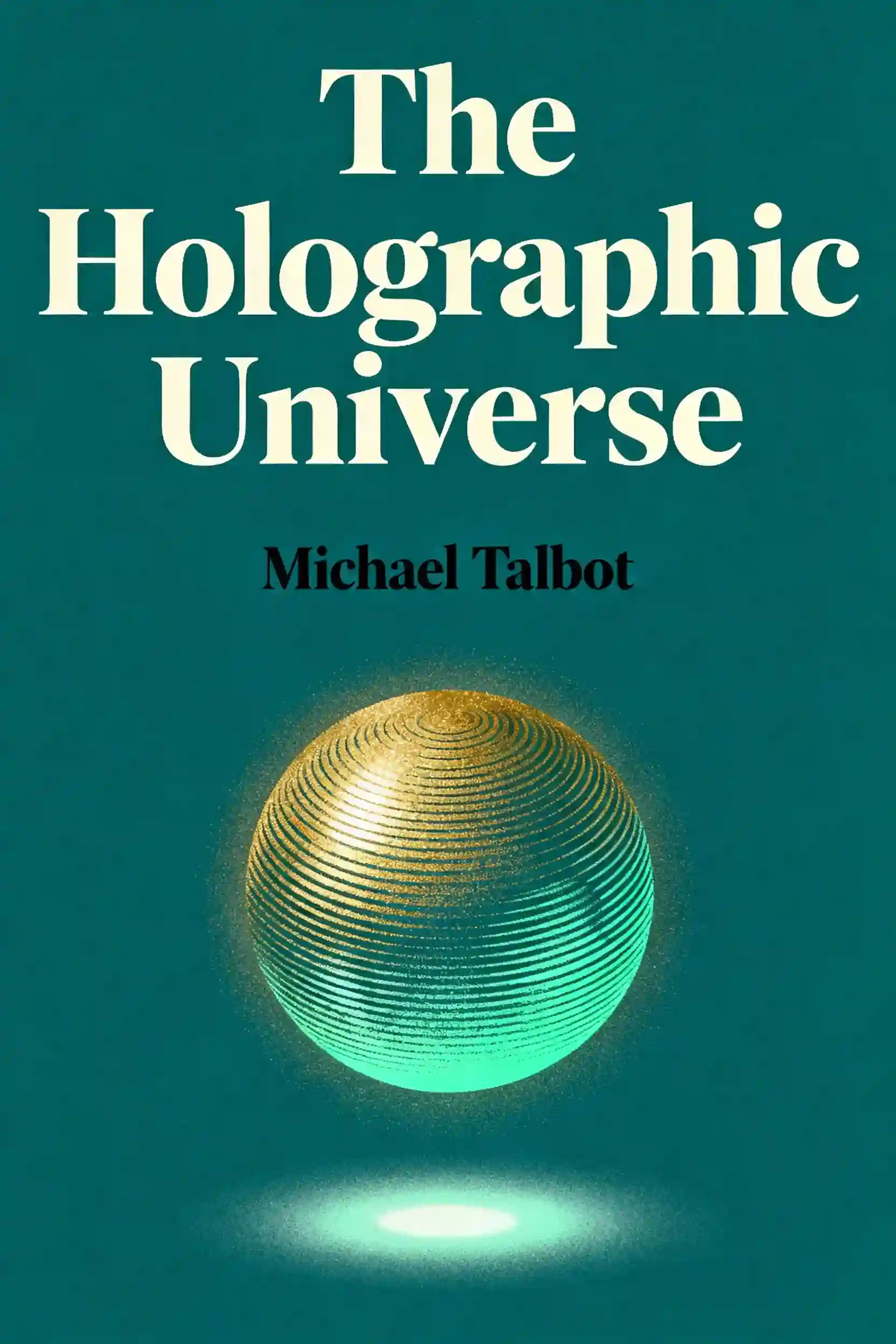
    The holographic universe
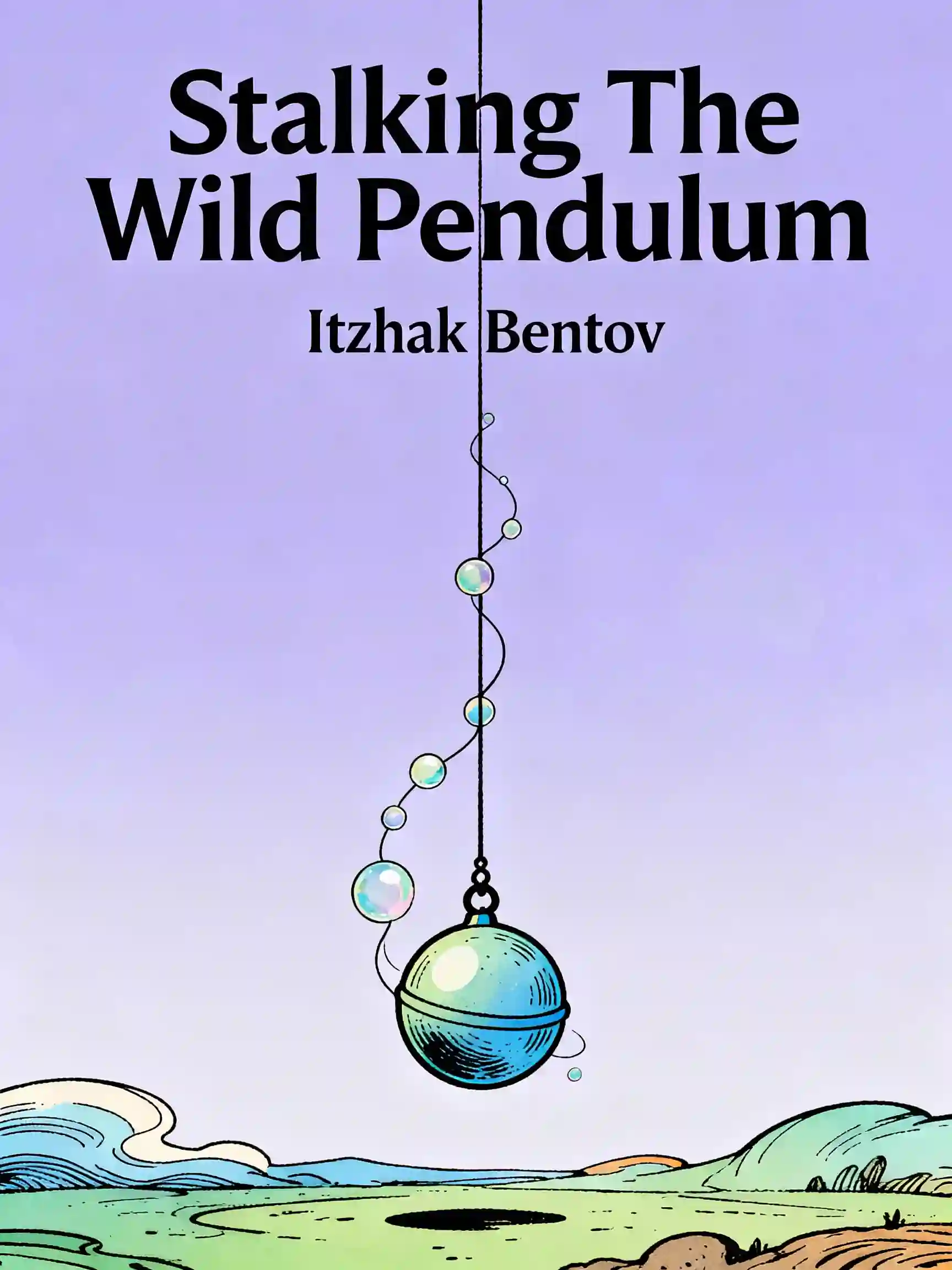
    Stalking the wild pendulum
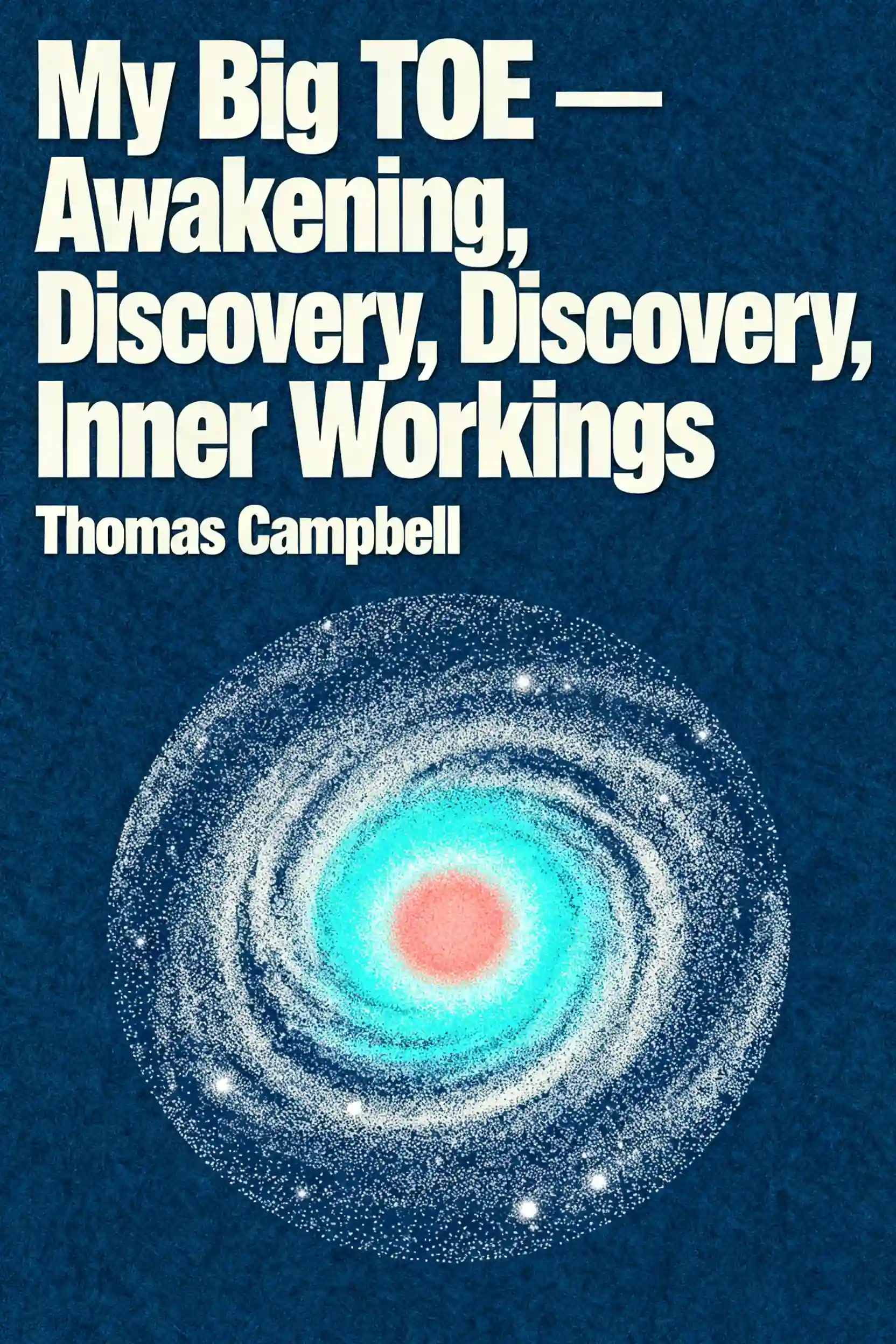
    My Big TOE
    You Are the Universe
    Science and the NearDeath Experience
    Imagine Heaven

    자주 묻는 질문

    The transmission model suggests that the brain does not actually produce consciousness, but rather acts as a receiver or interface for it, similar to how a radio tunes into a broadcast signal. In this view, consciousness exists as a fundamental field or "signal" in the universe, and the physical brain serves as a "resonator" or filter that narrows this infinite information down so a person can function in a three-dimensional world. When the brain is damaged or shuts down during death, the "filter" is removed, allowing consciousness to expand back into its original, unfiltered state.

    The holographic theory proposes that the universe is a self-contained memory system where every part contains the information of the whole. During an NDE, a person’s awareness shifts from a "zero-dimensional" point inside the body to a three-dimensional or even four-dimensional perspective. This allows them to perceive "veridical" information—such as events in a hospital room or objects on a ledge—that would be physically impossible to see from their body's location. Because information in a hologram is non-local and conserved, it doesn't vanish when the physical body fails; it simply transforms or returns to the larger universal field.

    Terminal lucidity is a phenomenon where patients with severe, irreversible brain damage—such as advanced Alzheimer’s or massive tumors—suddenly become completely coherent and "themselves" again shortly before death. This is significant because it suggests that the "Self" remains fully intact even when the physical "hardware" of the brain is falling apart. Researchers argue that if the mind were strictly a product of the brain, such clarity would be physically impossible, supporting the idea that the brain is a filter that sometimes "clears up" as the body prepares to let go.

    The script cites rigorous studies from the University of Virginia, where researchers documented thousands of cases of young children who possessed detailed, verifiable memories of previous lives. A key example is the case of James Leininger, a toddler who knew specific details about a World War II pilot, including the pilot's name, the ship he flew from, and the exact manner of his death—information the child had no way of accessing through normal means. This suggests that consciousness acts as a "symbolic information matrix" that can occasionally "re-nest" into a new physical body rather than dissolving.

    The life review is a common NDE report where individuals experience their entire history simultaneously rather than sequentially. In the holographic model, this is explained as a shift from the "Day Agent" (the local ego) to the "Night Agent" (the non-local witness). Because the holographic field is interconnected, individuals in a life review don't just watch their actions; they feel the emotions and effects those actions had on others. It is described as an "informational reset" where the person integrates all the data collected during their life back into the universal memory system.

    컬럼비아 대학교 동문들이 제작 | 샌프란시스코에서 개발

    BeFreed는 호기심 넘치는 글로벌 커뮤니티를 하나로 연결합니다

    4.7

    평균 평점

    앱 평가 7.84천 개 이상

    BeFreed 커뮤니티

    정말이지 아직 앱을 다 써 보지도 않았는데, 며칠 써 본 것만으로도 깊은 인상을 받았어요… BeFreed는 제가 써 본 어떤 학습 앱과도 차원이 달라요. 몰입감이 엄청나고 집중력도 실제로 좋아져서, 스마트폰을 하염없이 스크롤하는 분들께 딱이에요!

    @ladyInfinity

    정확히 23일 전에 BeFreed를 구입했는데, 그날부터 하루도 빠짐없이 쓰고 있어요. 제 일상 업무 흐름과 학습 습관에 완전히 자리 잡았어요.

    @jayallen

    솔직히 이 앱은 제 기대를 전부 뛰어넘었어요. 어떤 주제든 오디오로 만들어 달라고 할 수 있고, 결과물이 놀라워요. 제 전문 분야는 심리치료 쪽이고 여러 학문이 얽혀 있는데도 답변이 아주 정확해요.

    @Raguipa

    제일 고마운 건 스크롤하는 시간이 확 줄었다는 거예요. 검색하는 시간은 줄고 흡수하는 시간은 늘었어요. 오디오북 전권, 팟캐스트, 학습 플랜의 조합이 정말 훌륭해요.

    @colonyofcreatorsNGO

    저는 24년째 PhotoReading 속진 학습 강사로 일하고 있어요… 책과 독서, 배움이 제 전문인데, BeFreed는 정보를 소화하기 쉽게 전달하는 혁신적인 방식을 정말 잘 구현했어요.

    @BeFreed user

    단순한 책 요약 앱이 아니에요. '재미' 스타일을 써 봤는데, 전통적인 방식보다 훨씬 나은 요약이고 아이디어를 이해하기도 쉬워요. 이것만으로도 값어치를 해요.

    @austinakon

    이 앱이 정말 좋아요. 며칠 써 봤는데 듣는 걸 멈출 수가 없어요. 시작하기에 이보다 좋을 수 없어요.

    @jcrules328

    정말 마음에 들어요. 한 달 정도 써 봤는데 숨은 보석을 찾은 기분이에요. BeFreed로 제가 원하는 주제를 직접 만들 수 있어서 좋고, 목소리도 훌륭한 데다 내레이션 선택지가 무궁무진해요.

    @DanielCZ

    정말이지 아직 앱을 다 써 보지도 않았는데, 며칠 써 본 것만으로도 깊은 인상을 받았어요… BeFreed는 제가 써 본 어떤 학습 앱과도 차원이 달라요. 몰입감이 엄청나고 집중력도 실제로 좋아져서, 스마트폰을 하염없이 스크롤하는 분들께 딱이에요!

    @ladyInfinity

    정확히 23일 전에 BeFreed를 구입했는데, 그날부터 하루도 빠짐없이 쓰고 있어요. 제 일상 업무 흐름과 학습 습관에 완전히 자리 잡았어요.

    @jayallen

    솔직히 이 앱은 제 기대를 전부 뛰어넘었어요. 어떤 주제든 오디오로 만들어 달라고 할 수 있고, 결과물이 놀라워요. 제 전문 분야는 심리치료 쪽이고 여러 학문이 얽혀 있는데도 답변이 아주 정확해요.

    @Raguipa

    제일 고마운 건 스크롤하는 시간이 확 줄었다는 거예요. 검색하는 시간은 줄고 흡수하는 시간은 늘었어요. 오디오북 전권, 팟캐스트, 학습 플랜의 조합이 정말 훌륭해요.

    @colonyofcreatorsNGO

    저는 24년째 PhotoReading 속진 학습 강사로 일하고 있어요… 책과 독서, 배움이 제 전문인데, BeFreed는 정보를 소화하기 쉽게 전달하는 혁신적인 방식을 정말 잘 구현했어요.

    @BeFreed user

    단순한 책 요약 앱이 아니에요. '재미' 스타일을 써 봤는데, 전통적인 방식보다 훨씬 나은 요약이고 아이디어를 이해하기도 쉬워요. 이것만으로도 값어치를 해요.

    @austinakon

    이 앱이 정말 좋아요. 며칠 써 봤는데 듣는 걸 멈출 수가 없어요. 시작하기에 이보다 좋을 수 없어요.

    @jcrules328

    정말 마음에 들어요. 한 달 정도 써 봤는데 숨은 보석을 찾은 기분이에요. BeFreed로 제가 원하는 주제를 직접 만들 수 있어서 좋고, 목소리도 훌륭한 데다 내레이션 선택지가 무궁무진해요.

    @DanielCZ

    유용한 정보와 아이디어를 8~15분짜리 팟캐스트 스타일 오디오로 압축해서 들을 수 있다는 게 정말 좋아요. 원래 팟캐스트는 군더더기가 많아서 안 좋아했는데, 여기는 그걸 싹 걷어냈어요.

    @BeFreed user

    박사 과정을 마무리하는 중이라 낯선 자료를 많이 읽어야 해요… BeFreed에서는 프롬프트만 입력하면 앱이 자료를 찾아서 오디오 팟캐스트로 만들어 줘요. BeFreed의 과정이 NotebookLM보다 더 매끄럽게 느껴져요.

    @Brad

    아침을 준비하거나 산책하거나 출퇴근할 때 들을 것을 YouTube에서 자주 찾곤 했는데, BeFreed는 광고도 군더더기도 없이 훨씬 더 딱 맞는 걸 들려줘요!

    @BeFreed user

    이 플랫폼의 가장 큰 장점은 활용도예요. 다루지 못하는 주제가 말 그대로 하나도 없어요. 무엇을 던져도 다 소화해요… 제한이 전혀 없으면서 약속을 실제로 지키는 학습 도구는 정말 드물어요.

    @jayallen

    BeFreed는 환상적이에요. 디자인이 편해서 헤매는 시간은 줄고 배우는 시간은 늘었어요. 오디오북, 팟캐스트, 학습 플랜의 조합은 천재적이에요. 제 하루가 완전히 달라졌어요.

    @BeFreed user

    처음엔 이탈리아어로 팟캐스트를 만드는 방법을 이해하는 데 시간이 좀 걸렸는데, 알고 나니까 — 와! 정말 대단해요! 어떤 주제든 설명해 달라고 하면 정말 똑똑하게 잘 설명해 줘요!

    @matteo77

    BeFreed는 제가 매일 쓰는 오디오북 앱이 됐어요… 제일 마음에 드는 건 텍스트를 넣으면 이동 중에도 들을 수 있는 오디오로 만들어 준다는 점이에요.

    @kotanzu1

    유용한 정보와 아이디어를 8~15분짜리 팟캐스트 스타일 오디오로 압축해서 들을 수 있다는 게 정말 좋아요. 원래 팟캐스트는 군더더기가 많아서 안 좋아했는데, 여기는 그걸 싹 걷어냈어요.

    @BeFreed user

    박사 과정을 마무리하는 중이라 낯선 자료를 많이 읽어야 해요… BeFreed에서는 프롬프트만 입력하면 앱이 자료를 찾아서 오디오 팟캐스트로 만들어 줘요. BeFreed의 과정이 NotebookLM보다 더 매끄럽게 느껴져요.

    @Brad

    아침을 준비하거나 산책하거나 출퇴근할 때 들을 것을 YouTube에서 자주 찾곤 했는데, BeFreed는 광고도 군더더기도 없이 훨씬 더 딱 맞는 걸 들려줘요!

    @BeFreed user

    이 플랫폼의 가장 큰 장점은 활용도예요. 다루지 못하는 주제가 말 그대로 하나도 없어요. 무엇을 던져도 다 소화해요… 제한이 전혀 없으면서 약속을 실제로 지키는 학습 도구는 정말 드물어요.

    @jayallen

    BeFreed는 환상적이에요. 디자인이 편해서 헤매는 시간은 줄고 배우는 시간은 늘었어요. 오디오북, 팟캐스트, 학습 플랜의 조합은 천재적이에요. 제 하루가 완전히 달라졌어요.

    @BeFreed user

    처음엔 이탈리아어로 팟캐스트를 만드는 방법을 이해하는 데 시간이 좀 걸렸는데, 알고 나니까 — 와! 정말 대단해요! 어떤 주제든 설명해 달라고 하면 정말 똑똑하게 잘 설명해 줘요!

    @matteo77

    BeFreed는 제가 매일 쓰는 오디오북 앱이 됐어요… 제일 마음에 드는 건 텍스트를 넣으면 이동 중에도 들을 수 있는 오디오로 만들어 준다는 점이에요.

    @kotanzu1

    웹에서 BeFreed가 어떻게 논의되고 있는지 더 보기
    129.7K19.5K
    55.2K19.2K
    154.2K10827355
    48.1K2.5K
    81.2K6.6K
    82.3K1.8K
    지금 바로 학습 여정을 시작하세요
    BeFreed 앱
    BeFreed

    무엇이든 개인화된 학습

    DiscordLinkedIn
    추천 도서 요약
    Crucial ConversationsThe Perfect MarriageInto the WildNever Split the DifferenceAttachedGood to GreatSay Nothing
    인기 카테고리
    Self HelpCommunication SkillRelationshipMindfulnessPhilosophyInspirationProductivity
    유명인 추천 도서
    Elon MuskCharlie KirkBill GatesSteve JobsAndrew HubermanJoe RoganJordan Peterson
    수상작 컬렉션
    Pulitzer PrizeNational Book AwardGoodreads Choice AwardsNobel Prize in LiteratureNew York TimesCaldecott MedalNebula Award
    추천 주제
    ManagementAmerican HistoryWarTradingStoicismAnxietySex
    연도별 베스트 도서
    2025 Best Non Fiction Books2024 Best Non Fiction Books2023 Best Non Fiction Books
    추천 저자
    Chimamanda Ngozi AdichieGeorge OrwellO. J. SimpsonBarbara O'NeillWinston ChurchillCharlie Kirk
    BeFreed vs 다른 앱
    BeFreed vs. Other Book Summary AppsBeFreed vs. ElevenReaderBeFreed vs. ReadwiseBeFreed vs. Anki
    학습 도구
    Knowledge VisualizerAI Podcast Generator
    정보
    회사 소개arrow
    가격arrow
    FAQarrow
    블로그arrow
    채용arrow
    파트너십arrow
    앰배서더 프로그램arrow
    디렉토리arrow
    BeFreed
    Try now
    © 2026 BeFreed
    이용 약관개인정보 처리방침
    BeFreed

    무엇이든 개인화된 학습

    DiscordLinkedIn
    추천 도서 요약
    Crucial ConversationsThe Perfect MarriageInto the WildNever Split the DifferenceAttachedGood to GreatSay Nothing
    인기 카테고리
    Self HelpCommunication SkillRelationshipMindfulnessPhilosophyInspirationProductivity
    유명인 추천 도서
    Elon MuskCharlie KirkBill GatesSteve JobsAndrew HubermanJoe RoganJordan Peterson
    수상작 컬렉션
    Pulitzer PrizeNational Book AwardGoodreads Choice AwardsNobel Prize in LiteratureNew York TimesCaldecott MedalNebula Award
    추천 주제
    ManagementAmerican HistoryWarTradingStoicismAnxietySex
    연도별 베스트 도서
    2025 Best Non Fiction Books2024 Best Non Fiction Books2023 Best Non Fiction Books
    학습 도구
    Knowledge VisualizerAI Podcast Generator
    추천 저자
    Chimamanda Ngozi AdichieGeorge OrwellO. J. SimpsonBarbara O'NeillWinston ChurchillCharlie Kirk
    BeFreed vs 다른 앱
    BeFreed vs. Other Book Summary AppsBeFreed vs. ElevenReaderBeFreed vs. ReadwiseBeFreed vs. Anki
    정보
    회사 소개arrow
    가격arrow
    FAQarrow
    블로그arrow
    채용arrow
    파트너십arrow
    앰배서더 프로그램arrow
    디렉토리arrow
    BeFreed
    Try now
    © 2026 BeFreed
    이용 약관개인정보 처리방침

    비슷한 콘텐츠

    Life Beyond the Final Heartbeat 책 표지
    Science & the Near-death ExperienceHeaven Is For RealImagine Heaven
    16 sources
    Life Beyond the Final Heartbeat
    From near-death experiences to beliefs across religions, we explore humanity's enduring question: does consciousness continue after death? Discover what science, faith, and philosophy reveal about the great beyond.
    1 min
    What happens to consciousness after we die? 책 표지
    Science and the NearDeath ExperienceConsciousThen I Am Myself the WorldStalking the wild pendulum
    25 sources
    What happens to consciousness after we die?
    If existence feels permanent, why is non-existence so hard to grasp? Explore the mystery of the observer and what happens when the brain stops filtering.
    24 min
    Consciousness Beyond Death: Scientific Evidence for Afterlife 책 표지
    source 1source 3source 4
    6 sources
    Consciousness Beyond Death: Scientific Evidence for Afterlife
    Explore compelling evidence for consciousness surviving death through near-death experiences, scientific research, and documented cases of awareness beyond the physical brain.
    21 min
    The holographic universe 책 표지
    The holographic universe
    Michael Talbot
    Reality as hologram: quantum physics redefines consciousness and existence.
    55 min
    Is the holographic universe a projection of 2D data? 책 표지
    The Grand DesignThe holographic universeOn the Origin of TimeThe theory of everything
    24 sources
    Is the holographic universe a projection of 2D data?
    If 3D reality feels solid, why does physics suggest it's a 2D projection? Explore how black holes and quantum information reveal our cosmic code.
    30 min
    Boltzmann Brains and the Mystery of Fake Memories 책 표지
    The Grand DesignStalking the wild pendulumThe Conspiracy against the Human RaceSomething Deeply Hidden
    23 sources
    Boltzmann Brains and the Mystery of Fake Memories
    Is your life a cosmic hallucination? Explore why physics suggests you might be a brain in the void and how entropy shapes our reality.
    30 min
    The Science of End-of-Life Visions 책 표지
    The dying dream of the dead to be at peace with lifeTerminal Lucidity: Meaning, Signs & Causes - Cleveland ClinicFrontiers | The dying-moment dream hypothesis: heaven and hell as the brain’s final dream
    5 sources
    The Science of End-of-Life Visions
    Are final visions hallucinations or a surge of clarity? Explore the biology of the brain’s final simulation and the peace it brings to the dying.
    19 min
    What the Bleep: Quantum Physics and Reality 책 표지
    [b8b066fe-f9bf-46c4-a145-c6e9bd5c1c1a:c0000] William Arntz - What the Bleep Do We Know-TM- Discovering the Endless Possibilit.md p1-1[b8b066fe-f9bf-46c4-a145-c6e9bd5c1c1a:c0001] William Arntz - What the Bleep Do We Know-TM- Discovering the Endless Possibilit.md p1-1[b8b066fe-f9bf-46c4-a145-c6e9bd5c1c1a:c0002] William Arntz - What the Bleep Do We Know-TM- Discovering the Endless Possibilit.md p1-1[b8b066fe-f9bf-46c4-a145-c6e9bd5c1c1a:c0003] William Arntz - What the Bleep Do We Know-TM- Discovering the Endless Possibilit.md p1-1
    21 sources
    What the Bleep: Quantum Physics and Reality
    Stuck in a repetitive life? Explore how quantum physics and intentional attention can break mental habits to reshape your perceived reality.
    1557 min

    Recommended Learning Plans

    The Science of Near-Death Experiences
    학습 계획

    The Science of Near-Death Experiences

    This plan bridges the gap between spirituality and neuroscience, offering a data-driven look at the brain's final frontier. It is ideal for medical students, psychology enthusiasts, or anyone curious about the biological triggers of consciousness during extreme trauma.

    1 h 12 m•3 섹션
    Quantum Reality and Consciousness
    학습 계획

    Quantum Reality and Consciousness

    This plan bridges the gap between theoretical physics and philosophy, offering a deep dive into the nature of existence. It is ideal for curious minds and deep thinkers who want to understand how quantum mechanics reshapes our view of time, mind, and reality.

    3 h 30 m•5 섹션
    Becoming Supernatural: The Neuro-Quantum Shift
    학습 계획

    Becoming Supernatural: The Neuro-Quantum Shift

    This plan is designed for individuals seeking to transcend mental limitations and harness the power of neuroplasticity and quantum physics. It is ideal for those looking to bridge the gap between science and spirituality to achieve profound personal transformation.

    2 h 45 m•5 섹션
    Resonant Universes
    학습 계획

    Resonant Universes

    This learning plan is essential for thinkers seeking to bridge the gap between quantum physics and perennial philosophy. It is designed for students, researchers, and curious minds who want to understand how our perspective shapes the reality we inhabit.

    1 h 30 m•3 섹션
    Consciousness, AI, and the Simulation
    학습 계획

    Consciousness, AI, and the Simulation

    This learning plan bridges the gap between philosophy of mind and cutting-edge technology, addressing the most profound questions of the digital age. It is ideal for tech enthusiasts, philosophy students, and anyone curious about the future of human and machine intelligence.

    1 h 30 m•3 섹션
    The Ghost and the Machine
    학습 계획

    The Ghost and the Machine

    This learning plan is essential for anyone seeking to understand the deep philosophical roots of consciousness and the limits of physicalism. It is particularly valuable for students of philosophy, psychology, and cognitive science who want to explore the unresolved tension between the brain and the mind.

    1 h 30 m•3 섹션
    Learn more about neuroscience, philosophy and spirituality
    학습 계획

    Learn more about neuroscience, philosophy and spirituality

    This learning plan bridges the gap between scientific understanding of the brain and spiritual explorations of consciousness. It's ideal for curious minds seeking a holistic perspective on human experience, whether you have a background in science looking to explore spirituality or are spiritually-minded wanting scientific context.

    4 h 56 m•4 섹션
    The Quantum Observer Effect
    학습 계획

    The Quantum Observer Effect

    This plan is designed for individuals seeking to bridge the gap between quantum physics and personal transformation. It provides a practical framework for those looking to master their mental focus and energetic alignment to consciously shape their reality.

    1 h 30 m•3 섹션