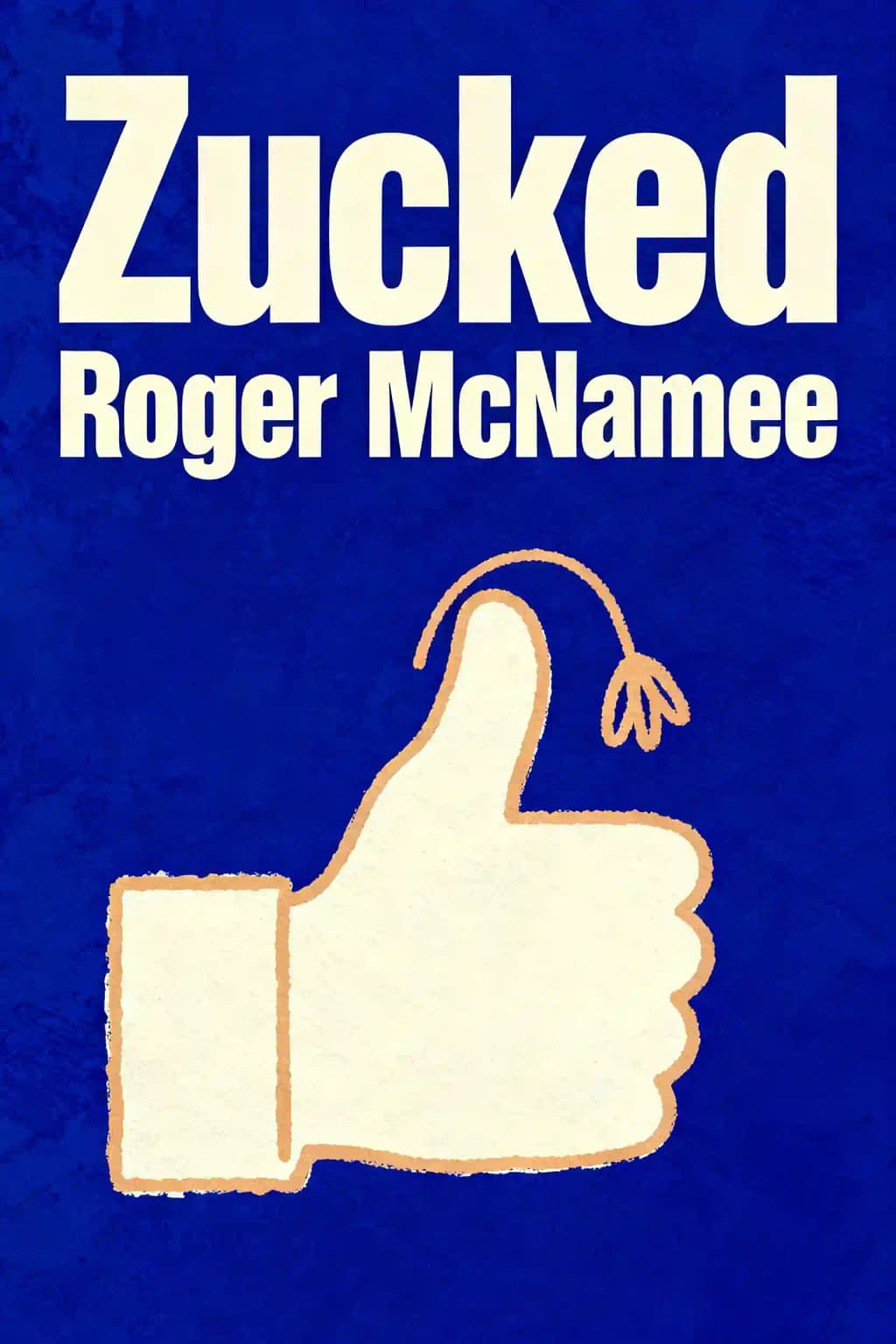
From Facebook mentor to whistleblower: Roger McNamee's insider expose reveals how social media hijacks minds and threatens democracy. Praised by Salesforce's Marc Benioff and internet pioneer Vint Cerf, this New York Times bestseller asks: what happens when tech's promise becomes our greatest vulnerability?
Roger McNamee, a venture capitalist and prominent critic of the tech industry, is the author of Zucked: Waking Up to the Facebook Catastrophe, a revealing examination of the dangers social media poses to democracy and privacy.
A Silicon Valley veteran since 1982, McNamee co-founded Elevation Partners and Silver Lake Partners. Drawing on his extensive experience investing in companies like Facebook—where he mentored Mark Zuckerberg from 2006 to 2009—he now critiques the unchecked power of the tech sector.
His advocacy for social media regulation, which began after the 2016 election, has positioned him as a key voice for tech accountability. He has been featured in TIME magazine and on MSNBC and CNBC.
McNamee’s previous works include The New Normal (2004), which analyzes the economic landscape following the dot-com bubble, and The Moonalice Legend series, a fusion of music and counterculture art.
He serves on the board of Indiegraf and the Rock and Roll Hall of Fame, and he also co-founded the Wikimedia Foundation. Zucked has become a focal point for tech reform, highlighted by its inclusion in a 2019 TIME cover story titled “The Facebook Wake-Up Call.”
Zucked exposes Facebook’s unchecked power, detailing how its algorithms manipulate user behavior, enable political polarization, and threaten democracy. Roger McNamee, an early mentor to Mark Zuckerberg, combines insider insights with critiques of surveillance capitalism, microtargeting, and events like the Cambridge Analytica scandal. The book serves as a urgent call for regulatory oversight to curb tech giants’ ethical failures.
This book is essential for policymakers, tech ethicists, and anyone concerned about social media’s societal impact. Entrepreneurs, journalists, and students studying data privacy or digital ethics will gain critical insights into Silicon Valley’s unchecked growth and its consequences for democracy.
Yes. McNamee’s firsthand accounts of Facebook’s rise, coupled with analysis of its role in election interference and addiction-driven design, offer a compelling case for tech accountability. Its blend of memoir and investigative reporting makes it a vital resource for understanding modern digital risks.
The book highlights Facebook’s role in the 2016 U.S. election and Brexit, where Russian operatives spent just $100,000 to sway voters via targeted ads. McNamee argues that the platform’s preference bubbles and algorithmic amplification of divisive content undermine informed public discourse.
McNamee details how Cambridge Analytica harvested millions of user profiles to create psychographic models, tailoring political ads to exploit individual biases. He frames this as a systemic failure of Facebook’s lax data policies and prioritization of growth over accountability.
The book condemns Facebook’s “move fast and break things” ethos, accusing leadership of ignoring societal harm for profit. McNamee describes Zuckerberg and Sandberg as dismissive of concerns about misinformation, polarization, and privacy breaches.
While both books critique data exploitation, Zucked offers a unique insider perspective on Facebook’s leadership and specific policy failures. McNamee’s narrative blends personal anecdotes with actionable reforms, whereas Shoshana Zuboff’s work provides a broader theoretical framework.
Microtargeting is framed as Facebook’s core revenue model, enabling advertisers (including bad actors) to weaponize personal data. McNamee explains how this practice amplifies extremist views, destabilizes democracies, and erodes trust in institutions.
With ongoing debates about AI ethics, misinformation campaigns, and antitrust lawsuits against tech giants, McNamee’s warnings about unregulated platforms remain urgent. The book’s advocacy for accountability aligns with current efforts to legislate data privacy and algorithmic transparency.
Some critics argue the title’s wordplay undermines its serious message, while others note McNamee’s delayed activism despite early involvement with Facebook. However, these critiques are overshadowed by the book’s comprehensive analysis and calls for systemic change.
저자의 목소리로 책을 느껴보세요
지식을 흥미롭고 예시가 풍부한 인사이트로 전환
핵심 아이디어를 빠르게 캡처하여 신속하게 학습
재미있고 매력적인 방식으로 책을 즐기세요
Facebook is an attention-harvesting machine.
User control is an illusion.
Facebook doesn't create preference bubbles but provides the perfect incubation environment.
Zucked의 핵심 아이디어를 이해하기 쉬운 포인트로 분해하여 혁신적인 팀이 어떻게 창조하고, 협력하고, 성장하는지 이해합니다.
Zucked을 빠른 기억 단서로 압축하여 솔직함, 팀워크, 창의적 회복력의 핵심 원칙을 강조합니다.

생생한 스토리텔링을 통해 Zucked을 경험하고, 혁신 교훈을 기억에 남고 적용할 수 있는 순간으로 바꿉니다.
무엇이든 물어보고, 목소리를 선택하고, 진정으로 공감되는 인사이트를 함께 만들어보세요.

샌프란시스코에서 컬럼비아 대학교 동문들이 만들었습니다
"Instead of endless scrolling, I just hit play on BeFreed. It saves me so much time."
"I never knew where to start with nonfiction—BeFreed’s book lists turned into podcasts gave me a clear path."
"Perfect balance between learning and entertainment. Finished ‘Thinking, Fast and Slow’ on my commute this week."
"Crazy how much I learned while walking the dog. BeFreed = small habits → big gains."
"Reading used to feel like a chore. Now it’s just part of my lifestyle."
"Feels effortless compared to reading. I’ve finished 6 books this month already."
"BeFreed turned my guilty doomscrolling into something that feels productive and inspiring."
"BeFreed turned my commute into learning time. 20-min podcasts are perfect for finishing books I never had time for."
"BeFreed replaced my podcast queue. Imagine Spotify for books — that’s it. 🙌"
"It is great for me to learn something from the book without reading it."
"The themed book list podcasts help me connect ideas across authors—like a guided audio journey."
"Makes me feel smarter every time before going to work"
샌프란시스코에서 컬럼비아 대학교 동문들이 만들었습니다

Zucked 요약을 무료 PDF 또는 EPUB으로 받으세요. 인쇄하거나 오프라인에서 언제든 읽을 수 있습니다.
A veteran tech investor watches in horror as the platform he helped build transforms into a weapon against democracy itself. By 2016, Roger McNamee-early Facebook advisor and longtime believer-could no longer ignore what was unfolding before his eyes. Misogynistic propaganda flooding Bernie Sanders groups, Brexit's shocking outcome driven by algorithmic fear-mongering, and coordinated attacks that felt anything but organic. The company he'd championed had become something far more dangerous than anyone imagined. What makes his story particularly chilling isn't just the scale of manipulation he uncovered, but how Facebook's design made such manipulation inevitable. This wasn't a bug in the system-it was the system working exactly as intended.