1장
When Algorithms Rule Our World
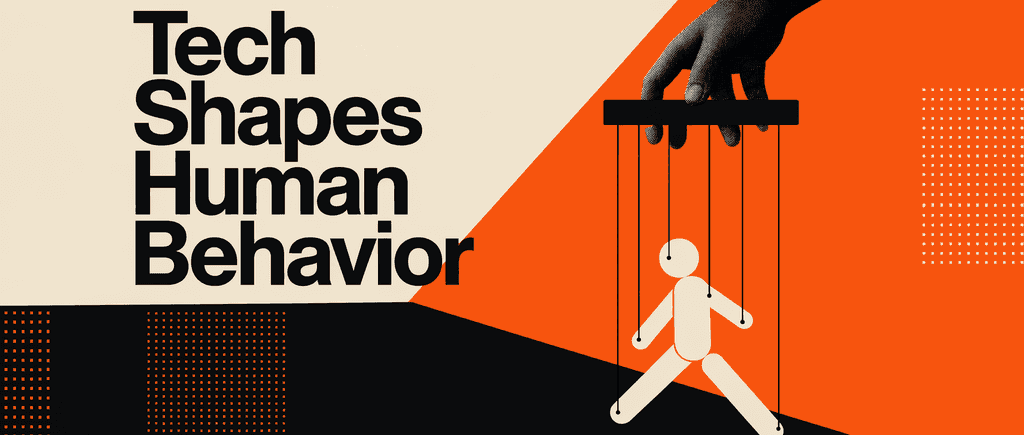
The year is 2018, and I'm standing in Facebook's opulent $300 million headquarters-a place that feels more like the Vatican than a tech company. In my bag are 1,400 pages of leaked internal documents revealing how the platform's content moderation systems are failing catastrophically worldwide. As I speak with polished executives about Facebook's role in global violence, I notice something disturbing: despite their thoughtful answers about specific challenges, they seem blind to how their platform's fundamental design is reshaping human behavior. When I mention dangerous viral rumors triggering mob violence or QAnon's rapid growth, they show little interest. Later, I'll discover internal research warning that "our algorithms exploit the human brain's attraction to divisiveness" had been shelved by executives unwilling to reduce user engagement. This pattern-prioritizing growth over safety-would repeat across platforms, countries, and crises, leaving a trail of real-world harm that few could have imagined when social media first emerged.
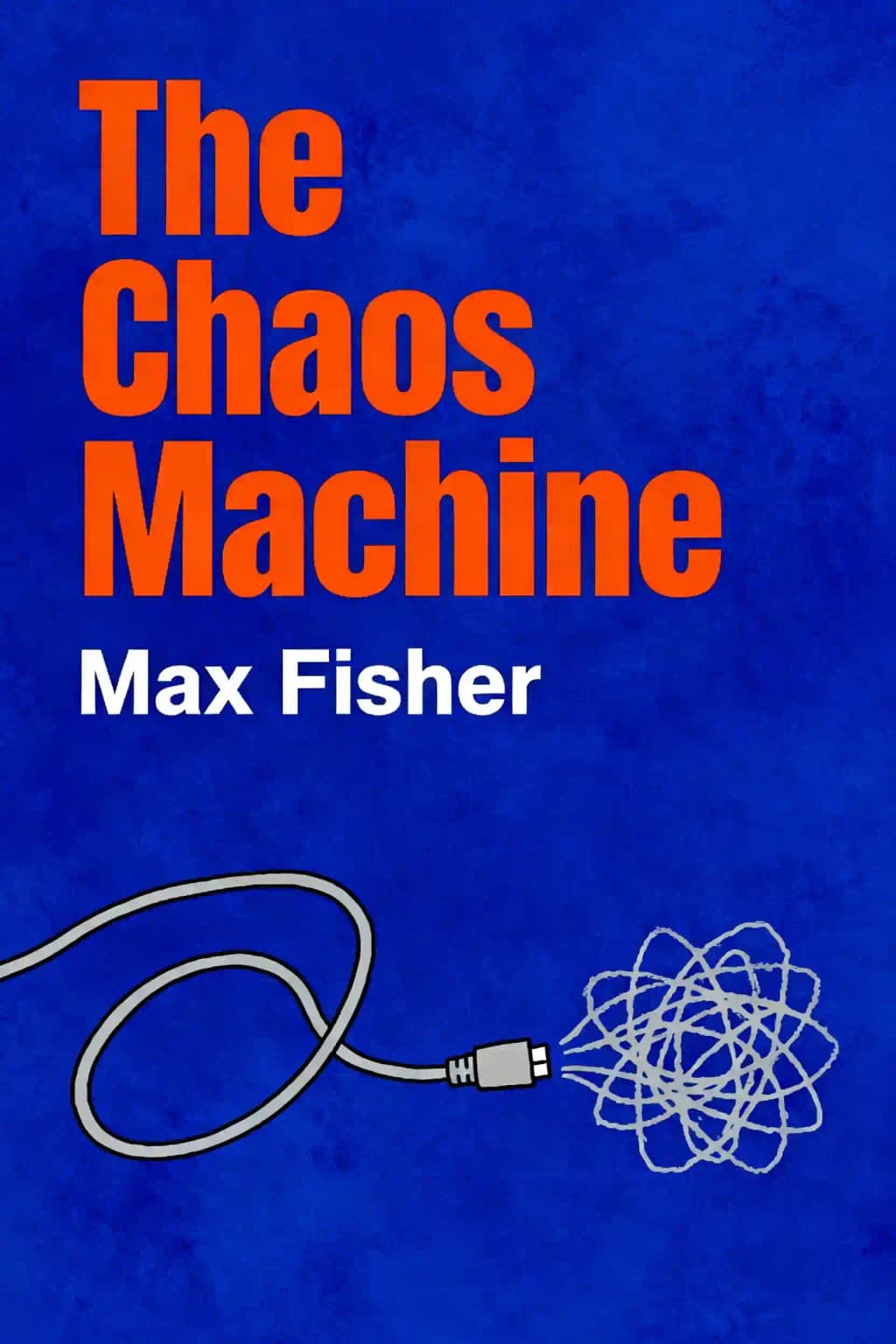
*The Chaos Machine* has become a cultural touchstone in tech ethics discussions, with figures from Barack Obama to Tristan Harris citing its revelations. As one of the first comprehensive investigations into social media's societal impacts, the book has influenced regulatory discussions in Congress and the EU while becoming required reading in university courses examining technology's influence on democracy. What makes Fisher's work particularly compelling is how it connects Silicon Valley's idealistic origins to its troubling present-revealing how the road to algorithmic hell was paved with utopian intentions.
2장
The Dopamine Factory: How Social Media Hijacks Our Brains
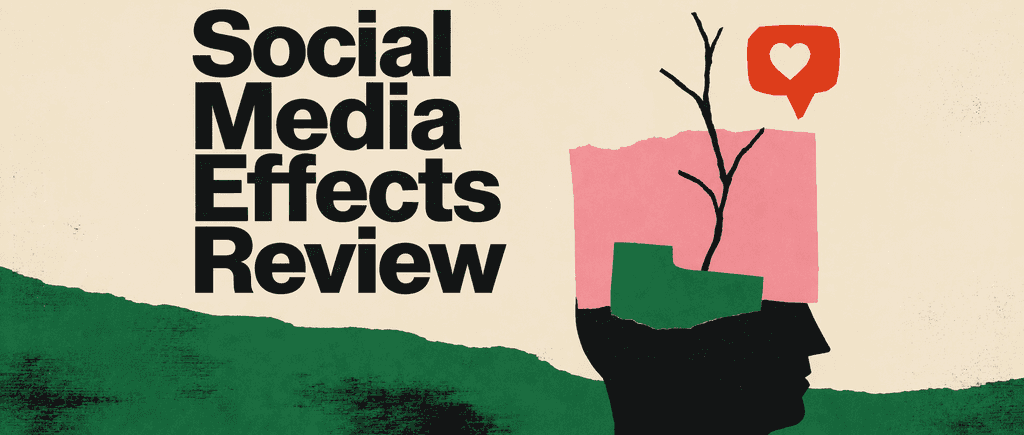
Your smartphone is essentially a slot machine in your pocket. Every notification, every like, every comment activates the brain's reward system through a neurotransmitter called dopamine-the same chemical triggered by gambling, drugs, and other addictive behaviors. This isn't accidental. Social media platforms deliberately employ what psychologists call "intermittent variable reinforcement"-the most addictive reward pattern possible, where you never know if your next action will deliver a small reward, a big one, or nothing at all.
The mechanism is brilliantly effective. When posting on social media, you never know if you'll receive a flood of engagement or complete silence. Unlike real-world interactions where social feedback is predictable and proportional, platforms invisibly decide which comments to distribute and to whom, creating an unpredictable reward system that keeps users coming back despite making them unhappy. Studies consistently show that people who deactivate their accounts experience more happiness and less anxiety, yet the average American checks their smartphone 150 times daily-behavior economists describe as "consistent with standard habit formation models," essentially addiction leading to "sub-optimal consumption choices."
Facebook's "Like" button, initially rejected by Zuckerberg but implemented in 2009, exploits what psychologists call the "sociometer"-our evolutionary mechanism for monitoring social acceptance. Self-esteem functions as an internal gauge of how valued we are by our community, a crucial survival adaptation for humans who evolved to live in groups. The Like feature hooks directly into this sociometer, delivering social validation at unprecedented scale and immediacy. While public approval might happen rarely in offline life, social media delivers dozens of public affirmations daily, activating the brain's nucleus accumbens and triggering dopamine release similar to gambling addiction.
Even more powerful is how social media exploits our fundamental need for group identity. Humans evolved with deep tribal instincts-what Holocaust survivor Henri Tajfel called "social identity theory." Our drive for shared identity is so powerful that we'll construct divisions from nothing, as when movie extras playing different ape species spontaneously segregated at lunch tables. These instincts include fear and hatred of outsiders-emotions that social media platforms reliably surface and amplify to their most extreme forms. By 2012, content creators had reverse-engineered the formula for virality, discovering that identity-affirming content (especially portraying in-groups humiliating out-groups) generated massive engagement.
The result? A digital environment perfectly engineered to activate our most primitive tribal instincts while bypassing the empathy and social constraints that normally keep these impulses in check.
3장
The Radicalization Machine: From Gamergate to Insurrection
In August 2014, gaming forums exploded with outrage over game developer Zoe Quinn, marking a pivotal moment when internet culture permanently crashed into mainstream American life. What began as trolling evolved into something more significant-a coordinated harassment campaign that sent Quinn hundreds of death threats, published her personal information, and created pornographic images of her. The harassment expanded to dozens who defended Quinn or criticized gaming culture, with tactics including "swatting"-false emergency calls designed to provoke dangerous police raids on victims' homes.
This wasn't just about video games. Gamergate launched a new kind of identity-based conflict politics that would later manifest in movements from "incel" extremism to Trumpism. When game developer Brianna Wu approached social media companies about addressing the harassment, she found Silicon Valley's predominantly young white male leadership largely oblivious to the real-world consequences of their platforms. Facebook wouldn't engage at all, while Reddit, where much of the harassment organized, proved particularly unresponsive.
The pattern would repeat and amplify. In 2016, Reddit's algorithm began pushing users toward increasingly extreme content-from anti-vaccine groups to Zika conspiracy theories. "Radicalization via the recommendation engine" became inevitable as engagement-driven metrics favored rage-filled content. The algorithmic logic was brilliant but destructive: radicalized users became obsessive platform users who recruited others, creating "an outrage machine" where ordinary people felt like "soldiers in an online army."
YouTube's algorithm proved especially effective at indoctrination because it moved users incrementally through increasingly extreme content. Former extremist David Sherratt described how at age fifteen, he started with video game clips before being algorithmically guided through pro-atheism videos, anti-feminism content, "men's rights" videos, and eventually neo-Nazi material. A Bellingcat investigation of far-right chat rooms found YouTube was the most commonly cited entry point to extremism.
Researchers Jonas Kaiser and Adrian Rauchfleisch systematically mapped YouTube's recommendation algorithm, providing concrete evidence that YouTube had become a powerful force for large-scale radicalization. Their findings showed the algorithm created entirely new content clusters, guided users toward increasingly extreme content, and linked mainstream right-wing channels with the platform's most virulent extremists.
This digital radicalization manifested physically at the 2017 "Unite the Right" rally in Charlottesville, where previously unconnected fringe groups suddenly mobilized together, organized primarily through social media platforms that had algorithmically merged disparate extremist communities. Facebook's algorithm similarly connected previously isolated communities like Confederacy revivalists, neo-Nazis, anti-government militias, and alt-right meme circles into one cohesive network.
By January 6, 2021, this pattern reached its logical conclusion. Richard Barnett, a sixty-year-old Arkansas construction contractor and Facebook obsessive, had fallen deep into online conspiracy theories. When viral Facebook posts claimed Biden's victory was fraudulent, Barnett and thousands of others were ready not just to believe, but to act. The insurrection represented the culmination of a movement built on social media-planned with no planners, coordinated among thousands with no coordinators, and executed through digitally guided collective will.
4장
The Tyranny of the Like: How Algorithms Reshape Politics
In Brazil, YouTube's influence on politics revealed a disturbing pattern that would soon spread globally. Sixteen-year-old Matheus Dominguez discovered far-right YouTuber Nando Moura through the platform's recommendation algorithm. Moura's flamboyant videos accused feminists, teachers, and politicians of plotting to indoctrinate Brazilians with communism and homosexuality, all while entertaining viewers with jokes, costumes, guitar riffs, and video games.
As Dominguez spent more time on YouTube, the algorithm recommended videos from other far-right bloggers, including Jair Bolsonaro, whom he first saw as a guest on Moura's channel. By 2016, when YouTube installed its new deep-learning AI to chase its billion-hour watch-time goal, far-right YouTubers in Brazil saw their exposure skyrocket. Dominguez, now eighteen, credits YouTube with "waking up Brazilians" and providing his political education, leading him to join Bolsonaro's party with aspirations to run for office himself.
Research from Virgilio Almeida's team at Federal University of Minas Gerais confirmed that YouTube was actively shaping Brazilian politics. They found that right-wing channels grew substantially faster after YouTube's 2016 algorithmic upgrade, with Bolsonaro mentions increasing dramatically even when his poll numbers remained low. The platform wasn't reflecting real-world trends-it was creating them, first driving video views rightward, then shifting user comments in the same direction.
Brazilian students confirmed YouTube's overwhelming influence. "Ninety-five percent of kids here use YouTube. It's the main source for information," said seventeen-year-old Inzaghi. Students noticed the platform's algorithmic bias: "Sometimes I'm watching videos about a game and all of a sudden it's a Bolsonaro video." In classrooms, students increasingly interrupted teachers with conspiracies from YouTube personalities.
The real-world consequences were profound. Bolsonaro urged citizens to watch YouTube rather than reputable news and replaced government technocrats with social media personalities. YouTubers who followed Bolsonaro into office continued posting feverishly, understanding they relied on the platform to maintain their social media voter base. Even the Movimento Brasil Livre (MBL), whose leader Kim Kataguiri rose to YouTube fame as a teenager, admitted concerns about the platform's impact. "We have something here that we call the dictatorship of the like," explained Pedro D'Eyrot, who made videos for MBL. "Once you open that door there's no going back, because you always have to go further."
This pattern wasn't limited to Brazil. In the United States, social media platforms increasingly shaped political discourse through engagement-maximizing algorithms. Throughout democratic history, gatekeepers like party establishments, media institutions, and business interests have controlled political access and messaging. Social media promised to circumvent these gatekeepers, with Zuckerberg claiming in 2012 that direct expression "rather than through intermediaries controlled by a select few" would make governments "more responsive." In practice, however, social media merely replaced old gatekeepers with new algorithmic ones that favored engagement over popularity, giving fringe candidates disproportionate advantages.
5장
When Social Media Kills: From Myanmar to Sri Lanka
Myanmar became a test case for what happens when an entire society transitions overnight to social media. From 2012 to 2015, internet adoption exploded from 0.5% to 40%, with Facebook playing a dominant role through pre-loaded apps and "zero-rating" deals that made its platform the primary internet gateway for most users. Despite early warnings about hate speech overwhelming the platform, Facebook employed just one Burmese-speaking moderator while aggressively expanding.
When Buddhist monk Wirathu began using Facebook to spread false claims about Muslims, including a fabricated rape story that triggered deadly riots in Mandalay in 2014, Facebook remained unresponsive even as violence spread. Government officials couldn't reach the company during the crisis, and Facebook later showed more concern about being blocked than addressing the violence. Despite clear evidence of the platform's role in fueling violence, Facebook continued expanding, clinging to the Silicon Valley mantra that "the answer to bad speech is more speech."
The pattern repeated in Sri Lanka. In early 2018, I investigated a sudden outbreak of violence where entire villages had formed into mobs, burning their neighbors' homes. At the remote home of a grieving family whose relative had been beaten to death in what police called a traffic dispute, Facebook rumors had transformed the incident into part of a Muslim conspiracy against the Sinhalese majority.
The violence had "started in Ampara," a village where the Atham-Lebbe brothers, Muslims who spoke Tamil rather than Sinhalese, had no awareness of online rumors when they opened their small restaurant. One evening in March 2018, a customer began yelling about something in his beef curry. Farsith, the 28-year-old brother at the register who didn't speak Sinhalese, couldn't understand the crowd's accusations about sterilization pills-a viral Facebook rumor claimed police had seized 23,000 such pills from a Muslim pharmacist the previous day.
When pressed by the growing mob, Farsith, trying to defuse the situation, said in broken Sinhalese, "I don't know. Yes, we put?" Taking this as confirmation, the crowd beat him and destroyed the restaurant before marching to the local mosque and setting it on fire. Someone recorded Farsith's "confession" on a cell phone, and within hours the 18-second clip spread through Facebook groups like the Buddhist Information Center, which had been sharing anti-Muslim content for months.
Despite Facebook's utopian vision of creating a "global community" that would promote "peace and understanding," the reality in Sri Lanka was devastating. After the Ampara incident, calls for genocide flooded the platform with posts like "Kill all Muslims, don't even save an infant." Local human rights groups meticulously documented these violations and reported them to Facebook, but were ignored. When they met with Facebook representatives, they were told to use the same ineffective reporting forms they'd already tried countless times.
The situation escalated when a truck driver involved in a traffic dispute died, prompting extremist Facebook users like Amith Weerasinghe to frame it as the beginning of a Muslim uprising. Coordinating through Facebook and WhatsApp groups, mobs formed and targeted specific mosques and Muslim communities, sharing lists of targets with instructions like "tonight" and "tomorrow" next to mosque locations. For three days, mobs ruled the streets, burning Muslim homes, mosques, and businesses. Only when the government blocked all social media did the violence immediately stop-and only then did Facebook representatives finally return government calls, concerned not about the violence but about their zeroed-out traffic.
6장
The Hidden Government: Content Moderation's Impossible Task
Jacob, a Facebook content moderator who would later become a whistleblower, faced an impossible task that exemplified the crisis of modern content moderation. What began as a straightforward system of removing obvious violations had metastasized into over 1,400 pages of labyrinthine guidelines. These rules were handed to low-paid former call center workers who earned barely above minimum wage, yet were expected to master complex policies while processing 400-500 posts daily, each decision potentially affecting millions of users worldwide.
The moderation system's complexity bordered on the absurd. The hate speech rulebook alone sprawled across 200 pages of dense technical jargon, requiring moderators to perform what amounted to linguistic calculus. They needed to cross-reference multiple matrices of protected categories against prohibited terms, while simultaneously considering cultural context and intent - all within a strict 8-10 second window per post. The guidelines contained numerous contradictions: for instance, attacks on "migrants" were forbidden, but similar rhetoric targeting "immigrants" might be allowed, depending on complex contextual rules.
Independent thinking became career suicide for moderators. "This is the biggest sin, when you're accused of imposing your own judgment," Jacob explained. Even when confronting obvious gaps in the rules or encountering clearly dangerous content not yet covered by guidelines, moderators found themselves powerless to act. The system's rigid hierarchy meant that those with the most direct exposure to problematic content had the least authority to address it.
The bureaucratic maze extended beyond Facebook's walls. Multiple internal departments issued competing rulebooks, while outsourcing agencies like Accenture and Cognizant created unauthorized "shadow guidelines" to boost their compliance metrics. These contractors, managing thousands of moderators across global content review hubs, operated in a grey zone of plausible deniability that served Facebook's interests in avoiding direct responsibility for controversial decisions.
Jacob's leaked documents revealed disturbing systematic failures. In India, Facebook's largest market, moderators worked from legally dubious guidelines that restricted protected speech. Performance quotas forced impossible choices between accuracy and speed, despite public statements claiming quality was paramount. Some agencies approved posts in languages no moderator could understand, effectively creating moderation blind spots in critical regions. These contractors continued receiving expanded contracts even while violating Facebook's policies, because the platform's metrics prioritized processing speed over accuracy.
This dysfunctional approach to global governance reflected Silicon Valley's deeper cultural hubris - the conviction that complex social and political challenges could be reduced to engineering problems solvable through algorithms and flowcharts. This mindset emerged from a dramatic power shift in the late 2000s, when cloud computing's economics transformed the relationship between investors and founders. Traditionally, venture capitalists had maintained control by installing experienced management teams. But as infrastructure costs plummeted and user growth became paramount, VCs found themselves competing to court young founders rather than impose oversight.
The result was the rise of inexperienced founder-CEOs who filled executive ranks with college friends and fostered corporate cultures that explicitly rejected traditional business wisdom. Surrounded by cold brew coffee bars and meditation rooms, employees convinced themselves they were changing the world rather than operating advertising platforms. When their products evolved into de facto instruments of global governance, many saw it as validation of tech's superior approach rather than a concerning abdication of democratic oversight.
7장
The Whistleblower: Exposing Silicon Valley's Dark Secrets
By May 2021, Facebook employee Frances Haugen had seen enough. Working on a team combating election misinformation overseas, she believed her corporate overlords were willfully sacrificing user safety, societies, and democracy for profit. She meticulously copied thousands of internal documents by photographing her screen to avoid security measures. After contacting Wall Street Journal reporter Jeff Horwitz, she sent the files to the Securities and Exchange Commission as whistleblower complaints, as well as to Congress and media outlets.
The documents revealed a company fully aware its harms sometimes exceeded critics' worst fears. Internal reports warned explicitly of dangers that later proved deadly, like spikes in hate speech or vaccine misinformation. Facebook's own data confirmed allegations the company had dismissed publicly, with executives including Zuckerberg repeatedly intervening to keep platforms running at full speed despite warnings. One particularly disturbing internal presentation on hooking children included the line "Is there a way to leverage playdates to drive word of hand/growth among kids?"
Haugen went public on 60 Minutes and testified before a Senate subcommittee, presenting herself as someone striving to reform the industry to salvage its potential. "We can have social media we enjoy, that connects us, without tearing apart our democracy, putting our children in danger, and sowing ethnic violence around the world," she told senators. Working with Harvard legal scholar Lawrence Lessig, she briefed lawmakers and European officials with regulatory power.
Haugen consistently highlighted Facebook's failures in poorer countries to demonstrate the company's callousness and the destabilizing power of platform dynamics. "What we see in Myanmar, what we see in Ethiopia," she warned, "are only the opening chapters of a novel that has an ending that is far scarier than anything we want to read."
When asked what would most effectively reform the platforms, Haugen's answer was simple: turn off the algorithm. "I think we don't want computers deciding what we focus on." She suggested that removing liability protections would force companies to abandon engagement-based ranking in favor of chronological feeds. This aligned with a pattern the author had observed-the longer someone studies social media, regardless of discipline, the more likely they are to reach this conclusion: turn it off.
8장
The Reckoning: Can We Reclaim Our Digital Future?
A brief window of opportunity opened after the Capitol siege, with broad understanding of social media's consequences finally emerging. Reimagining platforms down to their core felt necessary and possibly achievable, with tech experts proposing subscription-based models to break the addiction to engagement-driven ad revenue.
But this window quickly closed. The social media giants remained too invested in their existing financial and ideological models for radical change. Instead, they relied on familiar methods: automated technology and content moderation. Twitter added "friction" with prompts like "Want to read the article first?" before sharing, but fell short of Jack Dorsey's suggestions to rethink the platform's fundamental mechanics. Facebook's reforms proved largely superficial, with Zuckerberg announcing that Facebook would no longer promote political groups-the third time the company had made this promise, with previous announcements having been mostly empty.
Silicon Valley leaders quickly began questioning their responsibility to change at all. Sheryl Sandberg deflected blame for the insurrection, claiming it "was largely organized on platforms that don't have our abilities to stop hate," while Instagram head Adam Mosseri compared social media's problems to other technologies: "That happened with VHS. That happened with writing. That happened with bicycles." But as the author pointedly notes, no one could identify which genocides had been attributed to VHS.
The companies largely reverted to their old ways, with enforcement against election disinformation dropping precipitously throughout 2021. Social media-born movements continued to rise, with one study finding more than one in nine state lawmakers nationwide belonging to far-right Facebook groups. These officials promoted online conspiracies into law, passing legislation that curbed voting rights, COVID policies, and LGBT protections.
When Australia threatened Facebook's revenue by requiring payment to news outlets, the company demonstrated its power by blocking all news content nationwide-something it had never done during genocides in Myanmar or violence elsewhere. The blackout affected government health offices during the pandemic and weather services during floods and wildfires, creating an information vacuum quickly filled by rumors and misinformation. Australia capitulated within days.
The author compares social media algorithms to HAL 9000 from 2001: A Space Odyssey-not villainous but dangerous through misaligned incentives and hubris. The lesson isn't to upgrade HAL with algorithmic tweaks or accept corporate apologies, but to shut it down entirely, even if it means losing benefits, even if it's difficult to disentangle from our lives, even if the machine fights back with all its power.
As we stand at this crossroads, the fundamental question remains: Can we reclaim our digital future from algorithms designed to exploit our psychological vulnerabilities? Or will we continue surrendering our attention, our politics, and our social fabric to machines optimized not for human flourishing but for engagement at any cost? The choice, increasingly, is ours to make.