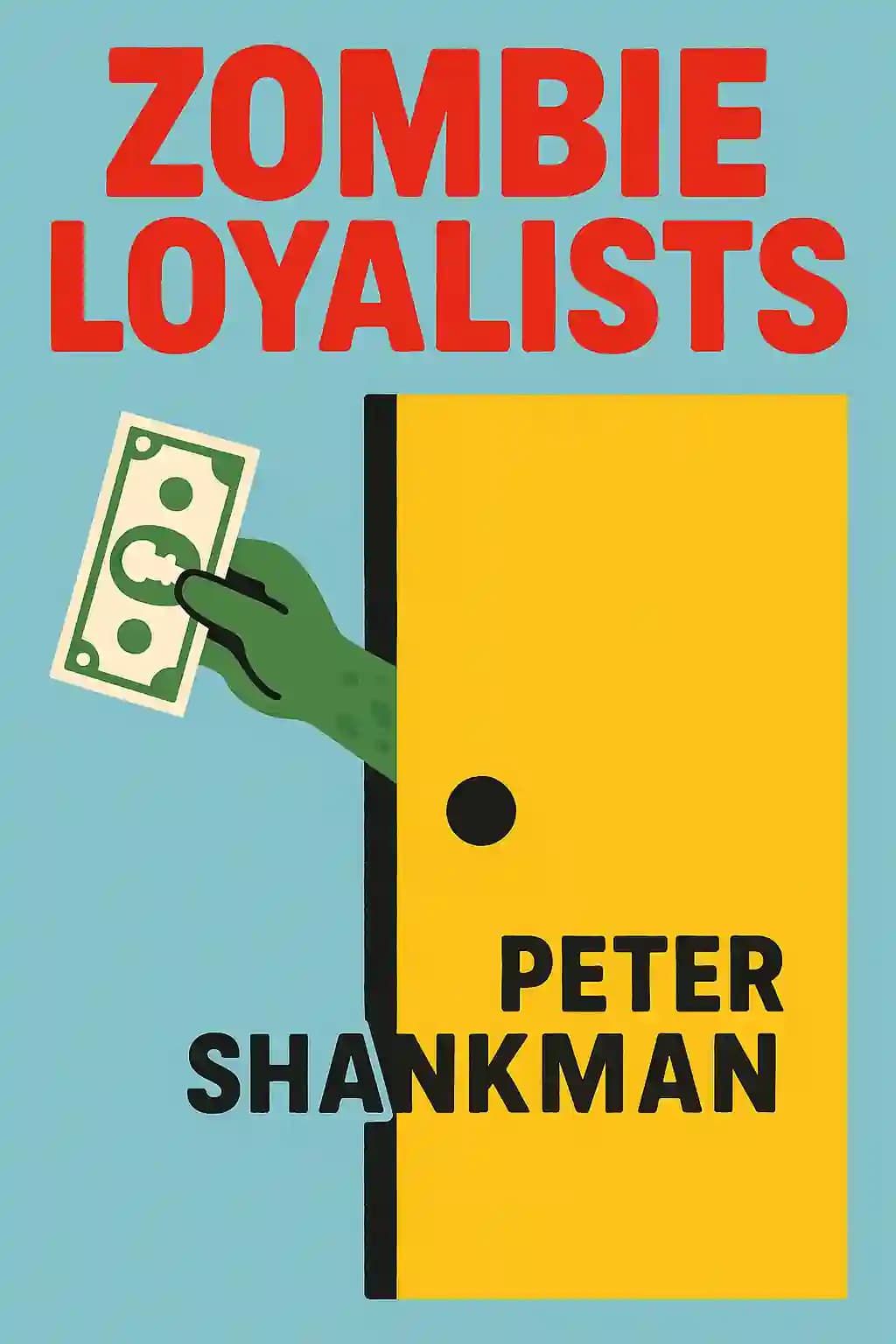
In "Zombie Loyalists," Peter Shankman reveals how exceptional service creates rabid brand advocates. When Morton's delivered steak to Shankman after a simple tweet, it wasn't luck - it was strategy. What could your business achieve with an army of passionate customers?
Peter Shankman, bestselling author of Zombie Loyalists: Using Great Service to Create Rabid Fans, is a globally recognized entrepreneur and customer experience innovator. Specializing in marketing, neurodiversity, and consumer engagement, Shankman draws from his experience founding Help a Reporter Out (HARO)—the world’s largest free media source repository—and selling three startups, including his PR firm The Geek Factory. His work in Zombie Loyalists blends practical business strategy with insights on fostering fanatical customer loyalty, reflecting his decades-long career advising companies like Morgan Stanley and Adobe.
A six-time bestselling author, Shankman’s other works include Faster Than Normal (on ADHD as a superpower) and Nice Companies Finish First. He hosts the award-winning Faster Than Normal podcast and has been featured in The New York Times, Wall Street Journal, and on CNN.
As Futurist-in-Residence at BluShark Digital, he champions neurodiverse workplace strategies. Zombie Loyalists has been adopted by Fortune 500 leadership teams and cited as a blueprint for modern customer retention.
Zombie Loyalists by Peter Shankman explores how exceptional customer service transforms customers into passionate brand advocates ("Zombie Loyalists") who promote businesses organically. The book emphasizes creating memorable experiences through strategies like the BRAINS framework, using case studies from companies like the Ritz Carlton and Amazon to show how loyalty drives revenue and growth.
Business leaders, entrepreneurs, and customer service professionals in industries like hospitality, retail, or e-commerce will benefit most. It’s ideal for teams aiming to build a customer-centric culture or businesses seeking to differentiate through service rather than price.
Yes—the book offers actionable insights for turning customers into loyal promoters. Peter Shankman, a marketing expert and founder of HARO, blends real-world examples with frameworks like BRAINS, making it practical for improving retention and word-of-mouth growth.
The BRAINS acronym stands for Bring Random Amazement Into Normal Situations. It encourages businesses to surprise customers with unexpected kindness, like complimentary upgrades or personalized gestures, to foster emotional connections and loyalty.
Unlike traditional loyalty programs (e.g., points systems), the book argues that Zombie Loyalists are created through emotional engagement and over-the-top service. These customers become unpaid marketers, passionately defending and promoting the brand to friends and social networks.
Shankman highlights the Ritz Carlton’s empowerment of staff to resolve issues instantly, Amazon’s hassle-free returns, and Starwood Hotels’ personalized guest experiences. These companies prioritize service to build armies of repeat customers.
Small businesses can focus on hyper-personalization, like remembering customer preferences or handwritten thank-you notes. Shankman stresses that consistency and empowering employees to make service decisions matter more than budget size.
The book identifies siloed communication, rigid policies, and lack of employee autonomy as key obstacles. Overcoming these requires aligning company culture around customer-centric values and simplifying service processes.
Shankman credits his ADHD for his innovative thinking, as detailed in his other works like Faster Than Normal. His neurodiversity informs Zombie Loyalists’ emphasis on creativity and unconventional problem-solving in customer service.
Some may find the zombie metaphor gimmicky, and smaller businesses could struggle with scaling Shankman’s strategies. However, the core principles—prioritizing empathy and employee empowerment—remain broadly applicable.
While Faster Than Normal focuses on ADHD strengths and Nice Companies Finish First on collaboration, Zombie Loyalists is his deepest dive into customer experience. It complements his broader themes of innovation and empathy in business.
As AI and automation reduce human interaction, the book’s emphasis on authentic, personalized service becomes critical. Businesses that master emotional connections will stand out in an increasingly digital marketplace.
저자의 목소리로 책을 느껴보세요
지식을 흥미롭고 예시가 풍부한 인사이트로 전환
핵심 아이디어를 빠르게 캡처하여 신속하게 학습
재미있고 매력적인 방식으로 책을 즐기세요
Companies must value their employees before employees can properly value customers.
Poor internal communication creates another major barrier.
Businesses must embrace change or risk extinction.
This attitude kills employee initiative and ultimately drives away customers.
Companies must defend employees when they're in the right, even if it means losing a customer.
Zombie loyalists의 핵심 아이디어를 이해하기 쉬운 포인트로 분해하여 혁신적인 팀이 어떻게 창조하고, 협력하고, 성장하는지 이해합니다.
생생한 스토리텔링을 통해 Zombie loyalists을 경험하고, 혁신 교훈을 기억에 남고 적용할 수 있는 순간으로 바꿉니다.
무엇이든 묻고, 학습 스타일을 선택하고, 나에게 맞는 인사이트를 함께 만들어보세요.

샌프란시스코에서 컬럼비아 대학교 동문들이 만들었습니다
"Instead of endless scrolling, I just hit play on BeFreed. It saves me so much time."
"I never knew where to start with nonfiction—BeFreed’s book lists turned into podcasts gave me a clear path."
"Perfect balance between learning and entertainment. Finished ‘Thinking, Fast and Slow’ on my commute this week."
"Crazy how much I learned while walking the dog. BeFreed = small habits → big gains."
"Reading used to feel like a chore. Now it’s just part of my lifestyle."
"Feels effortless compared to reading. I’ve finished 6 books this month already."
"BeFreed turned my guilty doomscrolling into something that feels productive and inspiring."
"BeFreed turned my commute into learning time. 20-min podcasts are perfect for finishing books I never had time for."
"BeFreed replaced my podcast queue. Imagine Spotify for books — that’s it. 🙌"
"It is great for me to learn something from the book without reading it."
"The themed book list podcasts help me connect ideas across authors—like a guided audio journey."
"Makes me feel smarter every time before going to work"
샌프란시스코에서 컬럼비아 대학교 동문들이 만들었습니다

Zombie loyalists 요약을 무료 PDF 또는 EPUB으로 받으세요. 인쇄하거나 오프라인에서 언제든 읽을 수 있습니다.
Ever notice how companies love to pat themselves on the back for "superior customer service" while you're still on hold for the third time this week? Here's the uncomfortable truth: 80% of businesses genuinely believe they're knocking it out of the park with customer care. Their customers? Only 8% agree. That's not a gap-that's a canyon. And it's exactly why most businesses will never create the kind of customer loyalty that actually matters. Real loyalty isn't about satisfaction scores or comment cards. It's about creating customers so passionate they become unpaid evangelists for your brand-what we might call Zombie Loyalists. These aren't people who merely tolerate your business; they're advocates who actively recruit others, defend you online, and choose you even when competitors offer better prices or more convenience.
Most businesses treat customer service as a department rather than a religion, creating policies that protect the company instead of serving people. Banks exemplify this - most of us think ours is terrible, yet we stay because we assume they're all equally awful. That's resignation, not loyalty. The problem starts internally. When a franchise owner tells a teenage employee "I don't pay you to think" after the kid polished tarnished brass poles, that attitude infects every customer interaction. One bank threatened to call security on a customer with a well-behaved dog. Commerce Bank welcomed dogs with belly rubs and branded biscuits. Guess which earned a customer for life? Companies breeding fierce loyalty understand something fundamental: you can't value customers until you value employees. When employees genuinely love what the company represents, they naturally extend that enthusiasm to customers - because they're not faking it.
Creating Zombie Loyalists is surprisingly easy because customer expectations are so low. When a gas station attendant cleaned car windows while pumping gas - something once standard - the customer was so shocked she left a tip. That's your opportunity. Elizabeth walks past six closer convenience stores to visit one two blocks away. Why? The counter guy dances with her and notices her preferences. When he saw she'd stopped drinking alcohol, he started stocking more V-8 and lemonade without being asked. These personal touches cost nothing but create relationships worth the extra walk. When Melissa brought her Honda in with a broken window during financial hardship, the repair manager recognized her loyalty and fixed it free. Her gratitude manifested as thank-you gifts, guaranteed future purchases, and numerous referrals. The crucial element? He had the power to decide on the spot. When a couple visited Greek Corner restaurant looking upset, the owner brought complimentary ouzo shots and applied a 10% "bad day discount." This unexpected gesture transformed occasional diners into twice-monthly regulars who consistently bring friends.
Napoleon understood that leadership transforms an army's fighting spirit. The same principle applies to customer loyalty - small, thoughtful gestures create disproportionate results. When Stuart's Bose headphones broke, the company replaced them without question, even though he'd bought them from Best Buy. Every subsequent failure? Replaced without hesitation. Stuart became such a vocal evangelist that he actively converts others to the brand. Morton's Steakhouse asks if you're celebrating anything special, then customizes your menu with personalized wishes. One customer has personally brought over 200 people to Morton's - purely because exceptional service turned him into an unpaid recruiter. When RSC Contracting rebuilt a family home after Hurricane Sandy, they secretly documented the renovation with photographs. At the celebration, RSC presented the family with an engraved album showing the transformation. This unexpected gesture turned a satisfied customer into family. Even tiny gestures create outsized impact. When Raleigh Starbucks baristas provided complimentary ice water for a 5:30 a.m. Thursday running club, the leader immediately shared photos on social media and tagged all her runner friends.
When a loyal customer becomes dissatisfied, you're facing a code red emergency. A scorned Zombie Loyalist can take their infected followers elsewhere with devastating effects. The question isn't whether mistakes happen - they will - but how you respond when they do. In 2004, a Continental Airlines customer discovered a $500 fee to use miles for first-class upgrades. He emailed the president directly, who personally called back, explained the situation, and waived the fees. That two-minute conversation transformed frustration into renewed loyalty lasting over a decade. Contrast this with Jawbone's response when a journalist sent his headset for repair. It returned without the charger. Despite multiple calls, Jawbone refused to replace the $2 charger, insisting he purchase a new one. This rigid policy cost them a customer who now actively recommends against their products. The cardinal sin? Letting an unhappy customer leave without making things right. When a six-year customer of a Los Angeles bus service mentioned declining service to the district manager, action followed within two days. The previous driver was removed for retraining, and the manager gave his personal mobile number, promising to drive him personally if the bus was ever more than five minutes late. Three years later, that customer remains fiercely loyal - all because someone listened and acted immediately.
Humans crave novelty, so businesses must create unexpected moments of delight. When Barry Diller joined struggling Paramount Pictures in the late 1970s, he spent thirty minutes each morning calling ten random contacts-not for sales, just friendly check-ins. When Hollywood players needed something done, Diller was top-of-mind. Under his leadership, Paramount became one of Hollywood's top studios. Rent the Runway created a Zombie Loyalist when a customer returned a dress noting "fiance just broke up with me." Beyond refunding her money, they sent Valentine's Day flowers with "Happy It's His Loss Day!" This unexpected kindness guaranteed lifetime loyalty and a story she eagerly shares. Companies build loyalty through personalized gestures around life events. When customers have babies, brands like Uber and Starwood send branded onesies. Richard Branson featured a friend's baby on Virgin Atlantic's blog as "Our Youngest Virgin Atlantic Member!" These simple acknowledgments transform customers into passionate advocates. Brandon Steiner eliminated the dedicated customer service department at Steiner Sports, making every employee responsible for satisfaction. His rule: "treat your customer as you would treat your mother." When complaints can reach millions instantly, everyone must own the customer experience.
Within five years, minimal product differentiation will leave companies competing on one thing: how customers feel after every interaction. The future economy runs on trusted networks where engagement frequency determines your position in personal recommendations. A billboard catches attention briefly, but "my stylish friend shopped there and loved it" becomes the strongest call to action possible. Top restaurants already Google guests before arrival, personalizing experiences around anniversaries and preferences. You can't fake genuine service. Your survival depends on creating customers so passionate they recruit others without being asked. The most powerful marketing isn't what you say about yourself - it's what your customers say about you when you're not in the room.