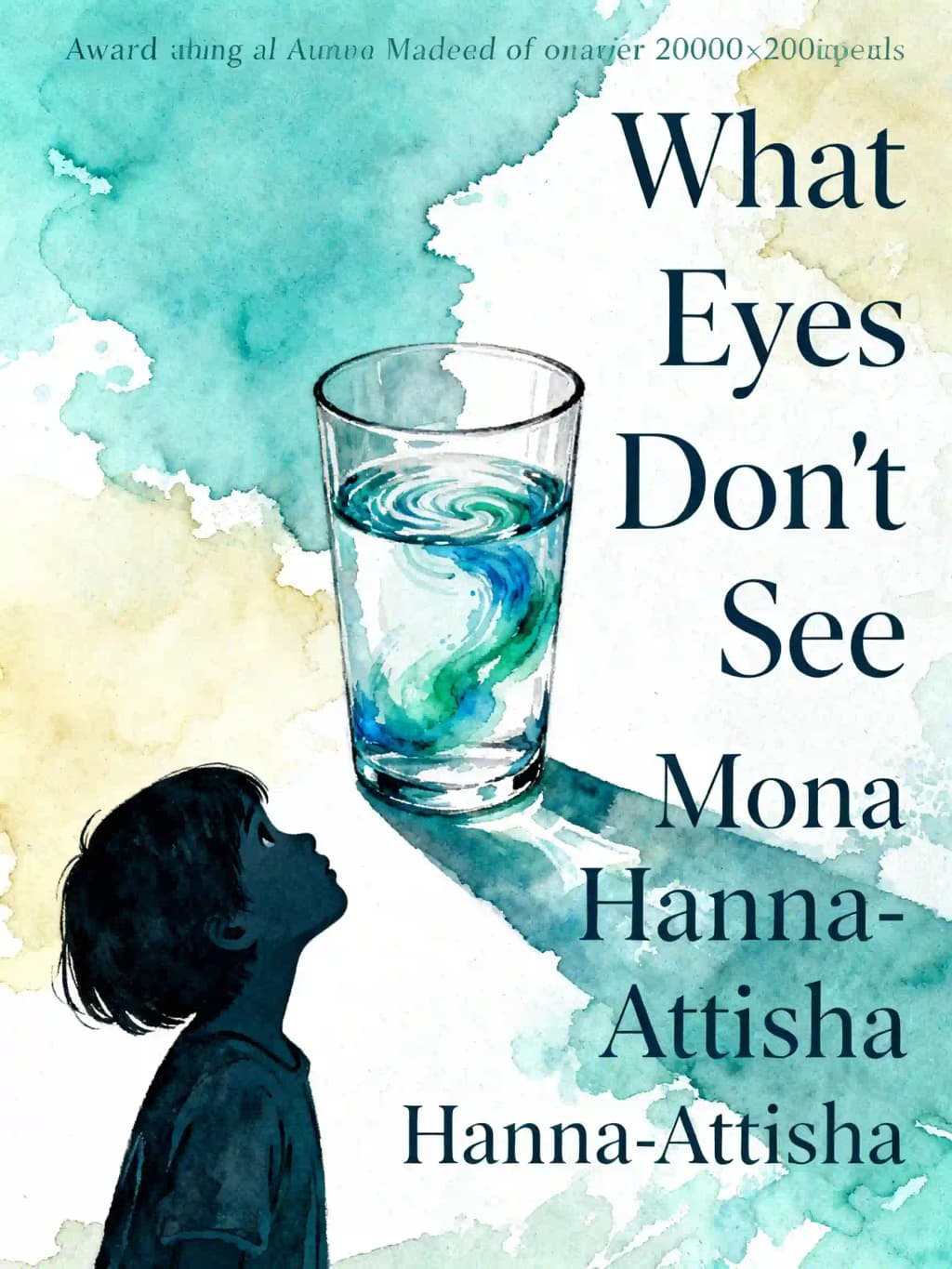
A pediatrician's fight against government lies exposed the Flint water crisis, earning praise from Erin Brockovich and Michael Moore. "What the Eyes Don't See" reveals how one woman's detective work uncovered environmental racism that poisoned an entire city's children.
Mona Hanna-Attisha is a pediatrician, public health advocate, and the bestselling author of What the Eyes Don’t See. She gained global recognition for her role in exposing the Flint water crisis.
Her memoir, What the Eyes Don’t See, intertwines themes of environmental justice, government accountability, and community resilience. This reflects her expertise as the director of the Michigan State University-Hurley Children’s Hospital Pediatric Public Health Initiative.
As a first-generation Iraqi American, Hanna-Attisha holds degrees from the University of Michigan and Michigan State University. Her public health training crucially informed her research on lead contamination. Her work has been featured in The New York Times, The Washington Post, and major media outlets such as CNN and NPR.
A recipient of Time’s 100 Most Influential People and the CDC Foundation’s Fries Prize, she founded the Flint Child Health and Development Fund to address the long-term impacts of the water crisis. What the Eyes Don’t See was named a New York Times Notable Book and has driven policy reforms, remaining a pivotal text in environmental health literature.
What the Eyes Don’t See chronicles Dr. Mona Hanna-Attisha’s pivotal role in exposing the Flint water crisis, blending memoir, investigative journalism, and a call to action. The book details her scientific detective work to prove lead contamination in Flint’s water supply, the systemic failures that allowed the crisis, and the resilience of the community fighting for justice.
This book is essential for readers interested in public health, environmental justice, or grassroots activism. It appeals to those seeking a firsthand account of scientific advocacy, policymakers examining institutional racism, and anyone inspired by stories of courage against bureaucratic negligence.
Key themes include environmental injustice, institutional racism, community resilience, and the ethical responsibility of professionals. The narrative underscores how marginalized communities bear the brunt of policy failures and the power of collective action to demand accountability.
Notable lines include Erin Brockovich’s praise: “Mona Hanna-Attisha is a true American hero” and the titular phrase inspired by D.H. Lawrence: “The eyes don’t see what the mind doesn’t know.” These emphasize the book’s focus on overlooked truths and moral courage.
The book combines data analysis, personal stories of affected families, and a timeline of bureaucratic failures. Dr. Hanna-Attisha reveals how state officials dismissed evidence of lead poisoning and how grassroots efforts forced accountability, offering a blueprint for combating public health disasters.
Some reviewers note deviations into the author’s family history, which, while enriching her personal motivation, occasionally distract from the central crisis narrative. Others highlight repetitive passages about systemic inequities.
Unlike purely journalistic accounts, this memoir intertwines Hanna-Attisha’s Iraqi immigrant heritage with her scientific rigor, offering a unique lens on activism. It parallels works like Silent Spring in blending personal narrative with urgent public health advocacy.
The title reflects the adage “The eyes don’t see what the mind doesn’t know,” emphasizing how willful ignorance enabled the Flint crisis. It challenges readers to confront hidden injustices and question institutional narratives.
As the daughter of Iraqi dissidents, Hanna-Attisha draws parallels between Flint’s struggle and her family’s defiance against oppression. Her upbringing instilled a commitment to speaking truth to power, shaping her approach to advocacy.
The book advocates for vigilance in holding institutions accountable, leveraging data for grassroots change, and centering marginalized voices in policymaking. It underscores the role of individuals in driving systemic reform.
Yes, it’s a nonfiction account of the Flint water crisis, detailing Hanna-Attisha’s research, the community’s resistance, and the ongoing fight for clean water. The book includes photographs, timelines, and citations to reinforce its factual basis.
The book remains a critical resource for understanding environmental racism, public health failures, and community empowerment. Its lessons apply to ongoing crises, from contaminated water systems to climate justice disparities.
저자의 목소리로 책을 느껴보세요
지식을 흥미롭고 예시가 풍부한 인사이트로 전환
핵심 아이디어를 빠르게 캡처하여 신속하게 학습
재미있고 매력적인 방식으로 책을 즐기세요
"You can do this."
"The eyes don't see what the mind doesn't know."
Don't waste your money on bottled water. They say it is fine to drink.
What the Eyes Don't See의 핵심 아이디어를 이해하기 쉬운 포인트로 분해하여 혁신적인 팀이 어떻게 창조하고, 협력하고, 성장하는지 이해합니다.
What the Eyes Don't See을 빠른 기억 단서로 압축하여 솔직함, 팀워크, 창의적 회복력의 핵심 원칙을 강조합니다.

생생한 스토리텔링을 통해 What the Eyes Don't See을 경험하고, 혁신 교훈을 기억에 남고 적용할 수 있는 순간으로 바꿉니다.
무엇이든 물어보고, 목소리를 선택하고, 진정으로 공감되는 인사이트를 함께 만들어보세요.

샌프란시스코에서 컬럼비아 대학교 동문들이 만들었습니다
"Instead of endless scrolling, I just hit play on BeFreed. It saves me so much time."
"I never knew where to start with nonfiction—BeFreed’s book lists turned into podcasts gave me a clear path."
"Perfect balance between learning and entertainment. Finished ‘Thinking, Fast and Slow’ on my commute this week."
"Crazy how much I learned while walking the dog. BeFreed = small habits → big gains."
"Reading used to feel like a chore. Now it’s just part of my lifestyle."
"Feels effortless compared to reading. I’ve finished 6 books this month already."
"BeFreed turned my guilty doomscrolling into something that feels productive and inspiring."
"BeFreed turned my commute into learning time. 20-min podcasts are perfect for finishing books I never had time for."
"BeFreed replaced my podcast queue. Imagine Spotify for books — that’s it. 🙌"
"It is great for me to learn something from the book without reading it."
"The themed book list podcasts help me connect ideas across authors—like a guided audio journey."
"Makes me feel smarter every time before going to work"
샌프란시스코에서 컬럼비아 대학교 동문들이 만들었습니다

What the Eyes Don't See 요약을 무료 PDF 또는 EPUB으로 받으세요. 인쇄하거나 오프라인에서 언제든 읽을 수 있습니다.
A mother stands in a pediatrician's office, holding her baby, asking a simple question: "Is our tap water safe?" The doctor-confident, well-trained-says yes. Months later, that same doctor discovers she was catastrophically wrong. The water flowing through an entire American city was poisoned with lead, and she had unknowingly told thousands of parents it was fine. This is where most people would crumble. Dr. Mona Hanna-Attisha did the opposite. She became a detective, an activist, and ultimately, the voice that forced a nation to confront an environmental disaster it wanted to ignore. Flint, Michigan's water crisis wasn't just a failure of infrastructure-it was a failure of democracy, accountability, and basic human decency. When government officials switched the city's water source to save money, they unleashed a neurotoxin into homes, schools, and hospitals. What followed was a masterclass in institutional denial: officials dismissed complaints, manipulated data, and attacked anyone who questioned them. But one pediatrician refused to stay silent. Her story reveals how ordinary people can challenge power, how science becomes activism when lives are at stake, and why some truths demand to be told-no matter the cost.