Discover 100+ heartwarming stories that made the NYT Bestseller list, praised by Elizabeth Gilbert as "a balm and treasure." In a world of doom-scrolling, what if the antidote to cynicism is hidden in these everyday acts of extraordinary kindness?
Gabriel Reilich and Lucia Knell, co-authors of the New York Times bestselling book Good People: Stories from the Best of Humanity, are media executives and social impact leaders renowned for amplifying stories of human kindness.
Reilich, Head of Content & Innovation at GOOD | Upworthy, holds a political science degree from UC Berkeley and has crafted campaigns for Google, GoFundMe, and the World Food Programme.
Knell, Upworthy’s Vice President since 2014 and a Kenyon College graduate, champions mental health advocacy and social media’s potential to foster unity, with her work featured in The New York Times and Vogue.
Their book, a collection of 101 true stories curated from Upworthy’s global community, reflects their mission to counter digital negativity with hope, empathy, and shared humanity. Frequent speakers on platforms like NPR and TEDx, they emphasize storytelling as a tool for social connection.
Good People debuted as an instant bestseller, endorsed by Elizabeth Gilbert, Kristen Bell, and Sheryl Crow, and has been embraced as a beacon of optimism in contemporary discourse.
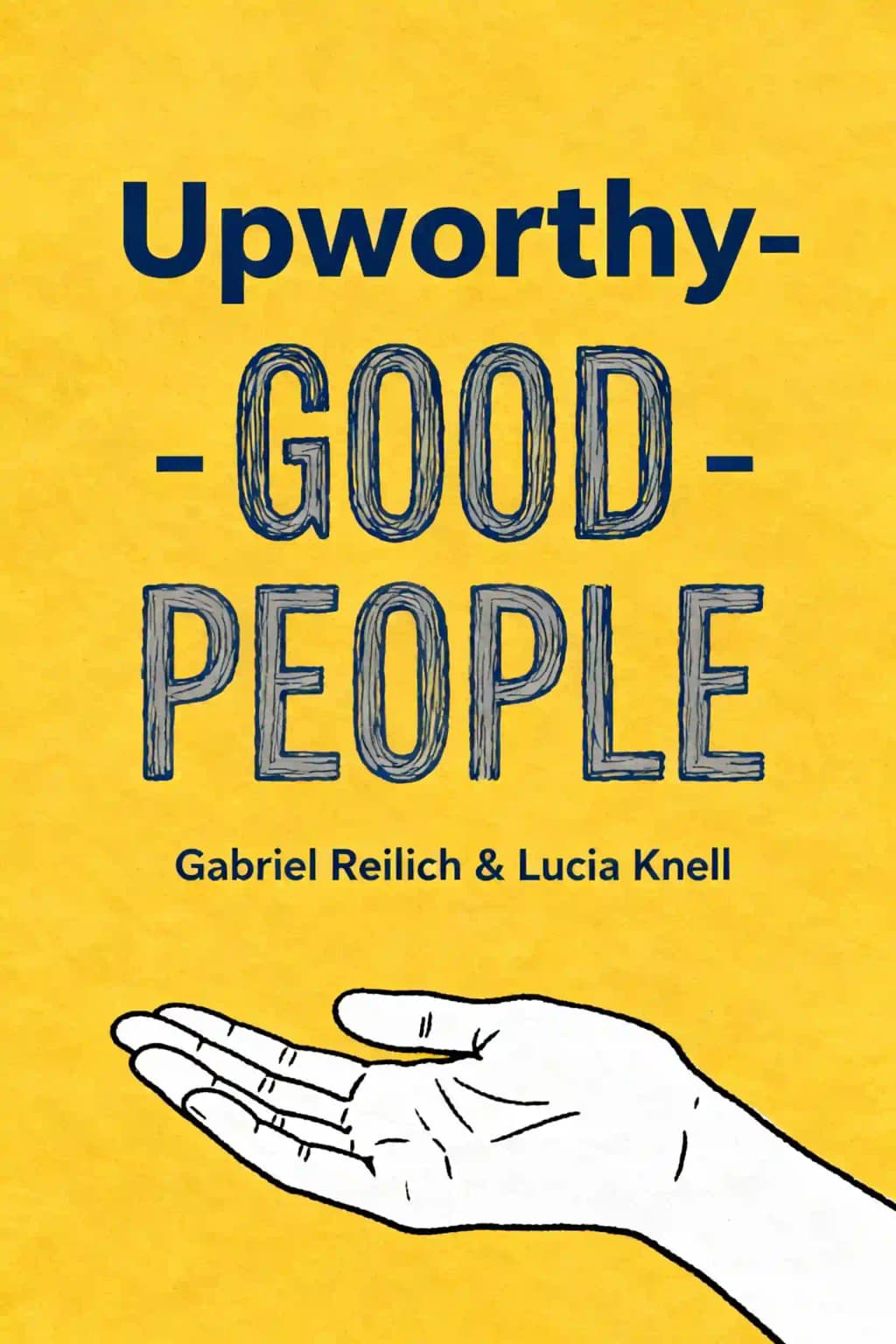
Upworthy - GOOD PEOPLE is a curated anthology of 100+ true stories celebrating human kindness, from strangers paying it forward to communities rallying during crises. Co-authored by Upworthy’s Head of Content Gabriel Reilich and VP Lucia Knell, the book combines viral social media sensibilities with deeply moving narratives, illustrated to amplify their emotional impact. Themes include empathy, resilience, and small acts with outsized effects.
This book is ideal for readers seeking hope amid today’s divisive headlines, fans of Humans of New York or Chicken Soup for the Soul, and anyone interested in psychology-driven storytelling. Educators, parents, and mental health advocates will also find it a tool for fostering optimism.
A New York Times bestseller, GOOD PEOPLE is praised for its “perspective-changing salve” that restores faith in humanity. With stories like a landlord easing a tenant’s grief and a teacher helping a child accept differences, it’s a compelling choice for readers prioritizing emotional nourishment over sensationalism.
Key themes include:
Gabriel Reilich (Head of Content at Upworthy) and Lucia Knell (Upworthy’s VP) are social media pioneers behind viral campaigns for Google, the UN, and NGOs. Reilich, a UC Berkeley grad, transformed Upworthy into a global brand, while Knell advocates for mental health and positivity online.
Both highlight human resilience, but GOOD PEOPLE focuses specifically on actionable kindness, blending Upworthy’s data-driven virality with National Geographic’s narrative depth. Stories are shorter and paired with illustrations, optimized for quick, impactful consumption.
“The Kindest of Strangers”—where a diner regular funds a waitress’s education—exemplifies the book’s theme of transformative generosity. Other standouts include “Learn by Heart,” about a teacher’s creative inclusion of a student with an eye patch.
The book organizes stories into thematic chapters like It’s the Little Things and When I Needed It Most, each opening with a commentary on the featured virtue. Stories are paired with minimalist illustrations to enhance emotional resonance.
Yes. The authors intentionally counter “mean world syndrome” by spotlighting decency, making it a recommended read for those feeling overwhelmed by negativity. Its bite-sized stories allow for daily positivity microdoses.
Available globally since September 3, 2024, through major retailers like Barnes & Noble, Amazon, and indie bookstores. The 320-page hardcover (ISBN 9781426223464) retails for $24.99.
In an era of AI-driven disconnection and polarized media, the book’s human-centric stories offer a grounding reminder of shared values. Its focus on community aligns with post-pandemic shifts toward collective well-being.
While not explicitly mentioned, the book’s thematic chapters and discussion-worthy stories make it suitable for book clubs. Educators can use tales like “The Kids Are All Right” to spark conversations about empathy.
저자의 목소리로 책을 느껴보세요
지식을 흥미롭고 예시가 풍부한 인사이트로 전환
핵심 아이디어를 빠르게 캡처하여 신속하게 학습
재미있고 매력적인 방식으로 책을 즐기세요
Goodness isn't just an ideal-it's a practical reality.
Differences don't make you worth less.
Grief, though deeply personal, need not be faced alone.
We are rarely as alone as we feel.
You are better than the bad things going on around you.
Upworthy의 핵심 아이디어를 이해하기 쉬운 포인트로 분해하여 혁신적인 팀이 어떻게 창조하고, 협력하고, 성장하는지 이해합니다.
Upworthy을 빠른 기억 단서로 압축하여 솔직함, 팀워크, 창의적 회복력의 핵심 원칙을 강조합니다.

생생한 스토리텔링을 통해 Upworthy을 경험하고, 혁신 교훈을 기억에 남고 적용할 수 있는 순간으로 바꿉니다.
무엇이든 물어보고, 목소리를 선택하고, 진정으로 공감되는 인사이트를 함께 만들어보세요.

샌프란시스코에서 컬럼비아 대학교 동문들이 만들었습니다
"Instead of endless scrolling, I just hit play on BeFreed. It saves me so much time."
"I never knew where to start with nonfiction—BeFreed’s book lists turned into podcasts gave me a clear path."
"Perfect balance between learning and entertainment. Finished ‘Thinking, Fast and Slow’ on my commute this week."
"Crazy how much I learned while walking the dog. BeFreed = small habits → big gains."
"Reading used to feel like a chore. Now it’s just part of my lifestyle."
"Feels effortless compared to reading. I’ve finished 6 books this month already."
"BeFreed turned my guilty doomscrolling into something that feels productive and inspiring."
"BeFreed turned my commute into learning time. 20-min podcasts are perfect for finishing books I never had time for."
"BeFreed replaced my podcast queue. Imagine Spotify for books — that’s it. 🙌"
"It is great for me to learn something from the book without reading it."
"The themed book list podcasts help me connect ideas across authors—like a guided audio journey."
"Makes me feel smarter every time before going to work"
샌프란시스코에서 컬럼비아 대학교 동문들이 만들었습니다

Upworthy 요약을 무료 PDF 또는 EPUB으로 받으세요. 인쇄하거나 오프라인에서 언제든 읽을 수 있습니다.
What happens when life shatters in public? A law student collapses against an airport wall, sobbing after her father's sudden death. Most travelers avert their eyes. But one businessman doesn't. He secures her an earlier flight, then holds her hand for the entire journey-sharing stories of losing his own father, transforming a stranger's grief into bearable company. Years later, she approaches others in distress without hesitation, carrying forward what he taught her: that our darkest moments need not be faced alone. These encounters arrive when we're most vulnerable yet least expect rescue. After tumbling spectacularly down college stairs, a woman finds herself beside a troubled young man. Their conversation reveals they belong to the same tragic club-both lost family to suicide. For two hours, they share memories and survivor's guilt with someone whose name they'll never know. Or consider the dental assistant whose toilet paper tower collapses in a Costco parking lot-the final straw after enduring daily workplace abuse. An elderly woman doesn't just help gather scattered rolls; she shares her own story of harassment from decades past, offering the perspective needed to finally quit that toxic job. Sometimes these interventions literally save lives. A 19-year-old off-duty firefighter checks the pulse of a woman ejected through a car windshield for a full minute before detecting life. He retrieves oxygen, stays throughout the ordeal, visits the hospital. They maintain contact years later-a stranger transformed into lifelong guardian. These moments reveal a profound truth: in our most vulnerable hours, we're rarely as alone as we feel. The human capacity for compassion transcends the boundaries between strangers, turning airports and parking lots into sacred spaces of connection.