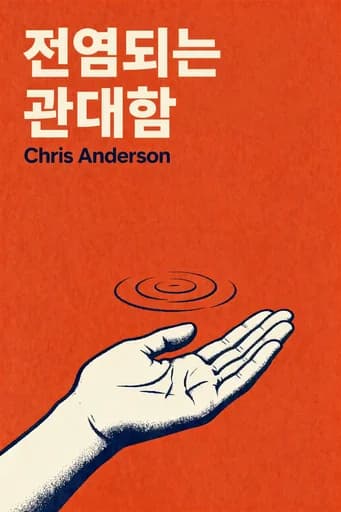
In "Infectious Generosity," TED curator Chris Anderson reveals how technology amplifies kindness. Bill Gates champions its "universal giving pledge" that could generate $10 trillion annually. What if small acts - like a barber's free haircuts for the homeless - could trigger a global generosity revolution?
Chris Anderson, bestselling author of Infectious Generosity: The Ultimate Idea Worth Spreading and renowned TED curator, is a global thought leader on technology, innovation, and human-centric solutions.
A former editor-in-chief of Wired magazine, Anderson pioneered concepts like "The Long Tail" (2006) and "Free: The Future of a Radical Price" (2009), both New York Times bestsellers that redefined digital-era business models.
As TED's visionary leader since 2001, he transformed the conference into a billion-view platform for "ideas worth spreading," launching TEDx and TED-Ed to democratize knowledge globally. Infectious Generosity reflects his two-decade focus on leveraging digital connectivity for societal good, arguing that kindness can achieve viral impact through modern media.
His work has been translated into 40+ languages and recognized with the Gerald Loeb Award for business journalism. Over 60,000 TEDx talks and 1 billion annual video views testify to his influence in shaping 21st-century discourse. The digital edition of Infectious Generosity achieved 300,000+ downloads in its first month.
Infectious Generosity explores how digital connectivity can amplify acts of kindness into global movements. Chris Anderson, TED’s curator, argues that small generous acts—when shared online—can trigger exponential positive change. The book combines case studies (like viral fundraising campaigns) with frameworks for leveraging social media, crowdfunding, and storytelling to create "generosity loops" that benefit givers and receivers alike.
Nonprofit leaders, social entrepreneurs, marketers, and ethically minded individuals seeking to create systemic change. The book offers actionable strategies for anyone aiming to harness digital tools for social good—from startup founders designing giving models to educators teaching empathy. Anderson’s TED-inspired approach appeals to readers who value evidence-based optimism.
Yes, particularly for those interested in modern philanthropy or digital activism. Anderson bridges theory (behavioral science, network effects) with tactical advice, like designing "shareable generosity moments." Critics praise its practicality, though some note it leans heavily on anecdotal TED success stories. Ideal for readers seeking fresh alternatives to traditional charity models.
Anderson emphasizes designing generosity into products/services, not just fundraising.
The book expands on TED’s "ideas worth spreading" philosophy into "actions worth replicating." Anderson shares behind-the-scenes insights from viral TED Talks that raised millions for causes, demonstrating how digital platforms turn inspiration into measurable impact. He argues TED’s success blueprint applies to any generosity-driven initiative.
These encapsulate Anderson’s thesis that strategic generosity thrives in connected ecosystems.
Anderson focuses on decentralized, participatory models over top-down charity. Unlike academic texts, he emphasizes viral mechanics (memes, challenges) and metrics-driven giving. The book aligns with Gen Z’s preference for micro-actions (e.g., social media advocacy) alongside monetary donations.
Some argue it underestimates systemic barriers to equitable participation. Critics note viral campaigns often favor photogenic causes over complex issues. Anderson counters by emphasizing "lo-fi generosity" tactics for resource-limited communities, like skill-sharing networks.
Absolutely. The book provides frameworks for embedding generosity into customer journeys—like Patagonia’s environmental pledges. Anderson advocates for "profit-with-purpose" models where social impact drives brand loyalty and employee retention.
Anderson proposes "joyful resistance"—making generosity fun through gamification (e.g., donation challenges with meme rewards). Case studies show how platforms like DonorsChoose reduce burnout by connecting givers directly to beneficiaries.
저자의 목소리로 책을 느껴보세요
지식을 흥미롭고 예시가 풍부한 인사이트로 전환
핵심 아이디어를 빠르게 캡처하여 신속하게 학습
재미있고 매력적인 방식으로 책을 즐기세요
Give away something valuable, and watch as unexpected benefits return.
Generosity could be not just morally right but strategically brilliant.
Assuming the worst creates a darker world.
The capacity for generosity exists within all humans.
Infectious Generosity의 핵심 아이디어를 이해하기 쉬운 포인트로 분해하여 혁신적인 팀이 어떻게 창조하고, 협력하고, 성장하는지 이해합니다.
Infectious Generosity을 빠른 기억 단서로 압축하여 솔직함, 팀워크, 창의적 회복력의 핵심 원칙을 강조합니다.

생생한 스토리텔링을 통해 Infectious Generosity을 경험하고, 혁신 교훈을 기억에 남고 적용할 수 있는 순간으로 바꿉니다.
무엇이든 물어보고, 목소리를 선택하고, 진정으로 공감되는 인사이트를 함께 만들어보세요.

샌프란시스코에서 컬럼비아 대학교 동문들이 만들었습니다
"Instead of endless scrolling, I just hit play on BeFreed. It saves me so much time."
"I never knew where to start with nonfiction—BeFreed’s book lists turned into podcasts gave me a clear path."
"Perfect balance between learning and entertainment. Finished ‘Thinking, Fast and Slow’ on my commute this week."
"Crazy how much I learned while walking the dog. BeFreed = small habits → big gains."
"Reading used to feel like a chore. Now it’s just part of my lifestyle."
"Feels effortless compared to reading. I’ve finished 6 books this month already."
"BeFreed turned my guilty doomscrolling into something that feels productive and inspiring."
"BeFreed turned my commute into learning time. 20-min podcasts are perfect for finishing books I never had time for."
"BeFreed replaced my podcast queue. Imagine Spotify for books — that’s it. 🙌"
"It is great for me to learn something from the book without reading it."
"The themed book list podcasts help me connect ideas across authors—like a guided audio journey."
"Makes me feel smarter every time before going to work"
샌프란시스코에서 컬럼비아 대학교 동문들이 만들었습니다

Infectious Generosity 요약을 무료 PDF 또는 EPUB으로 받으세요. 인쇄하거나 오프라인에서 언제든 읽을 수 있습니다.
What happens when you give away your most valuable asset for free? Most business advisers would call it financial suicide. Yet in 2006, TED took that exact risk-posting six conference talks online for anyone to watch. The result? Their website traffic exploded into the millions, transforming an exclusive conference into a global movement. This wasn't just good luck. It revealed something profound about how generosity works in our connected age. Unlike the zero-sum exchanges of the past, today's acts of kindness can multiply exponentially, reaching people you'll never meet and creating ripples you'll never witness. The question isn't whether generosity can spread like wildfire-it's whether we're brave enough to light the match.