1장
The Radical Power of Choosing to Feel
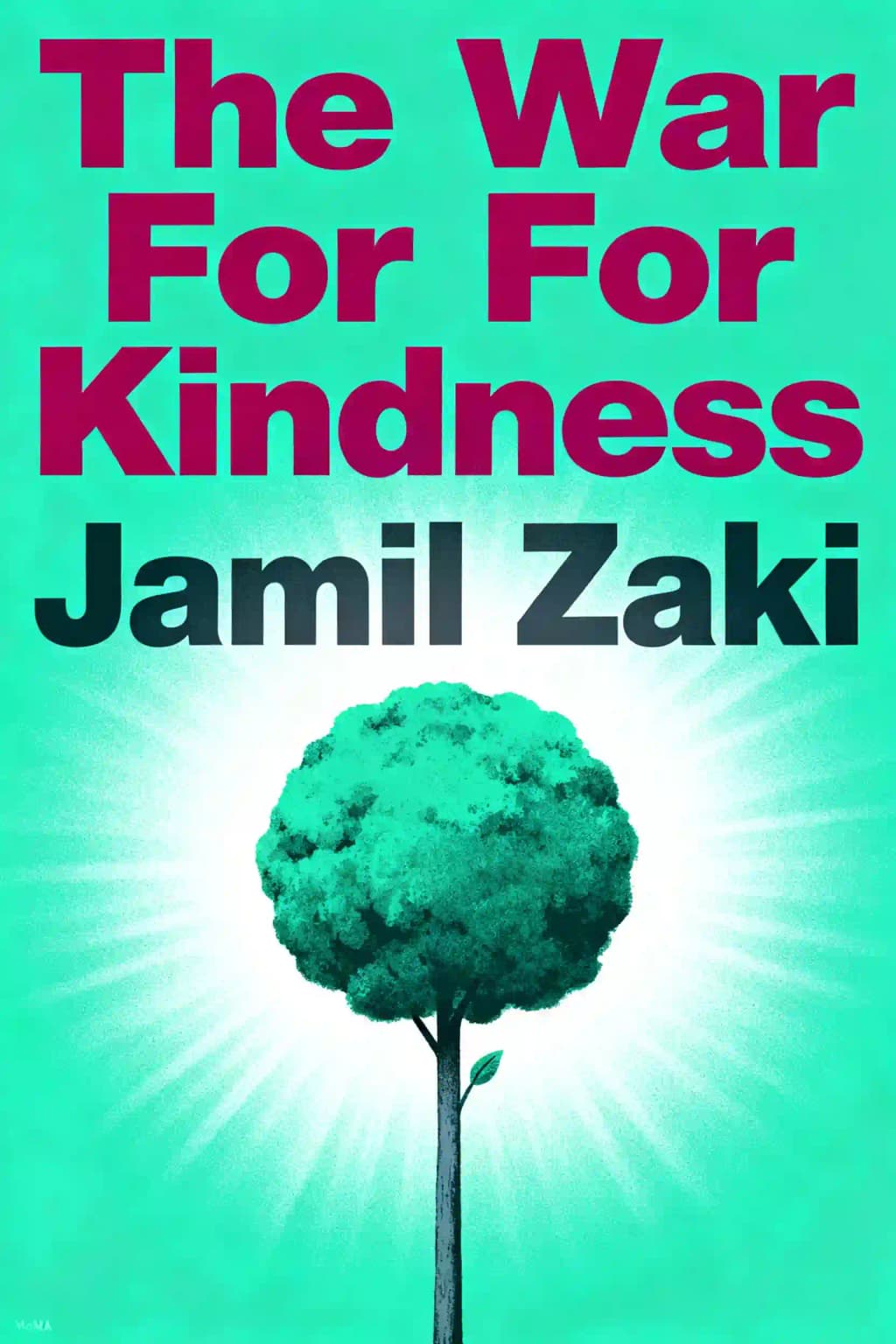
In a world that often feels increasingly divided, Jamil Zaki's "The War for Kindness" arrives as both a scientific exploration and a deeply personal manifesto. As a child of divorce between parents from Peru and Pakistan, Zaki learned early to tune himself to different emotional frequencies-a skill that would later inform his groundbreaking research on empathy. This book, which Brene Brown called "revolutionary" and Adam Grant praised as "profoundly hopeful," challenges our fundamental assumptions about human nature. Rather than accepting empathy's decline as inevitable, Zaki reveals the surprising science showing that empathy isn't fixed but can be developed like a muscle. Through compelling stories of ex-white supremacists, police officers, medical professionals, and ordinary people making extraordinary choices, Zaki offers a roadmap for how we might cultivate a more empathetic world-one choice at a time.
2장
The Surprising Mobility of Human Nature
A century ago, meteorologist Alfred Wegener proposed that continents had once formed a single landmass before gradually separating-a theory ruthlessly mocked by the scientific establishment until tectonic plates were discovered decades later. While we now accept that the physical world changes constantly, our understanding of ourselves remains stubbornly fixed. Throughout history, human essence has been viewed as immutable-whether located in the eternal soul, natural character, or our biology.
This "psychological fixism" provides comfort by making people predictable but limits human potential. Nineteenth-century phrenologists measured skull shapes to determine mental faculties, using this "science" to defend social hierarchies. Though neuroscience outgrew phrenology, the belief that adult brains couldn't change persisted. Santiago Ramon y Cajal, father of modern neuroscience, declared adult nerve paths "fixed, ended, immutable."
But this "harsh decree" proved wrong. Scientists discovered songbirds grow thousands of new brain cells while learning mating songs. Using radiocarbon dating techniques made possible by Cold War nuclear testing, researchers proved humans also grow new neurons throughout life. Our experiences, choices, and habits physically reshape our brains-string instrument players develop larger hand-control brain regions, while chronic stress causes memory centers to atrophy.
Intelligence changes dramatically too. The "Flynn effect" revealed average IQ scores rose fourteen points over just four decades. These shifts occur even within families-poor children adopted into well-off households gain over ten points in IQ, and each year of education adds about one point. Our personalities similarly evolve throughout life-becoming more neurotic after leaving home, more introverted after marriage, and more conscientious after starting work.
This "psychological mobility" doesn't mean unlimited potential, but it does mean we're not static beings. While genes establish our "set point" for traits like intelligence or empathy, we also have ranges within which we can move. Twin studies show empathy is about 30 percent genetically determined and generosity about 60 percent-substantial but not absolute. Experiences and choices matter tremendously, especially in childhood. Children whose parents express high empathy show greater concern for others throughout development.
Our empathy continues shifting throughout adulthood based on our circumstances. People who cause suffering (like doctors delivering bad news or managers conducting layoffs) often protect themselves by emotionally disengaging or blaming victims. Conversely, trauma survivors frequently develop deeper empathy-80 percent of rape survivors report increased empathy afterward. This "altruism born of suffering" appears across war-torn communities worldwide, with survivors showing greater civic engagement and generosity. This compassionate response not only helps others but creates "post-traumatic growth"-providing meaning, strength, and purpose after suffering.
3장
Choosing Empathy: The Psychological Tug-of-War
Photojournalists Ron Haviv and Ed Kashi both document human suffering, but approach empathy differently. Haviv detaches emotionally during shoots, saving his feelings for later, while Kashi embraces emotional connection as part of his process. Their different approaches challenge the notion that empathy is merely an automatic reflex we can't control.
Psychologist Kurt Lewin viewed human behavior as governed by competing psychological forces, with approach motives pulling us toward certain actions and avoidance motives pulling us away. While William McDougall and others have viewed emotions as instinctive and automatic, this view fails to recognize how emotions are built on thought and interpretation. By thinking differently, we can actually choose to feel differently, as demonstrated by James Gross's research showing people can intentionally turn their feelings up or down by reframing what they see.
Empathy, like other emotions, can be chosen or avoided depending on its perceived usefulness. We're drawn to empathy because it can feel good through emotional contagion, satisfies our need for relationships, and signals virtue to others. People act more generously in public than private, and increase helping behaviors when their moral identity is threatened. However, empathy also carries costs-connecting with others' pain risks our own well-being. Mark Pancer's research showed students literally walked in wider arcs around charity tables with empathy triggers. When resources are at stake, empathy feels even more burdensome, as demonstrated by studies showing people actively avoid hearing emotional details of homeless individuals' stories when they might later need to donate.
Kurt Lewin pioneered "action research" that diagnosed psychological forces causing real-world problems and developed interventions to encourage better choices. Similar "nudges"-small situational changes that inspire big behavioral shifts-have since been applied to retirement savings, organ donation, and other areas. Empathy builders use Lewin's approach to diagnose the forces in empathy's psychological tug-of-war, then alter them by amplifying positive forces or diminishing negative ones. Even gender differences in empathy can be eliminated by offering incentives-men performed equally to women when paid for accurately understanding others' emotions, or when told women found sensitivity attractive.
Even psychopaths can activate empathy when prompted-Christian Keysers found their brains mirrored suffering similarly to non-psychopaths when asked to focus on victims' pain. But these are "fast-twitch" changes that quickly fade without prompts. The greater challenge is building "slow-twitch empathy"-lasting changes that keep people at the high end of their empathic range. Tania Singer led an ambitious project testing whether Buddhist meditation techniques could tune brains for kindness. Over 39 weeks, participants practiced meditation, loving-kindness, and paired empathy exercises. The results were remarkable: students developed better attention spans, emotional vocabulary, and ability to recognize others' feelings. Brain scans revealed empathy-related regions actually grew in size, proving empathy can be cultivated through deliberate practice.
While Singer's approach works, it requires Olympic-level commitment. More accessible approaches focus on changing beliefs. Stanford researcher Erika Weisz found that having college freshmen write letters to high schoolers explaining that empathy is a buildable skill created lasting changes. Two months later, these students maintained their mobilist view of empathy, showed improved emotion recognition, and reported making more close friends during their crucial first months of college.
4장
Hatred Versus Contact: Breaking Down Walls
Tony McAleer's articulate hatred earned him leadership positions in white supremacy movements. He modernized Canadian bigotry by creating the first white-power record label website and founding Canadian Liberty Net, an automated phone service broadcasting racist messages. As his influence grew, his worldview became more paranoid and virulent. His hatred wasn't hot anger but cold disconnection-he traded his humanity for acceptance and approval.
Three people changed Tony's trajectory: his two children and a Jewish friend. Fatherhood softened him as he tried to be the father he wished he'd had. Meeting Dov Baron, a Jewish leadership trainer who showed him compassion despite knowing his past, cracked Tony's facade. This acceptance allowed Tony to confront his history, including visiting a Holocaust museum where he finally connected with others' pain-and his own.
Our culture has cured some forms of hatred while others have intensified. Americans now accept interracial and same-sex marriage, but political animosity has soared. By 2010, half of Republicans and a third of Democrats reported they'd be displeased if their child married someone from the opposite party, compared to just 5% and 4% in 1960. People easily divide the world into insiders and outsiders, even along arbitrary lines, and these divisions destroy empathy. When people encounter outsiders in pain, they report less empathy, feel less anxiety, and show reduced facial mimicry.
Hatred suppresses empathy but doesn't eliminate it. Contact theory shows that meaningful interaction with outsiders reduces prejudice toward many groups. Studies of over 250,000 people confirm this works even when contact isn't sought out-like randomly assigned college roommates or door-to-door conversations about transgender rights. The simple truth is that when people work, live, or play alongside each other, divisions melt away.
Empathy is a choice, and conflict gives people reasons to avoid it. People in competition "circle the wagons"-as Tony puts it, "Multiculturalism is great when everyone's doing well, but when you're fighting for a crust of bread, all bets are off." Contact remedies this by giving people reasons to care about outsiders. It builds empathy even in tough settings like Northern Ireland, where Catholics and Protestants dehumanized each other less if they had friends on the other side.
While contact theory shows promise, psychologist Emile Bruneau has found that conventional approaches need refinement. Bruneau discovered that contact programs must account for power dynamics. In experiments with Mexican immigrants and white Americans, and Palestinians and Israelis, he found that minority or less powerful groups benefited more from "perspective giving" rather than perspective taking. They already understand the majority view but rarely get heard themselves.
After leaving white supremacy, Tony discovered an online journal called "Life After Hate," full of stories like his. In 2011, Google Ideas brought together about fifty "formers"-ex-hate group members-to discuss preventing extremism. Despite their differences, they shared common stories: using hatred to cover childhood wounds, and escaping through new meaning found in parenthood and friendships with forgiving outsiders.
Life After Hate begins not by trying to change minds immediately, but by showing genuine interest and listening-similar to Carl Rogers' therapeutic approach. Tony emphasized that empathizing with hate group members doesn't mean validating their beliefs: "You absolutely judge the ideology, the hatred, but you don't judge the person."
5장
The Stories We Tell: Fiction as Empathy's Gateway Drug
Our minds can untether from the present moment, allowing us to mentally travel to past memories or future scenarios. These mental voyages engage our senses-imagining sunshine makes our pupils constrict, remembering touch activates sensory regions. Scientists discovered brain regions most active during rest are engaged in daydreaming, planning, and imagining. These same regions play a crucial role in empathy, allowing us to mentally inhabit others' perspectives. Stories aren't mere diversions but an ancient technology enhancing our ability to imagine other lives, plan for possible futures, and establish cultural codes.
Actors develop empathy through repeatedly inhabiting characters' inner worlds. Adrien Brody exemplified this approach for "The Pianist" by ending his relationship, disconnecting phones, moving to Europe, playing piano daily, and losing forty pounds to "encourage loneliness and loss." Thalia Goldstein, once a theater performer turned psychologist, pioneered research connecting acting and empathy. Her studies found drama students outperformed other arts students on empathy tests, with acting training specifically increasing cognitive empathy over time. Additional research shows medical residents who train in drama interact more empathically with patients, and children with autism show improved empathy after theater programs.
Reading fiction offers a more accessible form of perspective-taking than acting. Psychologist Raymond Mar's research shows that avid readers identify others' emotions more easily than non-readers, and even brief "doses" of fiction enhance empathy. In one study, people who read George Saunders's "The Tenth of December" later identified emotions more accurately than those who read nonfiction. Books allow readers to safely empathize with characters they might avoid in real life-murderers, outsiders, or people from marginalized groups. This "contact lite" can lead to real-world empathy, as seen historically with "Uncle Tom's Cabin" and "The Jungle."
The radio drama "Musekeweya" ("New Dawn") became Rwanda's most popular show, with 90% of the country tuning in. Its Romeo and Juliet storyline of love between rival communities provided a framework for processing trauma. The show gave Rwandans language to discuss difficult experiences, with people referring to real individuals using character names like "she was such a Batamuriza" (peace-seeking) or "he was a Rutaganira" (violence-inciting). This allowed people to discuss trauma without direct accusations during the pressure-cooker moments of gacaca trials.
Fiction helps readers recast their own lives through characters they meet. This principle drove "Changing Lives Through Literature," conceived in 1990 by English professor Bob Waxler and Judge Bob Kane to address recidivism. Kane selected convicts with long rap sheets, offering shortened sentences if they joined Waxler's reading group discussing novels like "The Old Man and the Sea." The program created a democratic space where criminals, the judge who sentenced them, and their probation officer discussed literature as equals. Stories of moral ambiguity helped participants see themselves beyond the "bad guy" label, imagine alternate futures, and develop empathy.
Research showed remarkable results-while 45% of similar probationers reoffended within a year (five with violent crimes), less than 20% of program participants did (only one violently). At $500 per student versus $30,000 for a year of incarceration, the program proved cost-effective while creating fewer victims. The program expanded nationwide and internationally, demonstrating literature's power to untether people from destructive patterns and foster empathy even in the hardest circumstances.
6장
Caring Too Much: The Caregiver's Dilemma
When Jamil Zaki's newborn daughter Alma was rushed to UCSF's Benioff Children's Hospital after suffering a stroke during birth, he experienced firsthand how medical staff's empathetic approach provided crucial emotional support during this traumatic time. While doctors couldn't control Alma's medical outcomes, they controlled how they treated the family-answering questions, sitting with their worries, and offering profound empathy that made them feel less alone during their darkest moments.
Yet this chapter explores the potential downside of empathy-when caring too much becomes debilitating. "Compassion fatigue," coined by Carla Joinson, affects caregivers who feel they can always give more. This affects millions of Americans, from family caregivers to parents to everyday citizens bombarded with images of suffering. Studies show empathic parents experience more inflammation and cellular aging, essentially transferring their well-being to their children. Even media consumption can lead to "news fatigue" as we're inundated with stories of suffering.
Returning to the ICN to observe the medical team's daily routine, Zaki follows Dr. Melissa Liebowitz, who admits motherhood has changed how she experiences her work. The team encounters Francisco, a premature infant with necrotizing enterocolitis whose intestines are dying. Despite communication barriers with his migrant worker parents, the team performs surgery only to discover Francisco's condition is "incompatible with life." Zaki witnesses the staff's compassionate approach as they kneel around Francisco's parents on the hospital roof terrace to deliver the devastating news, offering them control over how their son spends his remaining time.
Medical professionals like Dr. Liz Rogers reject "detached concern," believing emotional honesty gives more meaning to patients' care. Samantha shares becoming emotionally attached to an abandoned baby she cared for for seven months, feeling heartbroken when he left and struggling to care for other patients. Over-empathizing can lead caregivers to take heroic measures even when likely to fail or to sugarcoat bad news. Many develop secondary trauma and burnout-one in three intensive care professionals suffers burnout, with empathic professionals bearing the brunt.
A transformation in healthcare empathy began with tragedy at Johns Hopkins when 18-month-old Josie King died due to preventable medical errors. Rather than seeking revenge, her parents donated part of their settlement to create the Josie King Patient Safety Program. Meanwhile, Professor Albert Wu discovered caregivers who made medical errors often suffered PTSD symptoms but remained silent about their pain. This dangerous combination of vulnerability and silence led Wu to create Resilience in Stressful Events (RISE), a peer-to-peer empathy network. Initially underutilized, RISE now counsels over a hundred Hopkins staff weekly, providing psychological first aid that significantly reduces staff turnover after adverse events.
At San Francisco's Against the Stream meditation center, Eve Ekman leads medical residents in mindfulness practices. Eve's work helps caregivers distinguish between empathic distress (taking on others' pain) and empathic concern (caring without absorption). Research shows these states produce different outcomes-distress leads to avoidance and burnout, while concern correlates with resilience. Studies demonstrate meditation can reduce caregiver exhaustion while maintaining or even increasing empathy. For caregivers, redefining their role beyond "heroically defeating death" toward affirming life helps transform empathy from a source of burnout into sustainable compassion.
7장
Kind Systems: Transforming Institutions Through Empathy
Dan Batson's research showed how stress diminishes empathy, while other studies demonstrate empathy can be cultivated individually. However, our empathic responses don't exist in isolation-they're shaped by social norms and community influences. These shared beliefs and customs affect everything from our food preferences to our voting behaviors and emotional reactions.
Sue Rahr, the only girl in a family of seven kids, learned both combat skills and how to "maneuver, outsmart, and influence" growing up with her brothers. As a police officer, she uniquely completed her field training without ever using force. Now heading police training for Washington state, Rahr is implementing a new system designed to bring empathy back to policing.
Modern policing began with Sir Robert Peel's 1829 vision that "the police are the public and the public are the police," emphasizing community trust over force. American policing initially embraced community connection, but militarization increased in response to violence. The "warrior mentality" spread, with officers viewing themselves as combatants in dangerous territories, encouraged by trainers like Dave Grossman who portrays America as violent despite declining officer deaths.
After 33 years in law enforcement, Sue Rahr took over Washington State's Criminal Justice Training Commission (CJTC) in 2012. Rejecting the "bad apples" theory, she focused on changing the entire culture. While CJTC includes standard tactical training like defensive tactics and firearms, it distinguishes itself with its guardian philosophy. The motto "IN THESE HALLS, TRAINING THE GUARDIANS OF DEMOCRACY" reminds recruits to reject warrior mentality in favor of community caretaking. Every desk displays cards with "LEED: LISTEN AND EXPLAIN WITH EQUITY AND DIGNITY," based on Tom Tyler's research showing that transparency, impartiality and attentiveness build respect.
Despite its progressive approach, CJTC's training has significant flaws. It sometimes uses questionable psychological concepts and its approach to racial bias remains "antiseptic." Nevertheless, CJTC's empathy-centered approach is showing promising results. Officers trained in LEED techniques used force 30% less often than peers, and Washington officers now hospitalize rather than arrest more mentally ill individuals.
Jason Okonofua, sixteen years old, was ordered to strip naked shortly after arriving in jail. Just an hour earlier, he had been sitting in his AP calculus class. Despite being a straight-A student and football player, Jason's brief detention shattered his confidence. When arrested for refusing a suspension over a party flyer, a school officer said to him, "I thought you were the good one." Fortunately, a judge recognized Jason's academic record and dismissed the case.
In 2011, approximately 3.5 million children were suspended from school-more than double the rate from 1975. "Zero tolerance" policies expanded from weapons to vague infractions like "disrespect," disproportionately affecting black and brown students. Like warrior policing, these policies create adversarial relationships between teachers and students, often pushing troubled kids out of school and into the criminal justice system.
Jason Okonofua, now a UC Berkeley professor, researches the racial disparities in school discipline he once experienced. His work joins the growing Social and Emotional Learning (SEL) movement, which teaches children emotional regulation and empathy. Rather than focusing on students, Jason developed "empathic discipline" training for teachers. The program helps teachers understand why good students sometimes act out and view discipline as an opportunity for growth rather than punishment.
The results were remarkable-students reported feeling more respected, especially those who had previously been suspended. Suspension rates dropped by half, with the strongest improvements among boys and minority students. Most impressively, students behaved better not just in math class where teachers received the training, but throughout the school day, suggesting a fundamental shift in their behavior.
8장
The Digital Double Edge: Technology's Empathy Paradox
Technology has created unprecedented access to others' lives while simultaneously eroding our capacity for genuine connection. This paradox defines our digital era, where we can witness anyone's experiences but often fail to truly empathize with them.
Iraqi artist Wafaa Bilal created "Domestic Tension," an exhibit where internet users could remotely fire paintballs at him 24/7 for thirty days. Inspired by his brother's death from a drone strike, Bilal wanted to demonstrate how technology creates emotional distance that enables violence. Users from 138 countries fired approximately 60,000 shots while often sending hateful messages. The experiment revealed how technology allows people to dehumanize others in ways they might not face-to-face.
As Isaac Asimov predicted in 1964, we've withdrawn from nature to create digital environments that suit us better. Americans now spend four hours daily on phones compared to just eighteen minutes in 2007. Digital interactions have troubling correlations with empathy decline. Countries with greater internet usage show lower average empathy levels, and heavy technology users report more difficulty understanding others. Online, we narrow rather than broaden our perspectives, seeking information that confirms existing beliefs and gravitates toward emotionally affirming stories. Anonymity removes social accountability that typically constrains cruelty, enabling harassment that follows victims everywhere.
In Jeremy Bailenson's Virtual Human Interaction Lab at Stanford, you experience homelessness through virtual reality. This stark simulation reflects Santa Clara County's reality, where homelessness has increased 26% in two years despite being home to tech giants. Jeremy and his colleagues created VR experiences to combat this empathy gap, finding that immersive technology creates stronger, longer-lasting empathy than traditional perspective-taking exercises, even increasing willingness to support affordable housing initiatives a month later.
While virtual reality makes others' lives visible, augmented reality allows us to literally see emotions. Though Google Glass failed commercially, similar technology offers revolutionary help for people with autism like ten-year-old Thomas Coburn. Despite being emotionally expressive, Thomas struggles to recognize emotions in others' faces-a common autism trait. Stanford engineers developed an alternative using affective computing and augmented reality. Their system uses Google Glass to identify emotions on people's faces and display corresponding emojis in real-time, giving users with autism a "cheat code" for understanding social cues that neurotypical people take for granted.
When struggling with book deadlines and anxiety, Zaki turned to Koko, a bot connecting strangers for mutual emotional support. After sharing his fears, he was enlisted to help others while waiting for responses. Six minutes later, a thoughtful stranger offered perspective on his situation, creating an intimate, anonymous connection. Koko represents a different vision of social networking-one built on vulnerability and support rather than boasting or vengeance. Its creator, Rob Morris, developed the concept while battling depression as an MIT PhD student. Rather than struggling alone with cognitive distortions, he could send his thoughts to others who might help reframe them.
The internet has long connected people with rare illnesses or unusual experiences who might otherwise feel isolated. Rob realized he could broaden this concept of online kindness beyond specific communities. He developed a platform where helpers trained in cognitive behavioral therapy basics could assist people suffering from depression. Studies showed that those who shared their feelings with helpers demonstrated stronger ability to reframe their problems. Surprisingly, helpers benefited too-even severely depressed individuals wrote more incisively when helping others. Unlike traditional views of kindness as self-sacrificing, this mutual aid model benefits both parties.
9장
The Future of Empathy: Extending Care Across Time
The battle for empathy extends beyond our immediate circumstances to the legacy we leave for future generations. In a world increasingly focused on short-term thinking, we face the challenge of expanding our circle of care not just across space but across time. Our decisions today will shape the world inhabited by countless future humans who will outnumber us by millions to one.
Ari Wallach founded Longpath Labs to cultivate sustainable, intergenerational empathy. His workshops ask participants to introduce their great-great-grandchildren, imagining their lives, occupations, and struggles. By making future descendants feel real, people develop motivation to sacrifice for them. Gratitude for past generations' sacrifices also promotes long-term thinking-studies show that recalling gratitude helps people make more prudent decisions. When people read about companies that limited fishing decades ago to preserve resources, they become more willing to sacrifice their own prosperity for future generations, establishing a golden rule across time.
Experiencing awe-confronting something vast that interrupts our everyday concerns-helps us transcend selfishness. Whether gazing at Earth from space as Carl Sagan described in "Pale Blue Dot" or touching 4,000-year-old Neolithic gold beads, we can feel our connection to humanity's vast chain. Confronting mortality can either trigger tribal defensiveness or inspire legacy-building. When Alfred Nobel read his own premature obituary labeling him "The Merchant of Death," he established the Nobel Prize to transform his legacy. In Longpath workshops, participants write their own eulogies, pushing beyond their lifetimes to envision bigger possibilities than they thought possible.
Ancient empathy evolved for self-preservation-caring for our children because they carry our genes and for our tribe because they offer sustenance and safety. Building concern for a future that has forgotten us contradicts our Darwinian impulses. Yet in the face of escalating cruelty and isolation, we fight for our moral lives. Cultivating empathy for future generations requires effort and sacrifice for people who cannot repay us, but the sum of our choices will create the future we leave behind.
Empathy isn't one thing but an umbrella term encompassing multiple ways people respond to others. Despite decades of debate among psychologists, most researchers agree empathy consists of three key components: sharing others' feelings (experience sharing), thinking about others' perspectives (mentalizing), and caring about others' wellbeing (empathic concern). These components activate different brain systems and are useful in different contexts-poker requires mentalizing but not concern; parenting often needs concern even without understanding. Despite these distinctions, the components are intertwined, with Frans de Waal's "Russian Doll Model" showing how primitive experience sharing forms the core, with more complex forms layered on top, ultimately enabling broader forms of kindness.
Understanding empathy's distinct components helps researchers diagnose empathy deficits and design targeted interventions. When we discount a homeless person's suffering through thoughtlessness, perspective-taking exercises or virtual reality might boost mentalizing. In conflicts, we might think about enemies without caring for their wellbeing-contact and cross-group friendships can address this. Medical professionals experiencing burnout from excessive experience sharing can benefit from contemplative techniques that shift toward concern instead. Effective empathy interventions require first understanding exactly which component needs strengthening.