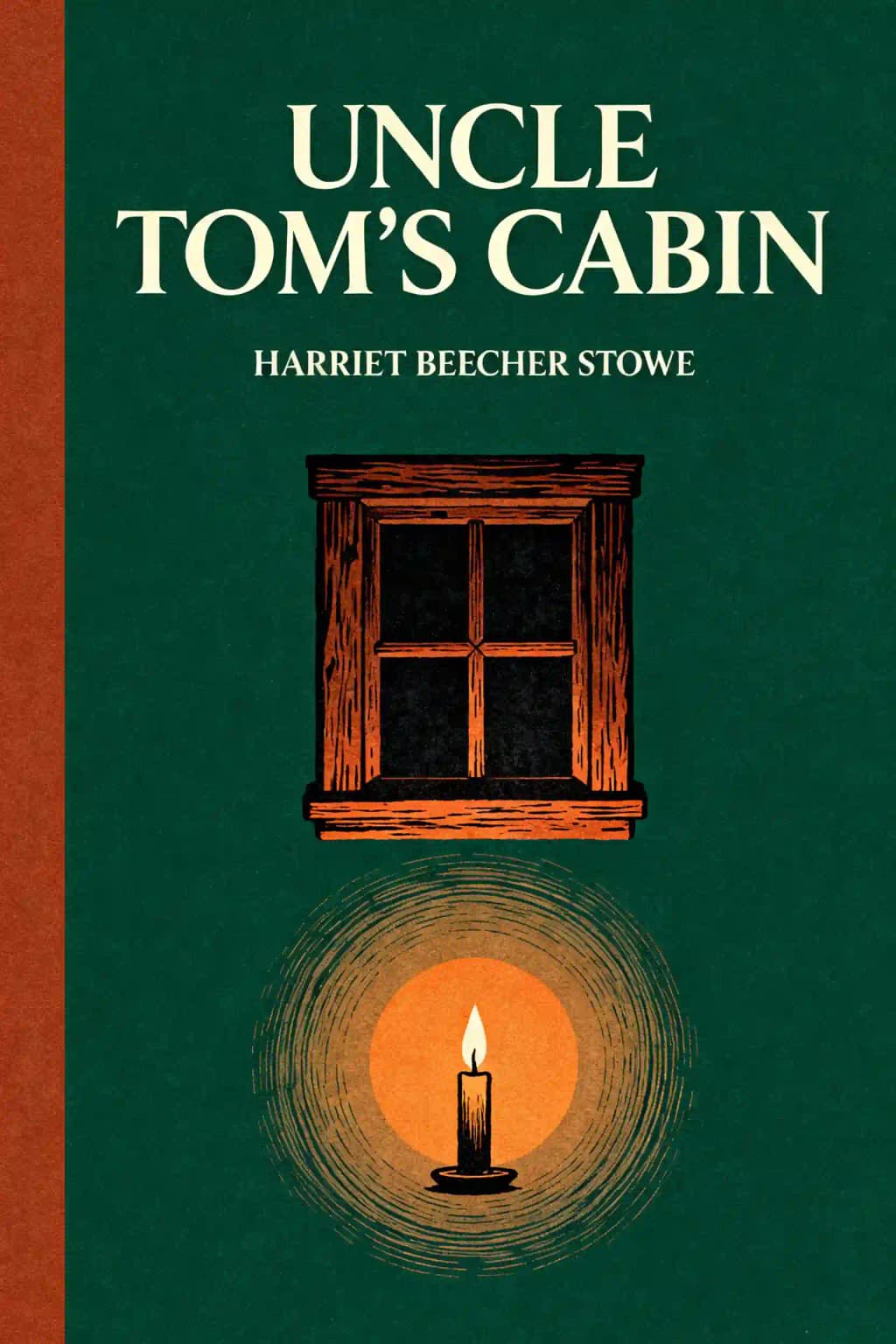
Before the Civil War, one novel ignited America's conscience. "Uncle Tom's Cabin" sold 300,000 copies in its first year, prompting Abraham Lincoln to call Harriet Beecher Stowe "the little lady who started this big war." What moral courage might you discover within?
Harriet Beecher Stowe, the influential abolitionist and bestselling author of Uncle Tom’s Cabin, crafted one of the 19th century’s most pivotal anti-slavery novels. Born in 1811 in Litchfield, Connecticut, Stowe grew up in the deeply religious Beecher family, which shaped her moral fervor and commitment to social reform.
Her firsthand exposure to slavery’s horrors while living in Cincinnati, coupled with her Christian convictions, drove her to write the groundbreaking novel. Blending themes of human dignity, religious morality, and familial bonds, Uncle Tom’s Cabin exposed slavery’s cruelty through vivid characters like Uncle Tom and Eliza, galvanizing anti-slavery movements in the North and sparking international outrage.
Stowe’s other notable works include The Mayflower, a collection of historical sketches, and A Key to Uncle Tom’s Cabin, a factual defense of her novel’s claims. A prolific writer and lecturer, she leveraged her platform to advocate for women’s rights and educational reform. Uncle Tom’s Cabin sold over 300,000 copies in its first year, was translated into 60 languages, and remains a cornerstone of American literature. Adapted into plays and widely debated, it is often cited as a catalyst for the Civil War, cementing Stowe’s legacy as a transformative voice for justice.
Uncle Tom’s Cabin follows the lives of enslaved individuals in pre-Civil War America, centering on Tom, a devout Christian sold into brutal conditions, and Eliza, who escapes to protect her son. The novel exposes slavery’s inhumanity through family separations, physical violence, and moral corruption, culminating in Tom’s martyrdom. It became a pivotal abolitionist work, galvanizing anti-slavery sentiment in the 1850s.
This book is essential for readers interested in American history, social justice, or classic literature. Students studying themes of race, religion, or 19th-century cultural movements will find it particularly impactful. Its emotional narrative also appeals to those exploring moral philosophy or the roots of the Civil War.
Yes—its critique of systemic oppression remains relevant, offering historical insight into slavery’s psychological and societal toll. While criticized for racial stereotypes, it’s a cornerstone of anti-racist literature and a key text for understanding America’s racial legacy.
Key themes include the evil of slavery, Christian morality vs. hypocrisy, maternal love, and resilience. Stowe contrasts Northern and Southern ideologies, emphasizing slavery’s destruction of families and the redemptive power of suffering.
Tom’s Christ-like forgiveness and Eva’s angelic purity symbolize Christian ideals of love and sacrifice. Their deaths highlight moral resistance to oppression, framing slavery as a sin against divine and human bonds.
Southern states banned it as abolitionist propaganda, fearing its influence. Modern debates focus on outdated racial portrayals, though its anti-slavery message is widely acknowledged.
Women like Eliza and Mrs. Bird embody moral authority, advocating for empathy and resistance. Their actions underscore motherhood as a force against slavery’s dehumanization.
Legree personifies greed and cruelty, using violence to control enslaved people. His downfall illustrates Stowe’s argument that slavery corrupts both the oppressed and the oppressor.
Tom’s cabin symbolizes the warmth of family and community, contrasting with the dehumanizing plantations. It becomes a metaphor for the domestic stability slavery destroys.
The novel humanized enslaved individuals for Northern readers, strengthening anti-slavery sentiment. Abraham Lincoln allegedly credited Stowe with “starting the Civil War” due to its cultural impact.
Yes—modern scholars note stereotypical “mammy” or “noble savage” tropes, which some argue perpetuate racism despite Stowe’s abolitionist goals. These critiques highlight the tension between intent and impact.
Key provides documentary evidence supporting the novel’s depictions, blending fiction with real-life accounts to strengthen its anti-slavery argument. It contextualizes the novel’s themes with historical data.
저자의 목소리로 책을 느껴보세요
지식을 흥미롭고 예시가 풍부한 인사이트로 전환
핵심 아이디어를 빠르게 캡처하여 신속하게 학습
재미있고 매력적인 방식으로 책을 즐기세요
I'm your church now!
"I will write something. I will if I live."
Slavery at its most depraved.
What made Uncle Tom's Cabin revolutionary was Stowe's masterful use of analogy.
The novel's moral framing of slavery helped maintain British neutrality.
Uncle Tom's Cabin의 핵심 아이디어를 이해하기 쉬운 포인트로 분해하여 혁신적인 팀이 어떻게 창조하고, 협력하고, 성장하는지 이해합니다.
Uncle Tom's Cabin을 빠른 기억 단서로 압축하여 솔직함, 팀워크, 창의적 회복력의 핵심 원칙을 강조합니다.

생생한 스토리텔링을 통해 Uncle Tom's Cabin을 경험하고, 혁신 교훈을 기억에 남고 적용할 수 있는 순간으로 바꿉니다.
무엇이든 물어보고, 목소리를 선택하고, 진정으로 공감되는 인사이트를 함께 만들어보세요.

샌프란시스코에서 컬럼비아 대학교 동문들이 만들었습니다
"Instead of endless scrolling, I just hit play on BeFreed. It saves me so much time."
"I never knew where to start with nonfiction—BeFreed’s book lists turned into podcasts gave me a clear path."
"Perfect balance between learning and entertainment. Finished ‘Thinking, Fast and Slow’ on my commute this week."
"Crazy how much I learned while walking the dog. BeFreed = small habits → big gains."
"Reading used to feel like a chore. Now it’s just part of my lifestyle."
"Feels effortless compared to reading. I’ve finished 6 books this month already."
"BeFreed turned my guilty doomscrolling into something that feels productive and inspiring."
"BeFreed turned my commute into learning time. 20-min podcasts are perfect for finishing books I never had time for."
"BeFreed replaced my podcast queue. Imagine Spotify for books — that’s it. 🙌"
"It is great for me to learn something from the book without reading it."
"The themed book list podcasts help me connect ideas across authors—like a guided audio journey."
"Makes me feel smarter every time before going to work"
샌프란시스코에서 컬럼비아 대학교 동문들이 만들었습니다

Uncle Tom's Cabin 요약을 무료 PDF 또는 EPUB으로 받으세요. 인쇄하거나 오프라인에서 언제든 읽을 수 있습니다.
In 1862, Abraham Lincoln allegedly greeted a diminutive woman with words that would echo through history: "So you're the little woman who wrote the book that started this great war." Whether he actually said this matters less than the truth it captures - Harriet Beecher Stowe's Uncle Tom's Cabin didn't just sell 300,000 copies in its first year; it detonated across American consciousness like a moral bomb. Theatrical adaptations filled every stage. Songs echoed its themes. British women collected over half a million signatures on anti-slavery petitions inspired by its pages. This wasn't merely a bestseller - it was a cultural earthquake that forced an entire nation to confront the humanity it had spent generations denying. What makes this achievement staggering is that Stowe wrote as a woman in an era when female voices were systematically dismissed, yet she managed to transform the conversation about America's original sin. The spark came in 1850 with the Fugitive Slave Law, which forced Northerners to become active participants in slavery's machinery. Suddenly, free states weren't sanctuaries - they were hunting grounds. When Stowe's sister urged her to write against this injustice, Stowe declared: "I will write something. I will if I live." But intellectual outrage alone doesn't create transformative art. Personal anguish does. In 1849, Stowe had buried her eighteen-month-old son Charley after cholera ravaged him. That grief became her bridge to understanding what enslaved mothers felt when their children were torn from their arms and sold like livestock.