Ancient Indian wisdom meets modern business crisis in "Two Birds in a Tree." Endorsed by thought leaders like Margaret Wheatley, this guide replaces profit-obsession with "Being-centered leadership." Can the same wisdom that inspired The Body Shop's success transform your business into a force for good?
Ram Nidumolu is the acclaimed author of Two Birds in a Tree: Timeless Indian Wisdom for Business Leaders and a pioneering thought leader in sustainable business strategy and innovation.
A business consultant, entrepreneur, and scholar with over 25 years of experience, Nidumolu blends insights from ancient Indian philosophy with modern management practices to redefine leadership in the corporate world.
His expertise stems from a distinguished career as the founder of InnovaStrat, advising Fortune 500 companies like FedEx and Puma, and serving as COO of Blu Skye. Nidumolu’s influential Harvard Business Review article, “Why Sustainability Is Now the Key Driver of Innovation,” has shaped global executive strategies.
Currently an affiliated scholar at Stanford University’s Kozmetsky Global Collaboratory, he holds a PhD in Management from UCLA and an executive education background from IIM Calcutta. Two Birds in a Tree, praised by CEOs of Unilever and Patagonia, remains a seminal work in dharma capitalism and beingful leadership, offering transformative approaches to sustainable business growth.
Two Birds in a Tree by Ram Nidumolu reimagines business leadership through ancient Indian wisdom from the Upanishads. It introduces Being-centered leadership, emphasizing interconnection between business, humanity, and nature. The book offers a four-stage roadmap to align profit with purpose, using parables and case studies from CEOs at Unilever, Patagonia, and others.
This book is ideal for executives, sustainability professionals, and leaders seeking ethical frameworks that balance profit with planetary health. It’s also valuable for readers interested in Eastern philosophy’s application to modern business challenges.
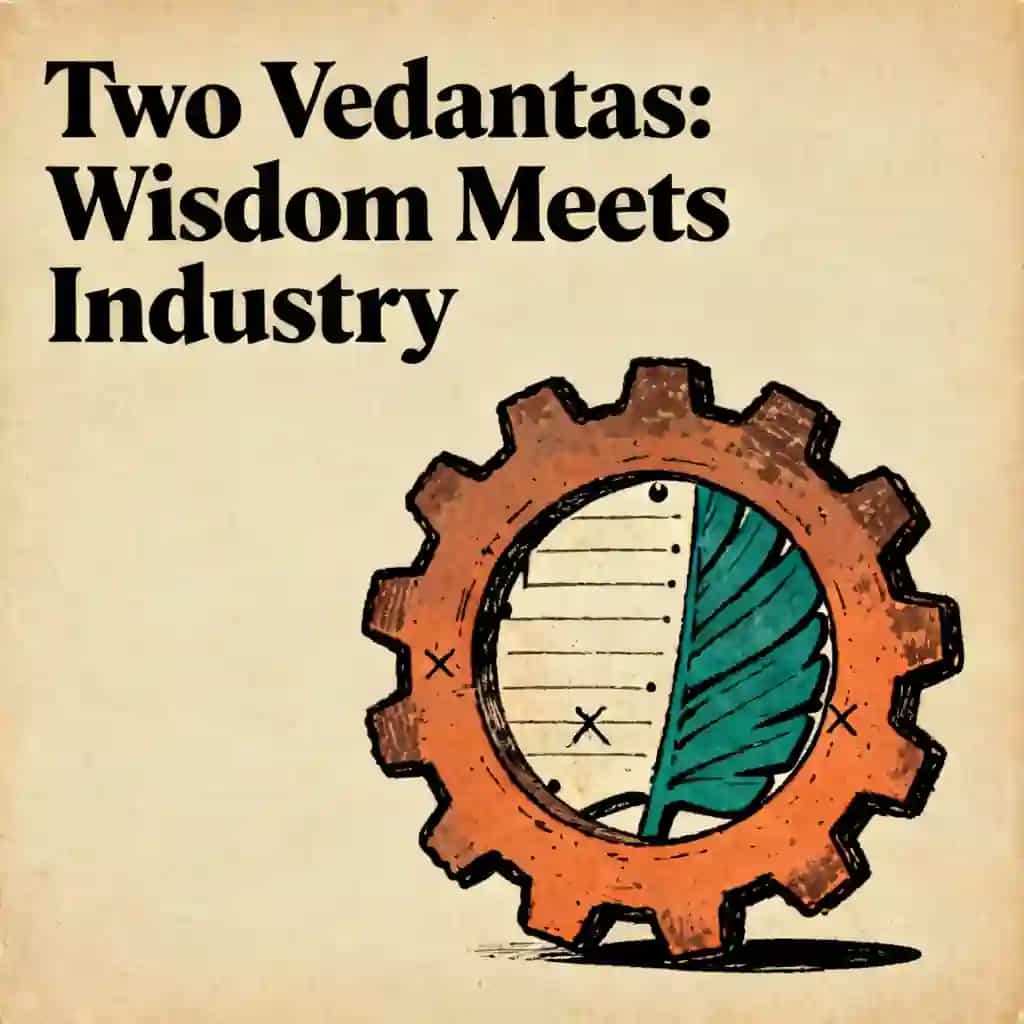
The metaphor, drawn from the Upanishads, symbolizes human duality: one bird (ego) obsesses over short-term gains, while the other (true self) observes holistically. Nidumolu uses this to critique profit-driven models and advocate for leadership rooted in interconnectedness.
Being-centered leadership prioritizes long-term well-being of all stakeholders over quarterly profits. It’s anchored in dharma (ethical duty) and emphasizes serving the collective, as demonstrated by CEOs who reduced environmental impact while boosting innovation.
Nidumolu argues sustainability isn’t optional but a competitive advantage. Case studies show companies like Patagonia thrived by embedding environmental care into core strategy, mirroring Gandhi’s principle of minimal harm.
While praised for innovation, some note its reliance on abstract philosophy over concrete tactics. Critics suggest pairing it with operational guides to bridge theory and practice.
His tech entrepreneurship and academic research inform real-world examples, like using CRM systems to foster stakeholder relationships, blending Eastern wisdom with Western business rigor.
These lines encapsulate the call for holistic, compassionate leadership.
Unlike Atomic Habits (tactical change) or Lean In (individual growth), Nidumolu’s work focuses on systemic ethical transformation, making it unique in linking ancient wisdom to stakeholder capitalism.
Yes. Its emphasis on servant leadership and empathy provides frameworks for resolving conflicts, reducing burnout, and fostering inclusive teams—key for modern remote/hybrid work environments.
Amid AI disruption and climate crises, its timeless principles help leaders navigate complexity ethically. The Upanishadic focus on interconnection aligns with rising ESG (Environmental, Social, Governance) priorities.
저자의 목소리로 책을 느껴보세요
지식을 흥미롭고 예시가 풍부한 인사이트로 전환
핵심 아이디어를 빠르게 캡처하여 신속하게 학습
재미있고 매력적인 방식으로 책을 즐기세요
Companies focused solely on short-term gains have become disconnected from humanity.
Being-centered leadership means leading from a place of seeking to realize this fundamental reality.
A subsystem cannot flourish if its containing system is unhealthy.
When guided by this quest, there is little to fear in this world.
Both internal imagination and external work are necessary sources of knowledge.
Two Birds in a Tree의 핵심 아이디어를 이해하기 쉬운 포인트로 분해하여 혁신적인 팀이 어떻게 창조하고, 협력하고, 성장하는지 이해합니다.
Two Birds in a Tree을 빠른 기억 단서로 압축하여 솔직함, 팀워크, 창의적 회복력의 핵심 원칙을 강조합니다.

생생한 스토리텔링을 통해 Two Birds in a Tree을 경험하고, 혁신 교훈을 기억에 남고 적용할 수 있는 순간으로 바꿉니다.
무엇이든 물어보고, 목소리를 선택하고, 진정으로 공감되는 인사이트를 함께 만들어보세요.

샌프란시스코에서 컬럼비아 대학교 동문들이 만들었습니다
"Instead of endless scrolling, I just hit play on BeFreed. It saves me so much time."
"I never knew where to start with nonfiction—BeFreed’s book lists turned into podcasts gave me a clear path."
"Perfect balance between learning and entertainment. Finished ‘Thinking, Fast and Slow’ on my commute this week."
"Crazy how much I learned while walking the dog. BeFreed = small habits → big gains."
"Reading used to feel like a chore. Now it’s just part of my lifestyle."
"Feels effortless compared to reading. I’ve finished 6 books this month already."
"BeFreed turned my guilty doomscrolling into something that feels productive and inspiring."
"BeFreed turned my commute into learning time. 20-min podcasts are perfect for finishing books I never had time for."
"BeFreed replaced my podcast queue. Imagine Spotify for books — that’s it. 🙌"
"It is great for me to learn something from the book without reading it."
"The themed book list podcasts help me connect ideas across authors—like a guided audio journey."
"Makes me feel smarter every time before going to work"
샌프란시스코에서 컬럼비아 대학교 동문들이 만들었습니다

Two Birds in a Tree 요약을 무료 PDF 또는 EPUB으로 받으세요. 인쇄하거나 오프라인에서 언제든 읽을 수 있습니다.
Two birds sit in the same tree. One frantically hops from branch to branch, tasting fruits both sweet and bitter, never satisfied. The other rests calmly at the top, simply watching. This 3,000-year-old image from India's Upanishads captures our modern crisis perfectly: businesses chasing quarterly returns have severed their connections to humanity and nature, leaving behind environmental collapse, social fracture, and institutional distrust. What if the solution to our most pressing challenges-climate change, inequality, workplace burnout-lies not in the latest management framework but in reconnecting with something far older and more fundamental?