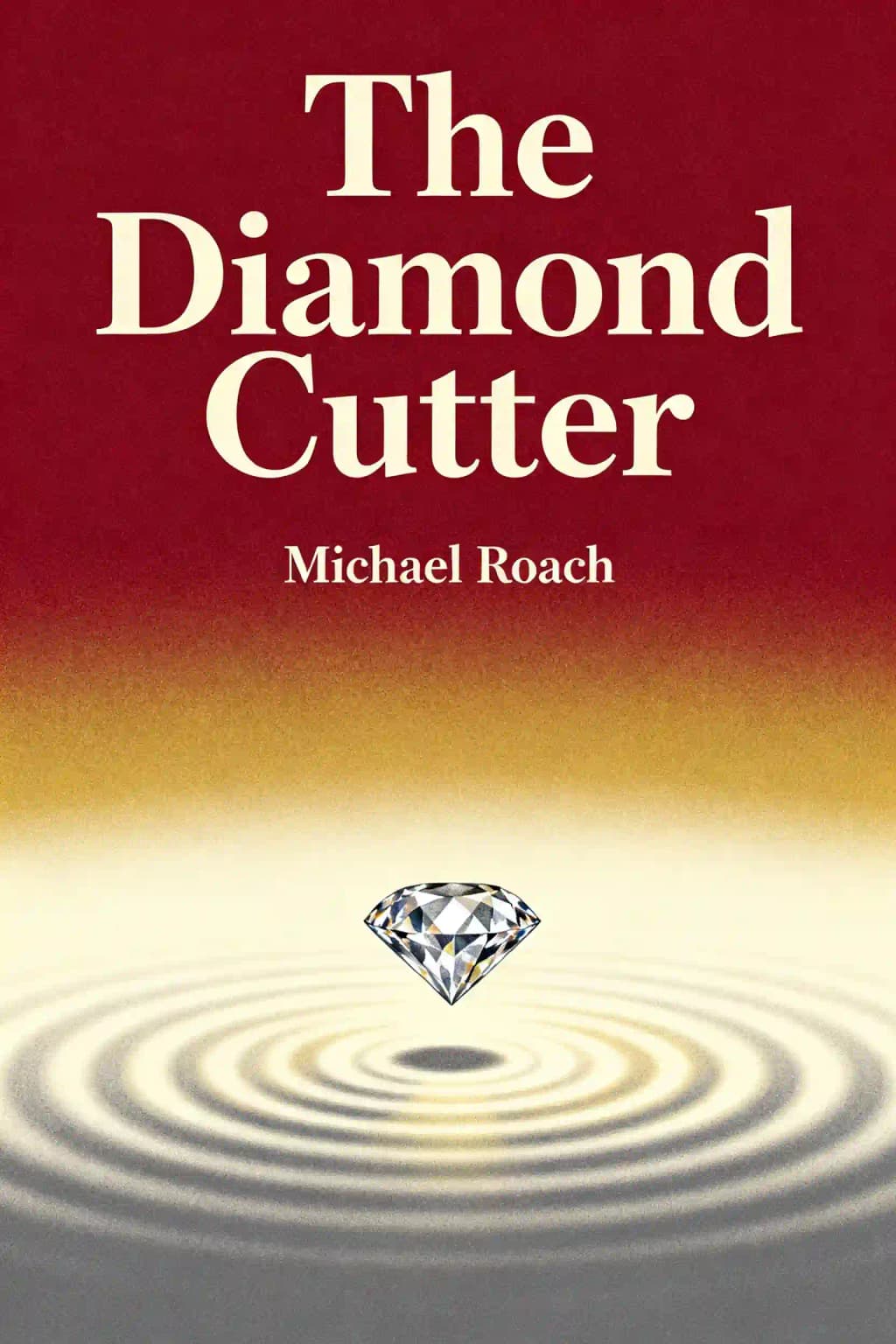
Ancient Buddhist wisdom meets modern business strategy in "The Diamond Cutter," where Geshe Michael Roach reveals how karmic principles transformed a diamond startup into a global powerhouse. What if the secret to ethical prosperity was hidden in 2,500-year-old teachings that quietly revolutionized corporate thinking?
Michael Roach, bestselling author of The Diamond Cutter: The Buddha on Managing Your Business and Your Life, is a pioneering figure blending ancient Buddhist wisdom with modern business strategy.
A Princeton University graduate and ordained Tibetan Buddhist monk, Roach earned the rare geshe degree after 22 years of study at Sera Mey Monastery. His unique expertise stems from applying Buddhist principles to his role as a director at a New York diamond firm, where he tested the ethical frameworks detailed in his book.
Roach’s works, including Karmic Management and How Yoga Works, explore themes of mindfulness, ethical leadership, and purpose-driven success across 30 translated languages. He founded the Diamond Cutter Institute and Asian Classics Input Project, organizations preserving Tibetan texts and teaching actionable strategies to global audiences.
Featured in The Wall Street Journal, Forbes, and The New York Times, Roach’s teachings have impacted executives and entrepreneurs worldwide. The Diamond Cutter has sold millions of copies since its 2003 release, cementing its status as a cross-cultural business classic.
The Diamond Cutter blends Tibetan Buddhist philosophy with business strategy, teaching how to achieve success through ethical practices and mental discipline. Geshe Michael Roach, a former diamond executive and ordained monk, explains how "emptiness" and "mental imprints" shape reality. The book offers 46 solutions to common business problems using ancient Buddhist principles, emphasizing generosity, mindfulness, and intentional action as keys to professional and personal fulfillment.
Entrepreneurs, managers, and professionals seeking ethical frameworks for decision-making will benefit from this book. It’s also ideal for readers interested in integrating mindfulness into business or exploring nontraditional success strategies. Spiritual seekers attracted to practical applications of Buddhist philosophy will find actionable insights.
Yes, for its unique fusion of spirituality and business practicality. Roach’s system, tested during his tenure growing a $100M diamond company, provides tools to reframe challenges as opportunities. Critics note its esoteric concepts, but its actionable advice on mindset and karma makes it valuable for leadership and personal growth.
Emptiness refers to the idea that objects and events lack inherent meaning—their value is shaped by our perceptions. Roach argues reality is a projection of past mental imprints, urging readers to consciously create positive imprints through ethical actions to manifest desired outcomes.
Every thought, word, or action creates "imprints" in the mind, which later surface as experiences. For example, aggressive competition plants imprints of conflict, while generosity fosters abundance. By managing imprints, you control future results—a core strategy for business success in the book.
Roach details solutions to issues like financial instability, workplace conflict, and stagnation. Each ties to a Buddhist principle: e.g., overcoming distrust by practicing honesty or resolving team disputes through compassionate communication. These frameworks aim to create sustainable, ethical success.
Unlike The Alchemist’s narrative focus, Roach offers structured Buddhist-business frameworks. Compared to The 7 Habits, it emphasizes karma and perception over habit formation. It’s ideal for readers seeking spiritually grounded, ethics-driven success strategies.
Some find its Buddhist concepts overly abstract for practical business use. Others question Roach’s unorthodox blend of monastic life and corporate work. However, its actionable steps for mindfulness in decision-making counterbalance these critiques.
Its focus on ethical leadership, mental resilience, and sustainable success aligns with modern demands for purpose-driven business. As AI and automation grow, its human-centric strategies for decision-making remain critical.
Pair with The Art of Happiness (Dalai Lama) for deeper Buddhist philosophy or Atomic Habits for habit-based success strategies. For diamond industry insights, read The Heartless Stone by Tom Zoellner.
저자의 목소리로 책을 느껴보세요
지식을 흥미롭고 예시가 풍부한 인사이트로 전환
핵심 아이디어를 빠르게 캡처하여 신속하게 학습
재미있고 매력적인 방식으로 책을 즐기세요
Wealth creation follows natural laws as predictable as physics.
Our perceptions come from ourselves.
Negative actions lead only to negative results, positive to positive.
Imprints continuously expand in strength until they flower.
The Diamond Cutter의 핵심 아이디어를 이해하기 쉬운 포인트로 분해하여 혁신적인 팀이 어떻게 창조하고, 협력하고, 성장하는지 이해합니다.
생생한 스토리텔링을 통해 The Diamond Cutter을 경험하고, 혁신 교훈을 기억에 남고 적용할 수 있는 순간으로 바꿉니다.
무엇이든 묻고, 학습 스타일을 선택하고, 나에게 맞는 인사이트를 함께 만들어보세요.

샌프란시스코에서 컬럼비아 대학교 동문들이 만들었습니다
"Instead of endless scrolling, I just hit play on BeFreed. It saves me so much time."
"I never knew where to start with nonfiction—BeFreed’s book lists turned into podcasts gave me a clear path."
"Perfect balance between learning and entertainment. Finished ‘Thinking, Fast and Slow’ on my commute this week."
"Crazy how much I learned while walking the dog. BeFreed = small habits → big gains."
"Reading used to feel like a chore. Now it’s just part of my lifestyle."
"Feels effortless compared to reading. I’ve finished 6 books this month already."
"BeFreed turned my guilty doomscrolling into something that feels productive and inspiring."
"BeFreed turned my commute into learning time. 20-min podcasts are perfect for finishing books I never had time for."
"BeFreed replaced my podcast queue. Imagine Spotify for books — that’s it. 🙌"
"It is great for me to learn something from the book without reading it."
"The themed book list podcasts help me connect ideas across authors—like a guided audio journey."
"Makes me feel smarter every time before going to work"
샌프란시스코에서 컬럼비아 대학교 동문들이 만들었습니다

The Diamond Cutter 요약을 무료 PDF 또는 EPUB으로 받으세요. 인쇄하거나 오프라인에서 언제든 읽을 수 있습니다.
Imagine walking into a gritty diamond cutting shop where exquisite gems emerge from dark, dusty environments - like lotuses rising from mud. This powerful Buddhist metaphor for transforming pain into beauty perfectly captures the essence of "The Diamond Cutter." When Michael Roach joined a diamond company as a seven-dollar-per-hour errand boy, no one expected he would help transform it into a $100 million enterprise. His secret? He was simultaneously a Buddhist monk applying 2,500-year-old wisdom to modern business challenges. The approach offers something radical: business success doesn't come from ruthless competition but from understanding reality's true nature and practicing genuine generosity. In a world obsessed with scarcity thinking, this ancient wisdom presents a revolutionary alternative - wealth creation follows natural laws as predictable as physics, if we're willing to see them.
Nothing is inherently good or bad "from its own side" - if it were, everyone would experience it identically. When you encounter an irritating colleague, they aren't inherently irritating (as others may find them pleasant). This person is "empty" of inherent qualities. Consider how the same business decision appears differently to stakeholders: When Andin International acquired a building, declining values made it bad for owners but good for managers who needed space. For some employees it meant longer commutes; for others, shorter ones. If nothing has inherent qualities, where do our experiences come from? They come from mental imprints (karma) planted by our past actions, words, and thoughts. These imprints function like recordings that determine how we perceive otherwise neutral events. The diamond industry illustrates these principles. When Jorges lost a valuable twelve-carat stone, everyone immediately helped search until dawn - demonstrating how mental imprints strengthen when kindness is shown to someone in great need. Similarly, the industry operates on "The Mazal" - verbal commitments that seal multimillion-dollar deals without contracts. Our minds record impressions of everything we do to others, creating tracks that remain long after, like prints in snow. These imprints follow four rules: they match their original cause, they continuously expand, no experience happens without a triggering imprint, and once planted, every imprint must eventually flower.
When companies struggle financially, the natural reaction is to cut back - first corporate giving, then perks, bonuses, and benefits. This creates a downward spiral as each cut plants negative imprints in our minds. Every time we deny funds or help to others, we plant imprints that make us see ourselves denied the same. The ancient Buddhist master Nagarjuna outlined seven key correlations between actions and business results: generosity creates wealth, ethical behavior creates a happy environment, patience creates health and attractiveness, joyful effort creates leadership, concentration creates mental focus, wisdom about hidden potential creates freedom from unwanted outcomes, and compassion creates fulfillment of all wishes. "But if good people sometimes fail while selfish people prosper, how can this system be true?" The explanation follows four principles: causes precede results (current success comes from past generosity), causes are smaller than results (minor kindnesses can create tremendous wealth later), imprints take time to grow, and people fail either by not following principles long enough or thoroughly enough. Think about how this plays out in your own experience: Haven't you noticed how the most generous people often seem to have abundance flow to them? Or how patient leaders tend to build more cohesive teams? These aren't coincidences - they're the natural flowering of mental imprints. The human mind has limitless potential, and by understanding these correlations, you can effectively design your future to unfold exactly as you want it.
To accelerate results, use the "six-time book" system: a pocket planner with six daily sections tracking your three biggest business problems. For each problem, note successes ("+"), failures ("-"), and a modest "to-do" action every two hours. End each day with an "act of truth" affirming your mindful and honest interactions. This practice creates awareness that naturally transforms behavior over time. Tibetan wisdom also teaches tsam - the practice of periodically getting away to think quietly. During his fifteen years at Andin International, Roach took every Wednesday off for structured reflection. These weren't rest days but organized sessions to consider why rather than how, to plan and gain inspiration. After one such session, he reimagined their inventory system, creating sophisticated tracking that saved millions. Begin this practice by reviewing your previous day's actions the night before. Then spend 15-30 minutes in a quiet space, counting ten breaths to establish calm before addressing a specific business problem. Conclude by visualizing yourself as financially successful, mentally balanced, and skilled at applying these principles.
Every business executive instinctively understands the difference between what's meaningful and what's not. The ultimate meaningful action is helping others reach complete freedom from suffering - and remarkably, it's also the greatest management tool of all time. At Andin's Diamond Division, with over ten different nationalities working together, this philosophy created a unified team with deep mutual respect despite vast cultural differences. This approach involves three essential steps: First, the Jampa Method - becoming exceptionally observant of what others need and want without them noticing. In business, this means consciously training yourself to become an expert in the preferences of those around you - how they take their coffee, their family details, everything that makes them happy. Second, "Switching Bodies" - mentally putting yourself in someone else's position to understand what they would want from you. Third, the Rope Trick - imagining dropping a huge lasso around yourself and others, visualizing you all as literally one person, treating your welfare and theirs as the same. The resources needed for this expanded self come from the very act of expanding - by sharing wealth indiscriminately, we create more wealth.
In a world where economic systems are built on the premise that resources are limited, The Diamond Cutter offers a radical alternative: wealth isn't fixed or limited. When we give to others, we plant imprints in our mind that eventually color our perception of the world, creating more abundance. This explains why identical business strategies sometimes succeed and sometimes fail, or why seemingly random products become valuable while others don't. Those who succeed financially do so because they've planted imprints to see themselves making money - imprints that can only be created by giving to others. Since wealth is a perception forced on those who've been generous, it could theoretically be available to everyone - making poverty itself unnecessary. The ultimate vision is a world without conflict, where generosity creates limitless resources and words like "poverty" and "war" disappear from our languages. The Diamond Cutter has been implemented by over a million people worldwide, generating billions of dollars - but its true success isn't measured in money, but in the discovery of wisdom in thousands of hearts. By understanding reality's true nature and the power of mental imprints, we can transform not just our businesses, but our world. The choice is yours: continue seeing limitations, or begin planting the seeds of abundance today.