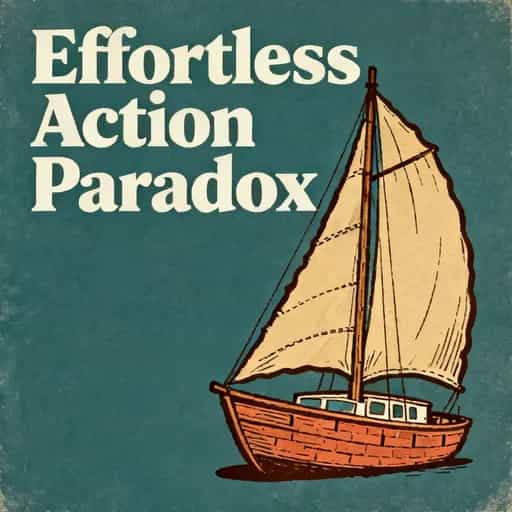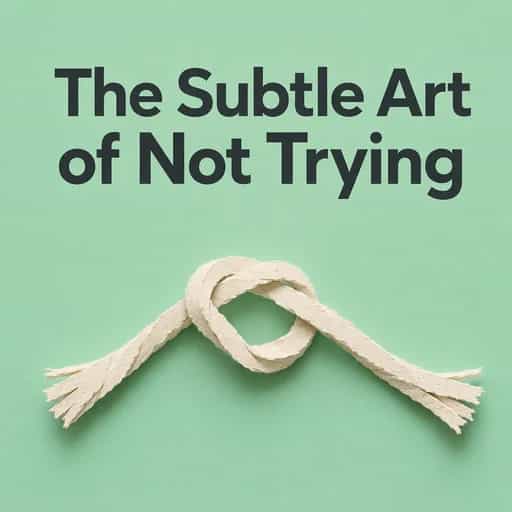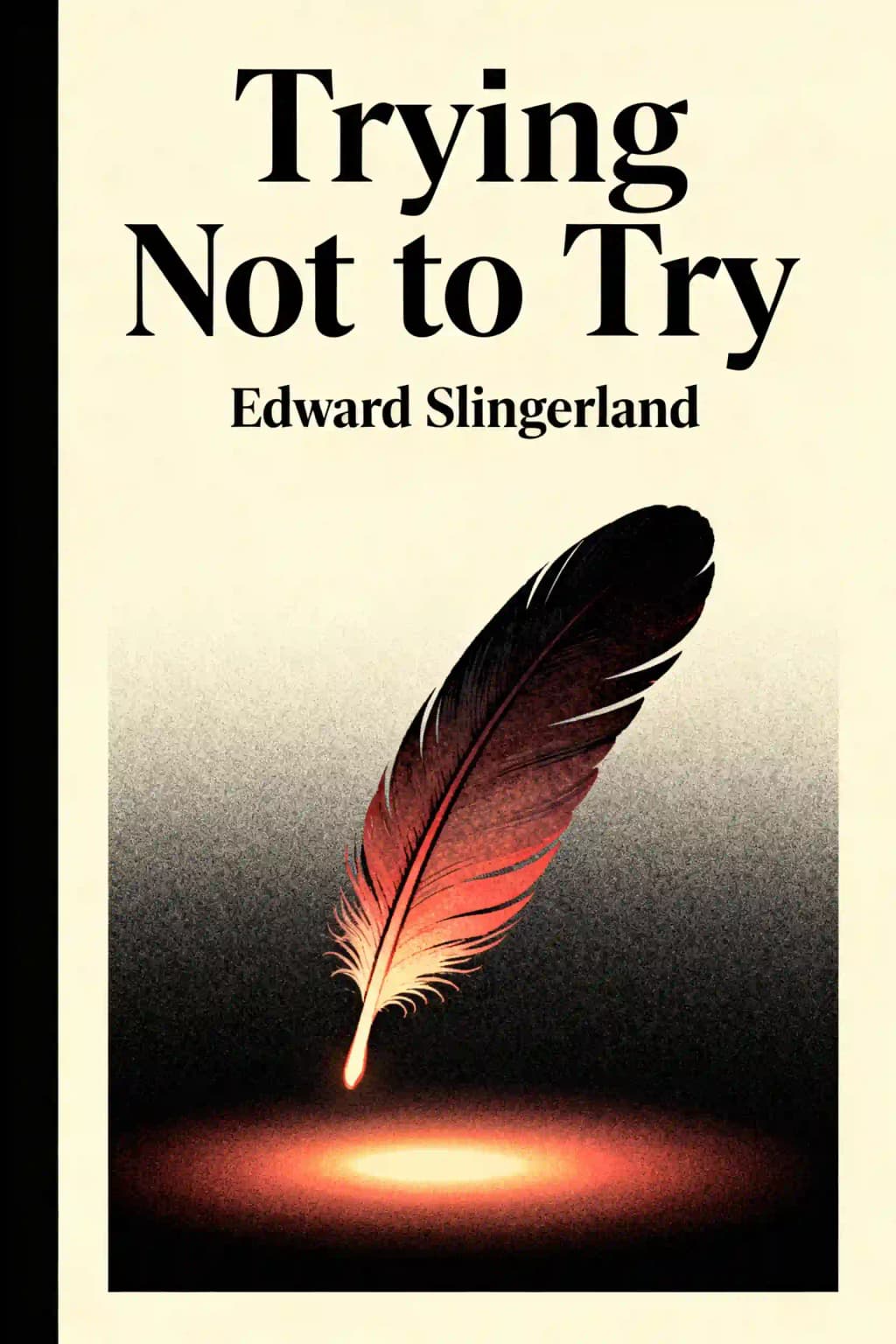
Discover the ancient Chinese art of "wu-wei" - effortless action that paradoxically requires intense effort. Tim Ferriss champions this counterintuitive approach where trying harder backfires. What if your greatest achievements come when you stop obsessively pursuing them?
Edward Slingerland, Distinguished University Scholar and Professor of Philosophy at the University of British Columbia, is the bestselling author of Trying Not to Try: Ancient China, Modern Science, and the Power of Spontaneity. A renowned expert in early Chinese thought and cognitive science, Slingerland bridges ancient philosophy with modern psychology to explore themes of effortless action (wu-wei), decision-making, and human flourishing.
His academic background includes appointments in Philosophy, Psychology, and Asian Studies, along with a groundbreaking translation of Confucius’ Analects.
Slingerland’s work has been featured on high-profile platforms like The Joe Rogan Experience and in his widely praised book Drunk: How We Sipped, Danced, and Stumbled Our Way to Civilization, which examines alcohol’s role in human cultural evolution. A Fellow of the Royal Society of Canada, his research integrates humanities and science, earning accolades such as the American Academy of Religion’s "Best First Book" award. Trying Not to Try has been translated into over 15 languages and remains a staple in discussions of mindfulness and performance psychology.
Trying Not to Try explores the ancient Chinese philosophy of wu-wei (“effortless action”) and de (“charismatic power”), blending Eastern thought with modern neuroscience and psychology. Slingerland argues that spontaneity, not rigid effort, unlocks peak performance and fulfillment, using examples from art, leadership, and daily life. The book contrasts Confucian and Taoist approaches to achieving this state.
This book suits readers interested in Eastern philosophy, self-improvement, or the science of flow states. Leaders, artists, and professionals seeking balanced productivity will find actionable insights. Critics note it’s dense at times, so patience with academic tangents is advised.
Yes—for its synthesis of philosophy and science on spontaneity. While some find its historical deep dives dry, the core thesis on “hot cognition” (intuitive action) vs. overthinking offers fresh perspectives on creativity and decision-making. Highlights include practical advice for modern burnout.
Wu-wei is a state of effortless action where skill and intuition align seamlessly. Slingerland illustrates it through musicians “in the zone” or athletes reacting instinctively. It’s not passive but a harmonious flow between mind, body, and task—central to art, leadership, and relationships.
De is the magnetic charisma or virtue cultivated through wu-wei. Slingerland describes it as a persuasive power that arises when actions are unforced—think leaders who inspire loyalty without coercion or artists whose work feels universally resonant.
Confucianism stresses disciplined practice to internalize virtue (e.g., ritual mastery), while Taoism advocates “unlearning” societal norms to reconnect with raw instinct. Slingerland uses this tension to explore whether spontaneity is earned or innate.
Some reviewers find the academic tone repetitive and less actionable than hoped. Others praise its intellectual rigor but note it’s best read in bursts, not as a step-by-step guide.
Slingerland argues overthinking stifles creativity and social ease. He cites studies showing excessive analysis weakens intuition, advocating for “cold” rational thought only when necessary (e.g., complex math).
These encapsulate the book’s case for trusting embodied wisdom over forced effort.
While mindfulness focuses on present-moment awareness, wu-wei emphasizes unselfconscious action. Slingerland links both to reduced cognitive overload but distinguishes wu-wei as goal-directed flow, not passive observation.
The book critiques modern glorification of hustle, arguing burnout stems from over-reliance on “cold” rationality. Its Taoist-inspired solutions—like strategic disengagement—offer alternatives to constant striving.
Fans of Burkeman’s Four Thousand Weeks (on time management) or Watts’ Zen philosophy will recognize themes of surrender and anti-hustle. Slingerland adds historical depth and cognitive science frameworks.
저자의 목소리로 책을 느껴보세요
지식을 흥미롭고 예시가 풍부한 인사이트로 전환
핵심 아이디어를 빠르게 캡처하여 신속하게 학습
재미있고 매력적인 방식으로 책을 즐기세요
True mastery isn't about exerting more control, but about learning when to let go.
Spontaneous behavior is inherently difficult to fake.
Trying too hard to be attractive often makes you unattractive.
True influence comes from authentic being rather than calculated doing.
Trying Not to Try의 핵심 아이디어를 이해하기 쉬운 포인트로 분해하여 혁신적인 팀이 어떻게 창조하고, 협력하고, 성장하는지 이해합니다.
Trying Not to Try을 빠른 기억 단서로 압축하여 솔직함, 팀워크, 창의적 회복력의 핵심 원칙을 강조합니다.

생생한 스토리텔링을 통해 Trying Not to Try을 경험하고, 혁신 교훈을 기억에 남고 적용할 수 있는 순간으로 바꿉니다.
무엇이든 물어보고, 목소리를 선택하고, 진정으로 공감되는 인사이트를 함께 만들어보세요.

샌프란시스코에서 컬럼비아 대학교 동문들이 만들었습니다
"Instead of endless scrolling, I just hit play on BeFreed. It saves me so much time."
"I never knew where to start with nonfiction—BeFreed’s book lists turned into podcasts gave me a clear path."
"Perfect balance between learning and entertainment. Finished ‘Thinking, Fast and Slow’ on my commute this week."
"Crazy how much I learned while walking the dog. BeFreed = small habits → big gains."
"Reading used to feel like a chore. Now it’s just part of my lifestyle."
"Feels effortless compared to reading. I’ve finished 6 books this month already."
"BeFreed turned my guilty doomscrolling into something that feels productive and inspiring."
"BeFreed turned my commute into learning time. 20-min podcasts are perfect for finishing books I never had time for."
"BeFreed replaced my podcast queue. Imagine Spotify for books — that’s it. 🙌"
"It is great for me to learn something from the book without reading it."
"The themed book list podcasts help me connect ideas across authors—like a guided audio journey."
"Makes me feel smarter every time before going to work"
샌프란시스코에서 컬럼비아 대학교 동문들이 만들었습니다

Trying Not to Try 요약을 무료 PDF 또는 EPUB으로 받으세요. 인쇄하거나 오프라인에서 언제든 읽을 수 있습니다.
Have you ever noticed how your best performance often comes when you stop trying so hard? The pianist who dazzles audiences only after forgetting they're on stage. The athlete who breaks records when they stop obsessing over technique. The conversation that flows effortlessly once you stop worrying about what to say next. These moments reveal an ancient paradox: our most effective actions often emerge when we abandon conscious effort. This tension between trying and not trying sits at the heart of human experience, frustrating us in everything from creative pursuits to dating to falling asleep. The Chinese called this state of effortless action "wu-wei" (pronounced "ooo-way"), and for over two thousand years, philosophers have wrestled with a fundamental question: how can we achieve spontaneity through effort? Wu-wei represents a state where action becomes perfectly effective yet completely effortless - where conscious striving dissolves while performance peaks. Modern neuroscience helps explain why: brain scans of jazz musicians improvising show their lateral prefrontal cortex (responsible for self-monitoring) becomes less active while regions handling automatic processes light up. This creates a neural state where trained expertise flows without interference from overthinking. Consider the ancient Chinese story of Butcher Ding, whose knife remained sharp for nineteen years because he instinctively found the spaces between joints, moving with such fluid precision that observers stood transfixed. After decades of practice, he explained, "I no longer see the ox with my eyes but encounter it with my spirit."