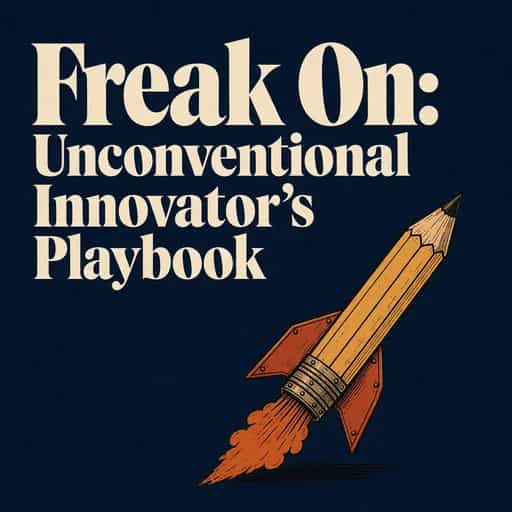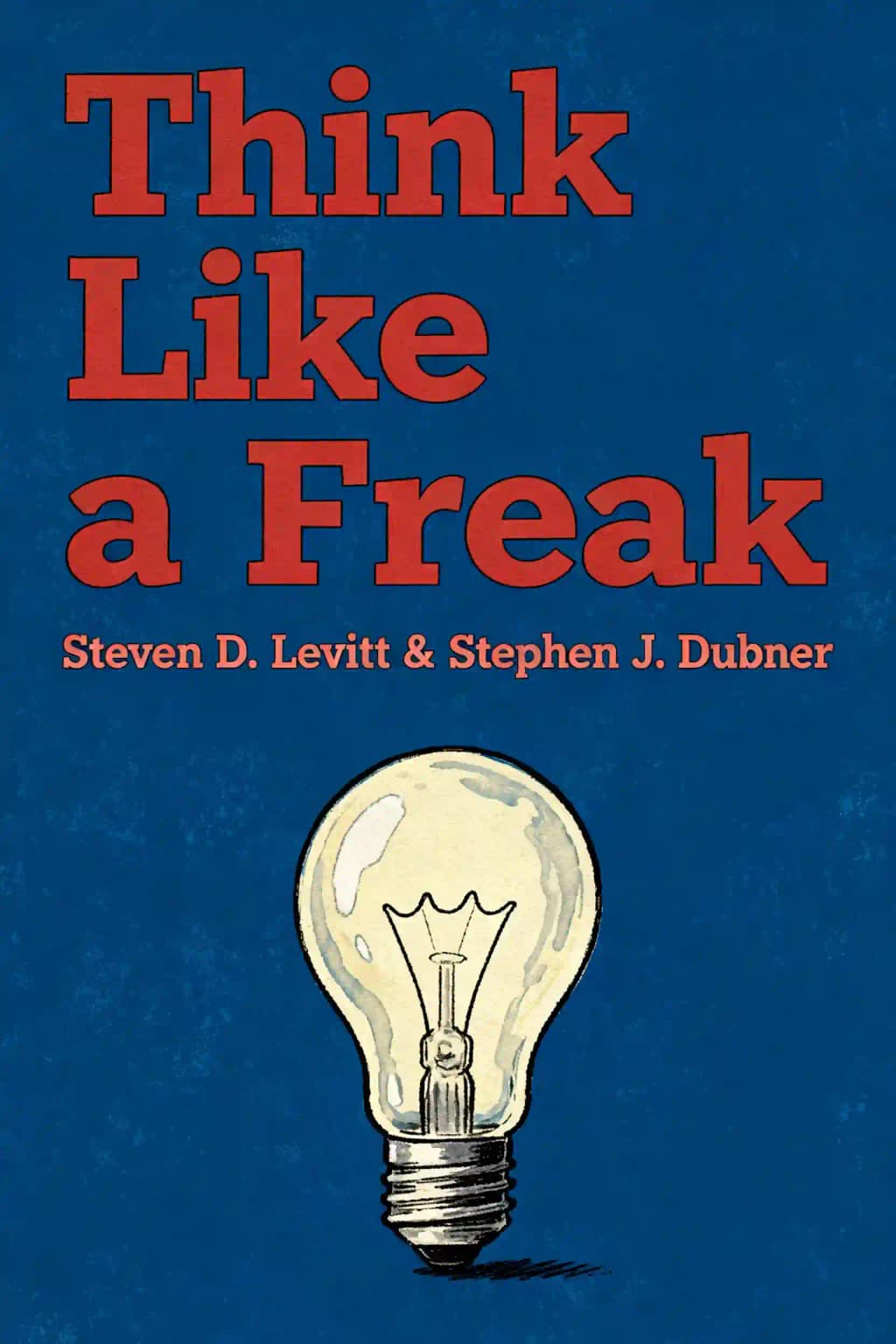
Unlock the revolutionary problem-solving toolkit from the Freakonomics masterminds. This New York Times bestseller teaches you to think like a child, understand incentives, and embrace quitting. Beloved by business leaders for its counterintuitive wisdom that transforms complex problems into solvable puzzles.
Steven D. Levitt and Stephen J. Dubner, the co-authors of Think Like a Freak and the internationally bestselling Freakonomics series, are renowned for transforming complex economic concepts into engaging narratives about human behavior.
Levitt, a celebrated University of Chicago economist and recipient of the John Bates Clark Medal, pioneered the use of data-driven analysis to explore unconventional topics like crime trends and parenting. Dubner, an award-winning journalist and former New York Times writer, amplifies these insights through accessible storytelling.
Their collaboration spans books (Freakonomics, SuperFreakonomics), a popular podcast, and a blog, all dissecting societal puzzles through the lens of incentives and causality. The Freakonomics series has sold over 5 million copies worldwide and inspired a documentary film.
The series remains a staple in pop economics, credited with making the field relatable to mainstream audiences. Levitt’s groundbreaking research on crime reduction and Dubner’s knack for translating academic rigor into witty prose continue to shape public discourse on decision-making and problem-solving.
Think Like a Freak by Steven D. Levitt and Stephen J. Dubner teaches readers to solve problems through unconventional thinking, data-driven analysis, and questioning assumptions. The book combines storytelling and economic principles to explore topics like incentives, decision-making, and behavioral psychology, using examples such as Nigerian email scams and competitive eating strategies to illustrate innovative problem-solving.
This book is ideal for professionals, entrepreneurs, and curious thinkers seeking fresh approaches to personal or business challenges. It’s particularly valuable for those interested in behavioral economics, psychology, or anyone looking to improve decision-making by embracing creativity and evidence-based reasoning.
Yes—the book offers actionable strategies for tackling problems, supported by engaging anecdotes and research. Readers gain tools to reframe challenges, leverage incentives, and avoid cognitive biases, making it a practical guide for personal growth and professional innovation.
While both books blend economics and storytelling, Think Like a Freak focuses on problem-solving frameworks rather than exploring societal quirks. It provides actionable steps to “retrain your brain,” whereas Freakonomics examines hidden causes behind cultural phenomena.
The book’s emphasis on incentives, experimentation, and reframing problems aids in optimizing workflows, negotiating deals, and innovating products. For example, using “small wins” to build momentum aligns with its “think small” philosophy.
Some argue its anecdotes oversimplify complex issues or prioritize entertainment over depth. Others note that its focus on individual problem-solving may underestimate systemic barriers.
Approaching problems with curiosity and simplicity, free from preconceived assumptions. Children ask “obvious” questions adults avoid, often leading to breakthroughs—like reexamining why hot-dog-eating champions succeed.
The authors advocate quitting unproductive endeavors early, framing it as pragmatic rather than weak. They cite the “sunk cost fallacy” and encourage pivoting to better opportunities.
저자의 목소리로 책을 느껴보세요
지식을 흥미롭고 예시가 풍부한 인사이트로 전환
핵심 아이디어를 빠르게 캡처하여 신속하게 학습
재미있고 매력적인 방식으로 책을 즐기세요
Conventional wisdom is often wrong.
The incentives that people face shape their behavior.
Conventional wisdom often fails us.
Without feedback, learning is virtually impossible.
Thinking small is often more productive.
Think like a freak의 핵심 아이디어를 이해하기 쉬운 포인트로 분해하여 혁신적인 팀이 어떻게 창조하고, 협력하고, 성장하는지 이해합니다.
Think like a freak을 빠른 기억 단서로 압축하여 솔직함, 팀워크, 창의적 회복력의 핵심 원칙을 강조합니다.

생생한 스토리텔링을 통해 Think like a freak을 경험하고, 혁신 교훈을 기억에 남고 적용할 수 있는 순간으로 바꿉니다.
무엇이든 물어보고, 목소리를 선택하고, 진정으로 공감되는 인사이트를 함께 만들어보세요.

샌프란시스코에서 컬럼비아 대학교 동문들이 만들었습니다
"Instead of endless scrolling, I just hit play on BeFreed. It saves me so much time."
"I never knew where to start with nonfiction—BeFreed’s book lists turned into podcasts gave me a clear path."
"Perfect balance between learning and entertainment. Finished ‘Thinking, Fast and Slow’ on my commute this week."
"Crazy how much I learned while walking the dog. BeFreed = small habits → big gains."
"Reading used to feel like a chore. Now it’s just part of my lifestyle."
"Feels effortless compared to reading. I’ve finished 6 books this month already."
"BeFreed turned my guilty doomscrolling into something that feels productive and inspiring."
"BeFreed turned my commute into learning time. 20-min podcasts are perfect for finishing books I never had time for."
"BeFreed replaced my podcast queue. Imagine Spotify for books — that’s it. 🙌"
"It is great for me to learn something from the book without reading it."
"The themed book list podcasts help me connect ideas across authors—like a guided audio journey."
"Makes me feel smarter every time before going to work"
샌프란시스코에서 컬럼비아 대학교 동문들이 만들었습니다

Think like a freak 요약을 무료 PDF 또는 EPUB으로 받으세요. 인쇄하거나 오프라인에서 언제든 읽을 수 있습니다.
Ever notice how the most educated people sometimes hold the most extreme views? A fascinating study revealed that individuals with higher scientific literacy weren't more moderate about climate change-they were actually more likely to hold extreme positions in either direction. This counterintuitive finding exposes a fundamental flaw in how we think: intelligence doesn't protect us from bias; it often amplifies it. We use our smarts to defend what we already believe rather than discover what's actually true. The real barrier to clear thinking isn't lack of knowledge-it's our inability to say three simple words: "I don't know." We confuse facts (scientifically verifiable truths) with beliefs (things we hold true without easy verification). This distinction becomes stark when examining how 84.5% of Maltese believe in the devil compared to just 9.1% of Latvians, or how expert predictions routinely fail. Political forecasters in Philip Tetlock's 20-year study performed barely better than "dart-throwing chimps," achieving 47.4% accuracy. Even Nobel laureate Paul Krugman embarrassingly claimed "the Internet's impact on the economy has been no greater than the fax machine's." Why do brilliant people make such terrible predictions? Because the personal cost of saying "I don't know" exceeds the cost of being wrong. When Harold Camping predicted the world would end in May 2011, causing widespread panic, he faced zero consequences when his prophecy failed. Bold predictions bring huge rewards if correct, while failures are quickly forgotten.