1장
When Your Mind Becomes Your Prison
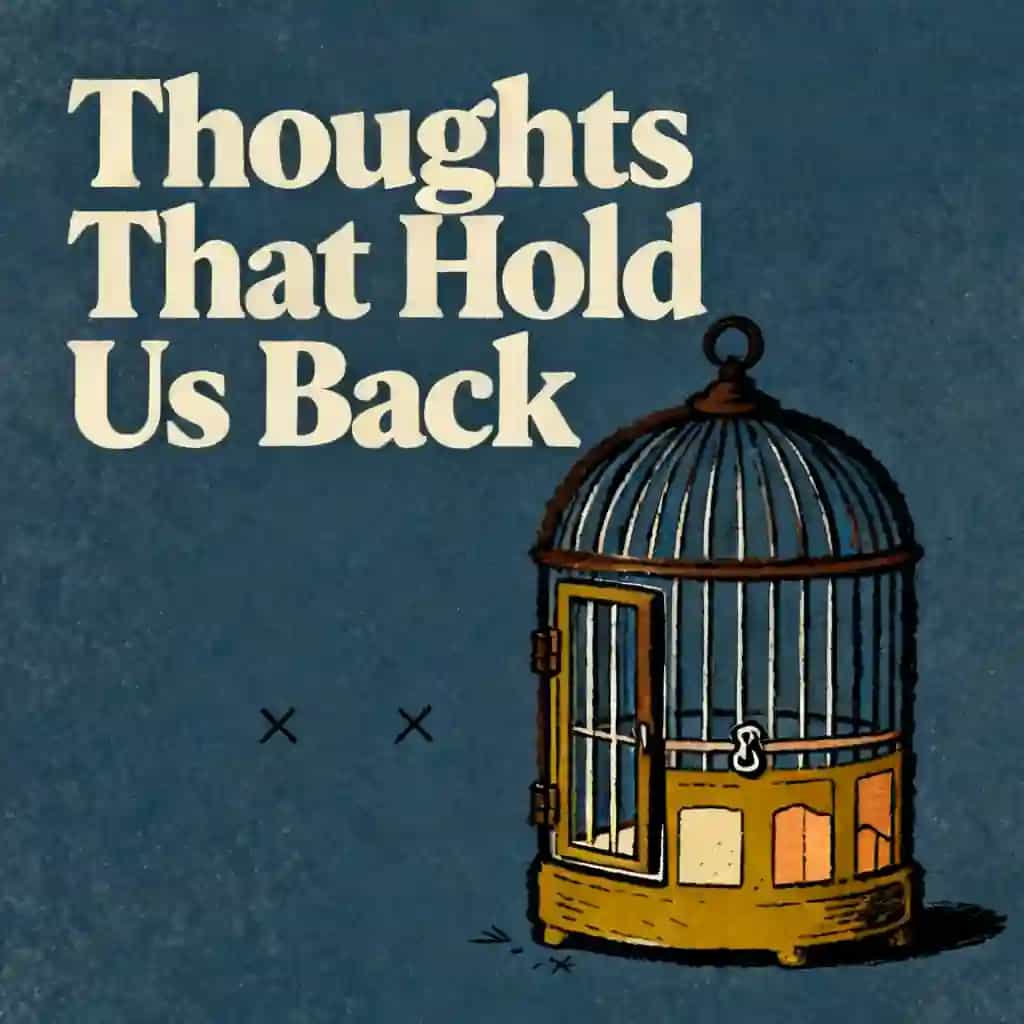
Have you ever noticed how the same thought loops through your head dozens of times a day? Maybe it's "I'm not good enough" or "I always mess things up." These mental refrains aren't just annoying background noise-they're shaping your entire reality. Consider this: we generate roughly fifty thousand thoughts daily, and a staggering 95 percent are reruns. When those thoughts contain lies we've mistaken for truth, they become invisible chains holding us back from everything we're capable of becoming.
Henry Ford captured this phenomenon perfectly: "Whether you think you can or you can't, you're right." Our beliefs-those mental certainties about what's true-determine whether we thrive or merely survive, whether we build meaningful relationships or remain isolated, whether we live with purpose or drift aimlessly. These beliefs typically cluster around three domains: ourselves ("I'm not smart enough"), other people ("Everyone's out to get me"), and the world ("The system is rigged"). A single limiting belief can derail an entire life trajectory. Think about it: if you genuinely believe people are untrustworthy, you'll unconsciously sabotage every relationship before it begins.
The power of belief extends beyond psychology into actual physiology. During World War II, Dr. Henry Beecher discovered that saline injections relieved pain in wounded soldiers who believed they were receiving morphine-the placebo effect in action. The reverse also holds true: negative expectations create negative outcomes. One patient, misdiagnosed with multiple sclerosis, experienced paralysis and deterioration until discovering she actually had treatable mold toxicity. Once the misdiagnosis was corrected, her symptoms vanished. Another man died exactly on schedule from a non-life-threatening tumor simply because doctors predicted he would. Our minds possess extraordinary power to shape our physical reality.
Breaking free begins with identifying your limiting beliefs. Look for thoughts like "I'm too old," "I'm not talented enough," or "Nothing good happens to people like me." These typically fall into three categories: impostor syndrome ("I'm not enough"), perfectionism ("What I've done isn't good enough"), and scarcity mentality ("I'll never have enough"). Once identified, systematically replace them with unlimited beliefs. Transform "I've made too many mistakes" into "I can't change the past, but I choose how to move forward." Write these new beliefs somewhere visible, speak them aloud daily, and repeat until the old patterns lose their grip. Your thoughts aren't facts-they're habits you can rewire.
2장
Who You Become Matters More Than What You Achieve
Culture measures success through wealth, fame, and status. Yet Howard's funeral revealed a different legacy - hundreds shared how his simple kindness transformed their lives. He never accumulated wealth or fame, but his impact was profound. Lance Armstrong's achievements crumbled when character flaws emerged.
True success means maximizing your abilities for others' good as daily practice, not an endpoint. Steve Jobs revolutionized technology but deeply regretted missing his children's lives. Research shows people pursuing wealth experience significantly less satisfaction than those focused on growth and relationships.
Einstein advised: "Try not to become a man of success, but rather try to become a man of value." Most executives lose positions due to ethical failures, not poor performance. The returns are substantial: enhanced leadership, stronger relationships, better health, lower depression risk, deeper fulfillment. Create a "to-be" list focusing on character qualities you want to develop. Your greatest achievement won't be what you accomplish - it'll be who you become.
3장
The Mirror That Reveals Everything
Witnessing families scavenging at an Ethiopian landfill revealed a deeper truth about privilege and responsibility. This is self-awareness: understanding what you feel and transforming it into meaningful behavior.
The uncomfortable reality: while 90 percent of people believe they're self-aware, only 10-15 percent actually are. True self-awareness means knowing your values, passions, and goals-plus understanding how others genuinely perceive you, which often differs dramatically from your self-perception.
Conversational narcissists exemplify its absence, hijacking discussions and steering everything back to themselves. Self-aware people listen attentively and show genuine curiosity.
Four barriers block self-awareness: pride (believing you already know everything), busyness (never creating space for reflection), character sabotage (avoiding uncomfortable truths), and entertainment addiction (constantly distracting yourself).
The Japanese concept of shoshin-"beginner's mind"-offers the antidote: approaching life with curiosity and humility. As Jordan Peterson notes, "You have no insight into your capacity for good until you have insight into your capacity for evil."
To develop self-awareness: eliminate distractions and create quiet space-silence promotes cell growth in the brain's memory center. Write about emotional experiences to reduce anxiety. Expose yourself to experiences outside your comfort zone. True self-awareness extends beyond self-examination to recognizing your role in community.
4장
The Quest That Gives Life Meaning
When stage 4 breast cancer struck a forty-one-year-old swim instructor, it devastated her family. Though declared cancer-free, she battled chronic fatigue and medication dependence. A decade later, cancer returned. She transformed her lifestyle with vegetable juicing, supplements, nature time, gratitude, and visualization. Four months later, her largest tumor shrank 52 percent. Nine months after that-cancer-free. Now sixty-eight and thriving, this crisis revealed her life mission.
Purpose is your reason for existence-your "why." We all seek lives that matter, that alleviate suffering and help others flourish. This aligns with Maslow's self-transcendence: becoming your best self to elevate others. Our universal purpose involves loving others and creating goodness, while individual purpose combines character development with unique skills across life roles.
Purpose manifests in everyday actions. A NASA janitor told President Kennedy, "I'm helping put a man on the moon." The Japanese concept of ikigai represents purpose fulfilled when four elements intersect: what you love, what you're good at, what the world needs, and what brings reward.
Living without purpose creates stagnant growth, self-focus, and lack of motivation-leading to depression, sleep disturbances, cardiovascular problems, even premature death. Viktor Frankl, who survived four Nazi concentration camps, observed that prisoners who lost faith in their future died first. Research confirms that college students who desired to help others experienced greater well-being years later than those focused solely on themselves.
5장
Building the Team That Transforms You
Heroes need teams to survive their quests. After marriage, the realization hit that surrounding yourself with a "community of greatness"-people sharing similar values and motivated for meaningful impact-was essential. A move to Nashville led to meeting Shawn Johnson East, an Olympic gymnast, and her husband Andrew, an NFL player. Regular workouts and dinners created mutual growth that individual effort could never achieve.
The people around you directly shape who you become. Duke University research shows that spending time with disciplined people improves our own self-control. Anthropologist Robin Dunbar found humans maintain about 148 stable relationships, with our closest five having the most profound impact. Modern Western societies mistakenly equate success with self-reliance, breeding loneliness that has doubled since the 1980s. Weak social connections harm health as much as smoking fifteen cigarettes daily.
Aristotle classified friendships into three types: utility, pleasure, and virtue. The highest level-a "community of greatness"-consists of peers linked through shared purpose who challenge each other to grow. J.R.R. Tolkien's friendship with C.S. Lewis exemplifies this-Lewis's encouragement helped Tolkien complete *The Lord of the Rings*.
To build your community, define your group's purpose and values, then identify six to eight people who embody these qualities. While 76 percent of people believe in mentorship's importance, only 37 percent have mentors-yet those who do report 70 percent better decision-making and are promoted five times more often.
6장
The Foundation Beneath Everything
Michelangelo spent four years painting the Sistine Chapel, meticulously detailing areas no one would see because "God will see." This commitment to excellence regardless of recognition exemplifies how identity drives us to create masterpieces in our own lives.
Identity consists of three interconnected elements: it connects to something or someone, feeds your roles within community, and drives purpose while determining value. Your chosen identity hierarchy - whether nationality, career, faith, or family - influences your beliefs, decisions, and actions.
Modern identity centers on "expressive individualism" where people conform only to their own notions, seeking validation in social trends. Traditional identity focuses on community and tested beliefs, prioritizing duties that fulfill responsibilities. Divine identity recognizes humans as spiritual beings with inherent value, leading to greater societal contributions and virtuous character.
Building rock-solid identity means connecting daily tasks to greater meaning. Three bricklayers rebuilding St. Paul's Cathedral illustrate this: one saw himself "cutting stone," another "earning wages," while the third recognized he was "helping build this great cathedral." The seven divine virtues - wisdom, justice, self-control, courage, faith, hope, and love - work synergistically as a moral compass, with love as the ultimate bull's-eye: choosing to put others' needs before your own.
7장
Your Life Is the Story You're Writing Right Now
You're not a victim of circumstance - you can rewrite your story today by choosing who you'll become. When crisis struck and a business failed, two paths emerged: fixate on pain or accept responsibility and start over. Choosing the latter led to creating the world's largest natural health website and a successful supplement company.
Fear-based thinking reveals itself through all-or-nothing statements: "If I don't get this promotion, my career is over." Research shows children praised for intelligence cared more about performance, while those praised for effort used failure as motivation.
A flourishing mindset says "I can learn from my mistakes" and "I am successful if I get better every day." Sara Blakely's father taught her that "failure became not trying versus the outcome." Walt Disney, Steve Jobs, and Dave Ramsey all transformed failure into success.
You don't need to feel courageous to be courageous - heroes act despite their fears. Bear Grylls admits being afraid of many things, including jumping from planes after his back injury. His secret? "I've learned that if I do the things I'm scared of and I do them often enough, I become good at managing fear."
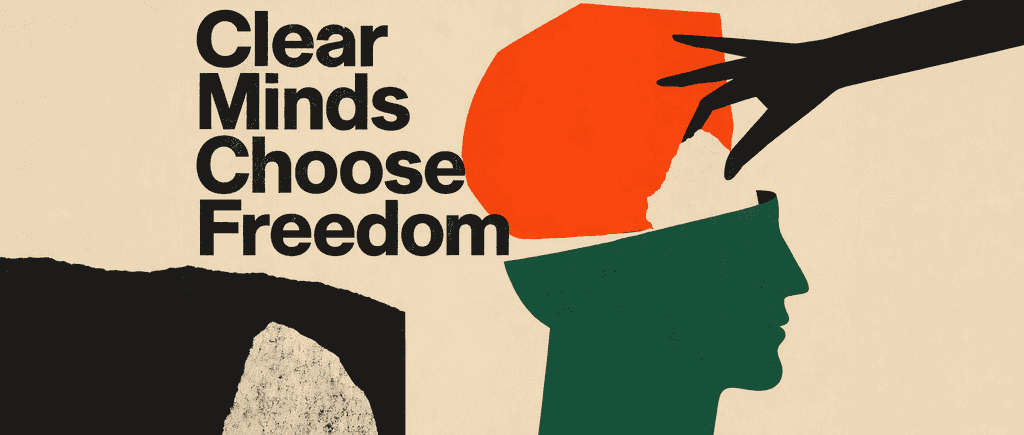
The people you surround yourself with, the beliefs you embrace, the character you cultivate, and the purpose guiding your decisions - these are the building blocks of your life. Your mind can be your prison or your liberation. The question isn't whether you can transform your life. The question is: will you?