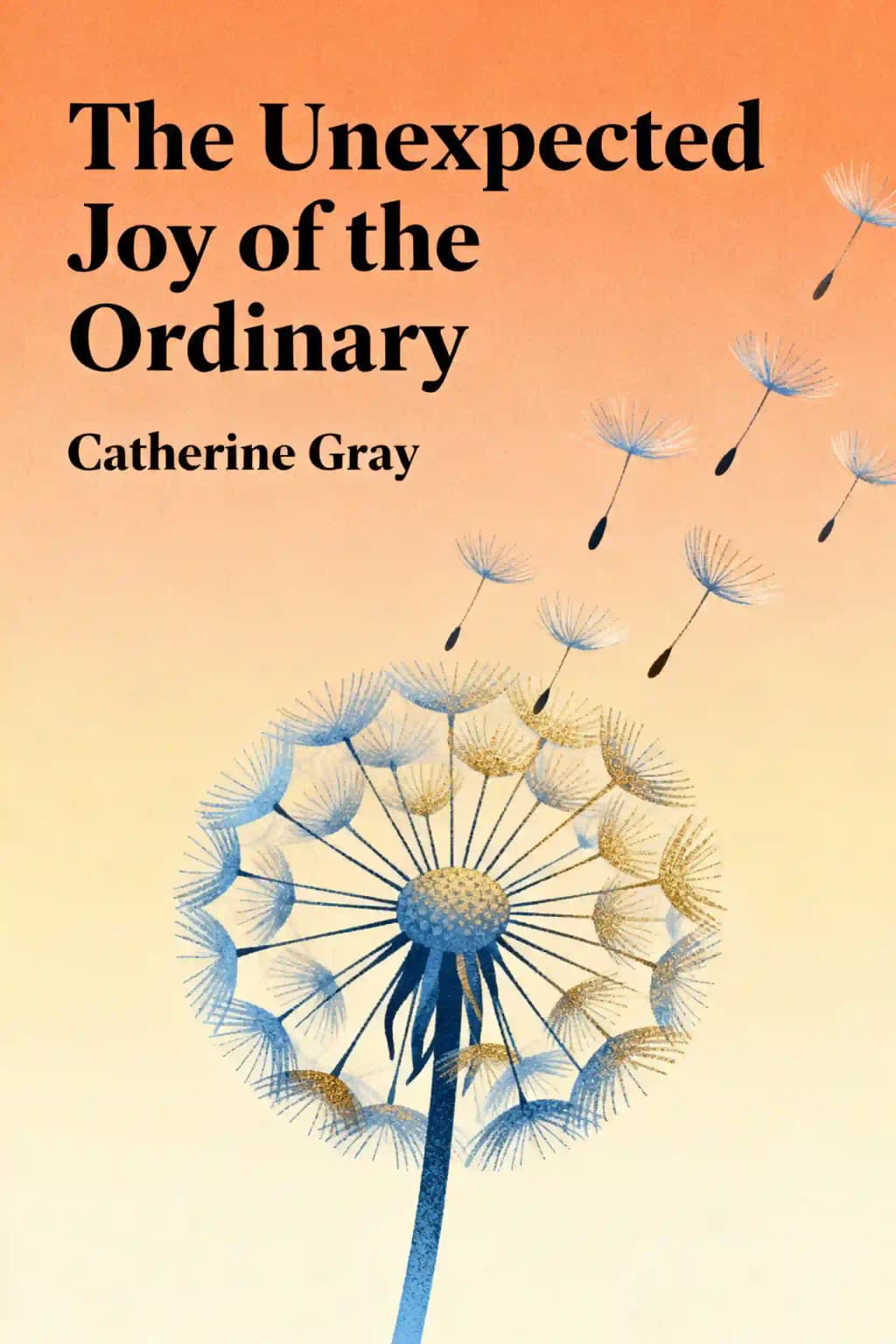
The Unexpected Joy of the Ordinary
The Unexpected Joy of the Ordinary 개요
In "The Unexpected Joy of the Ordinary," bestselling author Catherine Gray reveals why chasing extraordinary experiences keeps us miserable. Featured in The Guardian and Stylist, this 2019 gem unpacks the "hedonic treadmill" that traps millions. What if happiness isn't somewhere else - but right here?
The Unexpected Joy of the Ordinary의 핵심 주제
- hedonic adaptation
- everyday gratitude
- mundane beauty
- sustained contentment
- simple pleasures
The Unexpected Joy of the Ordinary의 명언
We're constantly chasing extraordinary experiences, convinced that happiness lies in the next big thing.
The ordinary isn't a consolation prize – it's the very stuff of life.
It's about shifting our focus to appreciate the abundance already present in our lives.
Love thrives in the ordinary moments we share with others.
Life is not about waiting for the storm to pass, but learning to dance in the rain.
The Unexpected Joy of the Ordinary의 등장인물
- Catherine GrayThe author and narrator sharing her journey.
The Unexpected Joy of the Ordinary 요약 다운로드
The Unexpected Joy of the Ordinary 요약을 무료 PDF 또는 EPUB으로 받으세요. 인쇄하거나 오프라인에서 언제든 읽을 수 있습니다.
이 책에 대한 FAQ
The Unexpected Joy of the Ordinary by Catherine Gray explores how embracing life’s mundane moments can lead to profound happiness. Through themes like gratitude, mindfulness, and evolutionary psychology, Gray argues that societal pressures for "extraordinary" achievements often obscure contentment found in everyday experiences like relationships, nature, and simple routines.
This book suits anxious individuals seeking calm, fans of self-help and mindfulness, and readers interested in evolutionary psychology. It’s ideal for those overwhelmed by modern life’s hustle culture or anyone wanting to reframe their perspective on mediocrity and ordinary joys.
Yes—readers praise its refreshing take on mindfulness and actionable advice for reducing anxiety. Gray’s blend of personal anecdotes, scientific insights, and relatable storytelling makes it a standout in the self-help genre, particularly for its focus on sustainable happiness over fleeting achievements.
Key concepts include redefining mediocrity as empowering, leveraging gratitude practices, and understanding how evolutionary instincts drive modern dissatisfaction. Gray also emphasizes “enoughness”—finding fulfillment without constant striving—and the psychological benefits of savoring small, daily pleasures.
Gray links ancient human instincts (like scarcity-driven ambition) to today’s discontent, explaining why ordinary life feels inadequate. She argues that recognizing these biases helps readers reframe their relationship with societal expectations and appreciate stillness.
Unlike her earlier work on sobriety (The Unexpected Joy of Being Sober), this book broadens to universal themes of contentment. However, both share Gray’s candid style, evidence-based insights, and focus on sustainable lifestyle shifts.
Gray suggests:
- Gratitude journaling
- Mindfulness exercises
- “Micro-savoring” moments like morning coffee.
She also advises reducing social media consumption and reframing chores as opportunities for presence rather than burdens.
Some readers note the advice may oversimplify complex mental health challenges. Critics also highlight repetitive sections, though many argue the core message warrants reinforcement given cultural pressures toward perfectionism.
By advocating acceptance of imperfection and grounding techniques, Gray provides tools to counter anxiety’s “what-if” spirals. She emphasizes reducing comparison and finding safety in life’s predictable, ordinary rhythms.
In an era of viral success stories and productivity obsession, Gray’s case for “ordinary” fulfillment offers a counter-narrative. It addresses burnout culture and the mental health costs of relentless achievement, making it timely for 2024 readers.
Gray reframes mediocrity not as failure but as liberation—a conscious choice to prioritize peace over external validation. She illustrates how average experiences often hold deeper meaning than curated, socially celebrated milestones.
While specifics aren’t detailed in sources, Gray’s prior work uses metaphors like “sober curiosity” (The Unexpected Joy of Being Sober). In this book, she likely employs similar relatable analogies to simplify psychological concepts.
Gray critiques societal glorification of busyness and achievement, urging readers to question inherited definitions of success. She advocates aligning personal values with daily actions rather than cultural benchmarks.