1장
A Cult of Darkness: When Belief Becomes Deadly
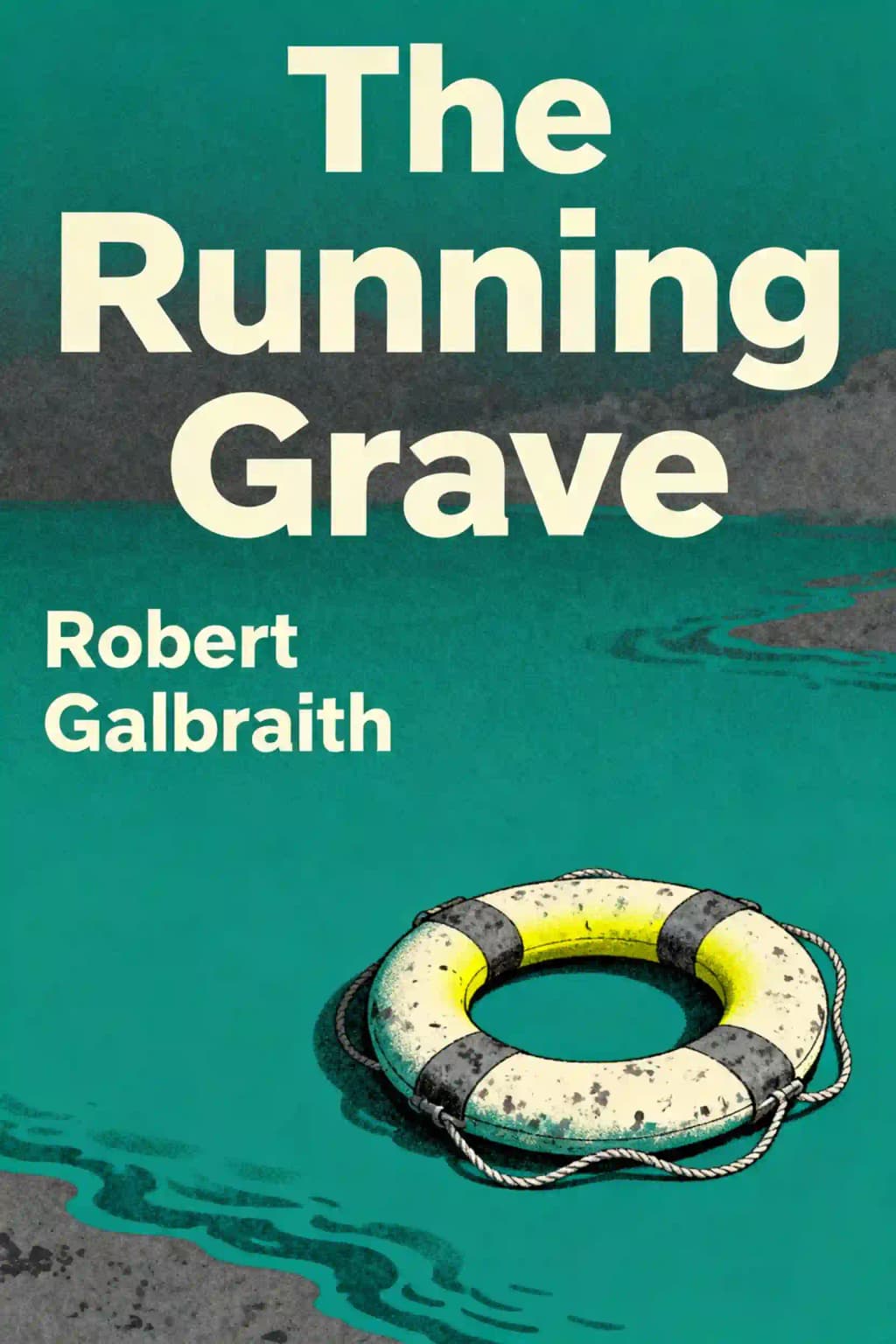
In the literary world, Robert Galbraith's "The Running Grave" stands as a chilling testament to the dangers of unchecked influence and the psychology of cult manipulation. This seventh installment in the Cormoran Strike series has captivated readers worldwide, with Stephen King calling it "absolutely riveting" and The Guardian praising its "masterful exploration of human vulnerability." The novel's unflinching examination of cult dynamics resonates particularly in our era of increasing polarization and ideological extremism. What makes this book so compelling is not just its thrilling plot, but how it forces us to confront an uncomfortable truth: none of us is immune to manipulation when caught in the right circumstances.
2장
The Dangerous Allure of False Prophets
The Universal Humanitarian Church (UHC) presents itself as the pinnacle of progressive spirituality-a place where the best elements of all religions combine to create something transcendent. Its charismatic leader, Jonathan "Papa J" Wace, has cultivated a following that includes celebrities, politicians, and wealthy professionals who are drawn to his message of spiritual enlightenment and social justice.
Behind this appealing facade lies something far more sinister. The UHC employs sophisticated psychological techniques to break down its members' identities and rebuild them according to the church's needs. New recruits are bombarded with horrific images of global suffering, creating anxiety that the church positions itself to resolve. They're subjected to sleep deprivation, caloric restriction, and constant supervision. Personal relationships outside the church are systematically destroyed, replaced by a new "family" structure where blood ties are dismissed as "materialist possession."
What makes the UHC's manipulation so effective is its gradual escalation. Initially, members experience "love-bombing"-overwhelming positive attention that creates a sense of belonging. This alternates with brutal "Revelation" sessions where recruits are publicly humiliated for fabricated moral failings. The church creates specialized jargon that reframes abuse as spiritual growth: verbal assaults become "Primal Response Therapy," contradictions in doctrine are explained as "Higher-Level Truths," and leaving the church is "going DV" (becoming a Deviate).
The novel brilliantly illustrates how intelligent, idealistic people can be particularly vulnerable to cults. As Prudence explains to Robin, "Apathetic people don't join cults... It's the ones who want to make a difference in the world, who're searching for meaning." This insight challenges our comforting belief that only the weak-minded fall prey to such manipulation.
3장
The Complex Partnership of Strike and Robin
At the heart of "The Running Grave" lies the evolving relationship between private detectives Cormoran Strike and Robin Ellacott. Their professional partnership has developed into a deep friendship complicated by unacknowledged romantic feelings on both sides. When Sir Colin Edensor hires them to extract his autistic son Will from the UHC, their investigation forces them to confront not just a dangerous cult, but their own emotional barriers.
Strike's character development is particularly compelling as he navigates multiple personal crises. His uncle Ted's advancing dementia forces him to confront mortality and family responsibility. The suicide of his toxic ex-girlfriend Charlotte Campbell brings both grief and a strange sense of liberation. Most significantly, Strike finally acknowledges his love for Robin, though he struggles with the timing and his fear of rejection.
Robin's undercover mission at Chapman Farm represents the most dangerous assignment of her career. Her immersion in the cult reveals both her extraordinary resilience and her vulnerability. Despite her professional competence, Robin finds herself unconsciously adopting UHC mannerisms and terminology-a frightening reminder of how even the most self-aware person can be influenced by constant psychological pressure. Her harrowing experiences, including being locked in a punishment box and nearly drowned in a staged ritual, test her to her physical and psychological limits.
The tension between Robin's relationship with police officer Ryan Murphy and her unacknowledged feelings for Strike creates a compelling emotional subplot. Murphy's jealousy of Strike painfully reminds Robin of her failed marriage, while Strike's reluctance to express his feelings stems from his fear of risking their friendship and professional partnership. This emotional dance between the protagonists provides a human counterpoint to the novel's darker themes.
4장
The Mechanics of Mind Control
Galbraith's research into cult dynamics shines through in the meticulous portrayal of the Universal Harmony Church's manipulation techniques. The church systematically dismantles members' critical thinking through multiple reinforcing methods that work in concert to create complete psychological dependency. Physical control comes first - restricting food, sleep, and privacy creates a state of heightened suggestibility. Members are kept on irregular sleeping schedules, often woken at 3 AM for "emergency devotionals," while meals are deliberately unpredictable in timing and portion size. Environmental control follows, with members isolated from outside information sources and constantly supervised, even during bathroom visits. Cell phones are surrendered, letters are screened, and internet access is strictly monitored.
Language becomes a powerful tool of control, weaponized to reshape reality itself. The UHC methodically redefines family relationships with dehumanizing terms - "flesh object" instead of "mother," "past vessel" instead of "father," and "temporal attachments" instead of "children." Members must abandon their birth names for church-approved alternatives, selected through a ritualistic "true name ceremony." This linguistic restructuring helps sever connections to members' previous identities and relationships, while creating an insider vocabulary that reinforces group cohesion and isolation from outsiders.
Perhaps most insidious is the church's sophisticated exploitation of supernatural fear. The myth of the Drowned Prophet - supposedly the vengeful ghost of Daiyu Wace who punishes those who betray church secrets - keeps members in line through carefully cultivated terror. The church maintains a database of "visitation incidents," where apparent supernatural occurrences reinforce the Prophet's power. Former members describe feeling haunted by this entity even years after leaving the church, experiencing night terrors and paranoid episodes that show how deeply implanted fears can persist beyond rational belief.
The novel unflinchingly depicts the sexual exploitation endemic to many cults, revealing how predatory behavior is normalized through doctrine. Jonathan Wace's "spirit bonding" teachings - which assert that "pure spirits" naturally demonstrate their connections through physical intimacy - provides religious justification for what amounts to institutionalized sexual abuse. Women selected as "spirit wives" for Wace himself gain elevated status and protection from other men but remain victims of his systematic predation. The hierarchy of "spiritual purity" creates competition among members, with sexual access to leadership presented as evidence of enlightenment. Young members are gradually desensitized through "proximity training" and "physical meditation" sessions that blur consent boundaries.
These overlapping systems of control - physical, linguistic, supernatural, and sexual - create a self-reinforcing web of manipulation from which escape becomes increasingly difficult. Members who show signs of doubt are subjected to intensive "realignment" sessions, while those who remain loyal are rewarded with privileges that only deepen their dependence on the church structure.
5장
The Dark Secret at the Heart of the Church
As Strike and Robin dig deeper into the United Healing Church's history, they uncover an intricate web of deception surrounding the church's founding myth. At its core lies the story of the Drowned Prophet - supposedly Wace's seven-year-old daughter Daiyu who drowned but whose spirit returns to guide the faithful. This narrative forms the bedrock of the church's theology, with followers claiming regular spiritual visitations and divine guidance from Daiyu's ghost. However, careful investigation reveals this cornerstone of faith rests on carefully constructed lies.
The investigation uncovers shocking evidence about Daiyu's true parentage. She was actually the daughter of Alexander Graves, a wealthy businessman later canonized by the church as the "Stolen Prophet," not Jonathan Wace as the church maintained for decades. Graves's suicide in 1983 left his entire fortune - estimated at over 12 million - to Daiyu through an ironclad trust. The Graves family, suspicious of Wace's claims to guardianship, demanded DNA testing to prove paternity. This threat to Wace and Mazu's control over both the child and her substantial inheritance set in motion a chain of tragic events. Within weeks of the family's legal challenge, Daiyu supposedly drowned while swimming with her teenage caretaker Cherie at Camber Sands.
Strike's brilliant deduction, pieced together from witness statements, weather reports, and inconsistent testimonies, suggests an elaborate hoax. A straw figure dressed in Daiyu's distinctive red coat was taken to the beach while the real child was secretly relocated. The "drowning" occurred during stormy conditions when few witnesses were present, and the body was conveniently never recovered. Years later, Strike theorizes, Daiyu resurfaced as "Becca Pirbright," one of the church's youngest and most influential leaders. Notably, Becca is the only "spirit wife" granted permanent virgin status - an unusual exemption that protected her from intimate scrutiny that might reveal her true identity.
This revelation explains the church's increasingly aggressive responses to any investigation of Daiyu's death. The exposure of this truth would have catastrophic consequences: destroying the Drowned Prophet myth that attracts wealthy followers, revealing decades of systematic fraud, and potentially leading to criminal charges for kidnapping and inheritance theft. The church's escalating attempts to silence Strike and Robin - including sophisticated surveillance operations, multiple break-in attempts at their office, and ultimately a shooting outside Strike's apartment - reflect their desperate need to protect this devastating secret. The financial implications alone would be ruinous, with decades of donations and investments potentially subject to legal challenge.
The investigation also reveals a pattern of similar disappearances within the church, suggesting Daiyu's case may not be unique - raising disturbing questions about other young members who vanished only to "return" in different guises years later.
6장
The Tragedy of Complicity
One of the novel's most powerful themes is how victims can become perpetrators within abusive systems, creating complex webs of trauma and responsibility. Will Edensor's case exemplifies this moral ambiguity. Though subjected to severe physical and psychological abuse - including prolonged starvation, solitary confinement, and systematic emotional manipulation - he has evolved into both victim and perpetrator. His relationship with an underage girl, resulting in a child, and his role in enforcing church discipline on other members illustrate how boundaries between victim and abuser can blur within closed systems. His rescue becomes ethically complicated, forcing Strike and Robin to navigate the delicate balance between his status as both survivor and enabler of abuse.
The transformation of Abigail Glover presents an even more disturbing example of this pattern. Having endured severe childhood trauma within the church - including physical abuse, emotional manipulation, and forced separation from her family - she emerges as one of its most dangerous defenders. Her calculated murder of Kevin Pirbright and subsequent attempt on Strike's life demonstrate the extreme lengths to which trauma can drive its victims. Her methodical planning, including the use of church records to track her targets and the careful staging of "accidents," reveals how her early victimization transformed into calculated violence. Strike's observation that "many people with terrible childhoods don't become murderers" underscores the complexity of trauma's impact - while acknowledging that past abuse explains but doesn't excuse present crimes.
The novel meticulously dissects institutional complicity, revealing how power structures protect abusive systems. Local police repeatedly dismiss complaints against the church, swayed by its political connections and the influence of wealthy members. The involvement of public figures proves particularly insidious - actress Noli Seymour's glamorous endorsements and author Giles Harmon's intellectual defense of the church provide a veneer of legitimacy that attracts vulnerable new members. Their public platforms effectively silence critics and discourage investigations. The participation of medical professionals like Dr. Zhou adds another layer of complexity - her integration of church practices with alternative medicine creates a dangerous fusion of spiritual and medical authority. This network of enablers - from celebrities and professionals to local authorities - forms a protective shield around the church, allowing its abusive practices to persist and evolve over decades while maintaining an outward appearance of respectability and legitimacy.
7장
The Horror of Normalized Cruelty
Some of the novel's most disturbing moments emerge not from dramatic violence but from the casual cruelty that has become normalized within the church's daily operations. Children are routinely tied to trees overnight as punishment for infractions as minor as speaking during meditation or failing to complete their chores. Members who question authority or break minor rules are forced to wear degrading pig masks and crawl on all fours through the compound, often for days at a time, while others are instructed to ignore their humanity. A teenage mother named Sarah is systematically coerced into sexual relationships with senior church members while her infant daughter is held in a separate compound - a form of emotional blackmail that exemplifies the church's manipulation tactics.
The case of Jacob, a dying child left untreated in a musty attic, particularly illuminates the depths of this normalized brutality. Despite his obvious pain and deteriorating condition, those assigned to "care" for him merely pray over his body while withholding medical treatment, believing their faith alone will heal him. Church members walk past his room daily, hearing his weakening cries but having learned to suppress their natural instincts to help.
This normalization of cruelty illustrates how moral boundaries gradually erode in closed systems. Church members who initially joined with genuine aspirations to help the homeless and fight social injustice find themselves participating in or turning blind eyes to horrific abuses. The psychological mechanism is chillingly familiar - small compromises lead to larger ones until the unthinkable becomes routine. Members first accept minor physical punishments, then increasingly severe ones, their moral compasses slowly shifting as they rationalize each escalation.
Particularly disturbing is the church's sophisticated trafficking operation involving "superfluous" babies, primarily boys, through an illegal adoption scheme. Children born from the church's encouraged culture of unprotected sex are systematically separated from their mothers immediately after birth and transferred to the Birmingham center. There, Joe Jackson, operating under the guise of a legitimate adoption agency, sells them to American buyers for substantial profits. This revelation connects the church's sexual exploitation to a calculated profit motive, adding another layer to its corruption. The mothers, often teenagers themselves, are told their babies are being placed in better homes while the church pockets thousands of dollars per child. The systematic nature of this operation - complete with fake paperwork, medical records, and a network of complicit officials - reveals the extent of the church's moral degradation and its transformation from a spiritual sanctuary to a criminal enterprise.
8장
The Path to Healing and Justice
The novel delves deeply into the complex aftermath of cult survival, presenting a raw and unflinching look at the challenging road to recovery. Will Edensor's struggle with deprogramming becomes particularly poignant - he finds himself unconsciously slipping into church chants during moments of stress, his body remembering the rhythmic prayers that once structured his days. Even mundane activities like grocery shopping can trigger episodes where he reverts to the church's teachings about purity and contamination. Lin, barely seventeen and nursing a three-month-old, faces the dual challenge of processing her own trauma while trying to protect her child from the psychological shadows of her past. Her story highlights how cult experiences can echo through generations, as she struggles to form healthy attachments and trust her own parenting instincts.
Flora Brewster's artistic expression becomes a haunting testament to the lasting impact of cult experiences. Her paintings - featuring distorted faces and recurring motifs of drowning figures - hang in a local gallery, drawing both praise and concern from viewers. Other survivors turn to different forms of expression: some write anonymous blogs, others form support groups, and a few, like Marcus Chen, become vocal advocates against religious exploitation.
Robin's recovery arc provides an intimate window into the immediate aftermath of cult exposure. Despite her relatively brief undercover stint, the psychological impact proves profound. She loses twelve pounds in three weeks, wakes from vivid nightmares of drowning in the purification tank, and catches herself using church phrases like "divine clarity" in regular conversation. Her therapist helps her understand how even short-term exposure to coercive control can create lasting trauma responses. The novel carefully documents her gradual healing process - from initial insomnia and hypervigilance to slowly regaining her sense of security and self-trust.
The pursuit of justice unfolds methodically through official channels. The police raids on Chapman Farm reveal not only the six graves of "failed initiates" behind the main compound but also detailed financial records documenting years of exploitation. Evidence emerges of systematic abuse: forced labor, illegal medical procedures, and extensive money laundering through the church's global network. The arrests come in waves - first Mazu and his inner circle (Taio, Jiang, and Dr. Zhou), then Joe Jackson who managed the church's properties, and finally Jonathan Wace, apprehended at a small airport with fake passports and over $200,000 in cash.
Yet even as the legal system processes the crimes, the human impact remains complex. Some former members, particularly those who spent decades in the church, struggle to accept the evidence against their former leaders. A small group of about thirty followers maintains a vigil outside the courthouse during the trials, claiming persecution of their faith. Their presence serves as a reminder that breaking free from cult conditioning requires more than just physical distance - it demands a complete reconstruction of one's worldview and identity.
9장
The Choice of Happiness
In the novel's poignant conclusion, Strike reflects that "happiness is a choice that requires effort" - a realization that emerges from the depths of confronting his complex past. This insight comes after his emotionally charged meeting with Charlotte's sister Amelia, who reveals Charlotte's manipulative suicide note blamed Strike for her death. Strike's response - "There's nothing deader than dead love" - marks not just his final liberation from Charlotte's toxic influence, but represents a profound shift in his understanding of love, loss, and personal responsibility.
This theme of choosing happiness despite trauma echoes throughout the story's intricate web of relationships. Robin faces her own crossroads, wrestling with whether to maintain her increasingly strained relationship with the jealous Murphy or acknowledge her deepening feelings for Strike. Her journey reflects the challenge of distinguishing between comfortable familiarity and genuine fulfillment. Will Edensor's struggle proves particularly compelling as he works to reconstruct his identity outside the church that shaped him for decades - showing how even the most deeply ingrained beliefs can be questioned and reformed. Even minor characters like Pat, Strike's secretary, demonstrate remarkable resilience by creating fulfilling lives despite past hardships, including a difficult divorce and financial struggles that initially forced her to live in her car.
Strike's final confession to Robin - that Charlotte claimed he was in love with her - represents a watershed moment in their relationship. This admission shows his conscious choice to risk vulnerability for potential happiness, breaking his pattern of emotional withdrawal. Though the novel ends with this revelation unresolved, it powerfully suggests that acknowledging truth, however uncomfortable, is the first step toward healing. The tension between them crackles with unspoken possibilities, leaving readers to contemplate the courage required to choose happiness over familiar pain.
"The Running Grave" ultimately offers hope that even the most insidious manipulation can be overcome, while acknowledging the difficulty of that journey. As the I Ching quote that opens the final section suggests, "Going out and coming in without error... On the seventh day comes return." For the characters who have escaped the UHC's influence, return means reclaiming their authentic selves from the cult that sought to erase them - a journey both painful and necessary. The novel demonstrates how this return often requires confronting past trauma, whether it's Strike facing Charlotte's ghost, Robin acknowledging her assault's lasting impact, or former cult members rebuilding their sense of self.
The story's conclusion suggests that true happiness isn't merely the absence of pain but rather the conscious decision to embrace life's possibilities despite past wounds. Through its varied character arcs, the novel illustrates that while happiness may indeed be a choice, it's one that must be made repeatedly, with courage and persistence.
10장
The Lasting Impact of Psychological Warfare
What makes "The Running Grave" particularly haunting is its exploration of how cult tactics mirror broader societal manipulation. The UHC's methods-information control, linguistic redefinition, us-versus-them thinking, and exploitation of fear-exist in various forms throughout our culture. From political extremism to toxic relationships, the mechanisms that enable cult control operate in more subtle ways in everyday life.
The novel challenges readers to examine their own vulnerabilities. If intelligent, well-educated people like Will Edensor can be indoctrinated, what beliefs might we hold that haven't been critically examined? What authorities do we trust without question? How might our desire for belonging and purpose be exploited?
By exposing the machinery of manipulation, Galbraith offers readers psychological self-defense tools. Understanding how coercive control operates-the alternation of reward and punishment, the isolation from outside perspectives, the gradual normalization of the extreme-helps us recognize these patterns in our own lives.
Perhaps the most powerful message is that recovery is possible. Despite the profound damage inflicted by the UHC, characters find their way back to autonomy and connection. This journey isn't portrayed as easy or complete-healing from psychological abuse is ongoing-but the novel affirms that even the most thoroughly indoctrinated mind can reclaim its freedom.
In a world increasingly divided by competing versions of reality, "The Running Grave" serves as both warning and guide. It reminds us that truth matters, that questioning authority is essential, and that maintaining our moral compass requires constant vigilance. Most importantly, it suggests that compassion-for others and ourselves-is the ultimate antidote to the poison of manipulation.