1장
The Chilling Truth Behind Frozen Facades
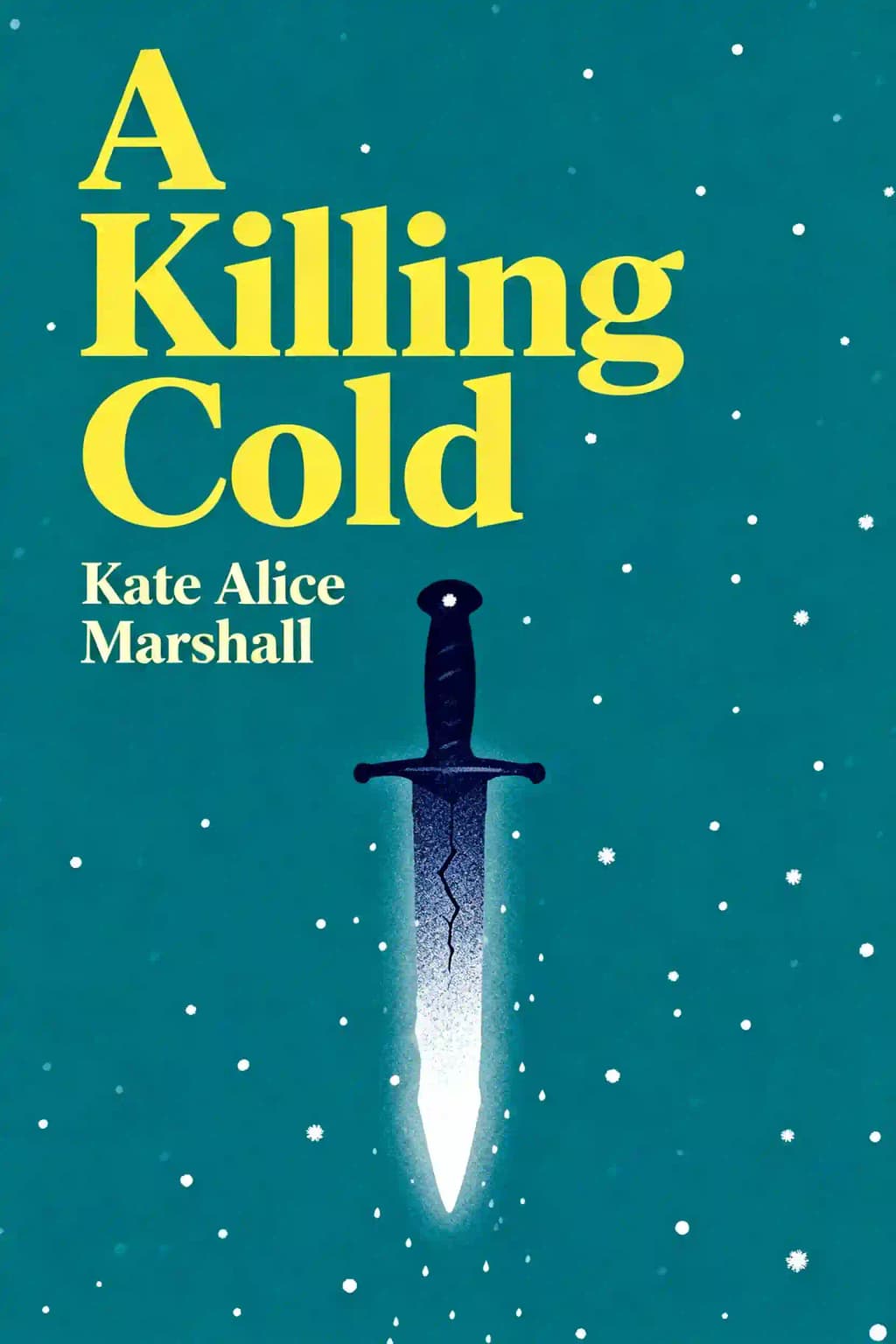
Kate Alice Marshall's "A Killing Cold" has captivated thriller enthusiasts since its release, quickly climbing bestseller lists and earning praise from Stephen King, who called it "a masterclass in psychological suspense." The novel's exploration of buried secrets and the destructive power of wealth has resonated with readers seeking sophisticated winter thrillers. Marshall, known for her atmospheric storytelling, drew inspiration from isolated mountain retreats she visited as a child, creating in Idlewood a setting that feels both luxurious and menacing. The book's twist-filled narrative has made it a book club favorite, with readers debating the moral complexities of its characters long after the final page.
2장
When Past and Present Collide in the Snow
Theo Scott's life seems to be heading in a promising direction. After a whirlwind six-month romance with the wealthy and charming Connor Dalton - complete with impromptu weekend trips to Paris and moonlit dinners on private yachts - she finds herself engaged and traveling to his family's isolated mountain retreat called Idlewood for the Christmas holidays. The snow-covered landscape, stretching endlessly in every direction without a neighboring house in sight, feels ominously silent to Theo, creating an immediate sense of unease that permeates her arrival. The pristine white expanse, beautiful from a distance, feels suffocating up close.
Her journey with Connor is interrupted when they nearly hit a wounded deer with an arrow in its side, its dark eyes meeting Theo's with an almost human desperation. This encounter introduces Daniel Vance, the Dalton family's groundskeeper, whose weathered face and calculating gaze suggest he knows more than he reveals. His hunting dog Duchess, a massive black German Shepherd, makes Theo inexplicably uncomfortable, watching her with an intensity that seems to mirror her master's. It's the first of many unsettling moments that suggest something isn't quite right about this picturesque winter getaway.
Theo's anxiety isn't just about meeting Connor's family. For weeks, she's been receiving disturbing anonymous texts warning her to "Stay away from Connor Dalton," each message arriving at oddly specific moments - right after their engagement announcement, during their wedding venue tour, and most disturbingly, just as they turned onto the private road leading to Idlewood. Despite these warnings, she's now heading to spend two isolated weeks with his family at their remote mountain property, where cell service is spotty at best and the nearest town is an hour's drive away.
What makes this opening so effective is how Marshall establishes both the external isolation of the setting and Theo's internal isolation. She's an outsider entering a close-knit family with old money and older secrets, her modest background as a bookstore owner standing in stark contrast to the Daltons' generations of wealth. The pristine snow surrounding Idlewood serves as both a beautiful backdrop and a potential prison, with the weather threatening to trap everyone together should things go wrong. This duality - beauty and danger, romance and fear - establishes the novel's central themes before we even meet the full cast of characters. The grand estate itself becomes a character, its stone walls holding decades of family history and potentially dangerous secrets, while the manicured grounds, now buried under feet of snow, hint at carefully maintained appearances that might be hiding something sinister beneath.
3장
Secrets Behind Every Door
Arriving at Idlewood, Theo is immediately struck by the impressive property with its pond, boathouse, and striking modern lodge made of glass and dark wood. The architecture itself reflects the Dalton family-beautiful, imposing, and designed to keep some things visible while hiding others behind carefully constructed facades.
Connor's sister Alexis emerges to greet them, her welcome to Theo seeming polite but perhaps not entirely genuine. The interaction establishes an important dynamic: Alexis exudes wealth and polish, making Theo acutely aware of the class difference between them. When Alexis mentions she helped select Theo's engagement ring, it's the first hint that Connor's life is not entirely his own-family involvement extends into what should be his most personal decisions.
As Theo prepares for dinner with the family, she examines herself critically, aware she needs to present a certain image to belong in this wealthy world. Her reflection reveals her "striking" face with broad cheekbones and gray-blue eyes, but more importantly, it reveals her insecurity. She dresses in new clothes bought with Connor's credit card, literally wearing a borrowed identity to fit in.
The dinner scene introduces the full Dalton dynasty: Alexis and her wife Paloma, their son Sebastian, Connor's father Magnus, his uncle Nick, brother Trevor, and the formidable grandmother Louise Dalton. Louise subjects Theo to an uncomfortable interrogation about her background, forcing Theo to craft careful half-truths about being an "orphan" from Washington with an English degree who works at a bookstore. The questioning reveals both Louise's controlling nature and Theo's practiced ability to construct a presentable narrative about herself.
What makes these interactions so compelling is how they simultaneously reveal character while concealing motive. Each family member seems to be performing a role-the protective sister, the intimidating matriarch, the charming father figure-while harboring thoughts they don't express. Similarly, Theo presents a carefully curated version of herself while hiding aspects of her past she fears would make Connor reject her. The dinner becomes a masterclass in social performance, with everyone playing parts rather than revealing their true selves.
4장
The House of Memories
As Theo adjusts to life at Idlewood, strange occurrences begin to undermine her sense of security in the remote mountain retreat. One bitterly cold night, she notices fresh footprints in the pristine snow leading toward their bedroom window - perfectly formed impressions that seem to materialize from nowhere. Following them into the frigid darkness, her flashlight beam cutting through swirling snowflakes, she discovers an abandoned fifth cabin tucked away behind thick pine trees, a structure conspicuously absent from all previous discussions of the property. When Mr. Vance finds her there, standing before the weathered door with its rusted hinges, he reveals the cabin's dark secret: "Liam died here" - Connor's father had met his end at Idlewood, not in the distant accident Connor had described to her.
This discovery fractures the foundation of trust in their relationship. The abandoned cabin stands as a physical manifestation of the family's buried trauma - a decaying structure they've left standing but methodically erased from their daily lives, much like the truth about Liam's death. Its windows, clouded with years of grime, seem to watch her like unseeing eyes, holding secrets she's not meant to uncover.
The next morning, Theo wakes to find a small velvet gift box perched precisely on her windowsill, its presence impossible given their second-floor location. The tag bears a name that sends ice through her veins: "DORA" - an identity from her past that no one at Idlewood should know. Inside lies a carefully folded note, its threatening message clear: "You shouldn't have come." This calculated escalation suggests someone at Idlewood not only knows her true identity but has been watching, waiting, and now wants her gone.
That night, her dreams take on a visceral quality. She finds herself gripping a knife, its blade reflecting moonlight as she faces a wounded deer. The creature's eyes hold human intelligence before it transforms into Connor, magnificent antlers crowning his head, blood dripping from their points. The imagery connects to her earlier encounter with the injured deer but twists it into something more sinister - a premonition of violence where the lines between predator and prey blur dangerously.
These elements weave together to create a psychological landscape as treacherous as the physical terrain surrounding Idlewood. The isolated cabins stand like sentinels in the wilderness, their windows dark mirrors reflecting untold stories. The footprints in snow that vanish by morning, the impossibly placed threatening messages, the weight of unspoken family history - they all contribute to an atmosphere where Theo can't trust her surroundings or the people inhabiting them. Even her own dreams seem to be warning her of impending danger, creating a multilayered sense of threat that seeps in from both external sources and her own subconscious, leaving her increasingly uncertain about what - or whom - to believe.
5장
Fractured Identities and Buried Truths
The novel's central mystery crystallizes when Theo makes a second visit to the abandoned cabin at Idlewood, culminating in a discovery that shatters her understanding of reality: a weathered photograph tucked behind a loose floorboard shows Connor's father Liam holding the hand of a small girl in a distinctive pink winter coat - a girl Theo recognizes, with growing horror, as her younger self. This impossible connection between her past and Connor's family sends her reeling. The timestamp on the photo's reverse indicates it was taken fifteen years ago, during a period Theo has always believed she spent in foster care in Arizona.
The photograph acts as a key unlocking a vault of suppressed memories, releasing them in disturbing fragments: a red star ornament hanging from a pine branch, the crunch of boots in fresh snow, an iridescent dragonfly caught in amber, and most terrifyingly, the recurring image of an antlered man whose shadow falls across her childhood nightmares. These elements, previously floating disconnected in her subconscious like debris in dark water, begin to arrange themselves into a coherent but troubling pattern - one that confirms she has indeed been to Idlewood before, though the circumstances remain shrouded in trauma.
Through careful investigation of local newspaper archives and conversations with townspeople, Theo uncovers an even more disturbing truth: her "chance" encounter with Connor was meticulously planned. He had first seen her in a portrait series at his friend Harper's photography exhibition six months earlier. The black-and-white image showed Theo in profile, the dragonfly tattoo on her neck clearly visible - a design that exactly matches the iron ornament on the abandoned cabin's door. This connection proves too precise to be mere coincidence, suggesting a calculated effort to draw her back to Idlewood.
These revelations force Theo to fundamentally question every aspect of her relationship with Connor. Each tender moment, every seemingly spontaneous encounter, now appears suspect. Was their passionate connection genuine, or was she expertly manipulated into a relationship with him as part of some larger scheme connected to her forgotten past? This uncertainty triggers a profound identity crisis for Theo, who must now question not only Connor's true nature but the very foundations of her own self-knowledge.
Marshall demonstrates remarkable skill in weaving together these complex threads of identity, memory, and deception. Theo's fragmented recollections mirror the fractured narrative she's been told about Idlewood and the Dalton family's history. The reader joins Theo in assembling these psychological puzzle pieces, creating a deeply immersive experience that parallels the protagonist's journey toward truth. The dragonfly motif - manifesting in Theo's tattoo, the cabin's ornament, and her dream sequences - serves as a haunting through-line connecting her buried past to her increasingly uncertain present, suggesting both transformation and entrapment.
6장
The Price of Belonging
As Theo becomes more deeply embedded in the Dalton family circle, the carefully maintained facade of their dynasty begins to crack, revealing the rotting foundation beneath. During an elaborate family dinner - complete with crystal glasses and inherited silver - tensions reach a breaking point when Trevor, already unsteady from too much bordeaux, challenges Magnus's authority. After pointed criticism from both Magnus and Alexis about his drinking habits, Trevor storms out, leaving behind a thick silence. Louise's swift dismissal of any further discussion, with a pointed glance at Theo, serves as a stark reminder: no matter how close she gets to Connor, she remains fundamentally outside their inner circle.
The Christmas tree incident later that evening serves as a dramatic turning point. Someone has transformed the family's pristine holiday centerpiece into a gallery of shame - each ornament carefully selected to expose buried secrets. A crumpled car wreck photo hangs next to court documents. Divorce papers bearing Rose's signature dangle near a damning photograph of Alexis in an intimate embrace with someone who isn't her husband. Though Trevor eventually claims responsibility for this theatrical act of defiance, the display accomplishes something more profound: it exposes how the Daltons have perfected the art of burying uncomfortable truths beneath polished surfaces and practiced smiles.
Through a wine-loosened conversation with Alexis, Theo uncovers layers of carefully concealed family history. Trevor's DUI wasn't an isolated incident - it preceded a more serious accident where his intoxicated driving left a passenger, Kayla, with lasting injuries. Magnus, ever the pragmatist, solved the problem the Dalton way: with a substantial payment that bought Kayla's silence, protecting a crucial business merger from scandal. But it's Alexis's unguarded comment about her father - "He didn't fall" - that shatters the official narrative about Liam Dalton's death, suggesting a darker truth behind his supposed accident.
The Daltons wield their wealth like a sculptor's chisel, carefully carving reality into their preferred shape. Money isn't merely a means of acquiring luxury - it's their primary tool for maintaining control, erasing inconvenient truths, and reshaping narratives. When Louise presents Theo with a check for seventy-five thousand dollars, accompanied by the condition that she leave Connor and never return, it represents more than a bribe. It's the distillation of the family's entire philosophy: problems aren't solved, they're purchased away.
This central theme resonates beyond the specifics of the Dalton family, touching on universal questions about authenticity and the true cost of acceptance. Theo's dilemma becomes increasingly complex as she realizes that genuine inclusion in the Dalton family would require more than just adapting to their lifestyle - it would mean becoming an active participant in their elaborate system of secrets and selective truths. The price of belonging isn't measured just in social conformity or material wealth, but in moral compromise. Through this lens, the story transcends its thriller elements to examine how wealth and power create corrupting ripple effects, transforming not only those who possess them but also those who orbit their influence, forcing everyone to choose between authentic existence and comfortable complicity.
7장
Trauma's Long Shadow
As the novel progresses, Theo's own traumatic past emerges from the shadows with devastating clarity. When Connor confronts her with a damning piece of evidence - an ornament containing her photograph at sixteen, showing extensive bruising and dried blood - she can no longer maintain the walls she's built around her history. The truth she reveals is horrific: her adoptive parents, along with their fundamentalist church pastor, had subjected her to what they called a "cleansing ritual," essentially an amateur exorcism. They imprisoned her in a cramped attic space for days with minimal sustenance, convinced her rebellious behavior indicated demonic possession.
During this ordeal, her adoptive mother Beth's religious fervor transformed into violent rage. The breaking point came during a particularly savage beating that left Theo barely conscious. When Beth discovered Theo bleeding profusely - strongly implied to be a traumatic miscarriage - she fled the scene in panic, leaving Theo alone and severely injured. Upon Joseph's return, Theo saw her chance for escape. In the ensuing struggle, she grabbed his prized hunting knife and stabbed him three times before fleeing into the night. Though she carried the weight of believing she'd killed him for years, she later learned he survived, and a compassionate police officer, recognizing the clear signs of abuse, arranged for the charges to be quietly dropped.
This revelation casts new light on Theo's complex personality traits. Her hypervigilance, her expertise in crafting and maintaining false identities, and her acute ability to read others' intentions - these weren't mere character quirks but sophisticated survival mechanisms forged in extreme trauma. Her past also illuminates why she proved so susceptible to Connor's calculated charm offensive. Having never experienced genuine, unconditional love, she lacked the emotional framework to recognize manipulation masquerading as affection.
Through painful conversations with Joseph and Mr. Vance, Theo uncovers more layers of her mysterious origins. They reveal that an unnamed intermediary approached the Scotts about adopting her "off the books," with substantial money changing hands to ensure discretion. As a young child, Theo exhibited peculiar behaviors - she would only repeat the word "Teddy" and told elaborate stories about living in "a castle on a mountain" where "the princess was dead." These seemingly nonsensical fragments begin to align with her recovering memories of Idlewood Manor and her mother's tragic fate.
Marshall's handling of this trauma narrative demonstrates remarkable restraint and sensitivity. Rather than exploiting Theo's suffering for mere shock value or melodrama, she presents it as essential context for understanding the character's complex psychology and behavior patterns. The novel suggests that while trauma leaves indelible marks, it doesn't have to be a person's defining characteristic. Instead, it shapes how they navigate the world - sometimes in ways that ensure survival but create barriers to forming authentic connections. Theo's journey evolves beyond merely uncovering external truths about her past; it becomes an exploration of how to integrate her fragmented self into a whole person capable of genuine intimacy and trust. Her story illustrates how healing often requires confronting not just what happened to us, but who we became in response to it.
8장
When the Snow Melts
As Theo's memories return more clearly, she realizes that Liam wasn't the monster in her nightmares. He was actually trying to help her mother Mallory escape from Nick, who had been abusing her. Connor reveals that Mallory had been living with Nick before getting together with Liam, explaining the animosity between the brothers.
Theo remembers Liam, bleeding from a head wound, trying to help her escape through the snow. Eventually he collapsed and never got up again. Nick was the real monster who stood watching as young Theo nearly froze to death. This revelation completely inverts Theo's understanding of her past trauma and its connection to the Dalton family.
When Theo and Connor attempt to escape Idlewood, they're pursued by Nick, who shoots Connor before their vehicle crashes. In the aftermath, Nick approaches to check if Theo is alive. Playing dead until he's close, she attacks with her knife, killing him by stabbing him in the throat-a mirror of her earlier attack on her adoptive father, but this time with lethal results.
Rather than continuing their escape, Theo decides they need to return to the lodge and confront the family. This choice represents her refusal to run from the truth any longer, even at great personal risk. It's a pivotal moment in her character development-choosing confrontation over escape, truth over safety.
In the final confrontation, Magnus reveals the most shocking truth of all: Alexis didn't actually kill Mallory. Though she shot her in the neck, the wound wasn't immediately fatal. Magnus found Mallory wounded on the road, pretended to call for help, and then deliberately stabbed her with his hunting knife after learning Liam and Rowan (Theo) were supposedly already dead. He justified the murder as "controlling the situation" and doing "what has to be done."
This revelation completes the picture of the Dalton family's moral corruption. Magnus, the patriarch who presents himself as reasonable and kind, is revealed as a calculating killer who prioritized family reputation over human life. His offer to welcome Theo into the family-provided she maintains their lies-is the ultimate expression of the Dalton approach to morality: everything, even murder, can be justified if it serves the family's interests.
9장
Breaking the Cycle
In the novel's denouement, Theo faces a choice that will define not just her future but her moral identity. Magnus, dying of pancreatic cancer, proposes a deal where they agree on a story that protects the family while allowing Theo to marry Connor with all the financial benefits that entails. In exchange, he offers to tell her where her mother is buried.
The knife in Theo's hand symbolizes her power to either perpetuate violence or break its cycle. In placing it down and walking away, she chooses the latter. She refuses to participate in the Dalton family's moral corruption, even when doing so might provide answers she desperately seeks about her mother's final resting place.
The epilogue reveals that Theo and Connor married in a small courthouse ceremony. Though no longer wealthy after Magnus cut him off, Connor kept some money-what Theo calls "blood money she earned after everything that happened." Magnus's attempt to control the narrative initially led to Theo's arrest, but Alexis broke ranks and testified against the family. Magnus, now on hospice care, will likely never stand trial due to his wealth and terminal illness.
Theo kept her new name, while Connor took hers-a symbolic rejection of the Dalton legacy. Though Magnus refused to reveal where Mallory Cahill is buried, Theo finds comfort knowing that wherever her mother lies, summer wildflowers are now blooming above her. This image of natural beauty reclaiming a site of violence offers a measure of peace without diminishing the tragedy of what occurred.
Marshall's conclusion avoids both cynical pessimism and naive optimism. Justice is incomplete-Magnus will likely never face legal consequences for his actions-but truth has been exposed, and Theo has freed herself from both her traumatic past and the corrupting influence of Dalton wealth. By choosing integrity over advantage, she breaks the cycle of violence and deception that defined both her childhood and the Dalton family history.
The novel ultimately suggests that while we cannot escape the influence of our past, we can choose whether to be defined by it. Theo's decision to confront rather than flee, to reveal rather than conceal, and to reject material comfort in favor of moral integrity represents a hard-won victory against the forces that sought to control her narrative-both in her childhood and at Idlewood. In a story filled with snow and ice, this moral clarity provides the warmth of genuine human connection that survives even the killing cold.