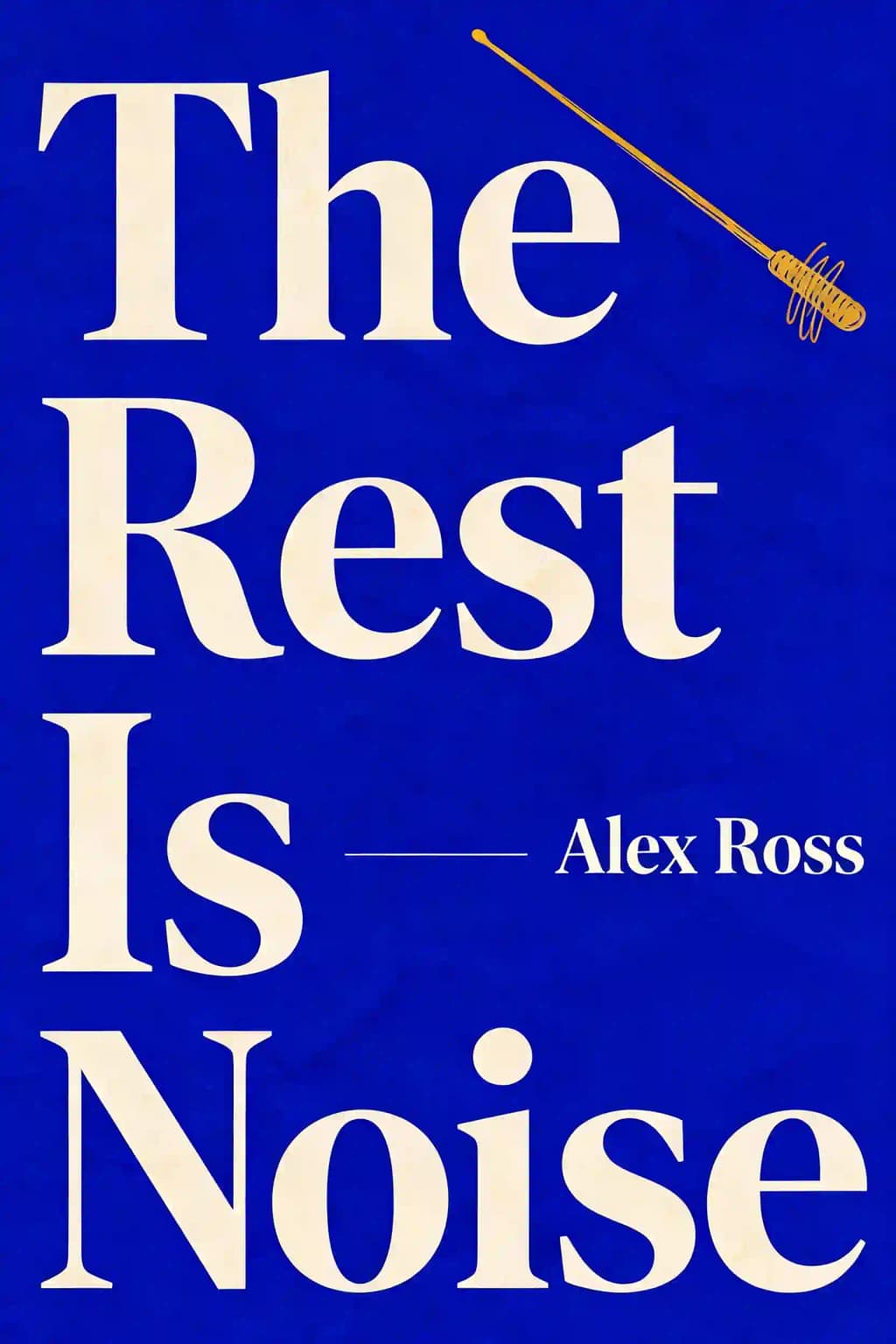
Alex Ross's masterpiece redefines 20th century through music, winning the National Book Critics Circle Award and enchanting Bjork. Explore how composers survived Stalin and Hitler while shaping modern culture. "Just occasionally someone writes a book you've waited your life to read" - Alan Rusbridger.
Alex Ross is an acclaimed music critic and author of The Rest Is Noise: Listening to the Twentieth Century. He stands as a leading voice in classical music analysis.
Born in Washington, D.C. in 1968, Ross developed his expertise through studies with composer Peter Lieberson at Harvard University and decades of contributions to The New Yorker, where he has been a staff writer since 1996.
His Pulitzer Prize-finalist book explores the cultural and political upheavals within 20th-century classical music. This reflects his career-long mission to bridge classical traditions with contemporary relevance. Ross’s influence extends to his widely read blog and appearances on platforms like NPR, amplifying his role in music discourse.
The Rest Is Noise won the National Book Critics Circle Award for Criticism and has been translated into over 15 languages. This has cemented its status as essential reading for both music scholars and enthusiasts.
The Rest Is Noise by Alex Ross explores 20th-century classical music’s evolution, linking composers like Strauss, Stravinsky, and Shostakovich to major historical events. It examines how political movements (Nazism, Soviet repression) and cultural shifts influenced modernist, avant-garde, and minimalist works, offering a narrative that intertwines artistry with societal upheaval.
Music enthusiasts, history buffs, and casual readers seeking to understand 20th-century classical music’s cultural impact will find this book accessible. Ross bridges academic rigor with engaging storytelling, making it ideal for both experts and newcomers.
Yes. Ross’s vivid prose demystifies complex musical trends, offering context for dissonant or experimental works. The book’s blend of biography, politics, and art criticism has been praised for transforming niche topics into a compelling narrative.
Ross depicts Shostakovich’s struggle to create under Soviet censorship, highlighting how his symphonies subtly critiqued Stalinist oppression. This duality—public compliance vs. private dissent—reveals music’s role as both propaganda and resistance.
Ross examines LGBTQ+ composers like Copland and Britten, linking their identities to their creative output. While some critics argue this focus becomes repetitive, it underscores how marginalized perspectives shaped 20th-century music.
Ross acknowledges Schoenberg’s innovation but questions his rigid serialism, contrasting it with Sibelius’s melodic approach. This analysis reflects broader debates about accessibility vs. experimentation in modern music.
Salome opens the narrative as a symbol of modernity’s birth. Ross details its scandalous 1905 premiere, illustrating how Strauss’s dissonance broke from Romantic traditions and foreshadowed 20th-century musical fragmentation.
Ross traces minimalism from Reich’s phased rhythms to Adams’s operas, showing its roots in repetitive structures and non-Western influences. He frames it as a reaction against mid-century academic complexity.
Key events include Weimar Republic chaos, Nazi cultural purges, McCarthyism’s impact on Copland, and Cold War-era avant-garde movements. Ross uses these to explain shifting musical ideologies.
Written in a WWII prison camp, Messiaen’s piece blends apocalyptic imagery with birdsong-like motifs. Ross highlights its spiritual resilience, calling its climactic A-major chord a “supernova” of hope amid despair.
Some argue Ross overemphasizes composers’ personal lives (e.g., sexuality) and underserves non-Western traditions. However, most praise its breadth and ability to make esoteric music relatable.
Unlike technical analyses, Ross prioritizes storytelling and context, akin to cultural histories like Gödel, Escher, Bach. It’s often recommended alongside Tim Page’s The Glenn Gould Reader for its accessibility.
저자의 목소리로 책을 느껴보세요
지식을 흥미롭고 예시가 풍부한 인사이트로 전환
핵심 아이디어를 빠르게 캡처하여 신속하게 학습
재미있고 매력적인 방식으로 책을 즐기세요
Time becomes space.
Music was really such a serious business.
I feel the heat of rebellion rising in even the slightest souls.
Stop it! Enough!
The Rest Is Noise의 핵심 아이디어를 이해하기 쉬운 포인트로 분해하여 혁신적인 팀이 어떻게 창조하고, 협력하고, 성장하는지 이해합니다.
The Rest Is Noise을 빠른 기억 단서로 압축하여 솔직함, 팀워크, 창의적 회복력의 핵심 원칙을 강조합니다.

생생한 스토리텔링을 통해 The Rest Is Noise을 경험하고, 혁신 교훈을 기억에 남고 적용할 수 있는 순간으로 바꿉니다.
무엇이든 물어보고, 목소리를 선택하고, 진정으로 공감되는 인사이트를 함께 만들어보세요.

샌프란시스코에서 컬럼비아 대학교 동문들이 만들었습니다
"Instead of endless scrolling, I just hit play on BeFreed. It saves me so much time."
"I never knew where to start with nonfiction—BeFreed’s book lists turned into podcasts gave me a clear path."
"Perfect balance between learning and entertainment. Finished ‘Thinking, Fast and Slow’ on my commute this week."
"Crazy how much I learned while walking the dog. BeFreed = small habits → big gains."
"Reading used to feel like a chore. Now it’s just part of my lifestyle."
"Feels effortless compared to reading. I’ve finished 6 books this month already."
"BeFreed turned my guilty doomscrolling into something that feels productive and inspiring."
"BeFreed turned my commute into learning time. 20-min podcasts are perfect for finishing books I never had time for."
"BeFreed replaced my podcast queue. Imagine Spotify for books — that’s it. 🙌"
"It is great for me to learn something from the book without reading it."
"The themed book list podcasts help me connect ideas across authors—like a guided audio journey."
"Makes me feel smarter every time before going to work"
샌프란시스코에서 컬럼비아 대학교 동문들이 만들었습니다

The Rest Is Noise 요약을 무료 PDF 또는 EPUB으로 받으세요. 인쇄하거나 오프라인에서 언제든 읽을 수 있습니다.
Vienna, 1913. Elegant concertgoers in their finest attire suddenly erupt into fistfights. The cause? Not politics or scandal, but music-Schoenberg's Chamber Symphony. This wasn't mere artistic disagreement; it was warfare. The 20th century didn't just change music-it exploded it, rebuilt it, weaponized it, and ultimately transformed how we hear the world. What began as Wagner's overwhelming shadow evolved into jazz's democratic voice, survived dictators who murdered millions while adoring Beethoven, and ended with composers who made silence itself sing. This journey reveals something profound: music doesn't just reflect history-it embodies our deepest struggles between order and chaos, tradition and revolution, the beautiful and the unbearable.