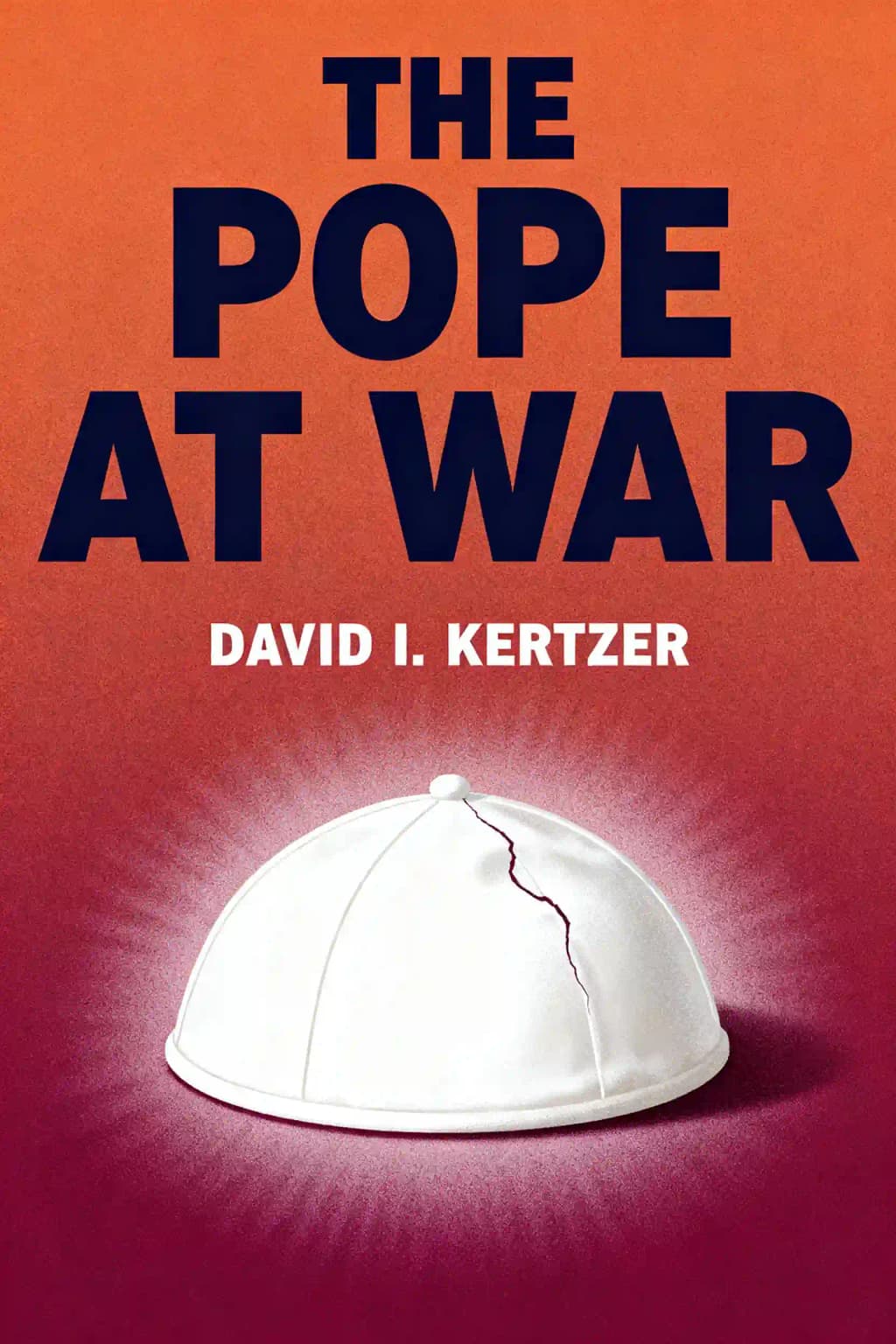
Pulitzer Prize-winning "The Pope at War" unveils Vatican secrets from newly released archives, exposing how Pope Pius XII navigated relationships with Hitler and Mussolini. What moral compromises did the Church make during humanity's darkest hour - and why are religious scholars still debating them today?
David Israel Kertzer, Pulitzer Prize-winning author of The Pope at War: The Secret History of Pius XII, Mussolini, and Hitler, is a leading historian of Vatican politics and modern European religious conflicts. A professor of anthropology and Italian studies at Brown University, where he served as provost from 2006 to 2011, Kertzer specializes in uncovering the intersection of religion, power, and diplomacy through rigorous archival research.
His expertise stems from decades studying Italy’s political history, exemplified by his National Book Award-finalist The Kidnapping of Edgardo Mortara and The Pope and Mussolini, which earned the 2015 Pulitzer Prize for Biography and has been translated into 11 languages.
Kertzer’s works, including The Popes Against the Jews and Prisoner of the Vatican, blend scholarly precision with narrative-driven storytelling to dissect institutional power dynamics. A fellow of the American Academy of Arts and Sciences, his research has reshaped understanding of the Vatican’s role in 20th-century geopolitics.
The Pope at War, like its predecessor, draws on previously sealed archives to reveal how Pius XII navigated fascist alliances during World War II. Translated into multiple languages, Kertzer’s books are frequently cited in debates about religious ethics and authoritarianism, cementing his reputation as a definitive voice on papal history.
The Pope at War examines Pope Pius XII’s controversial neutrality during World War II, drawing on newly opened Vatican archives. It details his diplomatic maneuvers with Mussolini’s Fascist regime and Hitler’s Nazi Germany, highlighting his silence on the Holocaust and prioritization of the Catholic Church’s political survival over moral leadership.
This book is essential for WWII historians, scholars of Vatican diplomacy, and readers interested in the ethical complexities of religious institutions during crises. It also appeals to those exploring the intersection of politics and morality in 20th-century Europe.
Yes. Kertzer, a Pulitzer Prize-winning historian, combines rigorous archival research with narrative urgency to reveal Pius XII’s calculated silence during Nazi atrocities. The book offers a sobering critique of neutrality in the face of genocide and reshapes understandings of Vatican wartime complicity.
Kertzer reveals secret communications between Pius XII and Nazi officials, including peace negotiation attempts with Hitler. The archives expose the Pope’s awareness of concentration camps and his strategic avoidance of public condemnation to protect Vatican interests.
The book argues Pius XII prioritized diplomatic relations with Axis powers over protesting mass Jewish extermination. Despite receiving detailed reports on Nazi atrocities, his public neutrality and private negotiations with Hitler’s envoys failed to leverage Vatican influence to save lives.
Mussolini emerges as a key collaborator, leveraging Italy’s alliance with Nazi Germany to pressure the Vatican. Kertzer details how Pius XII accommodated Mussolini’s regime, mirroring his earlier appeasement of Hitler, to maintain Church stability.
While The Pope and Mussolini explores Pius XI’s complex ties to Italian Fascism, The Pope at War expands this analysis to WWII, using newly available archives to deepen scrutiny of Vatican realpolitik and Pius XII’s moral failures.
Some scholars argue Kertzer underplays broader geopolitical pressures on the Vatican and could engage more with existing historiography. However, most praise its archival rigor and compelling narrative of institutional complicity.
The book reveals how the Vatican obscured its wartime compromises, rehabilitating Pius XII’s image by downplaying his alliances with Fascist leaders. This “scrubbing” allowed the Church to emerge unscathed despite its moral ambiguities.
Kertzer frames Pius XII’s neutrality as a cautionary tale, showing how institutional self-preservation can enable atrocities. The book challenges readers to reconsider the ethics of silence in authoritarian contexts.
Hitler looms as a shadow over Pius XII’s decisions, with Kertzer detailing how the Pope sought to negotiate with Nazi leaders even as they intensified genocide. The book underscores the Vatican’s pragmatic, fear-driven accommodation of Hitler.
The book resonates in debates about moral leadership during crises, offering parallels to contemporary political and religious institutions facing authoritarianism. Its archival revelations continue to influence discussions on Vatican accountability.
저자의 목소리로 책을 느껴보세요
지식을 흥미롭고 예시가 풍부한 인사이트로 전환
핵심 아이디어를 빠르게 캡처하여 신속하게 학습
재미있고 매력적인 방식으로 책을 즐기세요
The secretum is sacred to us.
Errors happen everywhere.
Pope at War의 핵심 아이디어를 이해하기 쉬운 포인트로 분해하여 혁신적인 팀이 어떻게 창조하고, 협력하고, 성장하는지 이해합니다.
Pope at War을 빠른 기억 단서로 압축하여 솔직함, 팀워크, 창의적 회복력의 핵심 원칙을 강조합니다.

생생한 스토리텔링을 통해 Pope at War을 경험하고, 혁신 교훈을 기억에 남고 적용할 수 있는 순간으로 바꿉니다.
무엇이든 물어보고, 목소리를 선택하고, 진정으로 공감되는 인사이트를 함께 만들어보세요.

샌프란시스코에서 컬럼비아 대학교 동문들이 만들었습니다
"Instead of endless scrolling, I just hit play on BeFreed. It saves me so much time."
"I never knew where to start with nonfiction—BeFreed’s book lists turned into podcasts gave me a clear path."
"Perfect balance between learning and entertainment. Finished ‘Thinking, Fast and Slow’ on my commute this week."
"Crazy how much I learned while walking the dog. BeFreed = small habits → big gains."
"Reading used to feel like a chore. Now it’s just part of my lifestyle."
"Feels effortless compared to reading. I’ve finished 6 books this month already."
"BeFreed turned my guilty doomscrolling into something that feels productive and inspiring."
"BeFreed turned my commute into learning time. 20-min podcasts are perfect for finishing books I never had time for."
"BeFreed replaced my podcast queue. Imagine Spotify for books — that’s it. 🙌"
"It is great for me to learn something from the book without reading it."
"The themed book list podcasts help me connect ideas across authors—like a guided audio journey."
"Makes me feel smarter every time before going to work"
샌프란시스코에서 컬럼비아 대학교 동문들이 만들었습니다

Pope at War 요약을 무료 PDF 또는 EPUB으로 받으세요. 인쇄하거나 오프라인에서 언제든 읽을 수 있습니다.
March 1939. A frail diplomat in white robes ascends to the papacy as Europe hurtles toward catastrophe. Pope Pius XII-born Eugenio Pacelli-inherits not just spiritual authority over millions but an impossible moral calculus: how to preserve the Catholic Church while the world burns. What unfolds is a story not of heroic resistance but of calculated silence, secret negotiations with Hitler, and a devastating choice to prioritize institutional survival over moral witness. Drawing on newly opened Vatican archives, this history reveals uncomfortable truths about what happens when leaders choose prudence over courage at civilization's darkest hour. Unlike popes who rose from parish work, Pacelli was forged in diplomatic chambers. Twelve years as papal nuncio in Germany gave him intimate knowledge of Nazi rise-and a preference for accommodation over confrontation. As Vatican Secretary of State, he had negotiated the 1929 Lateran Accords, securing Vatican City's sovereignty and Catholicism's privileged status in Fascist Italy. When his predecessor Pius XI died in February 1939, Mussolini celebrated: "At long last that stubborn old man is dead!" The dying pope had prepared a speech condemning Fascism. Pacelli's first act? Ordering every copy destroyed-"not a comma" would survive. His election came swiftly. German and Italian diplomats lobbied for him, seeing a more pliable figure than his predecessor. Many Italian cardinals worried about his "weakness of character," but on March 1, after three ballots, Pacelli emerged as Pius XII. The Vatican had chosen continuity over courage.