1장
Reshaping Global Power: East Meets West on the New Silk Roads
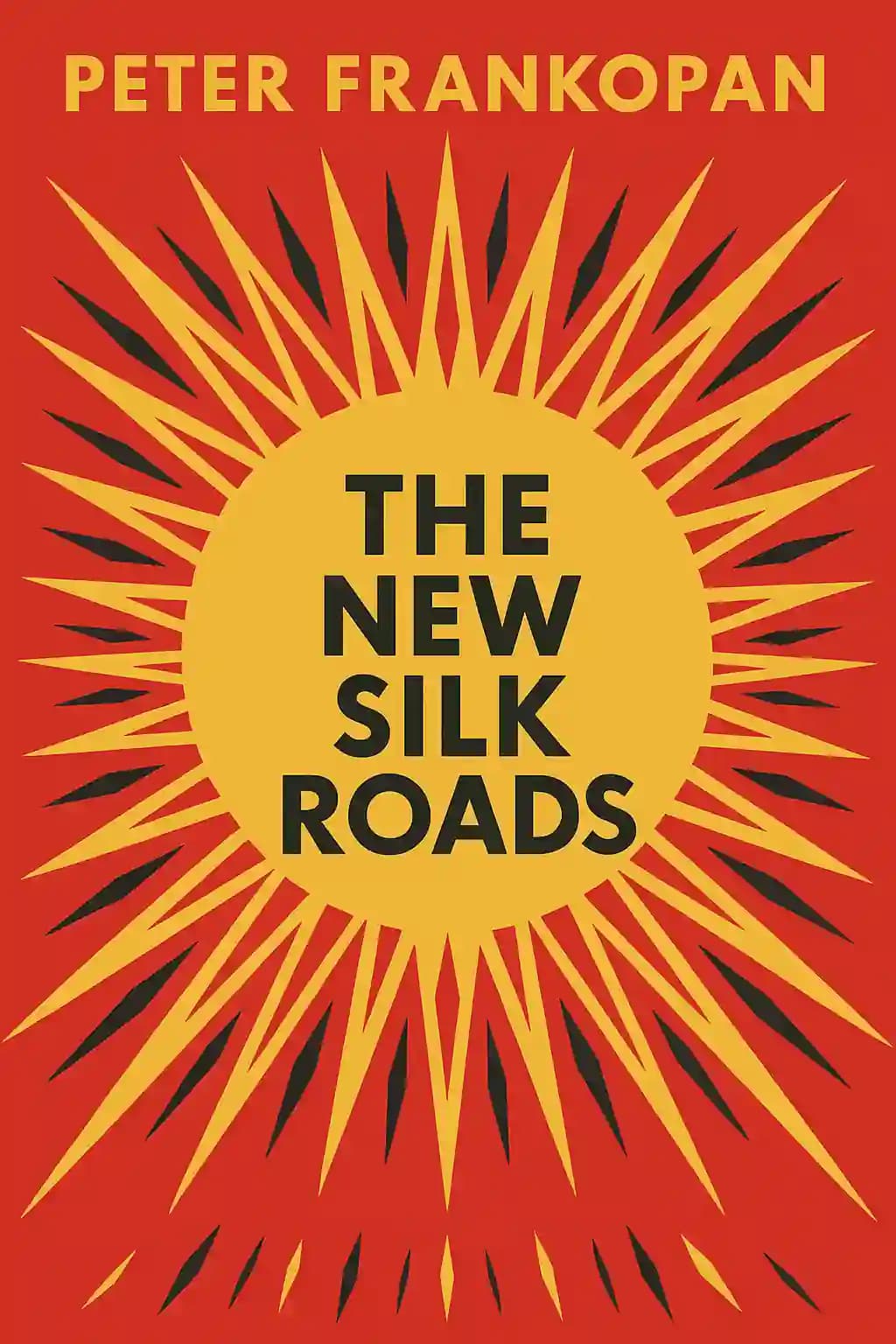
When Peter Frankopan's "The Silk Roads: A New History of the World" became an international bestseller, it revealed something profound: people were hungry for a history that shifted focus away from the familiar Western narrative toward Asia and the East. The book's success across the UK, Gulf states, India, and China demonstrated a global appetite for understanding the connections that have linked continents together for millennia. In "The New Silk Roads," Frankopan builds on this foundation with even greater urgency, arguing that the most consequential decisions of the 21st century aren't being made in Paris, London, or Washington, but in Beijing, Moscow, Tehran, and Delhi. This isn't merely academic observation-it's reshaping everything from global finance to popular culture. Celebrities from Kanye West to Angelina Jolie have referenced Silk Road inspirations in their work, while luxury brands like Hermes launch fragrances named "Poivre Samarcande" after ancient trading cities. Even Donald Trump, before his presidency, filed trademark applications across Central Asia, sensing the region's growing importance. As we witness this profound shift in global power, Frankopan's analysis offers not just historical context but a roadmap to our collective future.
2장
The Great Eastward Shift
The world has transformed dramatically in the past twenty-five years. Nowhere is this more evident than in English football, where teams once dominated by British players now feature global talent, and ownership has shifted to wealthy investors from across the Silk Roads. Chinese buyers have acquired major clubs in Birmingham and Milan, while Gulf state owners have transformed Manchester City and Paris Saint-Germain into dominant forces through unprecedented investment.
This transformation extends beyond sports. The wealthy from the East now collect Western trophies-from hosting World Cups and Olympics to building magnificent museums like Abu Dhabi's Louvre and Moscow's Garage Museum. Britain and America, once imperial powers that collected treasures from abroad, now see their own assets-from Harrods and the Plaza Hotel to media outlets like the Evening Standard and entertainment companies like Legendary Entertainment-acquired by investors from China, Russia, and the Middle East.
These purchases reflect a massive economic shift. China's GDP has grown from 39% of America's in 2001 to 114% by 2016. Over 800 million Chinese have risen above the poverty line since the 1980s. This wealth is transforming global markets-from French vineyards (where famous chateaux now have Chinese owners and Chinese-friendly names) to the airline industry (where pilot shortages are driving salaries to $750,000 annually) to tourism (with Chinese travelers spending $250 billion abroad annually, double what Americans spend).
The economic center of gravity is shifting eastward, affecting everything from property markets to retail patterns. Pakistan has become the world's fastest-growing retail market, while India's middle class has expanded from 2 million households in 1990 to 50 million by 2014. Luxury brands are responding-Prada opening seven stores in Xi'an alone, while Chanel buys silk manufacturers to secure supply chains for their increasingly Eastern clientele.
Chinese consumers now account for one-third of global luxury goods purchases-projected to reach 44% by 2025. Starbucks plans to open a new location in China every fifteen hours through 2021. Even policy changes like China ending its One Child policy immediately impact global markets, with baby-related companies' shares soaring while condom manufacturers' fell. The stakes are high-as Dolce & Gabbana discovered when a cultural misstep in China threatened hundreds of millions in revenue.
3장
Growing Pains of a Rising East
While economic and demographic growth create unprecedented opportunities, they also bring significant challenges that threaten to undermine Asia's remarkable progress. Building infrastructure for booming populations requires advance planning, considerable resources, and delicate political maneuvering. Bangalore, India's technology hub, exemplifies these challenges-despite detailed proposals to improve water supply for its growing population of 12 million, officials now speak openly of preparing evacuation plans before "Day Zero" when taps run dry, possibly as early as 2025. Similar scenarios are playing out in Chennai, Jakarta, and dozens of other rapidly expanding Asian metropolises.
Rapid urban growth historically correlates with political instability and radicalization, particularly when youth unemployment rises and infrastructure fails to keep pace. A comprehensive UN report states bluntly that cities worldwide are "grossly unprepared" for urbanization's multi-dimensional challenges. Climate change further threatens habitability in regions like the Gulf, where summer temperatures regularly exceed 50C, South Asia's coastal megacities facing rising sea levels, and Northeast China's industrial zones struggling with extreme air pollution and water scarcity.
Those attempting reform face significant hurdles in managing change while maintaining appearances of stability and control. Saudi Arabia's 2017 reforms-opening cinemas after 44 years and allowing women to drive-were initially celebrated as watershed moments. However, these changes were quickly overshadowed by the arrest and reported torture of prominent activists, mostly women advocating for these very reforms. The 2018 murder of journalist Jamal Khashoggi in Istanbul further revealed the stark contrast between reform rhetoric and the harsh reality of authoritarian governance.
Water scarcity represents perhaps the most pressing challenge across Central Asia and the broader region, threatening both political stability and economic development. The near-disappearance of the Aral Sea since the 1960s stands as a stark reminder of Soviet-era mismanagement, having shrunk to just 10% of its original size. This environmental catastrophe has caused widespread public health crises, including respiratory diseases and cancers, while destroying traditional fishing communities and agricultural systems. Recent salt storms from the dried seabed have covered fields in Uzbekistan and Turkmenistan with centimeters of salt, exacerbating crop failures and forcing entire communities to relocate.
Transboundary water management remains contentious, with the Syr Darya, Amu Darya and Irtysh rivers crossing multiple nations with competing interests and development priorities. Approximately 70% of developmental problems in the region stem from freshwater shortages, affecting everything from agriculture to hydroelectric power generation. Climate change compounds these challenges dramatically, with research indicating the Urumqi Glacier will lose 80% of its ice volume within three decades, threatening water security for millions. The situation has sparked diplomatic tensions between China, Kazakhstan, and Kyrgyzstan over water rights and usage, highlighting how environmental challenges increasingly shape regional politics and security dynamics.
4장
Technology and Innovation Transform the Silk Roads
A new world is emerging that seems both exotic and concerning. Iran has become an unexpected hub for tech startups, with companies like Sarava incubating innovative businesses ranging from water-friendly agriculture to AI-powered medical devices. Yet this pales compared to India and China, whose adoption rates of financial technologies far exceed even the US.
Ant Financial's $150 billion valuation-more than Goldman Sachs-demonstrates this shift, as does India's Paytm reaching $10 billion despite being founded just in 2010. However, Western technological dominance remains in most sectors, prompting countries like Russia to prioritize domestic technology development.
Russia has invested heavily in cybertechnologies, becoming what US officials call "the most technically advanced potential adversary" while simultaneously strengthening its defenses against external attacks. While Western debates focus on data monetization and privacy, Eastern concerns center on data weaponization and state control-exemplified by Russia requiring Facebook to store user data on Russian servers and blocking encrypted messaging services like Telegram. China similarly maintains state ownership of its three largest telecoms companies and blocks access to Western platforms like Google and Facebook.
We're experiencing an epochal transformation similar to what followed Columbus crossing the Atlantic and da Gama rounding Africa 500 years ago. Those expeditions shifted global economic and political gravity to western Europe. Today, something similar is happening in reverse: Asia and the Silk Roads are rising rapidly.
Yet unlike historical shifts, Asia's rise isn't occurring in isolation or competition with the West but is deeply interconnected with developed economies. The East's success doesn't necessarily come at the West's expense-at least not yet. What's striking is the contrasting reactions: optimism in the East versus anxiety so acute in the West that former US Secretary of State Madeleine Albright openly warns about democracy's future and potential fascism's return.
5장
The West in Retreat
The Western world stands at a critical historical juncture, facing unprecedented challenges to its post-WWII liberal order. In America, Donald Trump's 2016 presidential victory marked a dramatic shift, as he campaigned on a platform declaring America was in "free fall" and needed protection from what he termed unfair foreign exploitation. His administration swiftly enacted an "America First" agenda, withdrawing from major international agreements including the Trans-Pacific Partnership, the Paris Climate Accord, and the Iran nuclear deal, while implementing controversial travel bans on several Muslim-majority countries and imposing wide-ranging tariffs on China and traditional allies alike.
Europe confronts equally significant upheavals across multiple fronts. The rise of far-right parties has shaken the political establishment, with Marine Le Pen's National Rally in France and the Alternative for Germany (AfD) gaining substantial support. In Hungary, Viktor Orban's government has erected razor-wire fencing along its borders, curtailed press freedoms, and faced serious concerns about judicial independence. Poland's ruling Law and Justice party has challenged core EU values, leading to unprecedented Article 7 sanctions proceedings. Most significantly, Britain's 2016 Brexit vote represented the first major withdrawal from the European project, creating economic uncertainty and complex diplomatic challenges that continue to reverberate.
These developments signal a profound shift in Western attitudes and policies. The post-Cold War consensus favoring increased international cooperation, free trade, and multilateralism has given way to skepticism of globalization, resistance to immigration, and a preference for nationalist policies. Western leaders often display striking contradictions - like British Prime Minister Theresa May's claim that Brexit would make Britain "global leaders in free trade" while simultaneously ending free movement with Europe and leaving the single market. Similar paradoxes appear in Trump's assertion of "making America great again" through policies that many experts argue diminish U.S. global influence.
Meanwhile, across the ancient Silk Roads region, a contrasting pattern of increased integration has emerged since 2015. From the Pacific to the Mediterranean, nations are actively working to resolve historical tensions and build new frameworks for cooperation. China's Belt and Road Initiative, though controversial, has catalyzed infrastructure development and cross-border collaboration. Countries like Kazakhstan and Uzbekistan have made significant progress in settling long-standing border disputes.
This collaboration is increasingly institutionalized through a growing network of multilateral organizations. The Asian Infrastructure Investment Bank (AIIB), with 103 approved members, provides an alternative to Western-dominated development institutions. The Shanghai Cooperation Organisation has expanded its scope beyond security to include economic and cultural cooperation. Perhaps most significantly, the Regional Comprehensive Economic Partnership (RCEP) encompasses 3.5 billion people and 30% of global GDP, potentially creating the world's largest free trade zone.
While challenges and rivalries persist in Asia - including territorial disputes in the South China Sea and Indo-Pakistani tensions - the overall trajectory shows increasing interconnection. Central Asian states exemplify this trend, developing new transportation links like the China-Kazakhstan-Europe railway corridor and modernizing border crossings. They're also deepening security cooperation through joint military exercises and intelligence sharing, demonstrating a practical approach to regional integration that contrasts sharply with Western fragmentation.
6장
China's Belt and Road Initiative: Reshaping the World
In September 2013, Chinese President Xi Jinping delivered a landmark speech at Nazarbayev University in Kazakhstan that would reshape global geopolitics. Xi proposed revitalizing the ancient Silk Roads by creating an "economic belt" that would forge closer ties across Eurasia. He emphasized how peoples of "different races, beliefs and cultural backgrounds" had historically shared peace and development along these routes, presenting this historical model as inspiration for contemporary cooperation.
While American visions remained mostly talk without substantial funding, President Xi's concrete proposals backed by hard cash signaled something serious was underway. The One Belt, One Road policy-later renamed Belt and Road Initiative-had been carefully planned, with the Communist Party quickly implementing these ideas after Xi's 2013 announcement.
By mid-2015, the China Development Bank had reserved $890 billion for approximately 900 projects, while the Export-Import Bank of China began financing over 1,000 projects across 49 countries. The initiative now encompasses more than 80 countries with a combined population of 4.4 billion people-63% of the world's population-representing $21 trillion in economic output.
At Beijing's 2017 Belt and Road Forum, President Xi declared the initiative would "change the world" by replacing estrangement with exchange, clashes with mutual learning, and superiority with coexistence. Xi positioned it as "the project of the century," emphasizing a "new type of international relations featuring win-win cooperation."
Flagship investments include the $60 billion China-Pakistan Economic Corridor with power plants, wind farms, industrial parks and the development of Gwadar port, expected to reach $100 billion by 2030. While rail connections to Europe remain more symbolic than economically competitive (costing up to five times more than sea transport), they represent China's commitment to reshaping global infrastructure.
President Xi's signature policy is driven by three principal motivations. First, China's domestic needs-particularly energy security, with oil imports reaching 8 million barrels daily in 2017 and demands expected to treble by 2030. Food security is equally critical as urbanization pressures agricultural production, with Chinese companies buying farmland globally as domestic beef and pork prices rose 80% between 2009-2013. Environmental concerns also drive policy, with 70% of North China Plain groundwater "unfit for human touch" and a sixth of agricultural land contaminated.
The second motivation stems from China's economic transformation from manufacturing to services. This transition has created excess capacity in steel, cement and metals that can be deployed abroad, along with a skilled construction workforce now facing fewer domestic projects. Meanwhile, developing Asia requires over $22.6 trillion in infrastructure through 2030 according to the Asian Development Bank.
Security forms the third motivation, particularly regarding China's western provinces. Xinjiang, containing half China's coal deposits, a fifth of its oil reserves, and major gas fields, saw security spending double to $9 billion in 2017 alone. Fearing Islamic fundamentalism spreading from Afghanistan and returning Uighur fighters from Syria, authorities have implemented severe measures including reported "re-education camps" holding hundreds of thousands.
7장
Global Reactions to China's Rise
Many remain skeptical about the Belt and Road Initiative despite its nearly $1 trillion in promised funding. Environmental concerns accompany major construction projects and transportation networks. Critics worry about local elites enriching themselves while burdening populations with unpayable debts.
The initiative itself is "breathtakingly ambiguous" according to scholar Jonathan Hillman, who notes mismatches between official plans and actual projects, along with inefficiencies and lack of coherence. Harvard's Joseph Nye questions whether it's "more public relations smoke than investment fire," suggesting China might simply be seeking better returns than low-yield US government bonds.
Chinese officials themselves acknowledge that 80% of investments in Pakistan, half in Myanmar, and a third in Central Asia will likely be lost. Critics note that 89% of Chinese-funded Belt and Road projects use Chinese contractors, prompting a French embassy complaint about lack of transparent, rules-based public tenders. Former US Secretary of State Rex Tillerson contrasted America's approach of "incentivizing good governance" with China's "opaque contracts, predatory loan practices, and corrupt deals that mire nations in debt."
Indebtedness worries are growing. Kenya's debt may rise from 40% to nearly 60% of GDP due to Chinese-funded projects. In Congo, a single mining agreement with a Chinese consortium was worth more than the country's entire annual budget. IMF Managing Director Christine Lagarde diplomatically warned that such ventures can "lead to a problematic increase in debt, potentially limiting other spending as debt service rises."
Eight countries including Pakistan, Kyrgyzstan, Tajikistan, Laos and Mongolia face acute debt risks. In 2011, Tajikistan ceded hundreds of square kilometers of land to China to settle unpayable debts. The $7 billion Kunming-Vientiane railway represents over 60% of Laos' GDP. Angola's Chinese debt averages $754 per citizen in a country with $6,200 annual per capita income.
India's anxieties toward China stem from their 1962 war and long-standing rivalry. Delhi pointedly boycotted the 2017 Beijing Forum and expressed "serious reservations" about the Belt and Road Initiative, citing sovereignty concerns over Chinese infrastructure projects in disputed Kashmir. The China-Pakistan Economic Corridor particularly alarms India, both for running through Kashmir and potentially boosting Pakistan's GDP by 8% annually.
8장
America's Response to a Changing World
Nostalgia can be intoxicating but deceptive. Despite American anxiety about decline, today's world is objectively better than the past by nearly every measure-from life expectancy to literacy rates. Yet adjusting to change remains difficult, particularly in the United States where China's rise casts a shadow over America's self-perception.
The sale of iconic American businesses like General Electric's Appliance Business to foreign buyers represents a psychological shock, mirrored in Europe where companies from Volvo to Warner Music now have owners from Silk Road countries. Perhaps most symbolically, the marble used in the Freedom Tower in New York comes from Italian quarries now owned by the bin Laden family-the same family whose most infamous member orchestrated the destruction of the Twin Towers.
During his presidential campaign, Trump demonized China in stark terms, claiming they "want to take your throat out" and had perpetrated "the greatest theft in the history of our country." This rhetoric resonated with voters who felt left behind by globalization, as economist Branko Milanovic noted that "the great losers" in global wealth redistribution were "the lower middle classes of the rich world."
Beyond trade disputes, American anxiety about China runs much deeper. In 2018, Washington revoked long-term visas for Chinese citizens working in sensitive sectors like aviation and robotics to limit access to military-related technologies. The White House even considered banning all Chinese students from American universities-a proposal only abandoned due to the economic impact on colleges. "Almost every student that comes over to this country from China is a spy," Trump reportedly claimed.
Henry Kissinger observed that China presents "a fundamental challenge to American strategy" that the US is ill-equipped to handle because "we don't understand their history and culture." Official documents like the 2017 National Security Strategy portray China as "attempting to erode American security and prosperity" and seeking "to shape a world antithetical to US values."
9장
The Future of the Silk Roads
The United States has strategically chosen India as its counterweight to China's rising influence. However, the relationship is complicated by Trump's contradictory approach-calling Modi "a beautiful man" while simultaneously threatening tariffs on "thousands and thousands" of Indian products and accusing India of using the US as a "piggy bank that everybody is robbing."
Despite these tensions, India sees benefits in closer US alignment, evidenced by signing the Communications Compatibility and Security Agreement (COMCASA) that allows defense cooperation and potentially positions India in an "Asian NATO" with Japan and Australia. Yet India remains pragmatic about China relations, with Modi and Xi holding a productive summit in Wuhan where they emphasized their countries' shared historical importance.
Trump's withdrawal from the Iran nuclear agreement (JCPOA) created cascading complications for US allies. Despite promising "no exceptions" to Iran sanctions, the US issued waivers to India and other major Iranian oil importers-a six-month reprieve Indian officials expected would be extended indefinitely.
The deterioration of America's global alliances extends beyond Trump's personal temperament, representing a deeper strategic shift. Former Deputy Secretary Strobe Talbott warned that American isolationism undermines national interests-a sentiment echoed in Defense Secretary Jim Mattis's resignation letter, which argued America's strength is "inextricably linked" to its alliance system.
With depleted diplomatic capacity, US foreign policy has followed the path of least resistance, making Saudi Arabia the cornerstone of Middle East strategy. Trump's first foreign trip to Riyadh signaled this prioritization and his intent to confront Iran. Despite his business reputation, Trump's much-touted $110 billion Saudi arms deal wasn't finalized, leading him to publicly chide Crown Prince Mohammed bin Salman that hundreds of millions in purchases were merely "peanuts to you."
10장
The Asian Century Has Arrived
We are already living in the Asian century. The shift of global GDP from Western to Eastern economies has been breathtaking in both scale and speed, with Middle Eastern countries alone earning $210 billion more in 2018-19 than the previous year. This transformation has created growing pains across Asia, from environmental damage to an insatiable appetite for infrastructure investment.
What's striking is that the West risks becoming increasingly irrelevant. When Western powers do engage, they typically intervene in ways that create more problems than they solve, or impose restrictions that limit others' growth. The era of the West shaping the world in its image is long gone, though this seems lost on those who believe managing others' fates remains appropriate.
American officials label China, Russia and Iran as "forces of instability" that are "morally reprehensible," while simultaneously exploring backroom deals with these same powers. Relations with China have become particularly strained to the point of neurosis, with Defense Secretary Shanahan declaring America's focus should be "China, China, China." Some American strategists have even begun modeling what conventional war between the two countries might look like.
Whatever agreement might eventually be reached, there will never be a permanent settlement between these powers. Change is inevitable. The effectiveness of bullying tactics to bring parties to negotiating tables tends to be learned and replicated by those who feel they've been treated unfairly.
Forces of instability are in the eye of the beholder. The US easily forgets the destabilizing impact of its own interventions in Iraq and Afghanistan over the past fifteen years. From Washington's perspective, something has gone badly wrong along the spine of the Silk Roads, where China, Russia and Iran-three of the world's largest and most important states-are deemed direct threats to American interests and global stability.
As the King of Zhao in northeastern China wisely observed 2,500 years ago, "A talent for following the ways of yesterday is not sufficient to improve the world of today." Understanding what drives change is essential for adaptation. Trying to slow or stop this change is an illusion. The Silk Roads are rising and will continue to do so. How they develop will shape the world's future, for good and bad-just as they always have.




![[the-silk-roads-by-peter-frankopan:c0000] The Silk Roads p1-1](/_next/image?url=https%3A%2F%2Fd1y2du6z1jfm9e.cloudfront.net%2Fassets%2Fpodcast%2Fpurple.png&w=1024&q=50)
![[the-silk-roads-by-peter-frankopan:c0001] The Silk Roads p1-1](/_next/image?url=https%3A%2F%2Fd1y2du6z1jfm9e.cloudfront.net%2Fassets%2Fpodcast%2Fyellow.png&w=1024&q=50)
![[the-silk-roads-by-peter-frankopan:c0002] The Silk Roads p1-1](/_next/image?url=https%3A%2F%2Fd1y2du6z1jfm9e.cloudfront.net%2Fassets%2Fpodcast%2Fblue.png&w=1024&q=50)


