Samuel Greengard's "Internet of Things" unveils how everyday objects are revolutionizing our world. Part of MIT's Essential Knowledge Series, this accessible guide explains why IoT represents the Fourth Industrial Revolution - transforming healthcare, manufacturing, and human behavior while raising crucial questions about privacy and cybersecurity.
Samuel Greengard, author of The Internet of Things (MIT Press, 2021), is an award-winning journalist and technology expert specializing in emerging innovations shaping business and society. A prolific writer with over 2,000 articles published in outlets like WIRED, Communications of the ACM, and Adobe’s CMO by Adobe, he explores themes of digital transformation, AI ethics, and cybersecurity. His work as a corporate content creator for Fortune 500 companies—including Microsoft, Cisco, and Intel—informs his practical insights into IoT’s real-world applications.
Greengard’s expertise extends to his other MIT Press book, Virtual Reality (2019), which examines immersive technologies’ societal impacts, and the career guide AARP Crash Course in Finding the Work You Love. As past president of the American Society of Journalists and Authors, he combines decades of editorial leadership with hands-on experience advising organizations on tech integration. The Internet of Things is part of MIT Press’s Essential Knowledge series, a trusted resource used by professionals and academics worldwide to understand interconnected systems.
The Internet of Things provides a comprehensive exploration of IoT’s evolution from niche novelty to mainstream technology, detailing its impact on daily life, industries, and society. Samuel Greengard examines smart devices, industrial automation, AI integration, and risks like cybercrime and inequality, while envisioning a hyperconnected future. The book blends technical insights with real-world examples like earthquake-detecting smartphones and immersive VR environments.
This book is ideal for tech professionals, business leaders, and curious readers seeking to understand IoT’s transformative role in the Fourth Industrial Revolution. It benefits decision-makers implementing smart manufacturing, developers designing connected devices, and anyone interested in ethical implications of pervasive technology.
Yes, the revised 2021 edition offers up-to-date analysis of IoT advancements, including case studies on augmented reality fitting rooms and AI-driven supply chains. Greengard’s clear explanations of complex systems and balanced discussion of societal risks make it a valuable resource for navigating our connected world.
Key concepts include:
Greengard highlights threats like cyberattacks targeting connected infrastructure, surveillance risks eroding free speech, and job displacement from automation. He argues for proactive governance and ethical frameworks to mitigate harms while harnessing IoT’s benefits.
Examples include:
The book positions IoT as foundational for AI-driven systems, enabling real-time data collection from sensors and devices. Greengard explains how machine learning algorithms analyze IoT data to optimize supply chains, predict equipment failures, and personalize user experiences.
This refers to a future where IoT seamlessly links devices, environments, and people, creating interdependent systems that reshape work, communication, and daily routines. Greengard cautions that this connectivity demands robust security and ethical guidelines to prevent misuse.
Unlike technical manuals, Greengard’s book focuses on IoT’s societal implications, blending accessible explanations with critical analysis. It complements works like The Fourth Industrial Revolution by Klaus Schwab by detailing IoT-specific innovations and challenges.
He critiques overreliance on connected systems without adequate safeguards, corporate monopolization of IoT data, and the environmental impact of disposable smart devices. The book urges prioritizing user privacy and sustainability in IoT development.
As IoT adoption accelerates in smart cities, healthcare, and Industry 4.0, the book remains a critical guide for balancing innovation with responsibility. Its insights into AI integration and cybersecurity are particularly timely amid rising global digital infrastructure investments.
These lines encapsulate IoT’s transformative potential and inherent risks.
저자의 목소리로 책을 느껴보세요
지식을 흥미롭고 예시가 풍부한 인사이트로 전환
핵심 아이디어를 빠르게 캡처하여 신속하게 학습
재미있고 매력적인 방식으로 책을 즐기세요
We're witnessing nothing less than a fundamental rewiring of our physical world.
If something can be connected, someone has likely already done it.
Automation has evolved dramatically from simple mechanical systems.
Computer vision has become increasingly sophisticated.
Edge AI has become crucial for applications requiring real-time processing.
Internet of Things의 핵심 아이디어를 이해하기 쉬운 포인트로 분해하여 혁신적인 팀이 어떻게 창조하고, 협력하고, 성장하는지 이해합니다.
Internet of Things을 빠른 기억 단서로 압축하여 솔직함, 팀워크, 창의적 회복력의 핵심 원칙을 강조합니다.

생생한 스토리텔링을 통해 Internet of Things을 경험하고, 혁신 교훈을 기억에 남고 적용할 수 있는 순간으로 바꿉니다.
무엇이든 물어보고, 목소리를 선택하고, 진정으로 공감되는 인사이트를 함께 만들어보세요.

샌프란시스코에서 컬럼비아 대학교 동문들이 만들었습니다
"Instead of endless scrolling, I just hit play on BeFreed. It saves me so much time."
"I never knew where to start with nonfiction—BeFreed’s book lists turned into podcasts gave me a clear path."
"Perfect balance between learning and entertainment. Finished ‘Thinking, Fast and Slow’ on my commute this week."
"Crazy how much I learned while walking the dog. BeFreed = small habits → big gains."
"Reading used to feel like a chore. Now it’s just part of my lifestyle."
"Feels effortless compared to reading. I’ve finished 6 books this month already."
"BeFreed turned my guilty doomscrolling into something that feels productive and inspiring."
"BeFreed turned my commute into learning time. 20-min podcasts are perfect for finishing books I never had time for."
"BeFreed replaced my podcast queue. Imagine Spotify for books — that’s it. 🙌"
"It is great for me to learn something from the book without reading it."
"The themed book list podcasts help me connect ideas across authors—like a guided audio journey."
"Makes me feel smarter every time before going to work"
샌프란시스코에서 컬럼비아 대학교 동문들이 만들었습니다

Internet of Things 요약을 무료 PDF 또는 EPUB으로 받으세요. 인쇄하거나 오프라인에서 언제든 읽을 수 있습니다.
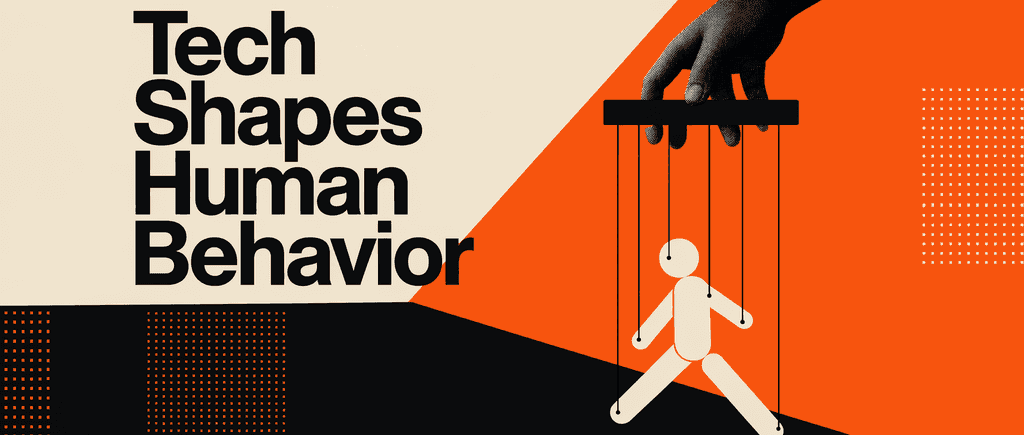
Imagine waking up to a world where over 21.5 billion devices silently monitor, analyze, and respond to your every need - this isn't science fiction, it's our present reality. When Kevin Ashton coined "Internet of Things" in 1999, few could have predicted how thoroughly it would reshape human existence. What began as a speculative concept has evolved into essential infrastructure that powers everything from home automation to global pandemic response systems. This technological revolution represents one of history's most profound shifts, yet it has emerged so gradually that we barely notice its presence. Beyond personal convenience, IoT is fundamentally rewiring industries, healthcare systems, and urban environments. Even tech luminaries like Elon Musk and Mark Zuckerberg have embraced this transformation - Musk investing heavily in neural interfaces while Zuckerberg built his home around sophisticated smart systems. The implications are so culturally significant that they regularly appear in shows like "Black Mirror," which explore both the promise and peril of our increasingly connected existence. My typical morning begins when my Apple Watch gently vibrates my wrist - not just waking me but having already analyzed my sleep quality, REM cycles, and breathing patterns overnight. Stepping onto my connected scale, it instantly transmits weight, body fat percentage, muscle mass, and hydration levels to an app tracking long-term health trends. Throughout the day, my home operates as an intelligent ecosystem. Sprinklers activate based on soil moisture readings and weather forecasts rather than rigid schedules. When packages arrive, my garage briefly opens to secure deliveries before automatically closing, sending instant photo verification to my phone.