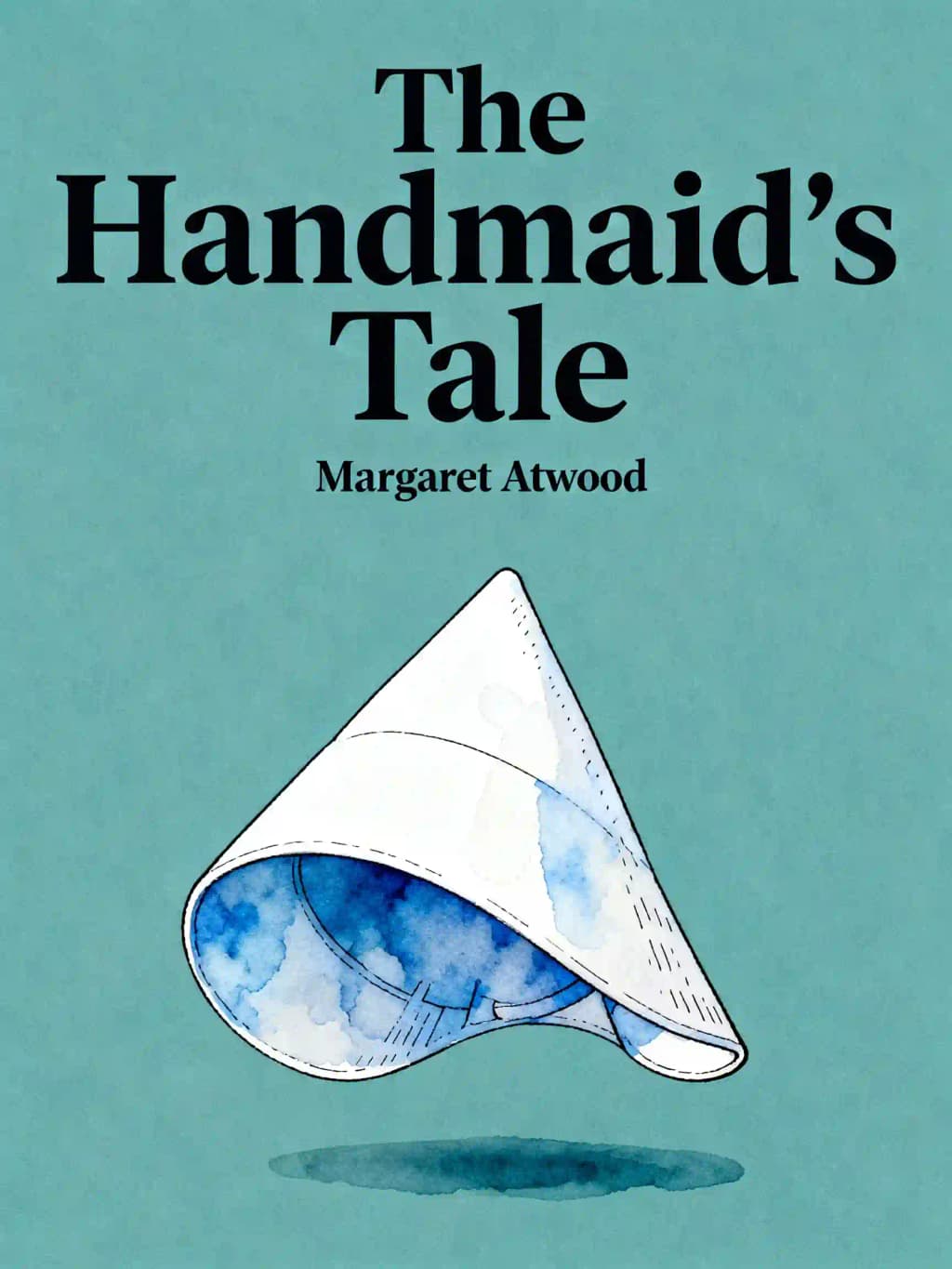
The Handmaid's Tale
The Handmaid's Tale 개요
In Atwood's chilling dystopia, women are reduced to their reproductive function. This 1985 masterpiece - now a cultural symbol with red-robed protesters worldwide - eerily foreshadows modern debates on bodily autonomy. What frightens most? Oprah's must-read feels increasingly, dangerously possible.
The Handmaid's Tale의 핵심 주제
- reproductive rights
- theocratic totalitarianism
- female bodily autonomy
- state-sanctioned violence
- institutionalized misogyny
The Handmaid's Tale의 명언
Better never means better for everyone... It always means worse, for some.
Ignoring isn't the same as ignorance, you have to work at it.
A rat in a maze is free to go anywhere, as long as it stays inside the maze.
Context is all.
The Handmaid's Tale의 등장인물
- OffredThe narrator and a Handmaid in Gilead
- LukeOffred's husband from the time before Gilead
- Commander FredA high-ranking official and Offred's master
- Serena JoyThe Commander's Wife
- JanineA Handmaid who undergoes indoctrination
저자 소개
The Handmaid's Tale의 저자 소개
Margaret Atwood, the internationally acclaimed Canadian novelist and poet, is the visionary author of The Handmaid’s Tale, a groundbreaking dystopian fiction that explores themes of patriarchy, reproductive rights, and authoritarianism. Born in Ottawa in 1939, Atwood studied at the University of Toronto and Harvard, cultivating a literary career that spans poetry, speculative fiction, and feminist discourse.
Her expertise in blending social commentary with speculative narratives has earned her two Booker Prizes—for The Blind Assassin (2000) and The Testaments (2019), the sequel to The Handmaid’s Tale.
Atwood’s other notable works, including Alias Grace (adapted into a 2017 miniseries) and the MaddAddam trilogy, further cement her reputation for interrogating power dynamics and ecological crises. A former professor and lifelong environmental activist, her writing reflects both academic rigor and urgent societal critique. The Handmaid’s Tale has sold over 8 million copies worldwide, been translated into 45 languages, and inspired an Emmy-winning television series that expanded its cultural impact.
The Handmaid's Tale 요약 다운로드
The Handmaid's Tale 요약을 무료 PDF 또는 EPUB으로 받으세요. 인쇄하거나 오프라인에서 언제든 읽을 수 있습니다.
이 책에 대한 FAQ
The Handmaid's Tale by Margaret Atwood is a dystopian novel set in Gilead, a theocratic regime that overthrew the U.S. government. Society is structured around rigid gender roles, with Handmaids like protagonist Offred forced into reproductive servitude. The story explores themes of power, identity, and resistance as Offred navigates oppression while clinging to memories of her past life.
This book is ideal for readers interested in feminist literature, dystopian societies, or political allegories. It resonates with those examining themes of authoritarianism, reproductive rights, and gender dynamics. Fans of Margaret Atwood’s speculative fiction or viewers of the Hulu adaptation will also find it compelling.
Key themes include power dynamics (state control vs. individual agency), gender roles (patriarchal oppression and feminine resilience), and identity (reclaiming autonomy through small acts of rebellion). Atwood critiques social engineering and the dangers of extremist ideologies, linking these to historical and contemporary struggles.
While fictional, the novel draws parallels to real-world regimes, religious extremism, and historical practices like forced childbirth. Atwood described it as "speculative fiction," warning against complacency toward threats to women’s rights and democratic freedoms.
The Handmaids’ red robes symbolize fertility, oppression, and erased individuality. Red reflects their reduced role to reproductive vessels while simultaneously evoking blood, violence, and resistance. The uniform strips them of personal identity, reinforcing Gilead’s control over women’s bodies.
Power is exerted through institutional control (e.g., the Eyes’ surveillance), gendered hierarchies (Commanders vs. Handmaids), and psychological manipulation. Offred subverts power by secretly engaging with Nick and stealing small items, demonstrating how marginalized individuals reclaim agency.
Offred’s fragmented narration reflects her struggle to retain identity under dehumanizing conditions. By recounting memories and naming her experiences, she resists Gilead’s erasure of individuality. Minor characters like Moira and Ofglen also defy societal roles, highlighting resilience.
Memory serves as a tool of resistance and a bridge to lost autonomy. Offred’s recollections of Luke, her daughter, and pre-Gilead life contrast with her present reality, underscoring the regime’s brutality. The “Historical Notes” epilogue critiques how history sanitizes oppression.
Atwood challenges patriarchal systems that reduce women to biological functions, critiquing the rollback of feminist progress. The novel examines complicity in oppression (e.g., Serena Joy) and celebrates solidarity among women, as seen in Mayday resistance networks.
Some critics argue the novel’s portrayal of gender oppression oversimplifies complex power structures. Others debate its dystopian plausibility or critiques of feminism. Despite this, its relevance to ongoing debates about bodily autonomy and authoritarianism keeps it widely studied.
The novel’s themes mirror modern discussions on reproductive rights, rising authoritarianism, and gender-based violence. Its TV adaptation (2017–) extends its cultural impact, reflecting contemporary anxieties about democracy and societal regression.
- “Don’t let the bastards grind you down”: Moira’s mantra embodies resistance against oppression.
- “Nolite te bastardes carborundorum”: Latin graffiti symbolizing clandestine defiance.
- “Better never means better for everyone”: Highlights Gilead’s exclusionary utopia.