1장
Genius Decisions: The Forgotten Art of Leadership
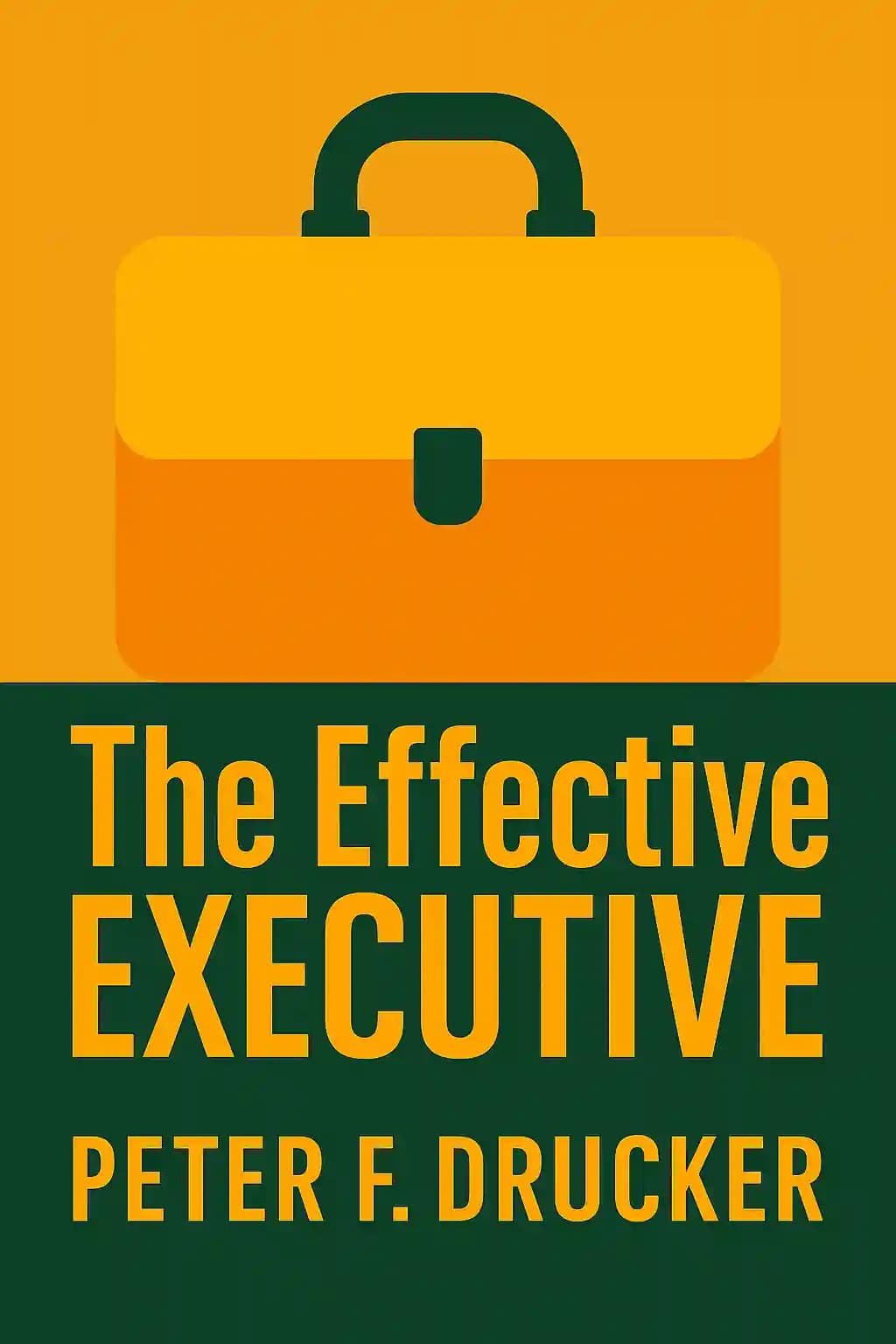
In a world obsessed with leadership charisma, Peter Drucker quietly revolutionized how executives actually succeed. While most chase inspiration, true effectiveness comes from something far more powerful - decision discipline. The man Warren Buffett called "my mentor" distilled leadership into a science when others treated it as mystical art.
Published in 1966 yet consistently ranking among the top business books ever written, "The Effective Executive" reveals why 90% of executive decisions fail not from wrong answers but from asking the wrong questions. Drucker, who advised organizations from General Motors to the Red Cross, discovered that great executives share one trait: they protect their thinking time with religious devotion.
Through practical frameworks that feel shockingly modern despite being over 50 years old, you'll learn to identify what deserves your attention, eliminate time-wasters, and make contribution-focused decisions. This isn't about working harder - it's about the counterintuitive discipline of doing less, but with laser focus on what truly matters. The book that transformed how IBM, Intel and countless Fortune 500 companies operate can do the same for you.
2장
The Essence of Executive Effectiveness
Effectiveness isn't about innate intelligence or working harder - it's about working smarter. Drucker defines an effective executive not by personality or knowledge, but by the ability to get the right things done. This seemingly simple definition contains profound implications for how we approach leadership.
The foundation of effectiveness begins with time management. Executives face constant demands on their attention, yet the effective ones systematically track where their time actually goes. They begin by logging their time use, then ruthlessly eliminate activities that waste this precious resource. This practice reveals a startling truth: most executives have far less discretionary time than they believe.
Once time is reclaimed, effective executives direct it toward contribution rather than mere effort. They ask: "What results are expected of me?" rather than "What tasks should I perform?" This contribution-focused mindset shifts attention from activities to outcomes, from busyness to results. The question becomes not "How can I get all this work done?" but "What unique value can I deliver that justifies my position?"
Strength utilization forms another cornerstone of effectiveness. Rather than fixating on weaknesses, effective executives build organizations around strengths - both their own and others'. They recognize that excellence comes from maximizing strengths, not from eliminating every flaw. This approach transforms how executives view both themselves and their teams, focusing energy on possibilities rather than limitations.
The effective executive also concentrates on a few key areas where superior performance will produce outstanding results. This principle of concentration runs counter to the modern tendency to divide attention across numerous initiatives. By focusing intensely on what matters most, executives avoid the trap of mediocrity that comes from spreading themselves too thin.
3장
The Power of Prioritization
Effectiveness demands ruthless prioritization. In Drucker's framework, this means distinguishing between what must be done and what merely could be done. The effective executive doesn't try to do many things adequately but focuses on doing the vital few exceptionally well.
Consider how this plays out in practice. When faced with a dozen seemingly urgent matters, the effective executive doesn't tackle them sequentially. Instead, they ask: "Which of these, if done exceptionally well, would make the others unnecessary?" This question reveals the leverage points where concentrated effort yields disproportionate results.
Prioritization also requires courage to abandon the past. Effective executives regularly review existing commitments, asking which activities have become unproductive or obsolete. They understand that yesterday's bold initiative may be today's organizational drag. By systematically pruning these activities, they free resources for tomorrow's opportunities.
The courage to prioritize extends to saying "no." Effective executives recognize that each new commitment dilutes focus on existing priorities. They understand that effectiveness isn't measured by the number of tasks undertaken but by the significance of results achieved. This discipline of refusal protects the organization's ability to excel at what truly matters.
Imagine an executive facing requests to join five new committees. The ineffective executive says yes to all, believing this demonstrates commitment. The effective executive carefully evaluates each against existing priorities, agreeing only to those that align with key objectives. This selectivity isn't laziness but strategic discipline that preserves capacity for excellence.
4장
Decision-Making as a Systematic Process
Decision-making lies at the heart of executive effectiveness, yet few approach it systematically. Drucker outlines a structured process that transforms this critical function from art to discipline.
First, effective executives determine whether a situation requires a decision at all. They ask: "Is this a symptom of a deeper problem? Is it part of a pattern? Is action truly necessary?" This initial classification prevents wasted energy on pseudo-problems while identifying opportunities for fundamental solutions.
When a decision is necessary, they clarify the boundary conditions - the specifications any solution must satisfy. These boundaries define what the decision must accomplish and establish criteria for evaluating options. Without such clarity, decisions become exercises in preference rather than judgment.
The effective executive then deliberately develops alternative solutions before making a choice. This practice counters the human tendency to seize on the first plausible option. By forcing consideration of multiple approaches, executives avoid the trap of binary thinking and discover creative possibilities that might otherwise remain hidden.
Implementation planning begins before the decision is final. The effective executive asks: "Who needs to know about this decision? What actions need to be taken? Who will take them? What information will they need?" This forward thinking transforms decisions from mere conclusions into actionable commitments.
Finally, effective executives build feedback mechanisms to test decisions against reality. They establish checkpoints to verify that implementation is proceeding as intended and that the decision is producing expected results. This feedback loop enables timely course corrections and creates organizational learning from both successes and failures.
5장
Meetings: From Time Wasters to Productivity Tools
Meetings consume a significant portion of executive time-studies show leaders spend up to 50% of their workday in meetings-yet few approach them with the systematic rigor they deserve. Drucker's insights transform meetings from necessary evils into powerful productivity tools that can drive organizational success.
The effective executive begins by questioning each meeting's purpose with a critical eye. Is it for information sharing, decision-making, or relationship building? Each type requires different preparation, participation, and structure. For example, a strategic planning session demands different dynamics than a project status update. By clarifying purpose in advance, executives can design meetings that accomplish their specific aims efficiently and avoid the common trap of mixing different objectives in ways that diminish effectiveness.
For information-sharing meetings, effective executives insist on advance distribution of materials, allowing the meeting itself to focus on clarification and implications rather than basic content. This might mean circulating quarterly reports 48 hours before a review meeting or sharing project updates via email prior to team gatherings. They also implement the "read-ahead" protocol, where participants must review materials beforehand or forfeit their participation rights.
Decision meetings receive special attention. Effective executives ensure participants understand the issue and alternatives beforehand, reserving meeting time for deliberation and conclusion. They often employ structured frameworks like the "Options-Pros-Cons" format or the "RAPID" decision-making model to guide discussions. Pre-meeting preparation might include individual position papers or structured analysis templates that participants must complete.
The composition of meetings receives equal attention, following Drucker's principle of "minimum effective size." Effective executives include only those whose presence is necessary for the specific purpose at hand, often using the RACI framework (Responsible, Accountable, Consulted, Informed) to determine attendance. They recognize that each additional participant increases complexity exponentially while often reducing candor proportionally. A meeting with 12 people creates 66 possible two-way interactions, while one with 6 people has only 15.
Time management within meetings is equally rigorous. The effective executive establishes clear start and end times, creating a sense of urgency that focuses discussion. They maintain a visible agenda with time allocations for each item, preventing minor issues from consuming disproportionate attention. Advanced practitioners often use techniques like the "parking lot" for off-topic items and the "two-minute rule" for brief updates to maintain flow and focus.
Perhaps most importantly, effective executives ensure that meetings produce clear outcomes and action commitments. Each decision point concludes with explicit agreement on who will do what by when, creating accountability that transforms discussion into results. They implement systems like "Action Items Logs" or "Decision Registers" to track commitments and follow-through. Post-meeting summaries are distributed within 24 hours, including specific assignments, deadlines, and success metrics.
The most sophisticated practitioners also regularly evaluate meeting effectiveness, conducting periodic audits of meeting time investment and measuring return on that investment through concrete outcomes. They aren't afraid to eliminate recurring meetings that no longer serve their original purpose or to experiment with alternative formats like standing meetings or walking meetings for appropriate contexts.
6장
The Art of Effective Communication
Communication forms the connective tissue of organizational effectiveness, yet executives often underestimate its complexity. Drucker reveals how effective communication requires systematic attention to both process and content.
Effective executives recognize that communication is determined by what the recipient hears, not what the sender says. This perspective shift leads them to begin with the listener's reality rather than their own. They ask: "What does this person already know? What language and concepts are meaningful to them? What are their concerns and priorities?" This empathetic starting point dramatically increases the likelihood of genuine understanding.
The structure of communication receives equal attention. Effective executives organize information to highlight what matters most to the recipient. They begin with conclusions and implications before providing supporting details, allowing listeners to grasp significance before processing specifics.
Clarity takes precedence over eloquence. The effective executive uses simple language and concrete examples, avoiding jargon and abstractions that obscure meaning. They recognize that communication fails when it impresses rather than informs.
Feedback mechanisms ensure communication effectiveness. After important exchanges, effective executives verify understanding by asking recipients to summarize their takeaways and commitments. This practice reveals misunderstandings before they lead to misaligned actions.
Perhaps most importantly, effective executives recognize that communication happens through actions as well as words. They ensure consistency between what they say and what they do, understanding that behavior communicates priorities more powerfully than any memo or speech.
7장
Building on Strengths: The People Dimension
Effective executives build organizations around human strengths rather than trying to eliminate weaknesses. This strength-based approach transforms how they select, develop, and deploy people.
In staffing decisions, effective executives focus first on what a position requires for success rather than on candidates' credentials. They ask: "What must this role accomplish? What strengths are essential for these results?" This clarity helps them match people to positions where their specific strengths can produce outstanding performance.
When developing people, effective executives concentrate on enhancing existing strengths rather than remediating every weakness. They understand that excellence comes from becoming exceptional in areas of natural talent, not from achieving mediocrity across all skills. This approach accelerates development while increasing motivation and confidence.
The effective executive also creates systems that make weaknesses irrelevant. Rather than demanding universal competence, they design roles that leverage strengths while minimizing exposure to areas of limitation. They pair people with complementary abilities, creating teams where individual weaknesses are covered by others' strengths.
Performance standards remain high, but effective executives apply them to results rather than methods. They define what must be accomplished clearly but allow individuals to approach these goals in ways that utilize their unique strengths. This combination of clear expectations and methodological flexibility maximizes both performance and engagement.
Perhaps most importantly, effective executives view people as assets to be developed rather than costs to be controlled. They invest in growth opportunities that expand capabilities and increase contribution potential. This development mindset creates a virtuous cycle where individual growth drives organizational performance.
8장
The Discipline of Knowledge Work
Knowledge work presents unique challenges for effectiveness because its processes and outputs remain largely invisible, unlike traditional manual or manufacturing work where progress is easily observable. Drucker provides a comprehensive framework for making this intangible work both manageable and productive, addressing the specific complexities that knowledge workers face in today's information-driven economy.
Effective executives begin by defining knowledge work in terms of results rather than activities. They ask fundamental questions: "What contribution should this work make? How will success be measured? What specific value will this create for the organization?" This clarity transforms vague responsibilities into concrete deliverables that can be planned and evaluated. For example, rather than simply tasking a team with "improving customer service," they might specify "reducing response time to customer inquiries by 40% while maintaining a 90% satisfaction rating."
The structure of knowledge work receives equal attention through systematic organization. Effective executives break complex intellectual tasks into discrete components with clear dependencies and sequences. A research project, for instance, might be divided into distinct phases: initial data gathering, analysis, hypothesis formation, testing, and conclusions. This structured approach prevents the paralysis that often accompanies ambiguous projects while enabling better resource allocation and progress tracking. They also establish clear milestones and decision points to maintain momentum and ensure alignment with objectives.
Time management takes on special importance in knowledge work, particularly given the cognitive demands of complex problem-solving. Effective executives recognize that intellectual productivity requires uninterrupted concentration - what Cal Newport calls "deep work." They create protected time blocks, often 90-120 minutes long, for intensive thinking and complex problem-solving, shielding themselves and their teams from the fragmentation that destroys knowledge work productivity. This might involve establishing "no meeting" periods, creating quiet spaces for focused work, or implementing communication protocols that minimize interruptions.
Feedback mechanisms help knowledge workers stay on track despite the absence of visible progress markers. Effective executives establish regular checkpoints to review direction and quality, providing course corrections before significant time is invested in unproductive paths. These feedback loops might include peer reviews, stakeholder consultations, or prototype testing. They also implement metrics that capture both quantitative and qualitative aspects of knowledge work, such as innovation indices, quality assessments, and impact measurements.
Perhaps most importantly, effective executives recognize that knowledge work requires continuous learning and adaptation. They build deliberate practices for capturing insights, reflecting on experiences, and incorporating new knowledge. This might include maintaining learning logs, conducting after-action reviews, or establishing communities of practice where knowledge workers can share insights and best practices. This learning discipline ensures that intellectual capital grows rather than stagnates, creating a compound effect of improvement over time.
The management of knowledge work also requires attention to the psychological and motivational aspects of intellectual effort. Effective executives create environments that stimulate creativity and innovation while managing the stress and uncertainty inherent in knowledge work. They recognize that knowledge workers need both autonomy and support, clear direction and freedom to explore, challenging goals and reasonable expectations. This balanced approach helps maintain both productivity and sustainability in knowledge work efforts.
9장
The Executive's Most Precious Resource: Time
Time management forms the foundation of executive effectiveness, yet few approach it with the rigor it deserves. Drucker provides a systematic framework for reclaiming and investing this most precious resource.
Effective executives begin with time diagnosis, recording how they actually spend their hours rather than relying on memory or intention. This practice reveals the gap between perceived and actual time allocation, highlighting opportunities for reclamation and redirection.
The elimination of non-essential activities follows this diagnosis. Effective executives ruthlessly evaluate each time commitment, asking: "What would happen if this were not done at all?" Activities that survive this test face a second question: "Could someone else do this as well or better?" This systematic pruning creates space for truly executive work.
Consolidation maximizes the value of remaining time. Effective executives group similar activities to capture economies of scale and learning. They schedule blocks for correspondence, meetings, and planning rather than allowing these activities to fragment throughout the day, recognizing that context switching carries significant productivity costs.
Delegation receives equal attention as a time management strategy. Effective executives transfer not just tasks but responsibility and authority, creating genuine capacity rather than merely shifting workload. They invest in developing subordinates' capabilities, understanding that effective delegation requires initial time investment to yield long-term returns.
Perhaps most importantly, effective executives reserve large, uninterrupted time blocks for their most important contributions. They recognize that significant thinking and complex problem-solving cannot be accomplished in the margins between meetings but require sustained concentration and mental energy.
10장
From Knowledge to Action
Effectiveness ultimately requires translating knowledge into action. Drucker provides a comprehensive framework for this crucial transition from thinking to doing, emphasizing that the gap between knowing and doing is often where organizations fail to achieve their potential.
Effective executives begin by establishing clear decision criteria before specific choices arise. They ask: "What standards must any acceptable solution meet? What objectives must it accomplish?" This advance clarity prevents decision paralysis and ensures alignment with strategic priorities. For example, a manufacturing executive might establish criteria like maximum investment threshold, minimum ROI expectations, and required safety standards before evaluating specific equipment purchases. These predetermined benchmarks streamline decision-making and maintain consistency across multiple choices.
Implementation planning receives equal attention and requires meticulous detail. Effective executives identify specific action steps, resource requirements, and responsible parties before finalizing decisions. They create detailed timelines, allocate budgets, and establish clear roles and responsibilities. For instance, when launching a new product, they map out everything from production schedules to marketing campaigns, supply chain requirements, and training needs. This forward thinking transforms abstract choices into concrete commitments with clear accountability and measurable milestones.
Feedback mechanisms become crucial guardrails to ensure that actions produce intended results. Effective executives establish regular checkpoints to verify progress and impact, creating opportunities for course correction before small deviations become major failures. These might include weekly status meetings, monthly performance metrics, or quarterly reviews. They also implement early warning systems to identify potential issues - for example, tracking leading indicators like customer complaints or employee turnover that might signal emerging problems.
The effective executive also builds systematic reflection into the action cycle. After significant initiatives, they conduct thorough reviews to capture learning: What worked? What didn't? What should we do differently next time? These after-action reviews go beyond simple success/failure analysis to examine process effectiveness, team dynamics, and unexpected challenges. For instance, a successful project might still reveal communication bottlenecks or resource allocation inefficiencies that could be improved in future initiatives. This practice creates valuable organizational knowledge that improves future effectiveness and prevents repeated mistakes.
Perhaps most importantly, effective executives recognize that action requires courage and calculated risk-taking. They understand that perfect information is rarely available and that waiting for certainty often means missing opportunities. They develop the judgment to act decisively with incomplete information, balancing the risks of premature action against the costs of delayed response. This might mean launching a product before all features are perfect, or entering a new market before all variables are known. They mitigate these risks through careful planning and monitoring, but accept that some uncertainty is inevitable in meaningful action.
The transition from knowledge to action also requires effective change management skills. Executives must communicate their vision clearly, build buy-in among stakeholders, and overcome organizational inertia. They recognize that even the best-planned initiatives can fail without proper attention to the human elements of change. This includes addressing resistance, providing adequate training and support, and celebrating early wins to maintain momentum.
Through this comprehensive approach to action, effective executives create a culture of execution that turns strategic thinking into tangible results. They understand that success lies not just in making good decisions, but in ensuring those decisions lead to meaningful change and measurable outcomes.
11장
The Mindset of Effectiveness: Continuous Learning
Underlying all specific practices of effectiveness is a fundamental mindset of continuous learning and improvement. This orientation transforms effectiveness from a static achievement into an ongoing journey.
Effective executives approach their work with genuine curiosity, regularly questioning assumptions and seeking new perspectives. They ask: "What am I missing? What could we do differently? What can we learn from others?" This questioning stance prevents complacency and opens possibilities for innovation.
Feedback becomes a valued resource rather than a threat. Effective executives actively seek input on their performance and decisions, understanding that external perspectives reveal blind spots and improvement opportunities. They create psychological safety that encourages honest feedback from all levels of the organization.
Mistakes and failures become learning opportunities rather than sources of blame. Effective executives analyze what went wrong, extract insights, and apply these lessons to future decisions. This approach transforms setbacks from career threats into valuable experiences that improve judgment.
The effective executive also invests in deliberate skill development. They identify capabilities needed for future challenges and create systematic plans to acquire them, whether through formal education, mentoring relationships, or stretch assignments. This forward-looking development ensures they remain effective as demands evolve.
Perhaps most importantly, effective executives maintain intellectual humility. They recognize the limits of their knowledge and the fallibility of their judgment, remaining open to new evidence and willing to revise their views. This humility, paradoxically, makes them more effective by expanding their capacity to learn and adapt.