1장
The Dangerous Path of Value Neutrality
C.S. Lewis's "The Abolition of Man" stands as one of the most prescient warnings about modern education and moral relativism ever written. Though published in 1943, this slim volume has become increasingly relevant in our technological age, with figures from Jordan Peterson to Neil Postman citing it as foundational to their thinking. The book emerged from Lewis's Rhodes Memorial Lectures at Oxford and represents his most concentrated philosophical work outside his religious writings. What makes this book particularly fascinating is how it transcends religious boundaries-despite Lewis's Christian faith, he deliberately grounds his argument in cross-cultural ethical traditions rather than theology. The work has been ranked among the top 100 non-fiction books of the 20th century by National Review and continues to influence fields from education to bioethics, offering a profound critique of what happens when societies attempt to create values from nothing while dismantling traditional moral frameworks.
2장
The Waterfall and the Schoolboys
Lewis begins his critique by examining a seemingly innocuous English textbook he calls "The Green Book," written by two schoolmasters he names Gaius and Titius. The authors analyze a tourist's description of a waterfall as "sublime," claiming this statement reveals nothing about the waterfall but merely the tourist's feelings. While this might appear as harmless linguistic analysis, Lewis exposes the profound philosophical assumptions hidden within this casual debunking - assumptions that would fundamentally reshape how students understand value and meaning in their world.
When teachers tell students that value statements are "merely subjective" or "just feelings," they implicitly communicate that values themselves lack objective reality. The subtle word "merely" does tremendous philosophical work, suggesting emotions are less important than facts. This approach doesn't just analyze language - it shapes young minds to believe all value judgments are unimportant personal reactions rather than responses to real qualities in the world. The consequences of this teaching extend far beyond the classroom, affecting how students approach art, literature, relationships, and moral decisions throughout their lives.
Consider how this plays out in the classroom. When students encounter great literature expressing profound emotions - Shakespeare's sonnets, Wordsworth's nature poetry, or ancient epic tales - teachers following this approach focus only on factual inaccuracies rather than helping students distinguish between authentic and inauthentic emotional responses. A travel advertisement appealing to historical associations becomes merely manipulative rather than potentially connecting to genuine human experiences. A passage about horses becomes an opportunity to mock "sentimental" reactions rather than exploring our rich traditions of human-animal relationships. Even discussions about justice or courage are reduced to mere psychological states rather than engagement with real moral qualities.
What's particularly insidious is how this approach presents itself as neutral while actually advancing a radical philosophical position. The schoolmasters likely don't intend to promote philosophical subjectivism, yet their casual dismissal of value statements as "merely feelings" inevitably plants this worldview in students' minds. This seemingly innocent pedagogical choice carries profound implications: it suggests that beauty, goodness, and truth are not objective features of reality but merely projections of human psychology. Students learn to dissect texts with clinical precision while remaining blind to the deeper meanings and values these works embody.
The long-term effects of this educational approach are far-reaching. Students become skilled at analyzing facts and detecting logical fallacies but develop no framework for determining what matters or why anything should be valued at all. They emerge from their education well-versed in critical thinking but potentially unable to recognize or articulate why something might be truly worthy of admiration, respect, or love. This creates a generation of what Lewis calls "men without chests" - individuals whose intellectual capabilities are divorced from their capacity for appropriate emotional and moral responses to the world around them.
3장
The Tao: Universal Moral Law Across Cultures
At the heart of Lewis's argument stands what he calls "the Tao" - the collective wisdom of humanity's moral traditions across cultures and throughout history. This isn't merely a set of arbitrary rules but a coherent vision of reality that recognizes objective values requiring appropriate responses. Whether expressed as Aristotle's virtues, Confucian principles, Hindu Rta, or Biblical commandments, these traditions share the fundamental conviction that certain attitudes and actions genuinely align with reality while others do not. From ancient Egyptian teachings about justice to Native American concepts of harmony with nature, we find striking similarities in core moral principles despite vast geographical and temporal distances.
The Tao manifests in remarkably consistent ways across civilizations. All major cultures condemn treachery against kin, celebrate self-sacrifice for the greater good, and uphold some version of the Golden Rule. They share common ground on fundamental virtues like courage, honesty, and compassion. Even societies that developed in complete isolation from each other arrived at similar conclusions about what constitutes honorable behavior - suggesting these aren't merely cultural constructs but recognition of underlying moral realities.
Consider how differently education functions depending on whether one stands within or outside this traditional framework. For those within the Tao, education trains appropriate emotional responses - teaching students to admire what is genuinely admirable, to feel disgust toward what truly deserves contempt. The goal isn't to create emotions artificially but to align natural human responses with objective reality. We teach children to fear genuine dangers, to admire true courage, to feel appropriate gratitude. This approach recognizes that proper moral development requires both intellectual understanding and emotional attunement.
Those who reject the Tao face an impossible educational dilemma. If values are merely subjective feelings, teachers must either eliminate all value judgments (creating purely rational beings with no emotional responses) or artificially produce whatever emotions society currently deems useful. Both approaches treat humans as raw material to be manipulated rather than as beings whose nature includes both reason and appropriate emotional responses. Modern educational systems often fall into this trap, attempting to instill "values" while simultaneously denying their objective basis.
Why does this matter? Because without trained emotions, intellect alone cannot withstand our strongest impulses. Reason can provide arguments for both virtue and vice - it needs emotional commitment to goodness to function properly. When we debunk traditional values without replacement, we don't create purely rational beings; we create "men without chests" - beings with sophisticated minds and powerful appetites but lacking the essential middle element that makes humans human: trained moral sentiments that connect intellect to action. This explains why societies that abandon traditional moral education often produce individuals who are technically brilliant but morally adrift, capable of justifying any action through clever argumentation while lacking the emotional foundation to distinguish right from wrong.
The implications extend beyond individual development to the very fabric of civilization. Societies that maintain connection to the Tao tend to produce citizens capable of both moral reasoning and moral feeling, while those that sever this connection risk creating a population susceptible to manipulation through pure logic or raw emotion, without the stabilizing influence of trained moral intuition.
4장
The Innovator's Dilemma: Creating Values from Nothing
Lewis next examines what happens when modern "Innovators" attempt to create new values after debunking traditional ones. The results prove philosophically incoherent. These reformers inevitably smuggle fragments of the very tradition they reject, selecting pieces of the Tao they personally prefer while lacking any consistent basis for their selection - much like someone trying to saw off the branch they're sitting on.
The philosophical challenge becomes clear through concrete examples. Take the case of sacrificing oneself for a worthy cause - a value celebrated across cultures. Why should anyone do this? The Innovator might appeal to biological instinct, but instincts frequently conflict. Self-preservation battles with altruism, tribal loyalty conflicts with universal compassion, and individual desires clash with collective needs. What determines which instinct should prevail? Natural selection offers no guidance here - it has produced both selfish and cooperative behaviors.
Or consider the utilitarian argument that some should die so others may live. This merely shifts the question: why should anyone value the survival of the group over themselves? The Innovator might cite evolutionary advantages of group cooperation, but this describes what is, not what ought to be. Even if group survival proved historically advantageous, this fails to establish why any individual should sacrifice for the collective - especially if they've rejected traditional moral frameworks.
The philosophical problem runs deeper: you cannot derive "ought" statements from mere "is" statements - what philosophers call the "is-ought problem." Science can tell us what exists but not what matters. Consider how we might justify concern for future generations. Appeals to instinct fail - many species show no concern for descendants beyond immediate offspring. Appeals to progress beg the question - why should we value progress? Each attempt to ground values outside the Tao ultimately borrows from it, like a child denying their parent's authority while living on their inheritance.
Modern examples abound. Environmental activists argue we must protect nature for future generations - but why? Tech optimists champion progress and innovation - but what makes these worthy goals? Social reformers demand equality and justice - but on what basis? What's particularly revealing is how the Innovators remain dogmatic about their own values while skeptically debunking others'. They insist we should care about humanity's future, equality, or freedom, yet can provide no rational basis for these commitments outside the very tradition they reject.
The result is philosophical incoherence - a position that cannot sustain itself without borrowing from what it claims to have outgrown. Like someone trying to construct a building while simultaneously demolishing its foundation, modern attempts to create values ex nihilo invariably rely on fragments of the very moral tradition they seek to replace.
5장
The Conquest That Abolishes the Conqueror
The most profound section of Lewis's argument examines what "Man's conquest of Nature" actually means. Each new power over Nature represents power exercised by some humans over others using Nature as the instrument. When we "conquer" rivers through hydroelectric dams, the average person doesn't gain power-rather, those who control the electricity gain power over their fellow humans.
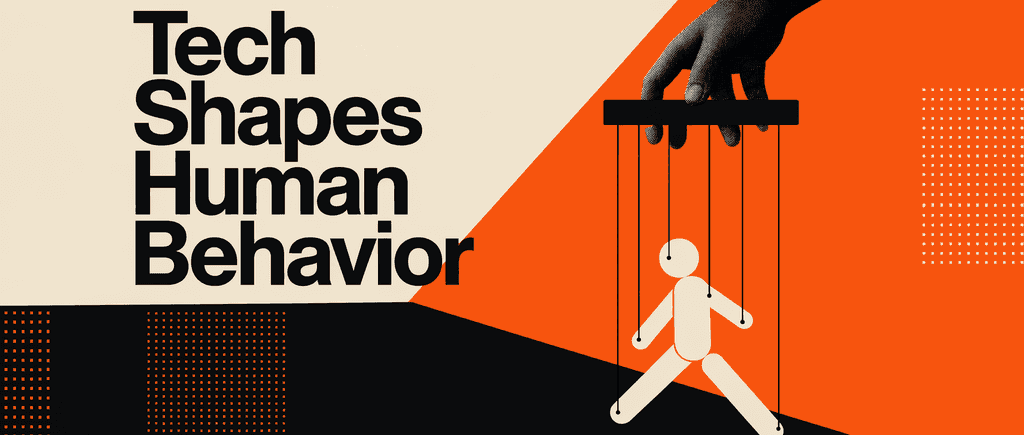
This pattern reaches its logical conclusion when humans gain power over human nature itself through genetic engineering, psychological conditioning, and reproductive technologies. This represents something fundamentally different from all previous forms of power. Earlier generations could only influence posterity indirectly through education and example. The final generation of Conditioners will determine what future humanity becomes-its desires, values, and very nature.
The profound irony is that these Conditioners, having stepped outside traditional moral frameworks, have no basis for their choices. Having reduced all values to human constructions, they cannot appeal to any standard beyond their own arbitrary preferences. They are not "bad men" in the traditional sense but rather not men at all-they have sacrificed their share in traditional humanity to decide what "Humanity" shall henceforth mean.
What will guide their decisions? Having debunked objective values, only subjective impulse remains-the simple "I want" that cannot be analyzed further. The Conditioners must act on emotional impulse with no rational ground for preferring one impulse to another. Thus, Man's conquest of Nature ultimately becomes Nature's conquest of Man-blind natural impulses ruling the Conditioners who rule humanity.
This represents the abolition of Man in two senses: the elimination of the traditional human defined by participation in objective values, and the reduction of humanity to raw material for manipulation. The process creates not the anticipated superhuman but something less than human-beings shaped by the arbitrary whims of planners who themselves are ruled by irrational impulses.
6장
Nature, Magic, and the False Promise of Power
Lewis makes a crucial distinction between Nature and the human essence. Nature represents the quantifiable, measurable world of objects and efficient causes, while the human realm encompasses quality, consciousness, and final causes. When humans analyze and attempt to dominate something, we effectively reduce it to "Nature" by stripping away its inherent meaning and suspending value judgments about it. This process of reduction transforms complex realities into manipulatable objects - stars become mere points of light and mathematical equations, living creatures become collections of cells and chemical reactions, and human emotions become neurological patterns.
Each conquest paradoxically increases Nature's domain. Stars become "Nature" only when we measure and categorize them, reducing their mystery and wonder to data points. Human souls become "Nature" when we psychoanalyze them, transforming the richness of human experience into clinical diagnoses and behavioral patterns. This reductive approach has enabled tremendous scientific progress but at a significant philosophical cost.
The fatal step occurs when we apply this same reductive approach to ourselves - what Lewis calls the "self-reduction." This process is inherently self-defeating because the being who might gain power and the being sacrificed to gain that power are one and the same. It's what Lewis terms a "magician's bargain" - giving up our souls for power, only to discover that the power we gain belongs not to us but to the appetites and impulses to which we've surrendered ourselves. We become slaves to the very forces we sought to master.
Lewis draws a compelling parallel between modern applied science and ancient magic that goes beyond superficial similarities. Both share the same fundamental approach: rather than attempting to conform the soul to reality through knowledge and virtue (the path of ancient wisdom), both seek to subdue reality to human wishes through technique and manipulation. Both willingly transgress traditional moral and philosophical boundaries in their pursuit of power over nature and human limitations.
Consider Francis Bacon, often celebrated as science's great champion and pioneer. His language notably mirrors that of Marlowe's Doctor Faustus - not pursuing knowledge for its own sake but explicitly for power: "Knowledge is power." This parallel doesn't discredit science itself, but suggests that modern science may have been born "in an unhealthy neighborhood" - its triumphs purchased at the cost of a deeper wisdom about humanity's proper relationship with nature.
What we need instead, Lewis argues, is a regenerate science that explains phenomena without explaining away their deeper significance - a science that remembers the whole while studying the parts. Such an approach would maintain what philosopher Martin Buber called the "Thou-situation" - relating to reality as something worthy of respect rather than mere manipulation. This regenerate science would achieve the delicate balance of conquering Nature without being conquered by her, maintaining human dignity while advancing human knowledge.
7장
The Tao as Human Heritage: Evidence Across Cultures
To demonstrate that the Tao isn't merely Western or Christian but represents humanity's collective moral wisdom, Lewis provides an extensive appendix of illustrations from diverse traditions. These examples reveal striking convergence on fundamental moral principles across civilizations separated by time, geography, and religious beliefs.
The Law of General Beneficence appears universally-from Egyptian "I have not slain men" to Jewish "Do not murder" to Norse warnings against murderers. Positive duties of beneficence appear equally widespread: Roman recognition that "Nature urges that a man should wish human society to exist," Chinese emphasis on "enriching and instructing the people," culminating in various formulations of the Golden Rule across traditions.
Special duties to particular people based on relationships appear consistently-Confucian emphasis on proper behavior to parents and siblings as "the trunk of goodness," Norse warnings against fraternal conflict, and Egyptian counsel to "love thy wife studiously." These special obligations balance with broader civic duties in remarkably similar ways across cultures.
Reverence for parents, elders, and ancestors appears nearly universal-from Hindu teaching that honoring parents is "the first duty" to Jewish commandments to Babylonian warnings. Equally widespread are duties toward children and future generations-Hindu reverence for children, Greek and Roman emphasis on education, and Native American laments about harm to the young.
Justice, honesty, good faith, mercy, and magnanimity appear with remarkable consistency. Sexual fidelity, prohibitions against theft, impartiality in judgment, truthfulness, care for the vulnerable, courage in defending others, and preference for dignity over mere survival-these principles appear across traditions from Australian Aboriginal customs to Chinese philosophy to Norse mythology.
This convergence doesn't prove the Tao's validity through common consent-Lewis acknowledges its truth cannot be deduced. Rather, these illustrations demonstrate that the moral tradition he defends isn't narrowly Western or Christian but represents humanity's shared ethical heritage across diverse cultures and times.
8장
The Educational Imperative: Cultivating Human Hearts
Lewis concludes that modern education faces a fundamental choice that will profoundly shape future generations. We can continue down the current path of debunking traditional values while maintaining a facade of neutrality - creating students who are technically proficient but morally empty. Or we can embrace the historical understanding that education has always involved not just information but formation - the careful cultivation of appropriate emotional and moral responses to reality through exposure to virtue, beauty, and truth.
The stakes in this educational choice couldn't be higher. Without proper moral formation, we create beings with powerful intellects and strong appetites but lacking the essential middle element - the trained heart that connects knowledge to wisdom and desire to virtue. These "men without chests" cannot sustain civilization because they lack the very qualities civilization requires: the capacity to recognize genuine value, respond to noble ideals, and act with moral courage. They become like sophisticated machines, capable of complex calculations but unable to make sound moral judgments or appreciate what makes life truly worthwhile.
This educational imperative isn't about imposing specific religious beliefs or rigid moral codes. Rather, it's about recognizing that all education implicitly shapes values, whether we acknowledge this or not. The choice isn't between value-neutral education and value-laden education - it's between education that honestly acknowledges its moral dimensions and education that unconsciously smuggles in values while pretending to remain objective. The authors of The Green Book weren't truly neutral; they actively undermined traditional values while implicitly promoting their own philosophical positions about the nature of reality and human meaning.
The path forward requires recovering the wisdom of the Tao - not merely as one tradition among many but as humanity's shared moral inheritance across cultures and times. This doesn't mean blindly accepting every historical expression of moral truth, but rather recognizing that certain fundamental principles - like courage, justice, honesty, and compassion - transcend cultural differences and form the bedrock of human flourishing. Without this foundational wisdom, our increasing technological power becomes increasingly dangerous - we gain unprecedented abilities to reshape humanity while losing the essential wisdom needed to guide these powers responsibly.
Modern education must recognize that training the heart - developing emotional intelligence, moral sensitivity, and the capacity for ethical judgment - is just as crucial as training the mind. This involves exposing students to great literature, art, and music that embody timeless values, encouraging them to wrestle with moral dilemmas, and helping them develop the character necessary to face life's challenges with wisdom and integrity. Without this vital dimension, education becomes mere technical training, producing clever but hollow individuals incapable of sustaining the moral fabric of society.
9장
Beyond Debunking: Recovering Wisdom in a Technological Age
Lewis's warning grows more relevant in our age of genetic engineering, artificial intelligence, and unprecedented technological power. We face critical decisions about human genetic modification, AI consciousness, and biotechnology that previous generations could hardly imagine. The fundamental question remains: What will guide these powers? If we continue treating values as mere subjective preferences while developing technologies that can reshape human nature itself, we risk creating precisely the nightmare Lewis envisioned - a humanity shaped by arbitrary whims rather than wisdom. Consider genetic engineering: without objective moral guidelines, who decides which traits to enhance or suppress? The danger lies not in the technology itself but in wielding it without moral compass.
The alternative isn't rejecting scientific progress but recognizing its proper limits and relationship to human values. Science can tell us what we can do but not what we should do. For that, we need the wisdom embodied in the Tao - the recognition that certain responses to reality are objectively appropriate while others are not. This universal moral framework appears across cultures and times, from Confucian ethics to Aristotelian virtue to Indigenous wisdom traditions. It suggests that concepts like courage, justice, and compassion aren't mere cultural constructs but reflect genuine moral truths.
This recovery doesn't require returning to premodern science but developing what Lewis calls a "regenerate science" - one that explains without explaining away, that remembers the whole while studying the parts. Such a science would maintain reverence for what it studies rather than reducing everything to objects for manipulation. It would recognize, for instance, that understanding the neurological basis of love doesn't invalidate the experience of love itself, just as knowing how a symphony creates sound waves doesn't diminish its beauty.
The path begins with education that acknowledges its moral dimensions - teaching students not just to analyze but to appreciate, not just to critique but to revere what deserves reverence. This means recovering the ancient understanding that education forms character as well as intellect, that it cultivates appropriate emotional responses to reality. Students should learn not only how to dissect a poem but to be moved by it, not only to understand historical events but to feel appropriate moral outrage or admiration.
Without this recovery, our increasing power becomes increasingly dangerous. We risk becoming, in Lewis's haunting phrase, "men without chests" - beings with sophisticated minds and powerful technologies but lacking the essential human quality of trained moral sentiments. The abolition of man occurs not through external conquest but through our own hands as we systematically dismantle the very tradition that makes us human. This is evident in modern tendencies to reduce all questions to technical problems, to treat emotional responses as mere chemical reactions, and to view traditional wisdom as primitive superstition rather than accumulated human insight.