1장
The Bread That Changed Everything
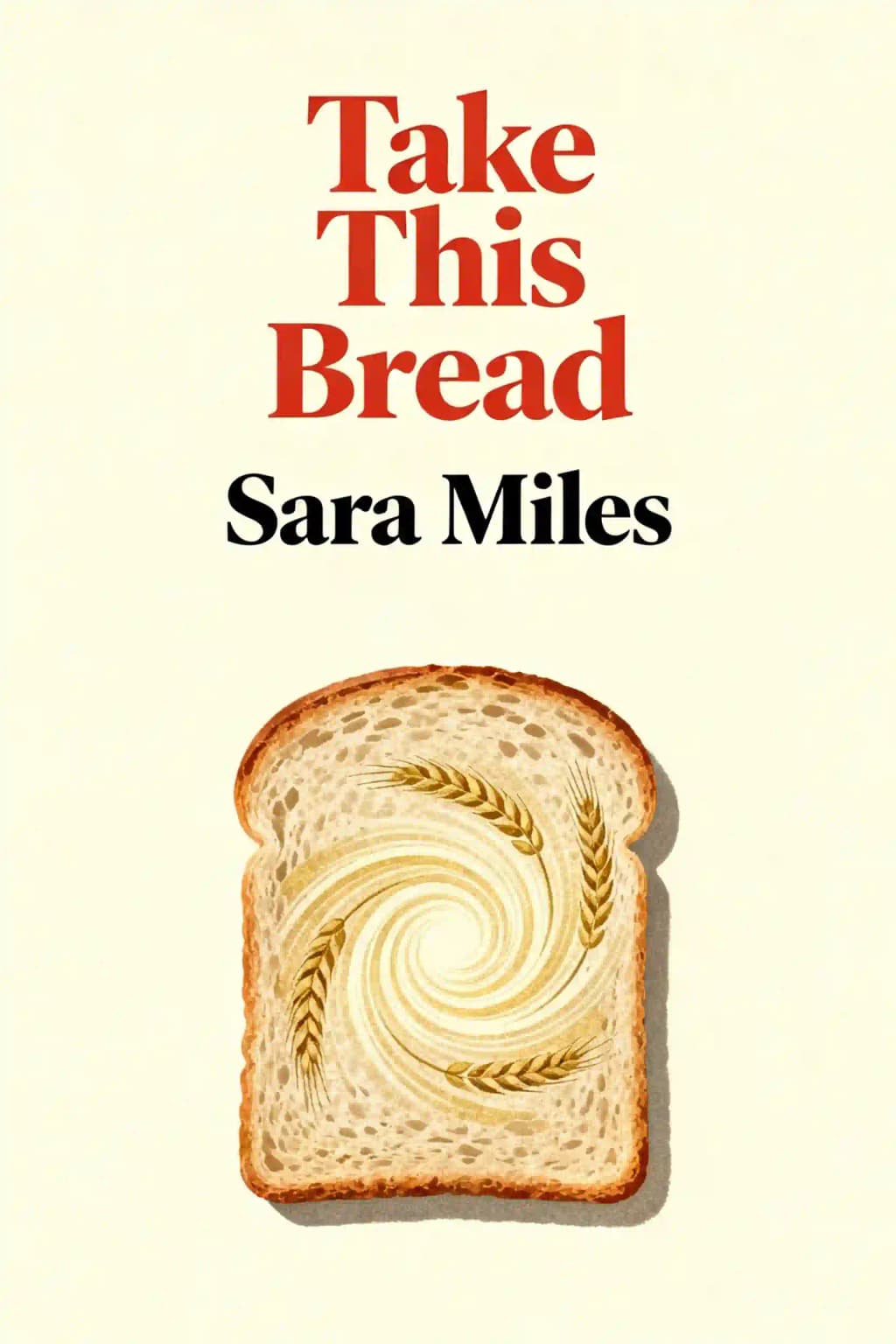
When Sara Miles walked into St. Gregory's Episcopal Church one cloudy morning at age forty-six, she had no intention of becoming a Christian. A thoroughly secular journalist who had covered wars in Central America, she was simply curious about the building. Yet when she impulsively joined the communion line and received a piece of bread and sip of wine, something extraordinary happened. This moment of unexpected grace launched her into a radical spiritual journey that would transform her understanding of faith, community, and purpose. Today, Miles' memoir "Take This Bread" stands as one of the most compelling modern conversion narratives, praised by Anne Lamott as "the most amazing book." Even the notoriously skeptical Christopher Hitchens found himself moved by her story. The book's power comes from its unflinching honesty about how faith manifests in the messiest parts of human experience - not in abstract theology but in the physical acts of feeding and being fed.
2장
Hunger for Meaning: An Atheist's Upbringing
Sara Miles descended from missionaries on both sides of her family, creating a complex religious legacy that would later influence her spiritual journey. Her paternal grandparents established medical missions in Burma, working tirelessly to combine healthcare with evangelical outreach, while her maternal grandparents taught at mission schools in Japan and later became prominent civil rights activists in Baltimore, merging their faith with social justice. Yet her parents, Matthew and Betty, made a decisive break from this religious heritage, rejecting not just missionary work but organized religion entirely.
In Greenwich Village, Sara and her siblings experienced an upbringing steeped in intellectual curiosity and progressive values, but deliberately stripped of religious context. Sundays in their household were marked by secular rituals: the methodical unfolding of the New York Times, the transcendent strains of Vivaldi filling their apartment, and the shared ceremony of preparing and eating artichokes. These weekly traditions created their own form of sacred time, though her parents would have rejected such terminology.
"My mother nursed a fifty-year grudge against Christianity," Miles writes, revealing the depth of her family's antipathy toward organized religion. Her parents actively steered their children toward direct, sensual engagement with the world - encouraging them to travel widely, experiment freely, and embrace physical labor. They promoted a philosophy that celebrated immediate, tangible experience over what they saw as the abstract promises of faith. In their sophisticated Manhattan circles, religious observance was seen as somewhat provincial - something practiced by Italian Catholics in the neighborhood or Orthodox Jews in Brooklyn. Their secular humanism was the norm among their intellectual peers, who replaced religious ritual with art galleries, political activism, and psychoanalysis.
This secular upbringing profoundly shaped Miles' worldview and sensibilities. She developed a natural skepticism toward institutional authority and dogma, while simultaneously cultivating an almost mystical appreciation for the physical world. Food became particularly significant in her understanding of human connection and community - she learned to see shared meals as moments of authentic communion. Without conscious awareness, these early experiences were preparing her for a radical encounter with Christianity's most tactile and mysterious sacrament - the Eucharist, where ordinary bread and wine become vehicles of divine presence.
What makes Miles' childhood particularly fascinating is how it inadvertently laid the groundwork for her later religious conversion. Her parents' emphasis on social justice, intellectual integrity, and human dignity - though intended as alternatives to religious faith - actually provided her with a moral framework that would later complement and deepen her Christian beliefs. Their insistence on direct experience and authentic engagement with the world would eventually lead her not away from faith, as they might have feared, but toward it through an unexpected path. The very qualities they cultivated in opposition to religion - skepticism, sensuality, and a hunger for meaningful connection - would become integral to her unique expression of Christian faith.
3장
Learning Through the Body: Kitchens and War Zones
At eighteen, Miles unwittingly began what would become a spiritual pilgrimage when she traveled to Mexico City to attend Friends World College - a radical experiment founded by Quakers and communists with no formal courses or campus. Living in Cuernavaca, she worked at a human rights organization serving South American exiles, where she was introduced to Marx and liberation theology. The experience transformed her understanding of politics from abstract theory to visceral reality when she witnessed the Corpus Christi massacre, where government-backed thugs killed student protesters.
"Politics suddenly became physical rather than theoretical," she writes. "I cared passionately about distinguishing between official stories and physical reality." This desire to experience truth through her body rather than just her mind would become a defining characteristic of her approach to both journalism and, eventually, faith.
Returning to America, Miles worked a series of jobs before landing in restaurant kitchens - an experience that would profoundly shape her understanding of community, politics, and eventually belief. Under the tutelage of Robert, a Black chef in his fifties, she learned not just cooking techniques but a philosophy of responsibility: "Take the weight," he'd insist - never shifting blame when things went wrong, claiming mistakes, making them right, and carrying on.
The kitchen taught Miles to become invisible in uniform, find solidarity through shared physical labor, and understand how food creates human community. As a bishop would later tell her, "There's a hunger beyond food that's expressed in food, and that's why feeding is always a kind of miracle."
Her restaurant work ended after a serious burn injury, launching her into a decade covering revolutionary wars across Latin America. In Nicaragua, El Salvador, and the Philippines, she witnessed both horrific violence and profound human connection. What surprised her most was the joy she discovered amid suffering - the deep intimacy of sharing life-and-death experiences with strangers. "In war, looking at different people face-to-face, I felt a 'we,'" she writes.
Throughout these war zones, despite poverty and danger, strangers fed her freely - a priest offering cookies in El Salvador, a peasant woman giving fish in the Philippines. These acts of sharing amid scarcity taught her what she would later recognize as Christianity: the profound communion possible between people through their common mortal bodies. While she didn't yet have religious language for these experiences, they were preparing her heart for the transformation to come.
4장
The Moment of Transformation: First Communion
One cloudy morning in San Francisco, years after her war correspondence had ended, Miles walked into St. Gregory's Episcopal Church out of mere curiosity. The rotunda was flooded with morning light, centered around a table beneath a neo-Byzantine mural of saints with gold halos. As the service began, a woman announced, "Jesus invites everyone to his table," and Miles found herself moving forward with others to receive communion.
When someone placed fresh bread in her hands saying "the body of Christ" and handed her wine saying "the blood of Christ," something extraordinary happened: "Jesus happened to me," she writes. "I can't explain my first communion. I was in tears and physically unbalanced, as if knocked over from behind. The disconnect between what I thought was happening (eating bread), what someone said was happening (this was Christ's body), and what I knew was happening (God was real and in my mouth) short-circuited my ability to do anything but cry."
All the way home, she scrambled for explanations. Maybe she was hypersuggestible, experiencing a contact high from believers. Perhaps her tears were just pent-up sadness from a hard decade. Yet that impossible word, Jesus, lodged in her like a crumb. "I repeated it, not understanding what it meant or what to do with it. But it was realer than any thought or emotion - as real as the taste of bread and wine. The word was in my body now, like a radioactive pellet that would outlive my flesh."
Miles was drawn to St. Gregory's immediacy - communion unmediated by altar rails, the raw physicality of that mystical meal, the invitation to participate without requirements. Unlike other churches she visited with their formal services and "dead wafer disks," St. Gregory's offered a direct experience of God through food. She sensed that any church would be disappointing, but here she could work through her questions with others genuinely seeking God.
Her conversion wasn't a greeting-card moment of sudden certainty. It was socially awkward, politically uncomfortable, and profoundly confusing. She wasn't struck with sudden conviction about "truth" - she was crabbier, lonelier, and more destabilized. What grounded her were those pieces of bread. She was developing a theology starting with what she had taken in her mouth - the materiality of Christianity, the incarnation in its grungiest details, the promise that words and flesh were deeply connected.
5장
The Radical Invitation: Feed My Sheep
Standing at the altar week after week as a deacon, flooded with hunger and gratitude, Miles began seeing a picture that looked like Sunday communion but was bigger, brighter, noisier, with more kids and fewer white people, centered on food. She realized San Francisco was food-obsessed, with celebrity chefs and boutique markets selling artisanal everything, yet access varied drastically by neighborhood. In the Mission where she lived, immigrants ate poor people's food - nacatamales, pupusas, dollar burgers - while hunger lurked beneath the surface.
When a Food Bank flyer mentioned 90,000 hungry San Franciscans, Miles realized what she was supposed to do: Feed my sheep. She called the Food Bank and introduced herself: "I'm Sara Miles, from St. Gregory's Church. I'd like to talk with someone about starting a food pantry."
The resistance was immediate. The church's outreach committee claimed burnout and inability to raise funds. Staff objections ranged from "Over my dead body" to fears about attracting dangerous people, security concerns, and potential damage to the church's beautiful space. Some congregants worried about messes, volunteer burnout, and questioned why they couldn't just support existing charities.
Miles persisted, writing to the congregation that this wasn't "outreach" but gratitude - acknowledging our own hunger while sharing God's abundance. She was admittedly manipulative, knowing it would be difficult for Christians to argue against feeding the poor. Yet beneath her strategic planning was a genuine belief that the pantry, like communion itself, would transform everything.
Thirty-five people showed up on opening day. They laid out altar cloths on folding tables stacked with produce, cereal, noodles and bread. "It smells good in here," Donald said, "Like a grocery store." The Sunday after the pantry opened, Miles was baptized, despite her fears and resistance. When Donald asked, "Will you continue in the breaking of bread?" she answered, "I will, with God's help."
The pantry quickly grew from thirty-five people to nearly two hundred. They set up tables around the altar, creating a farmers' market with piles of vegetables and bread spilling under icons and silver crosses. The pantry wasn't hushed and pious; it was loud and holy. As prostitutes and disabled people, widows and foreigners, thieves and children gathered, it took on an almost biblical atmosphere.
6장
The Body of Christ: A Community of Misfits
The pantry was drawing Miles deeper into community, helping her understand God through strangers. People came for food but wanted more. They'd ask her to pray with them - a grieving mother, a lonely immigrant, a sick man. Though awkward at first, she learned to sit with them, listen, and pray aloud without knowing where the words came from.
Their volunteers were mostly "pantry deacons" - visitors who came for groceries then stayed to help. They were misfits: jobless, homeless, mentally ill, poor. Miles saw herself in them - she too was a misfit who yearned to be useful. Her favorites had restaurant backgrounds: Lawrence, a former maitre d'; Dave, an unemployed cook; plus Homer, Phil the speed freak, and Starlight Wanderer with her psychedelic drawings.
The pantry resembled both church and busy restaurant kitchen, with political dimensions like the brigades she'd organized in Nicaragua. People could envision becoming part of this handmade, activist community. They were all converting: homeless guys, women with missing teeth, a transgender person, teenagers - all transformed by rubbing against one another, like rejected stones becoming cornerstones of something God was building.
As the pantry grew to serving more than two hundred people weekly, Miles discovered the Food Bank - a massive warehouse stocked with leftover, discarded food donated by grocers and wholesalers. The Food Bank operated as a scavenger in America's agricultural system, diverting excess that would destroy its own pricing if released to market. California's bounty meant they received tons of produce weekly: oranges, lettuce, grapes, onions, and more.
What Miles loved most was the pantry's unofficial nature - the sense they were being propelled forward by the same force described in Matthew's Gospel, where Jesus tells his anxious, doubting followers: "You give them something to eat." For their one-year anniversary, she organized a special Eucharist at the pantry. Despite logistics problems, the service transformed as everyone gathered - Russian ladies, Salvadoran families, street kids, volunteers - all sharing communion around the Table. She understood why Christians imagined heaven as a feast where no one is excluded and the broken are honored guests.
7장
Breaking Bread Together: The Sacrament of Shared Meals
Everything changed when Miles started making soup and Paul Fromberg, a priest who joined them, insisted they couldn't eat alone. As they broke bread together, she began to see what kind of community these "misfits" were building - a diverse group united by their shared humanity and hunger, both physical and spiritual.
When Paul announced he would cook lunch with her every week, their culinary creativity flourished beyond expectation. "I love to cook," he said. "All I really want to do is cook for people. All the time." Their menu evolved from humble beginnings of simple soups and stews into sophisticated culinary adventures. They crafted pork tenderloin with cumin-orange rub, mastered the delicate art of chocolate torte with creme anglaise, perfected homemade mayonnaise from scratch, and playfully deconstructed classics like Boston cream pie. Each dish became an expression of their growing friendship and trust.
The kitchen became their confessional and classroom. While they chopped vegetables and stirred sauces, conversations flowed freely between food techniques and theological insights. They discussed everything from proper knife skills to profound spiritual questions, from the latest neighborhood gossip to complex political issues. Paul brought fresh perspectives to religious discussions, sharing provocative insights about the Virgin Mary's radical independence and declaring that "the message of Jesus is the only sure cure for religion." These conversations freed Miles from the constraints of conventional religious discourse, which often trapped people in competing claims about exclusive paths to salvation. She came to see such rigid thinking as a form of idolatry - a misguided attempt to control God through perfect ritual observance.
This was theology learned through the senses - hands kneading dough, ears catching wisdom between timer dings, tongues tasting both food and truth. Through their shared cooking experiences, Miles began to understand Christianity's paradoxical promise that "things which were cast down are being raised up." In the simple act of cooking together, she found profound truth: that a helpless baby could embody divinity, that society's outcasts could manifest holiness, that human weakness and need were precisely what God chose to work through.
The food pantry became a living parable of God's kingdom. Here, hunger - both physical and spiritual - drew people together to witness glimpses of heaven on earth. Not in some distant afterlife, but in the present moment where divine grace transformed ordinary interactions. The pantry's unlikely community reflected the kingdom's nature - a contradictory collection of individuals who would never have chosen each other, yet found themselves bound together by need and nourishment. They came as they were to this Table, like disciples drawn to unexpected shores where miracles still occurred. In their midst, ancient parables came alive: loaves multiplying to feed thousands, small coins yielding abundant returns, and oil flowing generously while lamps blazed through the darkness. Every shared meal became a sacrament, every act of service a prayer, every unlikely friendship a testament to divine presence in their midst.
8장
The Cost of Faith: Wrestling with Doubt and Commitment
Miles' crisis of faith wasn't about church hypocrisy, as her atheist friends assumed. They thought Christians were sentimental, vulgar, embarrassing, intolerant, superstitious, dogmatic, self-righteous, and unsophisticated. Since she wasn't like that, they reasoned she couldn't be a "real" Christian. Her intellectual friends particularly struggled with reconciling her sharp mind and progressive politics with what they saw as an antiquated belief system.
"But I was like that," she writes. "Christianity demanded I understand exactly how like everyone else I was." This recognition of shared humanity - both its beauty and its flaws - became central to her faith journey. She still believed, but wrestled with the costs of faith. The Bible wasn't reassuring: "You'll give up home, wife, brothers, parents, children, for the sake of the Kingdom of God," Jesus explained. She could accept being lost, but wasn't willing to sacrifice her family. These words haunted her, especially as she tried to balance her growing religious commitment with her responsibilities at home.
This tension played out dramatically in her home life. One Friday, Martha, her partner, grew frustrated with her constant church commitments: "It's seven days a week. I didn't sign up to be the minister's wife." The comment cut deep, highlighting the real-world consequences of her spiritual devotion. Miles wished for a Jesus who could provide clear rules, but instead found herself stuck with the messy reality of human relationships and competing loyalties. She discovered that faith often meant navigating between equally valid needs and commitments, rather than following a clear-cut path.
Her spiritual journey taught her that none of us - fundamentalist, radical, or orthodox - could adequately sum up God. She came to understand that different theological perspectives offered partial glimpses of truth, but no single interpretation could capture the divine completely. Her path was through worldly struggles, wrestling with the political Gospel of incarnation and a Jesus who died poor at empire's hands. This understanding of Jesus as both divine and deeply embedded in human suffering and political reality resonated with her own experience. The fundamental practice remained: following what Jesus did, putting the Word into action in ordinary life.
When Miles proposed opening the pantry on Sundays after the Eucharist service, she met unexpected resistance from church members who felt Sundays should remain "sacrosanct" for worship, art, and music - not "invaded" by pantry clients. Angry emails circulated, with arguments about scheduling that masked deeper anxieties about class differences. One artist wrote that Sunday afternoons were "special time" for "contemplative" activities, fearing a "noisy crowd" would disrupt this peace. The debate revealed how even well-meaning Christians could struggle with truly opening their doors to all.
These conflicts revealed how challenging true Christian community could be - not just in theory but in practice. The pantry forced everyone to confront their own prejudices and comfort zones, from assumptions about who "belonged" in church to deeply held beliefs about sacred space and time. It raised fundamental questions about what church was for and who belonged there, pushing the congregation to examine whether they truly believed in the radical inclusivity Jesus preached. Miles found that living out her faith meant constantly navigating these tensions between tradition and transformation, comfort and challenge, personal spirituality and social responsibility.
9장
The Heavenly Banquet: Where None Are Left Behind
Communion remained at the absolute center of Miles' faith: bread and wine transformed into life. She kept coming back for more. Though church was where she found communion, it couldn't fully contain it.
When she gave Millie, her friend dying of cancer, the sacrament during treatment, they shared a moment of profound peace. After Millie took the toast, they sat in silence, the wisteria scent drifting through the window, children's voices from the schoolyard nearby. Nothing dramatic happened, yet driving home Miles found herself saying, "Oh my God, it's real." It was time out of time - each earthly detail vivid with the eternal hovering alongside suffering.
After Millie died, Miles anointed her body one last time as friends gathered. They prayed together: "All of us go down to the dust, yet even at the grave we make our song: Alleluia, alleluia, alleluia."
Christianity wasn't an argument she could win or a thesis to defend. It was a mystery she was finally willing to swallow. She was loved by a big love, even in the midst of suffering and hunger. What was, finally, so hard about accepting that?
She took her brother David to the pantry, where they cooked with Paul. As they prepared a meal together, she remembered Paul describing his first time celebrating the Eucharist - filled with eagerness and joy. She had long desired to share this meal with her brother. She would have to take real communion whenever it happened, wherever it found her, in her least prepared moments.
Finally, Miles came out to her mother as a Christian over a meal of bread, wine and lamb. Though her mother had rejected her parents' religion, she listened with unexpected kindness. "I love the hymns, though," she said. They shared wine and song - not official Eucharist but real communion, "a foretaste of the heavenly banquet, where none are left behind."
At the pantry, these eternal moments continue - volunteers sorting apples, Paul making cornbread, Starlight making tea, the tables filling with people from all walks of life. Life, everlasting. "We're eating together. The door opens. It is never over."