1장
A Journey of Self-Discovery on the Road to Santiago
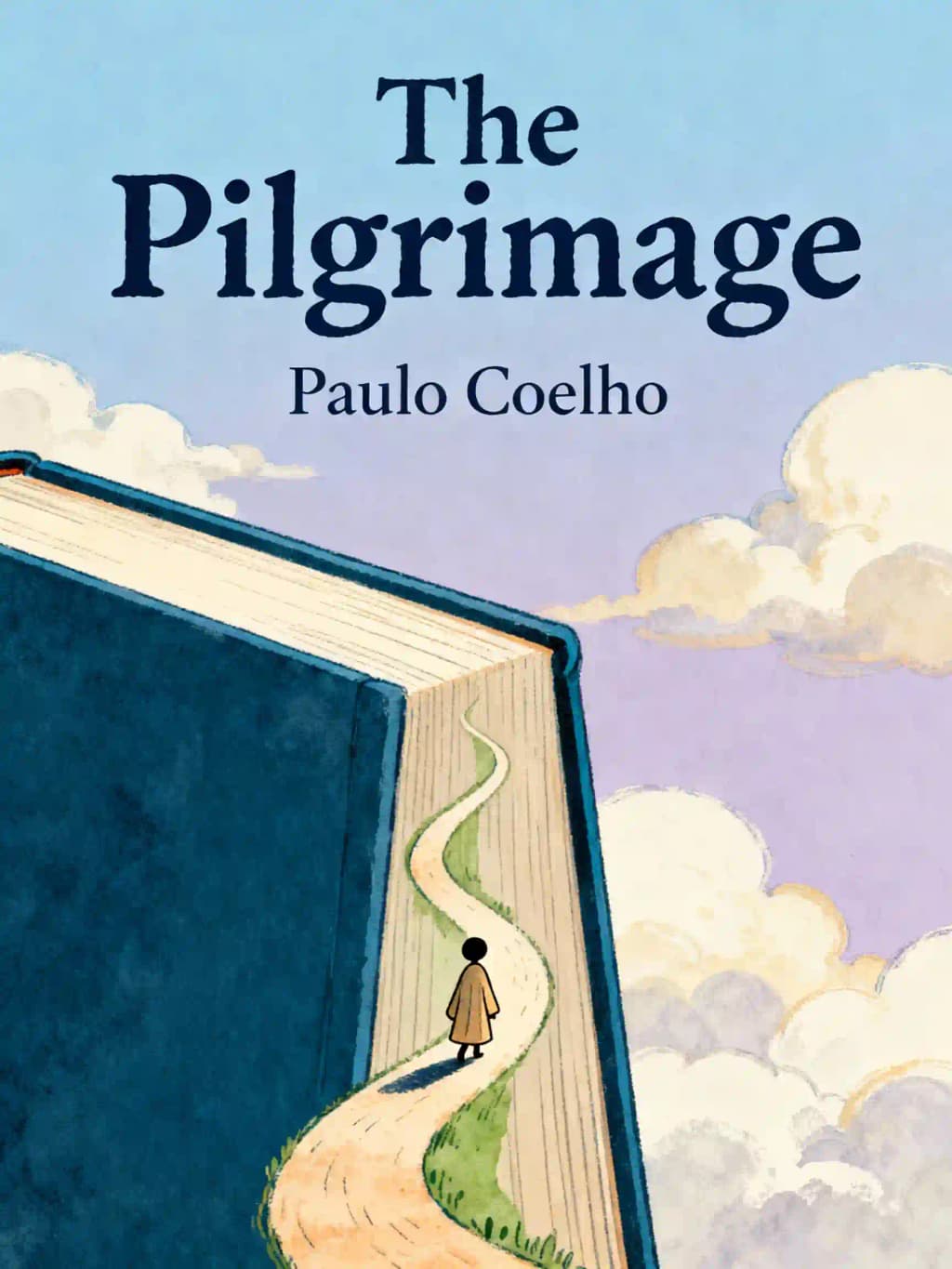
Paulo Coelho's "The Pilgrimage" has captivated millions worldwide since its publication, becoming a cornerstone of modern spiritual literature. This transformative tale follows Coelho's own journey along the ancient Road to Santiago in Spain, where pilgrims have walked for centuries seeking enlightenment. The book has influenced countless readers, including celebrities like Madonna and Will Smith, who cite it as a pivotal influence in their spiritual journeys. What makes this work particularly remarkable is how it blends medieval mysticism with practical wisdom for contemporary life. Beyond its literary success, the book has revitalized interest in the Camino de Santiago pilgrimage route, with thousands of new travelers embarking on this path each year after being inspired by Coelho's vivid account. As we explore this extraordinary journey, we discover not just a travelogue, but a roadmap for personal transformation that continues to resonate across cultures and generations.
2장
The Quest for the Lost Sword
The journey begins with a startling revelation. During Paulo's ordination as a Master of the Order of RAM, he reaches for his ceremonial sword only to have his Master step on his fingers, preventing him from taking it. "You have stumbled at the supreme moment," his Master admonishes him for his pride and avidity. As punishment, Paulo must now seek his sword among simple people on "the Strange Road to Santiago" in Spain, where his wife has hidden it following the Master's instructions.
The quest starts at customs in Spain, where Paulo's wife brings in the sword, claiming it's for auction valuation. After parting ways with her, Paulo drives to Saint-Jean-Pied-de-Port, where he must meet Mme Lourdes who will connect him with a guide. Despite hesitating for seven months before making this journey, Paulo now finds himself committed to recovering his sword and returning to his wife in Brazil.
In Saint-Jean-Pied-de-Port, Mme Lourdes dresses Paulo in traditional pilgrim's garb-a medieval cape and hat adorned with scallop shells-and performs a blessing ceremony. She makes him swear total obedience to his guide and explains how each item of clothing will protect him: the hat from evil thoughts, the cape from evil words, and the gourd from evil deeds. She then directs him to meet his guide two kilometers outside town.
As Paulo walks through the ruins beyond the city, he encounters a gypsy man at an abandoned well who attempts to deceive him. Just as Paulo nearly falls for the deception, his true guide Petrus appears, exchanging a password with him. The gypsy departs, and Petrus explains he was actually a devil-one they would encounter again on their journey.
This beginning establishes the framework of the entire pilgrimage-a physical journey that mirrors an inner quest, where dangers are not just external threats but also the internal demons of doubt, pride, and fear that we must confront to achieve true wisdom.
3장
The Path of Transformation
For seven days, Paulo and Petrus trek through the Pyrenees, climbing and descending mountains. Each evening at sunset, Petrus has Paulo perform the Seed Exercise-visualizing himself as a seed growing into a great tree reaching for the sun. This practice represents the fundamental principle of transformation that underlies the entire pilgrimage.
During these early days, Paulo learns that Petrus is Italian and works in industrial design. When Paulo expresses concern about Petrus abandoning his work to guide him, Petrus offers a profound insight: travel itself is an act of rebirth where everything becomes new again. "When we travel, we experience life more intensely, like children," he explains. "We appreciate small blessings and become more accessible to others. This is why religious pilgrimage has always been an objective way of achieving insight."
On the seventh day, they reach a mountain peak where Charlemagne had first prayed on Spanish soil. During the final Seed Exercise, Paulo enters a state of ecstasy, truly becoming a tree, until Petrus slaps him back to awareness. Petrus angrily reminds him not to forget his objective of finding his sword-a first lesson in balancing spiritual experience with practical purpose.
Soon after, Petrus reveals they had spent six days covering a distance they could have walked in one. Paulo had been so focused on the destination that he failed to notice they had passed certain places multiple times. "When you are moving toward an objective," Petrus explains, "it is very important to pay attention to the road. It is the road that teaches us the best way to get there, and the road enriches us as we walk its length."
This lesson becomes a central theme of the journey-the destination matters less than the transformation that occurs along the way. Petrus then teaches Paulo the Speed Exercise, which involves walking at half his normal pace for twenty minutes, paying attention to details around him. This practice helps Paulo develop awareness of the present moment and appreciate the journey itself rather than fixating on the destination.
4장
The Three Faces of Love
As they continue their journey, Petrus introduces Paulo to the three forms of love that shape human experience: eros, philos, and agape. This understanding becomes crucial to Paulo's spiritual development and his ability to wield his sword once recovered.
During a wedding celebration in a small town, Petrus points out different manifestations of eros-romantic love between two people. The newlyweds represent the potential of eros to either build something meaningful or deteriorate into resentment. Throughout the celebration, Petrus identifies various expressions of eros: the shy glances between a girl in blue and a boy in white, frustrated love in a woman obsessively straightening tables, and "social love" in a heavily made-up woman who had accepted her role without passion.
Philos, Petrus explains, is love as friendship-what sustains couples when eros fades. It represents a deeper connection beyond physical attraction, one based on mutual respect and understanding. Many people dismiss love when it transforms from eros to philos, not realizing that philos is the bridge to the highest form of love.
About agape-the highest form-Petrus initially says only that it is "the love that consumes" and is present in both other forms. When Paulo presses him to explain agape more fully, Petrus responds that it cannot be discussed, only lived, and promises to show him one of its faces.
Later, they visit a small hermitage where Petrus had once met a hermit named Alfonso. There, Petrus explains that the hermitage represents one manifestation of agape-"the love that consumes." This purest form of total love had driven hermit saints to isolation because their love was so overwhelming that nothing else mattered.
The second form of agape, Petrus reveals, is enthusiasm-derived from the Greek "entheos" meaning "God within." For the ancients, enthusiasm meant trance or ecstasy-a connection with God. This directed form of agape gives extraordinary strength and serenity when we believe completely in something, allowing perfect decisions. "Enthusiasm manifests most powerfully in childhood," Petrus explains, "when our divine connections are strongest. That's why children were drawn to Jesus-not for his miracles or wisdom, but moved by pure enthusiasm."
To help Paulo experience this form of agape, Petrus teaches him the Blue Sphere Exercise-a meditation that begins with relaxation and gratitude, then visualizes the heart growing and filling space with intense blue light while singing a childhood song. The practice culminates in envisioning this blue light spreading throughout the world, manifesting love beyond daily struggles.
5장
Confronting Personal Devils
Every spiritual journey involves confronting one's inner demons, and Paulo's pilgrimage is no exception. Early in their journey, Paulo encounters a black dog at an elderly woman's house. As he stares at the dog, he feels increasingly weak and tired. Suddenly, strange words form in his mind, and when he speaks them, the dog begins to growl and bare his teeth. Despite the woman's attempts to push him out, Paulo continues speaking this unknown language until the dog flees the house.
Petrus explains that Paulo has manifested "agape" and spontaneously demonstrated the "gift of tongues"-a divine grace that helped him exorcise the woman's demons. However, because Paulo didn't place the exorcised spirit anywhere specific, its force now follows him in the form of the dog, whom Petrus calls "Legion" because "he is many."
Later in the journey, Paulo encounters Legion again. This time, Petrus disappears, leaving Paulo to face his enemy alone. In a desperate battle, Paulo initially tries fighting with conventional means but realizes he must transform himself, fighting Legion with the same weapons used against him. He transforms himself into a dog, attacking Legion with primal ferocity. As he gains dominance, he realizes Legion's essence is entering him. Near fainting, he digs his nails into the earth and feels Legion pass through him into the ground as agape expels the entity from his body.
This confrontation represents Paulo's battle with his own inner demons-the fears, doubts, and weaknesses that prevent him from claiming his spiritual power. Petrus later explains that our enemies represent our weaker sides, and they join battle knowing exactly where to hurt us. "Our enemy is part of agape," he says, "there to test our grip, our will, and our handling of the sword."
Beyond personal devils, Petrus teaches Paulo about the "personal vices" that can defeat even those who find their swords. In a powerful prayer, Petrus asks for pity for various types of people trapped by their own limitations: those who pity themselves and those who are cruelly self-critical; those who sacrifice themselves for mere days off and those who become martyrs to their work; those who conquer the world but lose the battle within and those who win the inner fight but fail in the world.
To combat these tendencies, Petrus teaches Paulo the Cruelty Exercise-digging one's index fingernail into the thumb's cuticle whenever a cruel thought about oneself arises. By focusing on the physical pain, one releases the spiritual suffering.
6장
The Waterfall of Impossible Challenges
One of the most dramatic episodes in Paulo's journey occurs when Petrus leads him to a fifty-foot waterfall and announces they will climb through the water. Paulo stares at the seemingly impossible climb with no visible handholds and insufficient pool depth to break a fall. He recalls a similar situation years before when his Master had tested his wisdom rather than his courage with an impossible climb.
Initially, Paulo refuses to climb, declaring it impossible. Petrus remains silent for fifteen minutes before noting that Paulo has changed-his voice shows "a bit of the love that consumes" and his eyes are shining. He assures Paulo he hasn't broken his vow of obedience by using his decision-making ability.
Then Petrus proposes a challenge: if he can climb the falls without using any special gifts, Paulo would have to follow. Before attempting the climb, Petrus mentions they are near where the Virgin appeared to a shepherd in 1502-today is the Feast of the Virgin of the Road. He suggests Paulo offer her his victory rather than his pain, saying "she would be happier if, rather than just pain, people would also offer her their joys."
Petrus explains that everything Paulo has learned makes sense only when applied to real life. "A hammer would make no sense in the world if there were not nails to be driven," he says. "The waterfall is the place where you will put into practice everything you have learned so far."
Before disappearing behind the falls to begin his climb, Petrus delivers his final lesson: "This waterfall will teach you how to be a Master... a disciple such as you can never imitate his guide's steps. Teaching is only demonstrating that it is possible. Learning is making it possible for yourself."
What had appeared impossible from below reveals itself as manageable-the seemingly smooth wall actually contains many handholds. As Paulo climbs, he realizes how fear had nearly made him surrender his sword over what was actually a simple challenge. At the crest, he pushes through the torrent, briefly tempted to surrender to peaceful darkness before his hands and feet-his "loyal friends"-refuse to give up.
This episode powerfully illustrates how our perceived limitations often prove illusory when confronted with courage and determination. What seems impossible becomes achievable when we apply the spiritual practices we've learned and trust in our own capabilities.
7장
The Secret of Learning Through Teaching
As their journey nears its end, Petrus reveals the greatest secret of the pilgrimage: "You can learn only through teaching." He explains that while Paulo was learning the practices, he was simultaneously discovering their deeper meaning. "By taking on the role of guide, I was able to find my own true path," he confesses. This paradox - that teaching leads to learning - becomes a central revelation of the spiritual journey.
This revelation fundamentally transforms Paulo's understanding of his quest. If he finds his sword, he will need to teach someone else, and only then will he truly learn all the answers hidden in his heart. "Each of us knows the answers, even before someone tells us what they are," Petrus explains, emphasizing how wisdom often lies dormant within us until we engage in the act of sharing it. "Life teaches us lessons every minute, and the secret is to accept that only in our daily lives can we show ourselves to be as wise as Solomon and as powerful as Alexander the Great." This comparison to historical figures illustrates how everyday wisdom can match the greatest knowledge of antiquity.
The principle of learning through teaching manifests in multiple ways. When we attempt to explain concepts to others, we must clarify our own understanding. When we guide others through practices, we notice nuances we previously missed. When we answer questions, we often discover new perspectives we hadn't considered. This wisdom becomes apparent only when we teach others and participate in extraordinary adventures, transforming abstract knowledge into lived experience.
Before their emotional farewell at a train yard, Petrus imparts one final practice: the Dance Exercise. This involves relaxing with closed eyes, recalling childhood songs, and allowing the body to move freely to the remembered melody. The practice serves as "an almost-perfect means of communication with the Infinite Intelligence," combining physical movement, emotional memory, and spiritual connection. The simplicity yet profundity of this final exercise encapsulates many of the journey's teachings about connecting with the divine through ordinary experiences.
As they prepare to part ways, Petrus makes a suggestion that proves prophetic: Paulo should create something - whether a painting, piece of writing, or ballet - to depict his journey, allowing others to experience the Jacobean route wherever they are. This suggestion carries deeper significance, as it embodies the principle of teaching through creative expression. It foreshadows Paulo's eventual writing of "The Pilgrimage" itself - the very book we're exploring - which would indeed bring the Road to Santiago to readers worldwide, transforming his personal journey into a universal teaching tool that continues to guide spiritual seekers across generations.
8장
The Revelation at El Cebrero
In the final stages of his journey, Paulo experiences a profound transformation. As he climbs El Cebrero mountain in dense fog, he feels the Road to Santiago begin to "walk him." His intuition guides him forward despite poor visibility. The forest grows silent as the fog begins to dissipate, and he hears a woman's voice coming not from the woods but from within him.
Following this inner guidance, Paulo emerges from the fog to discover a cross driven into the mountain crest. Between two fog banks, he can see the tallest peaks and the cross atop El Cebrero. A lamb appears between the cross and Paulo, triggering overwhelming emotion as he confronts this powerful symbol.
Through tearful prayer, Paulo realizes the cross is empty because its power resides within each person. Following the lamb to El Cebrero's chapel, he discovers his Master waiting with his sword. In a sacred ritual during a cleansing rainstorm, the Master bestows the sword upon Paulo, having learned Paulo finally knows what to do with it.
This climactic scene represents the culmination of Paulo's spiritual journey. The lamb-a traditional symbol of Christ-serves as his final guide, leading him to his sword and to the understanding that true spiritual power comes not from external symbols or tools but from within. The empty cross reinforces this message-divinity is not confined to religious symbols but lives within each person who embraces agape.
The revelation that transforms Paulo is not about the sword's location but about its purpose. Throughout his journey, whenever Paulo focused solely on finding his sword, Petrus forced him back to reality. The secret wasn't where his sword was hidden-it was what he would do with it once found. This simple truth crystallizes for Paulo: when we want something, we must have a clear purpose for it. The reward itself is meaningless without knowing its application.
9장
The Practical Wisdom of RAM Practices
Throughout the pilgrimage, Petrus teaches Paulo eleven spiritual practices of the RAM tradition. These exercises form the practical backbone of the journey, providing concrete methods for spiritual development that readers can apply in their own lives:
1. The Seed Exercise: Kneeling in a fetal position, one visualizes becoming a seed growing into a tree reaching for the sun, experiencing the process of transformation and rebirth.
2. The Speed Exercise: Walking at half one's normal pace for twenty minutes, paying attention to details around oneself, developing awareness of the present moment.
3. The Cruelty Exercise: Digging one's index fingernail into the thumb's cuticle whenever a cruel thought about oneself arises, releasing spiritual suffering through physical sensation.
4. The Messenger Ritual: Through deep relaxation and visualization of fire, one invokes their personal messenger who can be consulted about specific problems.
5. The Water Exercise (Arousal of Intuition): Making a puddle of water on a smooth surface and playing with it without any objective, inducing a meditative state that connects with intuitive wisdom.
6. The Blue Sphere Exercise: Visualizing the heart growing and filling space with intense blue light while singing a childhood song, then envisioning this light spreading throughout the world.
7. The Buried Alive Exercise: Lying on the floor in the posture of death with arms crossed, visualizing one's own burial while alive, confronting mortality to embrace life fully.
8. The RAM Breathing Exercise: Completely emptying the lungs, then slowly inhaling while raising the arms, concentrating on allowing love, peace, and harmony to enter the body.
9. The Shadows Exercise: Studying shadows while focusing on a problem, identifying wrong solutions before finding the correct one.
10. The Listening Exercise: Concentrating on all surrounding sounds, then gradually separating each sound to develop intuitive hearing.
11. The Dance Exercise: Recalling childhood songs and allowing the body to dance freely, establishing communication with "Infinite Intelligence."
These practices are not merely theoretical concepts but practical tools for spiritual growth. Each addresses different aspects of human experience-fear, self-criticism, intuition, connection with divine love-providing a comprehensive approach to personal transformation.
What makes these exercises particularly valuable is their accessibility. Unlike many spiritual traditions that require years of study or special environments, the RAM practices can be performed in everyday settings. They transform ordinary moments into opportunities for spiritual growth, embodying Petrus's teaching that "only in our daily lives can we show ourselves to be as wise as Solomon and as powerful as Alexander the Great."
10장
The Journey's End and New Beginning
As Paulo reaches Santiago de Compostela, he watches tourists and students in medieval clothing gather at the cathedral. Having recovered his sword and completed his pilgrimage, he prepares to visit San Tiago's tomb to leave the image of Our Lady of the Visitation on scallop shells before returning to Brazil.
The secret of his sword remains his alone. He wrote it down and left it under a stone, but rain has likely destroyed it. When saying goodbye, his Master gave him a medal of the Order of San Tiago of the Sword and reminded him that he'd already received a revelation when looking into the eyes of the lamb.
Paulo now understands that people always arrive at the right moment where someone awaits them. This final insight encapsulates the essence of the pilgrimage-it's not about reaching a destination but about the transformative encounters along the way. Each person we meet, each challenge we face, each insight we gain contributes to our spiritual development.
The journey that began with failure-Paulo's inability to receive his sword during his ordination-ends with triumph. But this triumph is not merely the recovery of a physical object. It's the discovery of purpose, the experience of agape, and the understanding that true wisdom comes from teaching others.
As Paulo prepares to return to Brazil, he carries with him not just his sword but a transformed perspective on life. The Road to Santiago has changed him fundamentally, teaching him to value the journey over the destination, to recognize the different forms of love, to confront his personal devils, and to embrace the enthusiasm that connects us with divine wisdom.
This transformation represents the promise of pilgrimage for all who undertake it-whether physically walking the Road to Santiago or metaphorically pursuing their own spiritual quests. The journey may begin with a specific goal, but its true value lies in the unexpected lessons learned along the way and the person we become through the process.